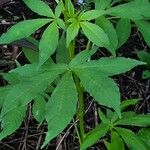
Cleome gynandra
African cabbage · Spiderwisp · Spider whisp · Spiderflower · Massamby
Description
Source: leafsnapCleome gynandra, commonly known as African cabbage or spider plant, is a leafy vegetable belonging to the Cleomaceae family. Native to Africa, it is widely cultivated worldwide for its nutritional and medicinal benefits. The plant can grow up to 1 meter in height and features long, slender stems with green leaves arranged in a spiral pattern. The leaves of Cleome gynandra are rich in vitamins A, C, E, and K, as well as minerals such as calcium, iron, and potassium. They also contain antioxidants that help protect the body against free radicals, which can cause cellular damage. In traditional medicine practices across Africa, Cleome gynandra is valued for its anti-inflammatory properties, which can help alleviate pain from arthritis and other inflammatory conditions. It is also used to treat respiratory infections such as asthma and bronchitis, due to its expectorant properties. Cleome gynandra can be consumed raw or cooked. It is commonly added to soups and stews but can also be stir-fried with other vegetables. Its unique taste profile makes it an excellent addition to salads as well.
Care Guide
💧 Water Every 3 days
☀️ Light Full sun
The development and vitality of shona cabbage are greatly affected by sufficient exposure to sunlight. It thrives in settings teeming with sunlight, as that's where it originated from. However, it cannot adapt to low-light conditions. Excessive or insufficient light can adversly affect the plant's growth and general health.
🌡️ Temperature 15–37.8°C
The Shona cabbage originates from areas where the temperature oscillates between 68 to 100.4 °F (20 to 38 ℃). These temperatures provide optimal conditions for its growth, hence the environments should be adapted to mirror these throughout the different seasons.
💨 Humidity dry (<40%)
This plant prefers dry conditions, so don't mist it. However, watering it less often can also thrive in higher humidity.
🪴 Soil 6-7
🌱 Fertilizer
For an optimal harvest, Shona cabbage thrives with frequent use of evenly balanced fertiliser, especially rich in nitrogen. Administer fertiliser prior to planting, at the time of planting, and when the seedlings reach a height of 2 inches (5.1 cm). The incorporation of compost or manure ensures an ongoing provision of nutrients. Undernourishment of the soil can lead to inadequately developed leaves and stems, subpar flavours, slender stems, and a possible bitter taste.
🪴 Pot & Repot
✂️ Pruning
🌿 Propagating
🐛 Diseases & pets
☠️ Toxicity
Characteristics
- Plant Type
- Herb
- Life Cycle
- Annual
- Genus
- Cleome
- Family
- Cleomaceae
- Hardiness Zone
- 8-12
- Mature Height
- 49 cm to 91 cm
- Mature Spread
- 30 cm to 61 cm
- Leaf Color
- Green
- Leaf Type
- Semi-evergreen
- Flower Color
- White
- Flower Size
- 1.02 cm to 25.40 cm
- Bloom Time
- Late spring, Summer, Early fall, Mid fall
- Planting Time
- Spring
- Harvest Time
- Mid summer, Late summer, Fall
- Native Area
- Sri Lanka, Burkina Faso, Somalia, Egypt, India, Malaysia, Angola, United Arab Emirates, Namibia, Eritrea, Pakistan, Nigeria, Yemen, Kenya, Uganda, Tanzania, Niger, Guinea-Bissau, Mali, Benin, Sierra Leone, Indonesia, Cambodia, Cameroon, Burundi, Mozambique, Oman, Ethiopia, Botswana, Congo, Nepal, Saudi Arabia, Malawi, Central African Republic, South Africa, Zambia, Sudan, Philippines, Mauritania, Laos, Bangladesh, Guinea, Chad, China, Vietnam, Myanmar, Togo, Bhutan, Senegal, Côte d'Ivoire, Congo (DRC), Thailand, Gabon