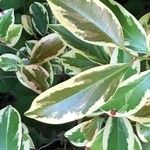
Cleyera japonica
Bird claw cleyera · Japanese cleyera · Sakaki
Description
Source: leafsnapCleyera japonica, commonly known as Japanese cleyera, is an evergreen shrub native to Japan and China. It belongs to the Theaceae family and can grow up to 20 feet tall, with a spread of 10-15 feet. The plant features glossy, dark green leaves that are oval-shaped with serrated edges, reaching up to 4 inches in length. In the spring, it produces small, fragrant white or pink flowers that attract bees. Japanese cleyera is a popular ornamental plant thanks to its attractive foliage and ability to thrive in various growing conditions. It prefers well-drained soil in partial shade but can also tolerate full sun and full shade. Once established, it is drought-tolerant but benefits from regular watering during dry spells. The plant requires minimal maintenance but does well with occasional pruning in late winter or early spring to shape it or remove dead branches. Additionally, Cleyera japonica is resistant to pests and diseases, making it an excellent choice for low-maintenance landscapes. Traditional medicine has employed Cleyera japonica for its anti-inflammatory properties. Moreover, its caffeine content makes it a popular choice in tea production among tea enthusiasts. Overall, Cleyera japonica is an attractive evergreen shrub that adds beauty and interest year-round while requiring minimal care, making it a great addition to any garden landscape design project.
🌳 Although modest in appearance, sakaki occupies a significant role in Japanese culture, especially within Shinto, the native spirituality of Japan. Its leaves are regarded as sacred and are often employed in rituals and offered to the kami (spirits or gods). Beyond its ritual function, sakaki also serves a secondary role in horticulture as an ornamental, valued for its hardiness and attractive foliage. The leaves have a waxy sheen, providing year-round luster in domestic gardens and temple grounds, and its wood, while not widely esteemed, is used to a small degree in crafting and joinery.
Care Guide
💧 Water Every 7 days
Sakaki does well in humid environments and can withstand some drought, needing water every 1-2 weeks. Being an evergreen plant grown outdoors, it requires consistent soil moisture to keep its foliage healthy all year round.
☀️ Light Full sun
Sakaki does best when given a generous amount of light, which allows it to grow healthily. Nevertheless, it can tolerate lower light levels, though its ability to thrive may be limited. Originating from a habitat with abundant sunlight, both too much and too little light can hinder its growth.
What are the sunlight requirements for Sakaki plants?
Sakaki plants require full sun, defined as over 6 hours of sunlight daily, to thrive properly. However, they can also manage in partial sun, which is about 3-6 hours of sunlight. It's essential to watch how sunlight moves through your garden and choose locations that provide a balance of light and shade, ensuring the health and happiness of your Sakaki plants.
How essential is light for the growth of Sakaki plants?
Light is crucial for the healthy development of Sakaki plants. These plants perform best when they receive a generous amount of sunlight. Although they can survive in less light, their growth could be limited. Originating from environments abundant in sunlight, the right amount is key to preventing either too much or too little light from hindering their growth. When natural sunlight is not adequate, especially during winter or in less sunny spaces, artificial lighting can be a vital solution to ensure optimal growth. LED lights are recommended for their ability to provide specific wavelengths needed by plants, with different intensity requirements based on the plant's natural sunlight needs.
What are some important symptoms of light deficiency in Sakaki plants?
Sakaki plants may display several symptoms when they do not receive adequate sunlight. These symptoms include smaller new leaves, leggy or sparse growth, faster leaf drop, slower or no new growth, lighter-colored new leaves, chlorosis, sunscald, leaf curling, wilting, and leaf scorching. Each symptom indicates different aspects of light deficiency or overexposure, affecting the plant's ability to grow healthily and perform photosynthesis effectively.
What are the solutions for Sakaki plants not receiving enough light?
For Sakaki plants not receiving enough light, several solutions can be employed. Indoors, gradually move plants to a location where they can get at least 6 hours of direct sunlight daily, using a south-facing window or artificial lighting such as desk lamps or professional grow lights for at least 8 hours a day. Outdoors, move your plants gradually to sunnier spots to avoid sunburn. Reducing obstructions like pruning trees or transplanting to better-lit locations can help. It's crucial to note that parts of the plant that have already suffered due to insufficient light may not recover, but new growth should be healthy following these adjustments.
🌡️ Temperature 10–35°C
Sakaki comes from areas with mild to hot climates and grows best where temperatures are between 50 and 95 °F (10 to 35 ℃). If temperatures lie outside that range, its environment will need to be adjusted.
What is the ideal temperature range for Sakaki?
Sakaki thrives in environments with mild to hot temperatures, flourishing particularly well in regions where temperatures range between 50 to 95 °F (10 to 35 °C). It is adaptable and has strong cold resistance, but adjustments in its environment would be required for temperatures outside this preferred range. Normally, special frost protection measures are not necessary during winter, thanks to its cold resistance. However, protection is recommended if winter temperatures are expected to fall below -25°C, by wrapping the trunk and branches with insulating materials. Additionally, to prevent winter and early spring drought, it's advised to water the plant abundantly before the first freeze of autumn to ensure the soil remains moist and freezes in that state.
How does cold temperature affect Sakaki, and what are the solutions?
Sakaki is notably cold-tolerant, best thriving when temperatures remain above 10°C. During winter, it's crucial to keep it above -15°C to maintain its health. Though it may not show visible signs of distress when temperatures fall below -25°C during winter, the branches can become brittle, dry out by spring, and fail to produce new shoots. To address this, any dead branches that have not produced new leaves by spring should be pruned away to encourage healthy growth.
What are the effects of high temperatures on Sakaki, and how can they be mitigated?
During summer, Sakaki plants should ideally be kept below 35°C. Exposure to temperatures exceeding 38°C may result in the leaves becoming lighter in color, their tips drying and withering, and an increased susceptibility to sunburn. To mitigate these effects, trim the sunburned and dried-up parts of the plant. Relocate the plant to an area with shade during the midday and afternoon sun, or use a shade cloth. Ensure the soil remains moist by watering the plant in the morning and evening.
💨 Humidity
🪴 Soil 5-6
🌱 Fertilizer
Timing is essential when fertilizing Sakaki. Apply fertilizer in early spring and continue once a month up to early summer. The fertilizer promotes attractive blooms and supplies energy during both dormant and active growth periods.
🪴 Pot & Repot 2-3 years
Sakaki is a robust evergreen shrub that can reach a height of 8 to 10 feet. It's important to repot the plant every 2 to 3 years during late winter or early spring, increasing the container size by 2 inches each time. Use well-draining soil and keep the soil consistently moist after repotting. Be sure to place the plant in a shaded location to support its growth.
✂️ Pruning
Sakaki is an evergreen shrub known for its glossy leaves and fragrant flowers. To keep it healthy and maintain its ornamental appeal, it's important to prune it carefully from early to late winter. Start by removing any damaged branches, and then thin out crowded areas to improve air circulation. These techniques will promote health and vibrant blooms in the shrub.
🌿 Propagating
🐛 Diseases & pets
☠️ Toxicity
Characteristics
- Plant Type
- Shrub
- Life Cycle
- Perennial
- Genus
- Cleyera
- Family
- Pentaphylacaceae
- Hardiness Zone
- 6-9
- Mature Height
- 11.89 m
- Mature Spread
- 2.44 m to 3.05 m
- Leaf Color
- Green, Yellow, Bronze, Brown
- Leaf Type
- Evergreen
- Flower Color
- White
- Flower Size
- 2.54 cm
- Bloom Time
- Late spring, Early summer, Mid summer
- Planting Time
- Spring, Autumn
- Harvest Time
- Mid summer
- Native Area
- Nepal, India, Indonesia, Vietnam, Myanmar, Japan, Philippines, South Korea, Thailand, China