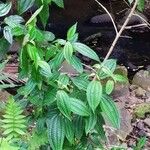
Clidemia hirta
Curse · Koster's-curse · Soapbush · Kaurasiga · Kui
Description
Source: leafsnapClidemia hirta, commonly known as Koster's curse or soap bush, is a shrub from the Melastomataceae family. Native to Central and South America, it has spread to regions including Africa and Asia. The plant can reach up to 3 meters in height and features dark green, oval-shaped leaves. During the summer, it produces small clusters of pink or purple flowers. This plant is considered invasive in many areas due to its rapid growth and ability to outcompete native vegetation. It flourishes in moist environments such as forests, wetlands, and disturbed areas like roadsides. For centuries, indigenous people have used Clidemia hirta for medicinal purposes. The leaves serve as a poultice for wounds, and the roots are used to treat diarrhea. Despite its invasiveness, Clidemia hirta offers some benefits, such as erosion control, thanks to its extensive root system that stabilizes soil on steep slopes. Nonetheless, it needs to be carefully managed to prevent it from becoming an ecological threat. In summary, Clidemia hirta is an interesting plant with both beneficial and detrimental impacts on ecosystems outside its native range.
Care Guide
💧 Water Every 7 days
Soapbush flourishes in humid tropical climates and prefers consistent levels of humidity. While it can withstand short periods of drought, it's best to water it every 2-3 weeks. To help retain moisture, especially during its active growth season, use mulch. This plant naturally grows in the moist understory of forests, so recreating these conditions will support its growth.
How should I water my Soapbush plant?
Your Soapbush is not picky about watering methods. You can use common tools like watering cans, hoses, or even cups. It's important to water the plant directly on the soil, making sure to moisten all areas evenly for the root system to receive sufficient water. Using filtered water is recommended to avoid harmful particles from tap water. Also, it's best to use water at or slightly above room temperature to prevent shocking the Soapbush. However, the plant generally responds well to any water given to it.
What should I do if I give my Soapbush plant too much water or not enough water?
Outdoor plants, especially newly planted ones or seedlings, are prone to lack of watering. To avoid this, it is important to water them sufficiently for the first few months, especially when the tree is small or recently planted. Once the roots are established, Soapbush plants can rely on rain for hydration most of the time. When Soapbush plants are in pots, overwatering is more likely to occur. If you accidentally overwater your Soapbush, you should take immediate action to address the issue. Firstly, stop watering the plant to minimize the impact of overwatering. Then, remove the plant from its pot and inspect the roots. If there are no signs of root rot, you can safely return the plant to its container. However, if there is root rot, trim away the affected roots and consider applying a fungicide to prevent further damage. Finally, repot the Soapbush in well-draining soil. On the other hand, underwatering Soapbush plants is relatively easy to fix. If you notice the leaves drooping, drying out, or falling off, it is a sign of underwatering. Simply increase the frequency of watering, and you will see the leaves regain their fullness. It is important to adjust the watering frequency promptly when underwatering occurs.
How frequently do I need to water my Soapbush?
Most outdoor plants can get enough water naturally from rainfall. However, if your area doesn't get much rain, you should water your plants every 2 weeks during spring and fall. In the summer, you need to water them more often. In winter, when plants grow slower and need less water, you should water them less frequently, or not at all. If your Soapbush is young or newly planted, you should water it more often to help it grow and adapt to drought conditions. For potted plants, there are two ways to determine how often to water your Soapbush. You can set a regular watering schedule, such as once a week or every other week. However, this may not always work well, as it doesn't consider the specific conditions of your growing environment. Another approach is to base your watering frequency on the soil moisture. Typically, you should wait until the top two to four inches of soil in the pots have completely dried out before watering again. This method allows you to adjust the frequency depending on the season, as the plant's water needs are highest in summer.
How much water does my Soapbush plant need?
When watering your Soapbush, keep in mind that it doesn't always require a large amount of water. If only a few inches of soil have dried since the last watering, give it about five to ten ounces of water each time. You can also determine the water volume based on the moisture of the soil. Take note of how many inches of soil have dried out between waterings. To ensure the Soapbush receives enough moisture, water the plant until all the dry soil layers from the previous watering are moistened. If over half of the soil has dried out, consider giving more water than usual. In such cases, continue watering until you see excess water draining from the pot's drainage holes. If your Soapbush is planted in an area that receives sufficient rainfall outdoors, it might not need additional watering. When the Soapbush is young or still establishing, ensure it receives 1-2 inches of rain per week. As it grows and becomes established, it can rely solely on rainwater. Only in situations where there is hot weather and no rainfall for 2-3 weeks should you give your Soapbush a thorough watering to prevent stress.
How do I know if I'm giving enough water to my Soapbush plant?
The Soapbush commonly faces the issue of overwatering, which can be identified through specific signs such as yellowing leaves and leaf drop. Overwatering can also result in the plant's structure shrinking and root rot. Conversely, an underwatered Soapbush will start wilting and exhibit brown or brittle leaves. No matter if you observe signs of overwatering or underwatering, it is important to take action and restore the health of your Soapbush.
☀️ Light Partial sun
Soapbush prefers spots where it gets a moderate amount of sun, since too much direct sunlight can be damaging. In its native setting, it does best with sun exposure that is neither excessive nor too low. Excessive sun can cause harm, while insufficient sun can limit its growth.
How much sunshine does Soapbush need every day?
When growing Soapbush indoors, it needs plenty of indirect, filtered, or dappled light. It should be placed in a sunny location all day, ensuring a minimum of 6 hours of daylight, including up to 3-6 hours of direct sunlight. Indirect sun won't harm the Soapbush, but direct sun should be monitored carefully.
What kind of sunlight does Soapbush require?
Soapbush in the wild receives ample sunlight throughout the day, although it is mostly indirect due to the filtering effect of the leafy canopy from the tall trees above. If you are growing Soapbush indoors, it is important to provide it with bright indirect light by placing it on a sunny windowsill or using grow lights.
Should Soapbush stay away from the sun?
Soapbush does not need to completely avoid sun exposure, but it should be exposed to the appropriate type of sunlight. It is important to ensure that Soapbush does not receive more than 6 hours of direct sun each day. Direct sun refers to sunlight that directly hits the plant. On the other hand, indirect light can be reflected from nearby objects or filtered by a sheer curtain. Thus, it is necessary to protect Soapbush from excessive direct sun exposure.
How can I keep Soapbush safe from the sun and hot weather?
Soapbush that are not accustomed to direct sun can be harmed by sunlight. To safeguard them, there are a few options. Firstly, select a spot that receives indirect light for the majority of the day. If the chosen location is still too bright, move the plant further into the room away from the window. Another option is to cover the window with a light curtain or blinds. Employing any of these methods will shield your Soapbush from both sun scorching and excessive heat.
What happens to Soapbush if it gets too much sunlight? What happens to Soapbush if it gets too much light?
Direct sunlight can be harmful to the plant's leaves, especially the upper leaves that receive the most sun. When leaves get scorched, they develop brown and dry spots. Entire leaves may also wilt and turn brown. Growing the plant in full sun can lead to the soil drying out too quickly. In extreme situations, excessive sun exposure can even result in the plant dying.
🌡️ Temperature 20–35°C
Soapbush comes from a temperate habitat and prefers temperatures of 68 to 95 °F (20 to 35 ℃). Adjusting conditions seasonally can help replicate its native climate. Overwintering calls for careful attention to warmth.
What temperature is best for Soapbush?
To help your tropical plants thrive, it's best to maintain a temperature range of 75℉ to 90℉ (25-32℃). While different species can tolerate temperatures outside this range, sticking within a few degrees of these limits will ensure optimal growth. However, there are extreme temperature limits to be aware of. Anything below 50℉ (10℃) or above 95℉ (35℃) can hinder growth and cause issues with the leaves and stems. Low temperatures are particularly damaging, as even a light frost can lead to the death of your tropical plants. In fact, cellular death can occur rapidly, with some species dying within 12 to 24 hours.
Does Soapbush need different temperatures at different stages of growth?
Soapbush can thrive without changes in temperature for different growing phases, but consistency is key. Fluctuations in temperature can slow down its growth, regardless of its current phase. Therefore, it's best to keep soapbush in a controlled environment. The optimal temperature range for its growth is between 75℉ and 90℉ (25-32℃), with staying above the lower limit being crucial. While exceeding 90℉ (32℃) isn't ideal, being a tropical plant, it can tolerate higher temperatures relatively well. However, dropping below 50℉ (10℃), especially 40℉/5℃, will start causing direct harm to this heat-loving plant species.
Does Soapbush require varied temperatures in different seasons?
Soapbush does not require different temperatures for different seasons. The most crucial aspect of caring for Soapbush during each season is to maintain an optimal temperature range. To achieve this, it is recommended to keep the plant indoors. By doing so, you have control over the temperature regardless of the outdoor climate. In addition to temperature, light is also vital for tropical species like Soapbush. These plants thrive when exposed to partial side level of sun. It is important to provide them with dappled or filtered light indoors. Bright but indirect light is the best option for the plant's growth, as too much direct sunlight can be harmful to its leaves and impede its potential for growth.
What temperatures are best for keeping your Soapbush healthy?
Here are three tips to help you take care of your plants: 1. Keep your plants away from windows during colder months: Cold air can leak into your home through cracks in the windows, and any plants placed near them will be affected. Move tropical plants to an area with bright but indirect light, while avoiding potential drafts. 2. Watch out for dry patches, which may indicate too much sunlight or heat: If you notice white or scorched leaves, your plant may be getting too much heat or sunlight. This can lead to dehydration and hinder growth. Dry spots can spread and eventually cause your plants to die if left unaddressed. 3. Be cautious of frost: Colder temperatures and frost can damage plants by disrupting their water circulation. This can lead to a lack of moisture in the stems and leaves. Look out for signs of hydrosis (a water-soaked appearance) and if the issue persists, the plant may shrivel and turn dark brown or black, eventually leading to death.
How can I keep my Soapbush at the right temperature?
To maintain the right temperature range for Soapbush, it is important to pay attention to both the climate and humidity. Ideally, you should place each species in a room where you have control over the temperature, so it closely resembles its natural environment. Keep an eye on humidity levels as well, as they directly affect temperature. To increase humidity, you can use a humidifier or lightly mist the leaves with water. If you plan to grow Soapbush outside, it might be challenging to maintain the ideal balance of temperature and humidity. In case temperatures drop or the air becomes too dry, it is recommended to bring your plant indoors where you can have greater control over the climate. This will help your plant thrive.
💨 Humidity
🪴 Soil 4-6
🌱 Fertilizer
Fertilization is essential to the care of Soapbush. Consistent feeding throughout the growing season maintains the vigor for showy leaves and supports overall development. Failing to fertilize can cause unhealthy leaves, reduced ornamental appeal, and stunted or weak growth that is prone to breaking.
Why should I put fertilizer on my Soapbush?
Soapbush requires regular fertilization because its showy leaves demand a significant amount of energy for production and maintenance. This poses a challenge as the plant must allocate enough energy not just to keep its leaves healthy, but also to support the growth of its stems, branches, roots, and other vital structures. Failure to fertilize can lead to two possible outcomes. Firstly, the leaves will lose their natural color and texture, resulting in an overall unhealthy appearance that undermines its decorative qualities. Secondly, the plant's overall growth will slow down or weak growth may occur, increasing the risk of breakage.
When should I fertilize my Soapbush to make it grow better?
Soapbush plants will benefit from periodic feedings, so there is no need to establish a set feeding schedule when initially planting them. One simple way to fertilize your Soapbush is to apply fertilizer while watering it occasionally. Additionally, your Soapbush will require a good amount of water during the growing season. You can feed the plant once every two to three weeks, ensuring this feeding schedule is maintained throughout the plant's period of new growth.
When should I not use fertilizer on my Soapbush?
You can follow a regular fertilization schedule for your Soapbush throughout most of the year, specifically during the active growing season of spring, summer, and early fall. However, during the winter, it's important to refrain from fertilizing the plant. This is because the Soapbush enters a dormant growth phase during this time, where it either produces no or very little new growth. Since the plant uses less energy and is not actively growing, fertilization is not necessary during this period.
What kind of fertilizer does my Soapbush plant need?
The fertilizer for a Soapbush needs a specific blend of nutrients, but each nutrient is present in low amounts. An ideal fertilizer should have an N-P-K ratio of 3-1-2. However, a general-purpose fertilizer that has a balanced blend of nutrients can also work well. When using a balanced fertilizer, the volume of each nutrient should be at 3 or lower. You can choose between granular or liquid-based fertilizer. If you opt for liquid fertilizer, it's best to dilute it by half. Granular fertilizer doesn't have many downsides, but using liquid fertilizer makes more sense, especially if you water your Soapbush while feeding it.
How do I make my Soapbush grow better?
Fertilizing a Soapbush can be done in a few different ways. One easy method is to mix fertilizer with water in a watering can and pour it onto the soil. Make sure it reaches the roots. Another option is to use granular fertilizer, which can be sprinkled onto the soil around the Soapbush. Granular fertilizers release nutrients slowly, so you won't need to fertilize as frequently as with liquid fertilizers. In both cases, it's important to water the plant while you fertilize it.
🪴 Pot & Repot Every 12 months
✂️ Pruning
Soapbush is a fast-growing plant with broad, hairy leaves that benefits from regular pruning during its dormant season, which lasts from early to late winter. Effective pruning techniques include cutting back overgrown areas, removing dead branches, and thinning the plant to improve air circulation. Performing these tasks regularly helps prevent the plant from becoming invasive and enhances its appearance.
🌿 Propagating
🐛 Diseases & pets
☠️ Toxicity
Characteristics
- Plant Type
- Shrub
- Life Cycle
- Perennial
- Genus
- Clidemia
- Family
- Melastomataceae
- Hardiness Zone
- 10
- Mature Height
- 0.49 m to 4.88 m
- Mature Spread
- 49 cm to 91 cm
- Leaf Color
- Green, Blue
- Leaf Type
- Evergreen
- Flower Color
- White
- Flower Size
- 1.02 cm to 1.52 cm
- Bloom Time
- All year round
- Planting Time
- Summer, Autumn
- Harvest Time
- All year round
- Native Area
- Belize, Honduras, Mexico, Guatemala, Peru, Dominican Republic, Trinidad and Tobago, Panama, Jamaica, Colombia, Cuba, Paraguay, Argentina, Haiti, Bolivia, Venezuela, Brazil, Guyana, El Salvador, Nicaragua, Ecuador, Suriname, Costa Rica