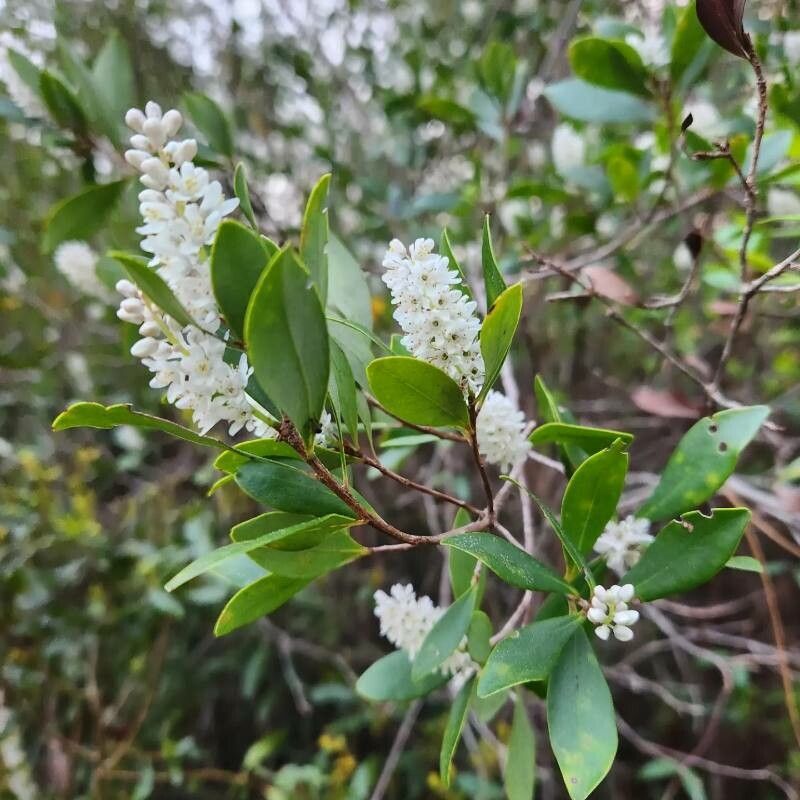
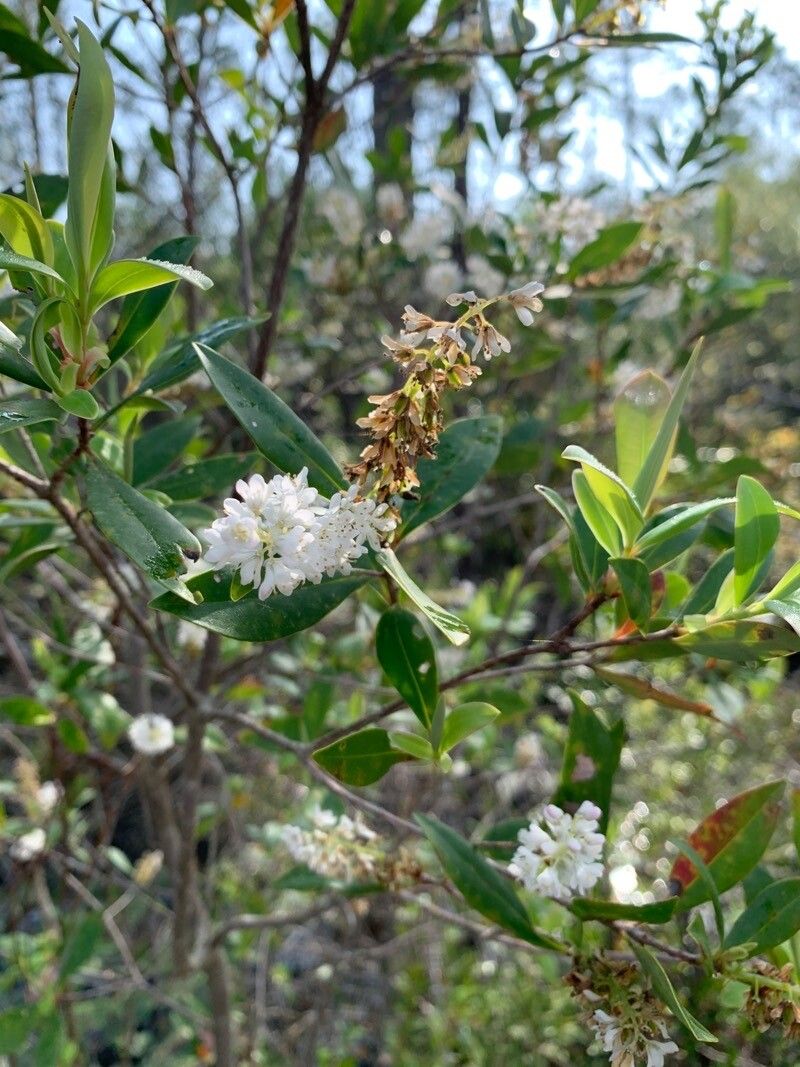
Cliftonia monophylla, commonly known as the buckwheat tree or black titi, is a small evergreen tree or shrub that belongs to the family Ericaceae. Native to the southeastern United States, it thrives in wetlands and swamps. This plant can grow up to 20 feet tall and typically has a narrow, pyramidal shape with dark green, leathery leaves. Its small, white or pinkish-white flowers bloom from late spring to early summer. The plant produces fruit capsules that contain numerous tiny seeds, which are dispersed by the wind. Cliftonia monophylla plays a crucial role in wetland ecosystems. It provides habitat for various wildlife species, including birds, insects, and mammals. Additionally, its extensive root system helps prevent soil erosion by stabilizing the soil. Historically, Native Americans used Cliftonia monophylla for medicinal purposes. They brewed tea from its leaves to treat fever and other ailments. However, it is important to note that the plant contains toxic compounds that can cause gastrointestinal distress if ingested. Overall, Cliftonia monophylla is a distinctive plant species with ecological significance in the wetland habitats of the southeastern United States. It also holds cultural importance due to its use in traditional Native American medicine.
Buckwheat tree is fairly disease-resistant and is usually not susceptible to illnesses. Regarding care, this plant is relatively low-maintenance. When grown outdoors it needs little watering, and larger specimens generally do not require pruning. Smaller plants, however, should be pruned after they finish blooming. Buckwheat tree is appropriate for anyone with an outdoor area, such as a garden or deck, and does not demand extensive care experience.
How to keep Cliftonia Monophylla.
Light
The buckwheat tree does best in areas with full sunlight, although it can tolerate situations where the sun's light is filtered by nearby foliage. In its native setting, abundant light supports its growth, while reduced light exposure can result in lacklustre growth and poor health.
Water
The buckwheat tree is well adapted to dry periods, showing excellent drought tolerance, but it still prefers moderate moisture. Typically, it needs watering every 2-3 weeks. It thrives in outdoor environments with distinct rainfall patterns, making the most of available water during critical growth seasons.
Temperature
The buckwheat tree adapts well to temperature, able to tolerate higher heat and considerable temperature fluctuations. In hot conditions, it is important to monitor watering and provide suitable shade to avoid sunburn. However, the buckwheat tree is relatively sensitive to low temperatures; while it can endure some cold, excessively low temperatures can cause frost damage.
Fertilizer
The timing of fertilization is vital for the Buckwheat tree. Begin feeding in early spring and continue on a monthly schedule through early summer. Fertilizer encourages attractive blooms and supplies energy both during dormancy and in periods of active growth.
Pruning
The Buckwheat tree features glossy, evergreen leaves and white flowers. To maintain its health and appearance, prune the tree from early to late winter. This will help you shape the tree, remove dead branches for better air circulation, and keep its size compact. Making strategic cuts promotes a strong structure, reduces pest problems, and encourages new growth, contributing to a healthy plant.
Botanical profile.
- Plant Type
- Tree, Shrub
- Life Cycle
- Perennial
- Genus
- Cliftonia
- Family
- Cyrillaceae
- Hardiness Zone
- 7-9
- Mature Height
- 3.66 m to 4.57 m
- Mature Spread
- 2.44 m to 3.05 m
- Leaf Color
- Green
- Leaf Type
- Evergreen
- Flower Color
- White, Pink
- Flower Size
- 2.54 cm
- Bloom Time
- Early spring, Mid spring
- Planting Time
- Spring, Summer
- Harvest Time
- Mid summer, Late summer, Early fall
Other names.
Reader questions.
What are the sunlight requirements for the Buckwheat tree?
The Buckwheat tree, or Cliftonia monophylla, flourishes when exposed to full sun for more than 6 hours daily but can also tolerate partial sun of about 3-6 hours. It's essential to watch how sunlight traverses your garden, finding areas that offer an ideal mix of light and shade to ensure your plants' well-being. In its native habitat, the Buckwheat tree benefits from ample sunlight for optimal growth, whereas in less sunny or shaded areas, it may exhibit less vigorous growth and poorer health.
How do I use artificial lighting for indoor Buckwheat trees?
For indoor Buckwheat trees lacking sufficient natural sunlight, especially in winter or less sunny spaces, artificial lighting can be a lifesaver. LED lights are recommended because they're customizable to provide specific light wavelengths needed by the plant. Full sun plants should receive 30-50W/sq ft of artificial light, partial sun plants 20-30W/sq ft, and full shade plants 10-20W/sq ft. The light source should be placed 12-36 inches above the plant to mimic natural sunlight, and it's advised to provide 8-12 hours of light per day to mirror natural daylight hours for your species.
What are the symptoms of light deficiency in Buckwheat trees?
Buckwheat trees showing signs of light deficiency may have smaller new leaves, experience leggy or sparse growth, faster leaf drop, and slowed or halted new growth. Leaves might develop lighter colors, indicating insufficient chlorophyll and nutrients. Chlorosis, or the yellowing of leaves due to chlorophyll breakdown; sunscald, causing pale or necrotic patches from intense light exposure; leaf curling as a defense against water loss; wilting from excessive transpiration; and leaf scorching with brown, crispy edges from too much light, are other symptoms indicating issues with sunlight exposure.
How can I address sunlight-related issues in Buckwheat trees?
For sunlight-related issues in Buckwheat trees, it's vital to adjust light exposure. Indoors, gradually relocate your plant to sunnier spots until it receives at least 6 hours of direct sunlight daily, using south-facing windows for maximum exposure. Artificial lighting, like a desk lamp or professional grow lights, can supplement light for large or immobile plants. Outdoors, move your plants to brighter areas gradually to prevent sunburn. Reducing obstructions and transplanting during the plant's dormant period can also help outdoor and ground-planted trees receive more sunlight. Note that parts of the plant damaged by previous insufficient light may not recover, but new growth will be healthy with improved light conditions.