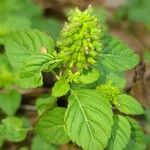
Clinopodium gracile
Slender wild basil · Slender wild calamint
Description
Source: wikipedia (CC BY-SA)Clinopodium gracile, commonly known as calamint, savory, slender wild basil, and tower flower, is a plant species in the mint family (Lamiaceae) native to Asia.
Care Guide
💧 Water
Slender wild basil, which originates from tropical regions, thrives in consistently moist environments and requires regular weekly watering. While it can withstand brief dry spells, it is often grown outdoors to benefit from natural rainfall. This plant demonstrates resilience to varying water availability during the growing season.
☀️ Light Full sun
Slender wild basil needs plenty of light for optimal growth, though it can tolerate moderate sun. Originally thriving in open environments, this plant requires steady sun exposure to flourish. Too much or too little light can damage it, resulting in poor health or diminished growth.
What are the sunlight requirements for Slender wild basil?
Slender wild basil thrives in conditions that offer full sun, defined as above 6 hours of sunlight daily, but it can also manage in partial sun, receiving about 3-6 hours of sunlight. Despite its preference for abundant light exposure for optimal growth, it can endure moderate sunlit conditions. Initially flourishing in open environments, consistent solar exposure is crucial for its development. However, both overexposure and underexposure can be detrimental, leading to reduced growth or health issues. It's beneficial to observe the movement of sunlight through your garden to ensure your plants receive the right balance of light and shade.
How does artificial lighting benefit indoor plants like Slender wild basil?
For indoor plants, especially in scenarios where natural sunlight is limited, such as during winter or in less sunny spaces, artificial lighting provides a critical solution for optimal growth. These lights, particularly LED lights, can be tailored to emit specific wavelengths needed by the plants. Full sun plants require 30-50W/sq ft, partial sun plants need 20-30W/sq ft, and full shade plants 10-20W/sq ft of artificial light. The proper placement involves positioning the light source 12-36 inches above the plant, mimicking natural sunlight. Additionally, ensuring the artificial light is on for 8-12 hours a day can simulate the natural daylight duration, beneficial for the plant's growth.
What are the symptoms of light deficiency in Slender wild basil?
When Slender wild basil is placed in areas with inadequate lighting, several symptoms can manifest, indicating its struggle with light deficiency. These include the development of smaller new leaves, leggy or sparse growth, premature leaf dropping, halted or slowed growth, and leaves appearing lighter in color or experiencing chlorosis (turning yellow due to chlorophyll breakdown). Excessive sunlight exposure can also cause negative symptoms like sunscald, where leaves show pale or necrotic spots, leaf curling, wilting due to increased transpiration, and leaf scorching characterized by brown, dry edges on leaves.
What are some solutions to address insufficient sunlight for Slender wild basil?
Addressing insufficient sunlight for Slender wild basil involves strategic steps, whether indoors or outdoors. Indoors, gradually moving the plant to sunnier spots to achieve at least 6 hours of direct sunlight daily is crucial, utilizing south-facing windows and keeping curtains open. If the plant is large, supplementing with artificial light for at least 8 hours daily is recommended. Outdoors, it's essential to incrementally introduce the plant to sunnier locations to prevent sunburn. Reducing obstructions like pruning trees can help, and transplanting smaller plants during their dormant period ensures they get enough sunlight. Remember, parts of the plant that suffered from insufficient sunlight might not recover, but new growth should be healthy with improved light conditions.
🌡️ Temperature 15–35°C
Slender wild basil hails from tropical zones, where conditions are usually warm and humid. Consequently, it is well suited to high temperatures and humidity. It dislikes abrupt temperature changes and favors a steady thermal environment, so preventing temperature swings indoors is important. It generally cannot tolerate cold and needs warmer conditions to grow. If the surrounding temperature falls too low, the plant may stop growing or even die.
What is Slender wild basil?
Slender wild basil, known botanically as Clinopodium gracile, is a plant species. Unfortunately, no specific details regarding its essentials, symptoms of concern, or additional information were provided.
💨 Humidity
🪴 Soil 6-7
🌱 Fertilizer
Proper fertilization is essential for Slender wild basil's health and appearance. Fertilize Slender wild basil during summer, repeating the application monthly throughout the season. Nutrients supply energy for growth and help sustain the plant's parts. Fertilizing improves Slender wild basil's flowering, ensuring the best blooms.
🪴 Pot & Repot
✂️ Pruning
Slender wild basil has aromatic leaves and delicate flowers. For optimal growth, prune the plant regularly from early to late spring using clean tools. This helps to remove damaged branches and shape the plant. Regular pruning encourages bushier growth, improves air circulation, reduces pests, extends blooming periods, and enhances the plant's overall vigor.
🌿 Propagating
🐛 Diseases & pets
☠️ Toxicity
Characteristics
- Plant Type
- Herb
- Life Cycle
- Perennial
- Genus
- Clinopodium
- Family
- Lamiaceae
- Hardiness Zone
- 7-10
- Mature Height
- 8 cm to 30 cm
- Mature Spread
- 10 cm to 20 cm
- Leaf Color
- Green
- Leaf Type
- Semi-evergreen
- Flower Color
- Pink, White
- Flower Size
- 0.51 cm
- Bloom Time
- Summer, Early fall, Mid fall
- Planting Time
- Spring, Summer, Autumn
- Harvest Time
- Late summer, Fall, Early winter
- Native Area
- India, Malaysia, Indonesia, Vietnam, Myanmar, Japan, Laos, South Korea, Thailand, China