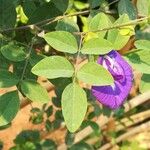
Clitoria ternatea
Butterfly-pea · অপরাজিতা · Kembang telang · శంఖపుష్పం · Asian pigeonwings
Description
Source: leafsnapClitoria ternatea, commonly known as butterfly pea or blue pea, is a perennial plant native to tropical Asia. It belongs to the Fabaceae family and is widely grown for its ornamental and medicinal properties. The plant can reach a height of up to 3 meters and features a woody stem with alternate, pinnately compound leaves consisting of 5-7 leaflets. Its strikingly beautiful flowers have bright blue petals that resemble butterfly wings. For centuries, butterfly pea has been valued in traditional medicine due to its numerous health benefits. The plant contains flavonoids, such as anthocyanins, which possess antioxidant properties that help protect the body from free radicals and reduce inflammation. Additionally, it has antimicrobial properties that can combat bacterial infections. Beyond its medicinal uses, butterfly pea is also popular in culinary applications. The vibrant blue coloration, derived from the anthocyanins in the flowers, makes it a favored ingredient for tea and natural food coloring. In summary, Clitoria ternatea is a versatile plant with a wide range of applications, from ornamental and traditional medicine uses to culinary purposes. Its significance spans many cultures across Asia, where it originates.
💡 Butterfly pea flowers are large and blue, resembling butterflies. When the breeze blows, they sway gracefully like dancing butterflies, which is why they are called Butterfly peas.
🌳 Butterfly pea has several lesser-known uses: in landscaping because of its bright blue blooms, as a natural pH indicator that shifts color in different pH solutions, and as a teaching tool to demonstrate nitrogen fixation in biology classes. It is also employed in traditional fabric dyeing, illustrating a distinctive overlap of utility, science, and culture.
🎭 Sunlight and positivity
Care Guide
💧 Water Every 7 days
Butterfly pea thrives in humid conditions, which is a testament to its tropical origins. While it has a moderate tolerance for drought, it requires watering every two weeks to maintain healthy foliage. When growing it outdoors, it's important to adjust supplemental watering according to natural rainfall patterns to ensure it can adapt to both wet and dry periods.
How should I water my Butterfly pea plant?
To ensure the health of the Butterfly pea when watering it, it is best to use filtered water that is at room temperature or slightly warmer. Tap water can contain harmful particles that can negatively affect the plant. Since the Butterfly pea is adapted to warm environments, using cold water can be a shock to its system. Avoid watering the plant from above, as this can lead to problems with the foliage. Instead, pour the filtered room temperature water directly onto the soil until it is completely soaked. This will be very beneficial for the plant, as it will moisten the roots and help them spread through the soil to gather essential nutrients.
What do I do if I give my Butterfly pea too much or too little water?
Taking proper care of your Butterfly pea plant is crucial to its health. Both overwatering and underwatering can harm the plant, but overwatering tends to be a more common problem. When your Butterfly pea receives too much water, it can cause wilting, yellowing of the stems and leaves, and even lead to diseases like root rot, mold, and mildew, which can ultimately kill the plant. On the other hand, underwatering is less likely to occur since the Butterfly pea has decent tolerance to drought. However, it is still a possibility, and if it happens, you will notice brittle and brown leaves. To prevent extensive damage, it is essential to recognize the signs of overwatering early on. Diseases like root rot are difficult to reverse if not addressed promptly. So, if you see signs of overwatering, reduce your watering schedule right away. Additionally, assess the soil's quality where your Butterfly pea is planted. If it drains poorly, replace it with a loose, well-draining potting mix. On the contrary, if you notice signs of too little water, simply increase your watering frequency until the signs disappear.
How frequently do I need to water my Butterfly pea plant?
If your Butterfly pea plant is in a pot, the best way to know if it needs water is by checking the soil. Stick your finger into the soil and if the top two to three inches are dry, it's time to water it. If you have your Butterfly pea growing outdoors in the ground, you can use the same method. When you find that the top few inches of soil have become dry, it's time to add water. In the spring and early fall, you'll usually need to water your plant about once a week using this method. But during extremely hot weather, you may need to water it twice or more a week. However, it's worth noting that mature and well-established Butterfly pea plants can handle drought conditions quite well.
How much water does my Butterfly pea plant need?
To properly water your Butterfly pea plant, don't be afraid to give it a generous amount of water. Wait until the top few inches of soil are dry before watering, and then make sure to thoroughly soak the entire soil. Add enough water so that it drains out of the bottom drainage holes of the pot. If no water is draining, you may have underwatered the plant, but be careful not to let water accumulate in the soil as it can harm the plant. If there is no drainage, it could be due to poorly draining soil, which should be avoided for the plant's health. If the plant is outside, watering it with 1 inch of rain per week will be sufficient.
How should I water my Butterfly pea when it is growing at different stages?
The water requirements of the Butterfly pea can vary depending on its growth stages. In the early years or after transplantation, it is crucial to provide more water than usual. During these stages, the plant focuses on developing new roots to support future growth, and these roots perform better with increased moisture. As the Butterfly pea matures over a few seasons, its water needs decrease significantly. Additionally, during the bloom period, the plant may require additional water due to the substantial moisture utilized for flower development.
☀️ Light Full sun
Butterfly pea, native to areas with unobstructed sunlight, grows best with plentiful sun. It can withstand periods of somewhat reduced light. Too much sun can dehydrate the plant, while too little light may prevent vigorous growth or flowering.
What are the sunlight requirements for butterfly pea plants?
Butterfly pea plants require full sun, meaning they thrive best with above 6 hours of sunlight. However, they can also manage in partial sun conditions, receiving about 3-6 hours of sunlight daily. It's essential to observe the movement of sunlight through your garden carefully to select spots that offer an ideal mix of light and shade, ensuring the plants remain healthy and happy.
What are the essentials for growing butterfly pea?
Butterfly pea is adapted to environments with unobstructed exposure to sunlight, performing best under abundant sun. Despite this, it can withstand lesser sunlight periods. Excessive sun exposure might dehydrate the plant, while insufficient sunlight could restrict its growth or flowering. For indoor plants lacking natural light, artificial lighting serves as a crucial alternative, particularly during winter or in less sunny locations. LED lights are recommended for their ability to provide specific light wavelengths needed by plants. Full sun plants should have 30-50W/sq ft of artificial light, partial sun plants require 20-30W/sq ft, and full shade plants need 10-20W/sq ft. The light source should be positioned 12-36 inches above the plant to simulate natural sunlight, and most plants benefit from 8-12 hours of light per day.
What are the signs of inadequate lighting in butterfly pea plants?
Butterfly pea plants show several symptoms when exposed to insufficient light, including smaller new leaves, leggy or sparse growth, quicker leaf dropping, halted or no new growth, paler new leaves, chlorosis (yellowing leaves due to chlorophyll breakdown), sunscald, leaf curling, wilting, and leaf scorching. These symptoms indicate the plant's struggle with inadequate sunlight, affecting its health and growth.
How can I address inadequate sunlight for my butterfly pea plants?
To combat insufficient sunlight for butterfly pea plants, consider gradually moving them to sunnier spots to ensure they receive at least 6 hours of direct sunlight daily. For indoor plants, use south-facing windows and keep curtains open during the day or use artificial grow lights for at least 8 hours daily for ample light. Outdoors, acclimate your plants to more sunlight gradually to prevent sunburn. Minimizing obstructions such as overhanging branches can also improve sunlight exposure. For smaller plants, transplanting during their dormant period to a sunnier location with good drainage can be beneficial. However, parts of the plant that suffered from low light may not recover, but new growth should be healthy with improved light conditions.
🌡️ Temperature 20–37.8°C
The butterfly pea is native to warm areas and prefers a temperature range of 68 to 100 ℉ (20 to 38 ℃). In summer, it can endure temperatures up to 104 ℉ (40 ℃) if it has adequate water. In winter, it is advisable to keep the plant in a warmer place or shield it from frost.
What are the ideal growing conditions for Butterfly Pea?
Butterfly Pea, known botanically as Clitoria ternatea, thrives in warm regions, preferring temperatures between 68 to 100°F (20 to 38°C). During the hot summer months, it can handle up to 104°F (40°C) as long as it is well-watered. To protect it from frost during winter, it's advisable to keep it in a warmer environment. If grown outdoors, it should be brought indoors in autumn and placed near a bright window, ensuring it's not too close to heaters to avoid harm. It's particularly important to maintain temperatures above the minimum suitable growth temperature during the colder months, as the Butterfly Pea is extremely heat-loving and susceptible to damage from cold.
How does low temperature affect Butterfly Pea and what are the solutions?
Butterfly Pea is sensitive to low temperatures, thriving best when the temperature is kept above the minimum suitable growth level. During winter, ensuring it's kept above the tolerable growing temperature minimum is crucial. Exposure to temperatures below the growth limit can lead to leaves lightening in color, and frost damage might cause them to turn brown or black, along with wilting and drooping. To combat frost damage, trim off damaged parts and move the plant indoors to a warmer setting. Placing it near a south-facing window ensures sufficient sunlight, but it should be kept away from direct heat sources like heaters or air conditioning vents to prevent air dryness.
What should I do if my Butterfly Pea suffers from high temperature?
During the summer, it's vital to keep Butterfly Pea below the maximum suitable growth temperature to prevent leaves from lightening and reducing the risk of sunburn. If the temperature exceeds the tolerable maximum, sunburned and dried parts should be trimmed away. Relocate the plant to a shaded area, particularly away from the harsh midday and afternoon sun. Ensuring the plant is watered in the morning and evening will help keep the soil moist, which is crucial for its health in high temperatures.
💨 Humidity
🪴 Soil 6-7
🌱 Fertilizer
Proper fertilization is essential for Butterfly pea's health and appearance. Fertilize Butterfly pea during the summer, applying treatment monthly throughout the season. Nutrients drive growth and help maintain the plant's parts. Fertilization improves Butterfly pea's flower display, ensuring the best blooms.
Why should I put fertilizer on my Butterfly Pea plant?
Butterfly pea plants rely on fertilizer, which provides essential nutrients for healthy growth. These nutrients are vital for developing new plant material and maintaining existing components. For the Butterfly pea, fertilization is especially important to enhance the beauty of its flowers. Since the flowers are the main attraction of this plant, gardeners should prioritize fertilization to ensure the best blooms. This is a reliable method for helping your Butterfly pea produce exceptional flowers.
When should I fertilize my Butterfly pea plant for best results?
Throughout the year, the Butterfly pea goes through two main phases. The first phase is the dormant phase during the winter, where there is minimal new growth. The second phase is the active growth phase, which occurs in the spring and fall. During this active phase, it is important to fertilize your Butterfly pea regularly. It is recommended to start fertilizing in the spring and continue once per month throughout the rest of the spring and most of the summer. As fall approaches, you can gradually decrease the frequency of fertilization.
When is it not a good idea to fertilize my Butterfly pea?
To support the growth of your Butterfly pea, it's important to avoid causing root burn. Your plant is most active during the spring and summer, so this is when it needs extra nutrients. However, during the fall and winter, your plant goes into a dormancy stage, and fertilizing should be stopped during this time.
Which fertilizer is best for my Butterfly pea plant?
The best fertilizer for a Butterfly pea is one that has a balanced mix of the three main plant nutrients, with slightly higher amounts of phosphorus. Another option is to improve the soil with organic materials like compost, worm castings, and manure. Fertilizers are available in different forms, but liquid or powdered ones are highly recommended for Butterfly pea. Regardless of the form you choose, remember to dilute the fertilizer and apply it while watering the plant.
How should I give nutrients to my Butterfly pea plant?
First, find a suitable fertilizer and learn the ideal fertilization schedule for your Butterfly pea. Once you have that information, it's time to learn how to apply the fertilizer. The most reliable method is to mix your liquid fertilizer with water before applying it to the soil. Each fertilizer may have different instructions for feeding plants, so it's best to follow the manufacturer's guidance. They will provide information on how to dilute the fertilizer properly to avoid overfertilization. Mixing the fertilizer with water is a simple process, and once it's done, just pour the mixture into the soil where your Butterfly pea is growing.
🪴 Pot & Repot 2-3 years
Repot the Butterfly pea in early spring, selecting a pot only slightly larger than the current one with adequate drainage. Use a well-draining potting mix and make sure the root ball sits at the same level as before. Gently loosen any root-bound roots. After repotting, water thoroughly and place the plant in a warm, shady spot. Regular pruning will help keep its size in check and encourage new growth.
✂️ Pruning
The butterfly pea, a perennial climbing plant, benefits from pruning in the spring. This encourages bushier growth and more abundant blooms. To keep the plant in good shape and improve air circulation, trim any overgrown branches. Better air circulation helps reduce the risk of disease. Make sure to use clean, sharp tools for the best results. You can consult horticultural guides for the proper pruning techniques.
🌿 Propagating
🐛 Diseases & pets
☠️ Toxicity
Characteristics
- Plant Type
- Vine, Herb
- Life Cycle
- Perennial
- Genus
- Clitoria
- Family
- Fabaceae
- Hardiness Zone
- 10-12
- Mature Height
- 1.83 m to 3.05 m
- Mature Spread
- 61 cm to 91 cm
- Leaf Color
- Green
- Leaf Type
- Deciduous
- Flower Color
- Blue
- Flower Size
- 3.05 cm
- Bloom Time
- Late spring, Summer, Early fall
- Planting Time
- Spring
- Harvest Time
- Summer, Fall
- Native Area
- Burkina Faso, Somalia, Egypt, India, Angola, Namibia, Madagascar, Nigeria, Yemen, Kenya, Niger, Uganda, Tanzania, Zimbabwe, Guinea-Bissau, Benin, Iraq, Cuba, Sierra Leone, Cameroon, Burundi, Mozambique, Ghana, Ethiopia, Central African Republic, Saudi Arabia, Malawi, South Africa, Zambia, Sudan, Guinea, Togo, Senegal, Gambia, Congo (DRC), Gabon