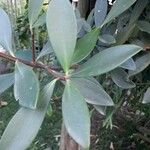
Clusia orthoneura
Porcelain-flower
Description
Source: leafsnapClusia orthoneura, commonly known as the "pitch apple" or "autograph tree," is a species of flowering plant that belongs to the Clusiaceae family. Native to tropical regions of South America, including Brazil, Colombia, and Venezuela, this plant is notable for its distinctive characteristics. The Clusia orthoneura plant is easily recognizable by its thick, leathery leaves that are glossy green and can grow up to 30 cm in length. Its small, white flowers feature five petals each. One fascinating aspect of this plant is its ability to grow aerial roots. These roots can attach themselves to various surfaces, such as rocks or trees, providing additional support. This capability makes Clusia orthoneura an excellent choice for landscaping, as it is well-suited for creating living walls or green roofs. Moreover, Clusia orthoneura has been used for centuries by indigenous people for its medicinal properties. It has been employed in treating various ailments, including skin infections, fever, and diarrhea. In summary, Clusia orthoneura is a unique tropical species that offers both aesthetic appeal and practical uses, making it a popular choice among gardeners worldwide.
Care Guide
💧 Water Every 7 days
☀️ Light Partial sun
Clusia orthoneura is native to habitats like forest understories and rocky areas that provide natural shade. It prefers partial sun but can tolerate full sun or full shade, showing its versatility and hardiness.
What are the sun requirements for Clusia orthoneura?
Clusia orthoneura, known by its botanical name as well, thrives under specific sunlight conditions to ensure its health and happiness. It requires full sun, which means it should receive above 6 hours of direct sunlight daily. Alternatively, it can also grow well in partial sun, getting about 3-6 hours of sunlight. It's important to observe how sunlight moves through your garden to select the ideal location that provides a harmonious balance of light and shade tailored for the plant's needs.
🌡️ Temperature 20–37.8°C
Clusia orthoneura comes from tropical areas, where the climate is generally warm and humid. Consequently it is well suited to high temperatures and humidity. It is sensitive to sudden temperature changes and prefers a stable thermal environment, so indoor temperature fluctuations should be avoided. It typically does not tolerate cold and needs higher temperatures to grow. If the ambient temperature drops too low, the plant may stop growing or even die.
💨 Humidity
🪴 Soil 6-7
🌱 Fertilizer
The best time to fertilize a Clusia orthoneura is in early spring, when it is coming out of dormancy. This encourages overall growth and the development of flowers. Fertilization benefits the foliage, stems, and branches, while encouraging flowers that are large, vivid, and long-lasting. It helps move nutrients from the roots to the blooms and enhances the plant's health and resistance to disease.
🪴 Pot & Repot
✂️ Pruning
To ensure optimal growth for Clusia orthoneura, it is essential to prune the plant in early spring. Important pruning techniques involve removing dead branches and thinning the plant to improve air circulation. Regularly shaping the plant helps it maintain a bushier form, which enhances its health, appearance, and resistance to disease. For more detailed pruning instructions, consult reliable horticultural guides.
🌿 Propagating
🐛 Diseases & pets
☠️ Toxicity
Characteristics
- Plant Type
- Tree
- Life Cycle
- Perennial
- Genus
- Clusia
- Family
- Clusiaceae
- Hardiness Zone
- 10-12
- Mature Height
- 1.22 m to 2.44 m
- Mature Spread
- 3.05 m to 4.88 m
- Leaf Color
- Dark Green
- Leaf Type
- Evergreen
- Flower Color
- White, Pink
- Flower Size
- 5.08 cm to 7.62 cm
- Bloom Time
- Summer, Early fall
- Planting Time
- Spring, Summer
- Harvest Time
- Late summer, Fall
- Native Area
- Colombia