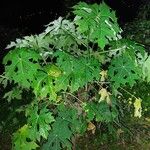
Cnidoscolus aconitifolius
Tree-spinach · Treadsoftly · Cabbage-star · Chaya · Spinach tree
Description
Source: leafsnapCnidoscolus aconitifolius, commonly known as chaya or tree spinach, is a perennial shrub in the Euphorbiaceae family. Native to Mexico's Yucatan Peninsula and Central America, it has spread throughout the Caribbean and other tropical regions. The plant can grow up to 6 meters tall and features large, dark green leaves resembling spinach. Chaya is renowned for its high nutritional value, containing vitamins A, C, and E, as well as calcium, iron, and protein. It also boasts antioxidants that help protect against free radicals in the body. For centuries, chaya has been used in traditional medicine for various health benefits, such as treating diabetes and high blood pressure. However, it is important to note that chaya should be cooked before consumption, as it possesses toxic properties when raw. Propagation of chaya can be achieved through stem cuttings or seeds, but it requires well-drained soil and ample sunlight exposure. The plant is also drought-tolerant, making it an ideal crop for arid regions. Overall, Cnidoscolus aconitifolius, or chaya, is a significant crop due to its nutritional and medicinal properties, playing a crucial role in traditional medicine practices in many tropical regions around the world today.
Care Guide
💧 Water Every 7 days
Treadsoftly thrives in tropical environments with high humidity and constant moisture. It prefers consistently moist soil and should be watered weekly. When growing this plant outdoors, take natural rainfall into account, particularly during the growing season, as this may reduce the need for additional watering.
☀️ Light Partial sun
Treadsoftly comes from habitats like forest understories or shaded rocky areas. It prefers partial sunlight but can tolerate full sun when necessary. This flexibility lets it thrive under a range of sunlight conditions.
🌡️ Temperature 20–37.8°C
Treadsoftly prefers moderate temperatures, similar to what most people find comfortable. It does best in conditions that are neither very hot nor very cold. The primary concern with high temperatures is the chance of sunburn, so providing some shade in summer is recommended to avoid excessive heat. When temperatures fall, Treadsoftly goes dormant. If continuous growth is desired, higher temperatures must be maintained during winter. Frost can damage the plant and should be avoided.
What is Treadsoftly?
Treadsoftly, scientifically known as Cnidoscolus aconitifolius, is a plant recognized for its distinctive characteristics and uses. However, specific details such as its essential features, symptoms it might cause or treat, and additional noteworthy information were not provided in the data received.
💨 Humidity
🪴 Soil 5-7
🌱 Fertilizer
To maximize yield, Treadsoftly benefits from regular applications of a balanced fertilizer, especially one high in nitrogen. Apply fertilizer before planting, at planting, and when seedlings are 2 inches tall. Adding compost or manure also supplies nutrients continuously. Insufficient soil nutrients cause underdeveloped leaves and stems, poor flavor, thin stems, and possibly a bitter taste.
🪴 Pot & Repot Every 12 months
✂️ Pruning
Treadsoftly is characterized by its tender, stinging hairs and lobed leaves. To maintain its health and shape, it should be pruned from early to late winter. During this time, remove any dead branches and carefully shape the plant to manage its size. This not only promotes new growth but also enhances air circulation, helping to minimize pests. Be sure to use clean, sharp tools to prevent the spread of disease.
🌿 Propagating
🐛 Diseases & pets
☠️ Toxicity
Characteristics
- Plant Type
- Tree, Shrub
- Life Cycle
- Perennial
- Genus
- Cnidoscolus
- Family
- Euphorbiaceae
- Hardiness Zone
- 9-11
- Mature Height
- 2.01 m
- Mature Spread
- 2.13 m to 3.96 m
- Leaf Color
- Green
- Leaf Type
- Evergreen
- Flower Color
- White
- Flower Size
- 0.51 cm to 1.02 cm
- Bloom Time
- All year round
- Planting Time
- Spring, Summer
- Harvest Time
- All year round
- Native Area
- El Salvador, Honduras, Nicaragua, Belize