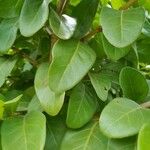
Coccoloba diversifolia
Pigeon-plum · Snailseed · Tie-tongue · Dove-plum · Barbadoes grape-tree
Description
Source: leafsnapCoccoloba diversifolia, commonly known as the pigeon plum or dove plum, is a tropical evergreen tree in the family Polygonaceae. Native to Central and South America, it thrives in diverse habitats such as coastal forests, mangroves, and savannas. This tree can grow up to 15 meters tall and features a dense crown of glossy green, oval-shaped leaves with pointed tips, arranged alternately on the branches. The pigeon plum blooms with small white flowers grouped in clusters from late spring through summer. These flowers are followed by small red or purple fruits that resemble plums and have a sweet taste when ripe. Birds, including pigeons, are attracted to these fruits, hence the common name "pigeon plum." This versatile tree has various uses, including medicinal applications. Its bark is traditionally used to treat ailments such as diarrhea, fever, and skin infections. The wood is valued for furniture making, and the fruit can be enjoyed fresh or made into jams. Overall, the pigeon plum is notable not only for its ornamental appeal, owing to its attractive foliage, but also for its practical uses. This makes it an important plant species in the tropical regions where it naturally grows.
Care Guide
💧 Water Every 7 days
Pigeon plum thrives in coastal and inland forests, where there is a balanced level of moisture. It shows moderate resistance to drought conditions. Water the pigeon plum every two weeks. When grown outdoors, it benefits from sea spray, which enhances leaf health and replicates the humidity of its native environment.
☀️ Light Full sun
The pigeon plum usually does best with abundant sunlight but can also grow well with moderate light. Although native to sunny habitats, it can adapt to places with reduced sun exposure. Both too little and too much light can affect its healthy growth.
What are the sunlight requirements for pigeon plum plants?
Pigeon plum plants thrive best under full sunlight, requiring more than 6 hours of sunlight daily, but can still grow well in partial sun, receiving about 3-6 hours of sunlight. It's essential to observe how sunlight moves through your garden and choose spots that offer a good balance of light and shade to ensure the plants' well-being. Originally from environments with a lot of sun, pigeon plums have adapted to less sunny spots, although too little or too much light might impact their health negatively.
How can artificial lighting be used for pigeon plum plants indoors?
For indoor pigeon plum plants, adequate lighting is crucial, especially when natural sunlight is insufficient, like during winter or in darker spaces. Artificial lighting is a valuable alternative, promoting healthier, more robust growth. LED lights are preferred for their customizability to meet the specific light wavelength needs of plants. Full sun plants require 30-50W/sq ft, partial sun plants need 20-30W/sq ft, and full shade plants need 10-20W/sq ft of artificial light. The light source should be placed 12-36 inches above the plant to mimic sunlight and kept on for 8-12 hours daily, resembling the natural daylight duration for most plant species.
What are the symptoms of insufficient lighting in pigeon plum plants?
Pigeon plum plants exhibit several symptoms when exposed to insufficient lighting, including small and fewer leaves, leggy or sparse growth, faster leaf drop, and slower or halted new growth. New leaves might appear lighter in color, indicating a lack of chlorophyll and essential nutrients. Chlorosis, or yellowing of the leaves, can occur, as well as sunscald, leaf curling, wilting, and leaf scorching, which result from too much sunlight. These symptoms highlight the plant's struggle with inappropriate lighting conditions.
How can lighting issues be managed for pigeon plum plants?
To manage lighting issues for pigeon plum plants, gradually increase their exposure to sunlight or artificial light. For indoor plants, moving them to a sunnier spot or using artificial lights for at least 8 hours daily can help. Outdoors, plants should be gradually moved to sunnier locations to avoid shock. If obstructions block sunlight, consider pruning or relocating the plant. Note that although parts of the plant affected by low light may not recover, new growth will be healthy with improved light exposure.
🌡️ Temperature 20–35°C
Pigeon plum originates from a climate where temperatures typically range from 68 to 95 °F (20 to 35 ℃). It prefers these moderate temperatures, so try to maintain similar warmth year-round and adjust if extreme seasonal changes occur.
What is the preferred temperature range for pigeon plum plants?
Pigeon plum plants thrive in environments where the temperature generally ranges between 68 to 95 °F (20 to 35 °C). These moderate temperatures are ideal, and it is suggested to maintain a similar warmth throughout the year. Adjustments should be made to accommodate for extreme seasonal changes to ensure the plant's well-being.
How does pigeon plum react to colder temperatures?
Pigeon plum shows a moderate tolerance to lower temperatures and generally does not require any special care when the temperature remains above 0°C. However, if temperatures are expected to drop below 0°C, it is necessary to take temporary measures to protect the plant from the cold. Wrapping the plant with plastic film, fabric, or other suitable materials can provide adequate protection until temperatures rise again, at which point these protective measures should be promptly removed.
What are the symptoms of pigeon plum being affected by low temperature?
When exposed to low temperatures, especially below -5°C, pigeon plum's leaves may start to droop. While the plant can recover from mild exposure, severe cases can cause the leaves to wilt and eventually fall off. To manage frost damage, trimming off the frost-damaged parts is recommended. Additionally, wrapping the plant with non-woven fabric or cloth and constructing a wind barrier for future cold events can help protect it from cold winds.
How does high temperature affect pigeon plum?
Pigeon plum should ideally be kept below 35°C during summer. Temperatures exceeding 41°C can lead to lighter leaf colors, dry and withered leaf tips, leaf curling, and increased susceptibility to sunburn. Managing high temperature stress involves trimming away sunburned and dried-up parts. Moving the plant to a shaded location during midday and afternoon or using a shade cloth helps protect it from sun exposure. Additionally, watering the plant in the morning and evening to maintain soil moisture is beneficial.
💨 Humidity
🪴 Soil 6-7
🌱 Fertilizer
Fertilize your Pigeon plum in early spring to encourage healthy growth. Regular feeding boosts overall health, leading to vigorous growth, increased resilience to harsh conditions, and improved resistance to pests and diseases. Keep a consistent fertilization schedule for your Pigeon plum to maintain vibrant, deeply colored foliage and a lush appearance.
🪴 Pot & Repot Every 12 months
✂️ Pruning
The pigeon plum features a variety of leaf shapes and appealing foliage. To maintain its health and encourage new growth, it is best to prune the tree from early to late winter. Focus on removing dead or crowded branches to enhance its structure. Be sure to use clean tools and avoid cutting too much. For the best results, consult reliable horticultural guides for care tips.
🌿 Propagating
🐛 Diseases & pets
☠️ Toxicity
Characteristics
- Plant Type
- Tree, Shrub
- Life Cycle
- Perennial
- Genus
- Coccoloba
- Family
- Polygonaceae
- Hardiness Zone
- 9-10
- Mature Height
- 6.1 m to 12.19 m
- Mature Spread
- 6.1 m to 10.36 m
- Leaf Color
- Green
- Leaf Type
- Evergreen
- Flower Color
- White
- Flower Size
- 2.54 cm
- Bloom Time
- Mid spring, Late spring, Early summer
- Planting Time
- Spring, Summer, Autumn
- Harvest Time
- Mid summer, Late summer, Early fall
- Native Area
- Bahamas, Belize, Cuba, Haiti, Mexico, Honduras, Guatemala, Venezuela, Dominican Republic, Jamaica