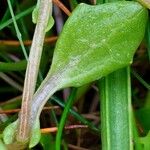
Cochlearia anglica
English Scurvygrass · Long-Leaved Scurvy-Grass · English scurvy grass · Long-leaved scurvygrass
Description
Source: leafsnapCochlearia anglica is a species of flowering plant in the family Brassicaceae known by the common names English scurvygrass and long-leaved scurvy grass. It is a plant of the coastlines of Europe, especially the British Isles. It is edible, and as its name suggests, it is rich in vitamin C. It has spade-shaped leaves and white flowers.
Care Guide
💧 Water
English scurvy grass thrives in coastal habitats and prefers moist, salty conditions. While it can withstand drought, it does best in consistently damp soil, needing to be watered weekly. As an herbaceous perennial, it benefits from natural rainfall during its growing season, which helps its foliage remain lush and green.
☀️ Light Partial sun
English scurvy grass comes from habitats such as forest understories or rocky spots with natural shade. It prefers partial sunlight, though it can withstand full sun when required. This flexibility lets it prosper under a variety of sunlight conditions.
🌡️ Temperature 5–32.2°C
English scurvy grass prefers moderate temperatures, roughly those most people find comfortable. It does best in conditions that are not excessively hot or cold. The principal concern with high temperatures is the potential for sunburn, so giving it some shade in summer is recommended to avoid overheating. When temperatures fall, English scurvy grass goes dormant. To keep it growing continuously, higher winter temperatures must be maintained. Frost can harm the plant and should be prevented.
💨 Humidity
🪴 Soil 6-7
🌱 Fertilizer
To maximize the yield and flavor of English scurvy grass, make sure there is sufficient nitrogen throughout the entire growth period, from before planting through harvest. Plants that are well watered and fertilized produce plentiful, healthy leaves and reduce bitterness. Before planting, improve the soil with organic matter such as compost or manure, ideally 2 to 8 weeks beforehand.
🪴 Pot & Repot
✂️ Pruning
To maintain the health and appearance of English scurvy grass, it's important to prune it during the spring. Focus on removing dead leaves and thinning out dense areas to improve light and air circulation. This practice encourages a more compact shape and stimulates new growth. Additionally, be sure to use clean tools to prevent the spread of disease and support vigorous growth.
🌿 Propagating
🐛 Diseases & pets
☠️ Toxicity
Characteristics
- Plant Type
- Herb
- Life Cycle
- Biennial
- Genus
- Cochlearia
- Family
- Brassicaceae
- Hardiness Zone
- 5-8
- Mature Height
- 10 cm to 40 cm
- Mature Spread
- 15 cm to 30 cm
- Leaf Color
- Green, Dark Green
- Leaf Type
- Evergreen
- Flower Color
- White
- Flower Size
- 0.51 cm to 0.76 cm
- Bloom Time
- Mid spring, Late spring, Early summer
- Planting Time
- Spring, Summer
- Harvest Time
- Summer
- Native Area
- Russia, Norway, Germany, Sweden, Denmark, Ireland, United Kingdom, Netherlands