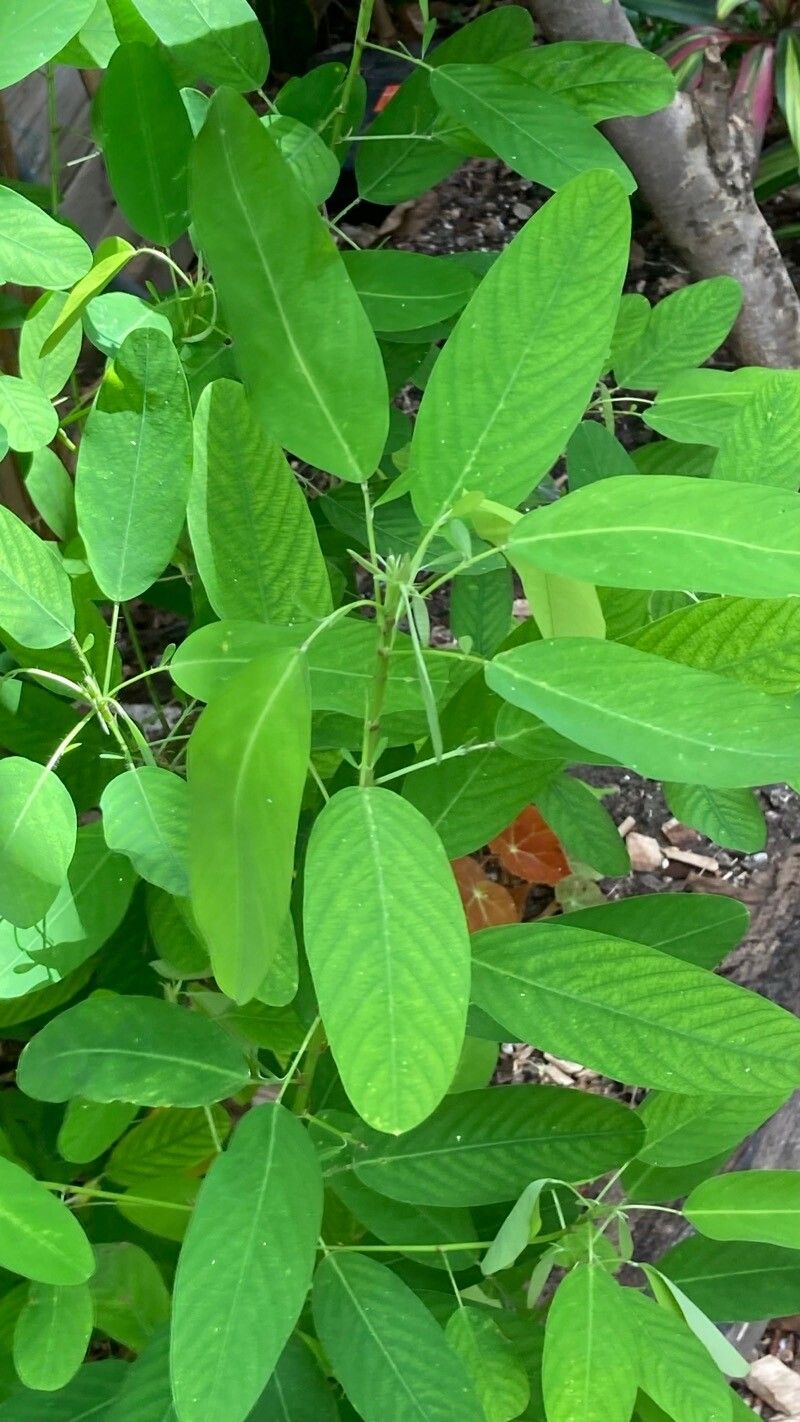
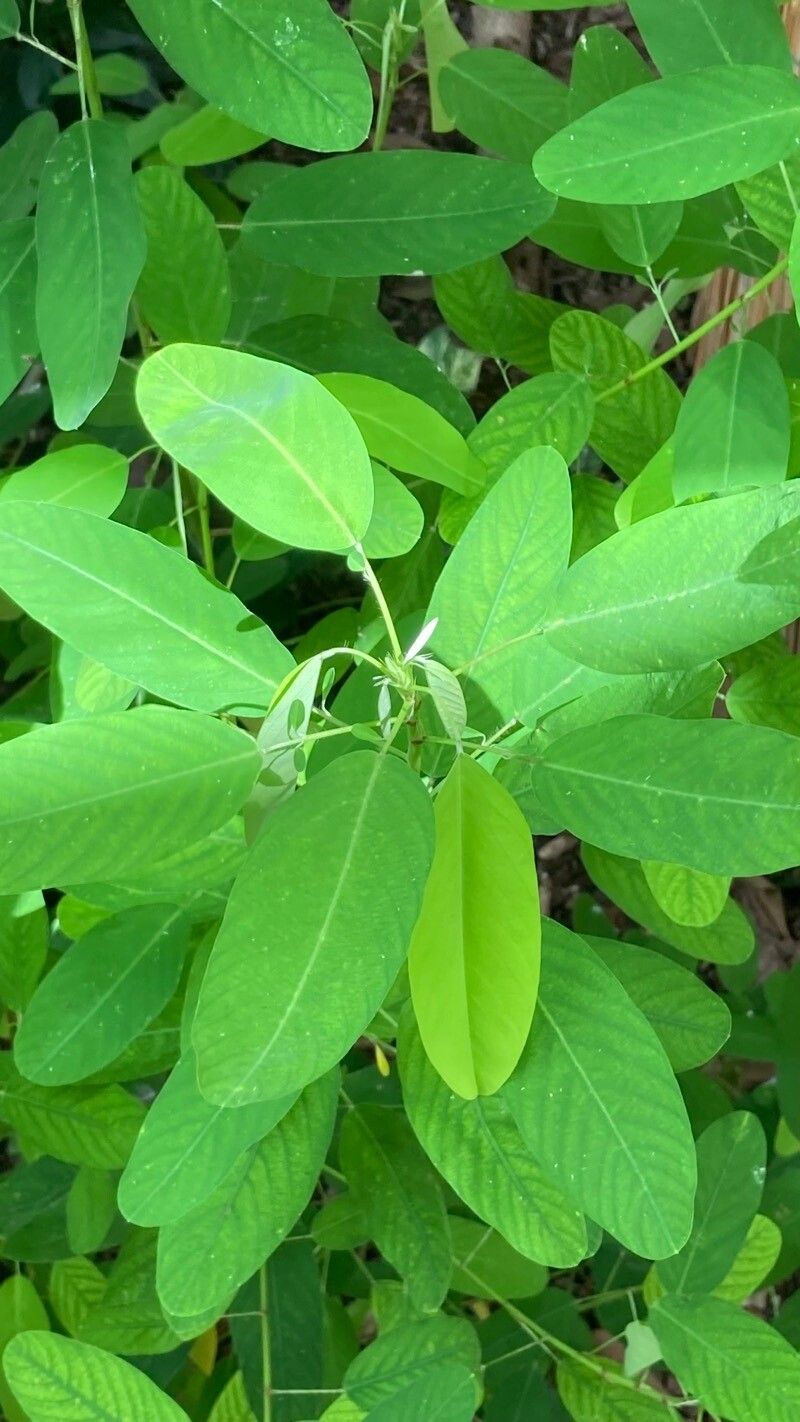
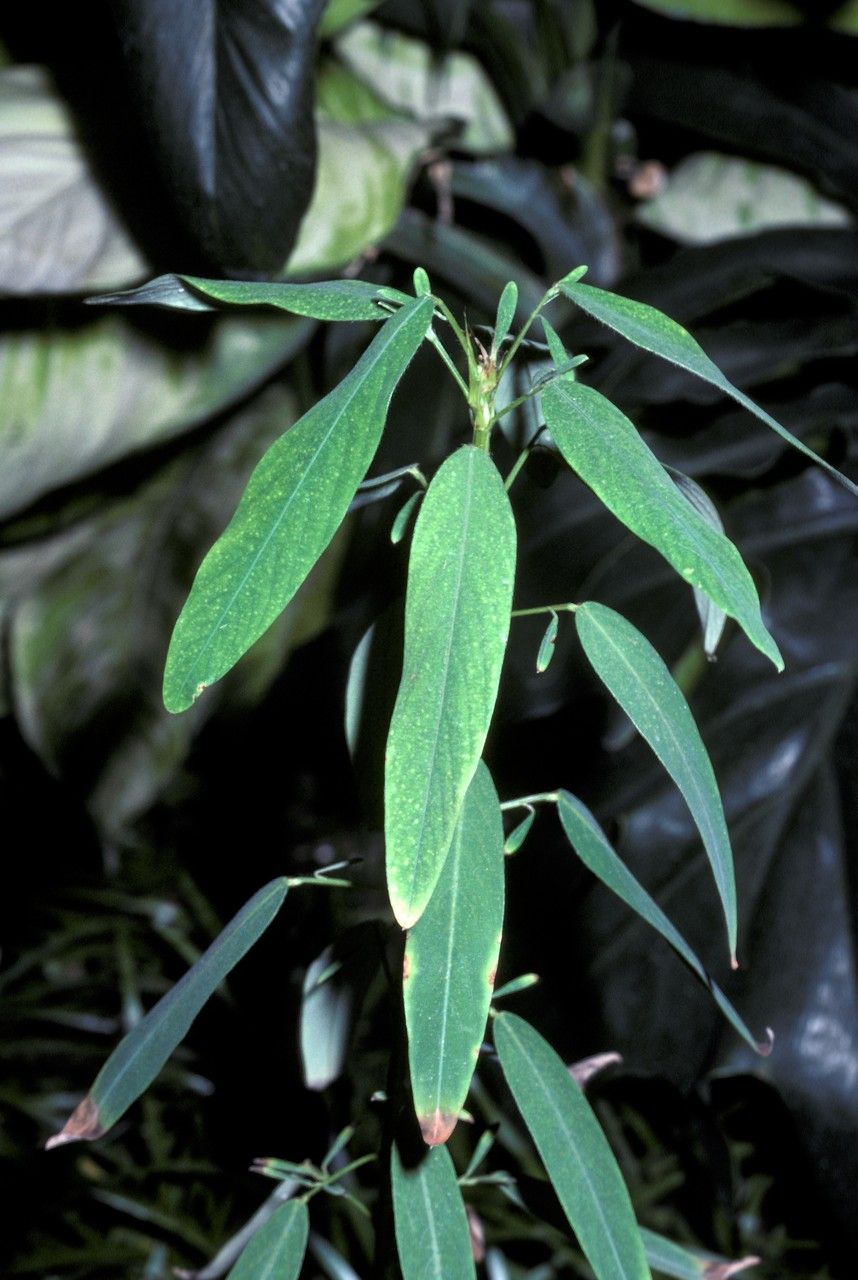
Codariocalyx motorius (though often placed in Desmodium), known as the telegraph plant, dancing plant, or semaphore plant, is a tropical Asian shrub in the Pea Family (Papillionaceae), one of a few plants capable of rapid movement; others include Mimosa pudica, the venus flytrap and Utricularia. The motion occurs in daylight hours when the temperature is above 72 degrees Fahrenheit. Many sources claim that the two leaflets move on a common axis (like the blades of a kayak paddle) even though there is no rigid connection between them.It is widely distributed throughout Bangladesh, Bhutan, Cambodia, China, India, Indonesia, Laos, Malaysia, Myanmar, Nepal, Pakistan, Sri Lanka, Taiwan, Thailand and Vietnam. It can even be found on the Society Islands, a remote chain of islands in the South Pacific. It produces small, purple flowers. This plant has small, lateral leaflets which move at speeds rapid enough to be perceivable with the naked eye. This is possibly a strategy to maximise light by tracking the sun. Each leaf is equipped with a hinge that permits it to be moved to receive more sunlight, but the weight of these leaves means the plant must expend a lot of energy in moving it. To optimise its movement, each large leaf has two small leaflets at its base. These move constantly along an elliptical path, sampling the intensity of sunlight, and directing the large leaf to the area of most intensity. Another hypothesis has been offered that the rapid movements are intended to deter potential predators. It has also been suggested that these movements may be a form of butterfly mimicry to prevent the laying of butterfly eggs on the plant's leaves.The common name is due to the rotation of the leaflets with a period of about three to five minutes; this was likened to a semaphore telegraph, a structure with adjustable paddles that could be seen from a distance, the position of which conveyed a message in semaphore, hence the common names.
The plant is described in detail in Charles Darwin's 1880 The Power of Movement in Plants.
The Telegraph plant is resistant to disease and is generally not susceptible to illnesses. In terms of care, this plant is fairly low-maintenance. When grown outdoors it needs only light watering, and larger plants typically do not require pruning. Smaller plants, however, should be pruned after they have finished blooming. Telegraph plantt is appropriate for anyone with an outdoor area, such as a garden or deck, and does not demand much gardening experience.
How to keep Codariocalyx Motorius.
Light
Telegraph plant prefers a partially shaded setting. Spots that get sunlight for part of the day are ideal. Native to environments with a mix of light and shade, it can withstand periods without light exposure. However, long stretches without sunlight or excessive sun exposure can undermine its health and growth.
Water
Native to Asia's monsoon climates, the telegraph plant thrives in environments with moderate moisture and shows resilience against drought once it is well established. To mimic its natural water cycle, it is best to water the plant every 1-2 weeks. While typically grown outdoors, the telegraph plant requires well-draining soil to prevent root rot, making a balanced watering strategy essential.
Humidity
This plant will thrive in moderate humidity, which is probably the level in your home. However, misting it a few times a week can be very beneficial. Make sure the room has good ventilation.
Temperature
The telegraph plant is native to temperate regions and performs best at temperatures of 68 to 95 °F (20 to 35 ℃). To replicate that environment, adjust the temperature during cooler seasons so it stays within that preferred range.
Fertilizer
The best time to fertilize a Telegraph plant is in early spring, as it breaks dormancy. This encourages overall growth and flower development. Fertilization improves the foliage, stems, and branches and promotes flowers that are larger, more vibrant, and longer-lasting. It helps transfer nutrients from the roots to the flowers and enhances the plant's health and resistance to disease.
Pruning
To improve the health and appearance of the telegraph plant, prune it in late spring. This involves removing any dead or weak stems to encourage better airflow and stimulate new growth. When trimming, be careful with elongated branches to maintain the desired shape of the plant. Avoid heavy pruning during periods of active growth, as this can stress the plant. By doing so, you enhance its health and flowering potential, while reducing the risk of disease and pests. Regular maintenance will ensure the plant retains a strong and attractive appearance.
Pot & Repot
The Telegraph plant should be repotted every 2-3 years, ideally in the spring. When repotting, use a pot that is one size larger than the current one. After repotting, make sure to give the plant bright, indirect light and keep the soil consistently moist to help it recover and promote healthy growth.
Botanical profile.
- Plant Type
- Shrub
- Life Cycle
- Perennial
- Genus
- Codariocalyx
- Family
- Fabaceae
- Hardiness Zone
- 10
- Mature Height
- 1.22 m
- Mature Spread
- 0.49 m to 1.52 m
- Leaf Color
- Green
- Leaf Type
- Evergreen
- Flower Color
- Purple, Lavender
- Flower Size
- 2.54 cm
- Bloom Time
- Summer, Early fall, Mid fall
- Planting Time
- Spring, Summer, Autumn, Winter
- Harvest Time
- Late summer, Fall, Early winter
- Native Area
- Nepal, Sri Lanka, India, Malaysia, Philippines, Bangladesh, Pakistan, Laos, Brunei, China, Indonesia, Cambodia, Vietnam, Myanmar, Bhutan, Thailand
Other names.
Reader questions.
What are the sunlight requirements for a Telegraph plant?
The Telegraph plant (Codariocalyx motorius) thrives best under partial sunlight, requiring about 3-6 hours of sunlight per day. It is essential to observe the movement of sunlight in your garden to ensure that your plant receives the ideal balance of light and shade, which contributes significantly to its health and happiness. In cooler weather, the Telegraph plant can handle full sunlight, but it's crucial to provide a partially shaded environment for optimal growth.
What is the native environment of the Telegraph plant?
The Telegraph plant, scientifically known as Codariocalyx motorius, is native to temperate environments. It thrives in a temperature range of 68 to 95 °F (20 to 35 °C), indicating its preference for warmer climates. To ensure the plant's health, especially during cooler seasons, it's important to adjust the environment to maintain its preferred temperature range. This may involve bringing outdoor-grown Telegraph plants indoors during the autumn to keep them away from cold temperatures and ensuring they have access to bright light, while also keeping them at a safe distance from heaters to avoid excessive dryness. Maintaining temperatures above 20°C during winter is beneficial, as colder conditions can be harmful to the plant.
Can artificial lighting be used for Telegraph plants, and how?
Yes, artificial lighting can be used for Telegraph plants, especially when natural sunlight is insufficient, like during winter or in less sunny indoor spaces. It's recommended to utilize artificial lights such as LED lights, which can be customized to offer specific wavelengths needed for the plant's growth. For indoor plants, the amount of artificial light required varies by plant type: full sun plants need 30-50W/sq ft, partial sun plants 20-30W/sq ft, and full shade plants 10-20W/sq ft. The light source should be placed 12-36 inches above the plant to mimic natural sunlight and be kept on for 8-12 hours per day, depending on the plant species.
How does low temperature affect the Telegraph plant and what are the solutions?
The Telegraph plant prefers warm temperatures and doesn't tolerate low temperatures well, thriving best when the temperature is above 20°C. During winter, it should be kept above 5°C, as temperatures below this can lead to color lightening in the leaves. Exposure to frost or temperatures below 1°C can cause the leaves to gradually turn brown or black, alongside symptoms like wilting and drooping. To address frost damage, trim off the frost-damaged parts and move the plant immediately indoors to a warm environment. Placing it near a south-facing window ensures ample sunlight, while avoiding direct placement near heaters or air conditioning vents helps prevent excessive dryness in the air.
What are the common symptoms of incorrect lighting in Telegraph plants?
Common symptoms of incorrect lighting for Telegraph plants include smaller-sized new leaves, leggy or sparse growth, faster leaf drop, slower or no new growth, lighter-colored new leaves, chlorosis, sunscald, leaf curling, wilting, and leaf scorching. These symptoms highlight the plant's struggle with either too little or too much light, affecting its growth, leaf production, and overall health. New leaves might show irregular color patterns or become pale, indicating a lack of chlorophyll and essential nutrients, while overexposure to intense sunlight can cause leaf damage and increase water loss.
What should be done when the Telegraph plant is exposed to high temperatures?
During the summer, it's crucial to keep the Telegraph plant below 35°C to prevent heat stress. If temperatures exceed 41°C, the leaves may lighten in color and the plant becomes more susceptible to sunburn. In such cases, trimming away the sunburned and dried-up parts is recommended. To mitigate further damage, moving the plant to a shaded location, particularly away from the midday and afternoon sun, can help. Providing adequate watering in the morning and evening helps maintain soil moisture, which is vital for the plant's well-being during high-temperature periods.
How can I manage and recover a Telegraph plant suffering from incorrect lighting?
To manage and help a Telegraph plant recover from incorrect lighting, gradually introduce it to more sunlight or improve lighting conditions. For plants that are large or difficult to move, increase sunlight exposure by shifting them to sunnier spots weekly until they receive 3-6 hours of sunlight per day or use artificial lighting like desk lamps or plant grow lights for at least 8 hours daily. For outdoor plants, avoid sudden changes in light intensity to prevent sunburn. If light obstruction is an issue, prune obstructive branches or consider transplanting smaller plants to a location with ample sunlight and good drainage during their dormant period. While parts of the plant that have suffered might not completely recover, new growth should be healthy with improved light conditions.