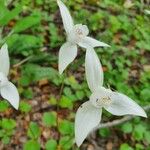
Codonorchis lessonii
Little dove orchid · Palomita (Little Dove) 0rchid
Description
Source: wikipedia (CC BY-SA)Codonorchis lessonii is a species of orchid. This species is native to Chile and Argentina. In Chile, it is found between the Maule and Magallanes regions. Its common names in English include Palomita Orchid and Dog Orchid. In Central-South Chile, this species engages in mycorrhizal symbiosis with fungi from the families Ceratobasidiaceae and Tulasnellaceae.
Care Guide
💧 Water
Codonorchis lessonii thrives in conditions with adequate moisture but can tolerate some drought. During the summer, water the plant weekly, and in the fall and winter, water it every 10 days. To maintain humidity, especially in dry conditions, mist the plant regularly. Use water with a neutral pH. You can neutralize tap or rainwater by storing it, which allows dissolved substances to be released.
☀️ Light Partial sun
Dog orchid naturally occurs in habitats like forest understories and rocky areas, where it receives natural shade. It prefers partial sun but can tolerate full sun or full shade, showing its versatile and hardy nature.
🌡️ Temperature 15–35°C
The Dog orchid can tolerate a wide range of temperatures, but its distribution may still be constrained by different combinations of moisture and heat. It grows best in warm summer conditions with sufficient rainfall or watering. Extended stretches of cloudy, rainy weather, as well as prolonged high temperatures, can raise the risk of the Dog orchid dying. In winter, protecting it from cold can increase the plant's chances of survival.
What is Codonorchis lessonii?
Codonorchis lessonii, also known by its botanical name as Codonorchis lessonii, refers to a specific species of plant. Unfortunately, there is no detailed information provided about its essentials, content, and additional aspects or any symptoms related to it.
💨 Humidity
🪴 Soil 6-7
🌱 Fertilizer
The best time to fertilize a Dog orchid is in early spring, as it comes out of dormancy and starts active growth. Fertilization supplies essential nutrients for healthy development. Although the Dog orchid has fairly low fertilizer needs, feeding it annually can improve its survival and encourage better, longer-lasting flowers.
🪴 Pot & Repot
✂️ Pruning
Codonorchis lessonii showcases elegant flowers and lush foliage. To promote growth and more blooms, prune in early spring by trimming dead stems and overgrowth. Remove old flowers to encourage additional blooming. Make clean cuts and avoid heavy pruning to minimize disturbance, enhancing the plant's beauty and vitality.
🌿 Propagating
🐛 Diseases & pets
☠️ Toxicity
Characteristics
- Plant Type
- Herb
- Life Cycle
- Perennial
- Genus
- Codonorchis
- Family
- Orchidaceae
- Hardiness Zone
- 7-10
- Mature Height
- 15 cm to 30 cm
- Mature Spread
- 10 cm to 20 cm
- Leaf Color
- Dark Green
- Leaf Type
- Evergreen
- Flower Color
- White
- Flower Size
- 3.05 cm to 5.08 cm
- Bloom Time
- Early spring, Mid spring
- Planting Time
- Spring, Summer
- Harvest Time
- Late spring, Early summer