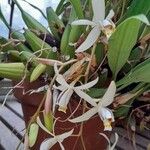
Coelogyne viscosa
Description
Source: leafsnapCoelogyne viscosa is a species of orchid. Media related to Coelogyne viscosa at Wikimedia Commons
Care Guide
💧 Water Twice per week
The Sticky Coelogyne thrives in humid environments where it requires consistent moisture and can tolerate brief periods of dryness. To care for this plant, water it twice a week, making sure the soil remains moist but not waterlogged. Regular misting helps mimic its native rainforest climate, promoting optimal health for this indoor epiphyte.
What do I do if I give too much or too little water to my Sticky coelogyne?
When a Sticky coelogyne is overwatered, the leaves become limp and wrinkled, turn yellow or decay, and the overall health of the plant suffers. Some owners mistakenly believe that the limp and shriveled leaves indicate a lack of water, so they continue to add more. However, this only worsens the problem. To determine what's happening, it's important to inspect the roots. Healthy roots are silvery green, green, or white and feel firm. If the plant has been overwatered, the roots will appear mushy, limp, and brown or black. To rescue an overwatered Sticky coelogyne, remove any rotted roots using a sterile knife or garden shears, and repot the plant in new growing medium. It's essential to avoid overwatering in the first place, as root rot may be irreversible and result in the plant's death. Therefore, it's advisable to be conservative with water to prevent this issue. The symptoms of underwatering and overwatering in Sticky coelogyne are similar, making it challenging to differentiate between the two. Check the moisture level of the growing medium using your finger or a moisture meter to gauge the amount of water retained. You may need to increase the frequency of watering to address underwatering. Once again, examining the roots is crucial to understanding the situation. Underwatered roots appear crisp, brown, and brittle, while healthy roots are pliable and green. If the plant still has some healthy roots remaining, it can be revived by trimming off any dried or dead root pieces and repotting it. Thoroughly water the plant after repotting. Within a week or two, the shriveled and limp leaves should start firming up and appearing healthy. If some leaves are too damaged to recover, they can be removed to make way for new growth.
How often should I water my Sticky coelogyne?
No matter what type of medium you use, water your Sticky coelogyne when the mix is mostly dry but not completely. How often you water will depend on the environment, but typically in summer it will be about once or twice a week and as infrequently as once every 2 weeks in winter.
How should you water Sticky coelogyne?
Sticky coelogyne is a type of plant that doesn't grow in soil like most plants. To help it grow well, you need to choose the right growing medium. Whatever you use, make sure the container has good drainage with plenty of holes. Sticky coelogyne pots are designed to hold a chunky potting mix that allows for ventilation around the roots. One popular option is bark, which is sourced from fir trees and drains well. However, bark dries out quickly, so it requires more frequent watering. Another commonly used medium is sphagnum moss, which is lightweight and inexpensive. Nursery-grown Sticky coelogyne plants are often sold in moss because it requires less watering. However, moss can hold too much water and cause root rot if not carefully managed. If your plant is already in moss, be careful with watering and try to avoid overwatering. It's best to water from below by placing the pot in water for 10-15 minutes and letting the roots absorb moisture. Make sure to drain thoroughly before putting the plant back in its normal spot, as it doesn't like sitting in water.
☀️ Light Partial sun
Sticky coelogyne prefers a moderate amount of sunlight but can tolerate locations with full sun or full shade. Coming from areas where light intensity varies, it copes well with shifting light conditions. Too much or too little light can affect its health, potentially stopping its growth entirely or causing harm.
What are the sunlight requirements for Sticky coelogyne?
Sticky coelogyne is adaptable to varying light conditions, thriving in both partial sun (3-6 hours of sunlight) and full sun or full shade (above 6 hours of sunlight). It's important to monitor the movement of sunlight in your garden to ensure your plants are in spots with an ideal balance of light and shade. This balance is crucial for their health and well-being. In situations where natural sunlight is insufficient, especially during winter or in less sunny areas, artificial lighting can be a beneficial alternative. LED lights are recommended due to their ability to provide specific wavelengths needed by plants. For optimal growth under artificial lighting, the general guideline is 30-50W/sq ft for full sun plants, 20-30W/sq ft for partial sun plants, and 10-20W/sq ft for full shade plants.
What are the symptoms of incorrect lighting for Sticky coelogyne?
Incorrect lighting can lead to several issues for Sticky coelogyne. Symptoms of light deficiency include smaller new leaves, leggy or sparse growth, faster leaf drop, slower or no new growth, and lighter-colored new leaves, indicating a lack of chlorophyll. Overexposure symptoms include chlorosis (yellowing leaves), sunscald, leaf curling, wilting, and leaf scorching. These symptoms signal that the plant's lighting environment needs adjustment to either increase or decrease exposure.
How can I adjust the lighting for my Sticky coelogyne?
Adjusting the lighting for your Sticky coelogyne involves several strategies, depending on whether the plant is indoors, outdoors, or in the ground. For indoor plants, gradually moving them to sunnier spots or using artificial light, such as keeping a lamp on for at least 8 hours daily or investing in professional grow lights, can help. For outdoor plants, it’s key to acclimate them by gradually moving them to sunnier spots each week to avoid shock. When dealing with ground plants, reducing obstructions by pruning trees or transplanting the plant to a sunnier location can be beneficial. Remember, sudden changes in light exposure can harm your plant, so gradual adjustment is the goal. Parts of the plant damaged by incorrect sunlight might not recover, but new growth should be healthy with proper light.
🌡️ Temperature 20–37.8°C
Sticky coelogyne does well in warm conditions. It prefers moderately high temperatures but not extreme heat and humidity. Sunlight helps warm the plant and encourages flowering. However, prolonged direct sun in summer can cause sunburn, so the amount of light it gets should be controlled during that season. The plant typically does not tolerate cold well, so it needs proper protection and warmer temperatures in winter to avoid freezing.
💨 Humidity
🪴 Soil 6-7
🌱 Fertilizer
Proper feeding is vital for Sticky coelogyne's health and appearance. Fertilize Sticky coelogyne in the summer, repeating the treatment monthly throughout the season. The nutrients provide energy for growth and help maintain the plant's components. Fertilization improves Sticky coelogyne's floral display, ensuring the best blooms.
Why must I fertilize my Sticky coelogyne?
Fertilization is important for the Sticky coelogyne and other plants because it provides essential nutrients for both above and below-ground growth. While the overall fertilization needs of a Sticky coelogyne are relatively low, annual fertilization can greatly benefit the plant. It can help keep the plant alive and also improve flower quality and longevity. Therefore, those who want their Sticky coelogyne to thrive should remember to fertilize annually.
When should I fertilize my Sticky coelogyne?
The best time to fertilize a Sticky coelogyne is in late winter to early spring. This is when the plant is transitioning from its dormant phase to a phase of active growth. Fertilizing at this time promotes healthy growth and sets the plant up for a successful season. Fertilizing in early spring is generally most beneficial, but it is also acceptable to fertilize in the fall. However, it is not recommended to fertilize during summer or winter.
When is it not a good idea to fertilize my Sticky coelogyne?
To keep your Sticky coelogyne healthy, it's best to only fertilize it in late winter and early spring. This plant doesn't need a lot of fertilizer, so one feeding per year is enough. Overfertilizing during spring, summer, and fall can cause problems, unless you missed fertilizing in the spring, in which case it's fine to fertilize in the fall. Also, avoid fertilizing during the winter when the Sticky coelogyne is dormant and not growing.
What kind of fertilizer should I use for my Sticky coelogyne?
A balanced general-purpose fertilizer with the three main plant nutrients is suitable for a Sticky coelogyne. Some nutrient blends, like higher levels of phosphorus, may be especially beneficial for stronger roots and better flowers. Applying a phosphorus-rich fertilizer is recommended for a flowering Sticky coelogyne. You can choose between granular or liquid fertilizers as long as there are enough nutrients. Additionally, using compost, manure, or similar materials can also improve the soil for your Sticky coelogyne.
How can I fertilize my Sticky coelogyne plant?
The most common way to fertilize a Sticky coelogyne is by applying a granular or pellet fertilizer to the soil around the plant. It is important to fertilize as the plant transitions from its winter dormant growth phase to a phase of active growth. In early spring, wait for shoots to emerge from the soil before applying fertilizer. Alternatively, some people prefer using liquid fertilizer, which should be diluted with water before application. Regardless of the type of fertilizer used, it is recommended to moisten the soil before, during, and after fertilization.
🪴 Pot & Repot
When repotting Sticky coelogyne, pick a pot slightly larger with good drainage, ideally a clear orchid pot. Use an orchid-specific, well-draining mix that includes bark or moss. Carefully clean the roots and cut away any that are dead or rotting. Repot after flowering, typically in spring or fall, water well, and position in bright, indirect light. Do not disturb the roots after repotting.
✂️ Pruning
Sticky coelogyne is known for its sticky texture and attractive floral spikes, requiring minimal pruning. To promote optimal growth, remove dead pseudobulbs and trim the foliage from late winter to early spring. Regular pruning encourages new growth and abundant flowering. Always sterilize your tools to prevent the spread of disease.
🌿 Propagating
🐛 Diseases & pets
☠️ Toxicity
Characteristics
- Plant Type
- Herb
- Life Cycle
- Perennial
- Genus
- Coelogyne
- Family
- Orchidaceae
- Hardiness Zone
- 10-12
- Mature Height
- 40 cm
- Mature Spread
- 20 cm to 30 cm
- Leaf Color
- Green, Blue
- Leaf Type
- Evergreen
- Flower Color
- White, Yellow
- Flower Size
- 4.06 cm
- Bloom Time
- Spring
- Planting Time
- Spring, Summer, Autumn
- Harvest Time
- Late spring, Early summer, Mid summer
- Native Area
- India, Malaysia, Indonesia, Vietnam, Myanmar, Bangladesh, Laos, Thailand, China