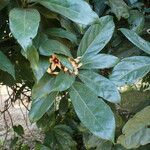
Cola nitida
Bitter cola · Gbanja kola · Kola · Ghanja kola · Kola nut
Description
Source: leafsnapCola nitida is a species of plant belonging to the family Malvaceae. It is a tree native to the rainforests of tropical West Africa. Common names include kola nut, cola, kola and bitter kola. The seeds contain caffeine and are chewed as a stimulant and used in the manufacture of soft drinks. The nuts and other parts of the tree have many uses of a ceremonial nature and in traditional medicine. The timber has multiple uses.
Care Guide
💧 Water
The gbanja cola tree, native to tropical regions, flourishes in conditions with consistent moisture and moderate humidity, though it can tolerate short dry spells. To care for this tree, water it every 2-3 weeks, allowing the soil to partially dry out between waterings. Applying mulch is beneficial for this outdoor plant, as it helps retain moisture during its active growth periods.
☀️ Light Partial sun
The gbanja cola tree does best with plentiful sunlight, reflecting its natural habitat where it grows beneath a bright, sunlit sky. A lack of light can hinder its development and overall health. Both excessive and insufficient sun exposure can be detrimental because it depends on an optimal amount of daylight.
What are the sunlight requirements for a Gbanja cola tree?
The Gbanja cola tree flourishes under full sun conditions, requiring above 6 hours of sunlight daily to thrive. It is essential to monitor how sunlight travels through your garden throughout the day to find spots that provide an ideal balance of light and shade. These conditions ensure the tree attains optimal growth and health. When cultivated indoors or in areas with inadequate natural light, artificial lighting can be a beneficial supplement. Installing artificial lights, such as LED lights, provides the necessary wavelengths of light. Depending on the plant's sun exposure needs, the intensity of artificial light should vary - full sun plants require 30-50W/sq ft, partial sun plants 20-30W/sq ft, and full shade plants 10-20W/sq ft. Moreover, the artificial light source should be placed 12-36 inches above the plant to best mimic natural sunlight conditions, with a duration ranging from 8-12 hours daily to replicate natural daylight hours adequately.
What are the symptoms of light deficiency in Gbanja cola trees?
Gbanja cola trees exhibit several symptoms when they suffer from light deficiency, especially when grown indoors or during less sunny seasons. These symptoms include the development of small and lighter-colored new leaves, indicating a lack of adequate sunlight for chlorophyll production and essential nutrients. The tree may experience leggy or sparse growth due to longer spaces between leaves or stems, giving it a stretched-out appearance. Faster leaf drop is also common as the tree sheds older leaves early to conserve resources for new growth. Additionally, the growth of the Gbanja cola tree may slow down or halt completely, entering a survival mode due to poor light conditions. Other critical symptoms are chlorosis, where leaves lose their green color, and sunscald, which damages plant tissues exposed to intense sunlight. Leaf curling and wilting are defense mechanisms against excessive sunlight, minimizing water loss and damage. Leaf scorching, characterized by brown, dry edges on leaves, signifies overexposure to sunlight, impacting photosynthesis and plant health.
How to manage light conditions for Gbanja cola trees?
Managing light conditions for Gbanja cola trees involves ensuring they receive adequate sunlight if they have been suffering from light deficiency. For indoor plants, it's advisable to gradually move them to sunnier locations, ensuring they receive at least 6 hours of direct sunlight daily, preferably through a south-facing window. If moving the plant isn't feasible, supplementing with artificial light for a minimum of 8 hours daily can be beneficial. For outdoor plants, gradually transitioning them to sunnier spots over several weeks helps avoid sunburn, while closely monitoring for the best sunlight exposure. Reducing obstructions like overhanging branches can significantly improve sunlight access. For smaller or potted plants, transplanting them during their dormant period to a location with better sunlight and drainage is recommended. Note that while parts of the plant affected by insufficient sunlight may not recover, new growth will be healthy post-adjustment.
🌡️ Temperature 20–37.8°C
The Gbanja cola tree is native to temperate regions and prefers temperatures between 68 and 100 °F (20 and 38 ℃). Its growth can be harmed by low temperatures. It is advisable to make careful adjustments to its care as the seasons change.
What is the optimal temperature range for the Gbanja cola tree?
The Gbanja cola tree, botanically known as Cola nitida, thrives in temperate regions with an optimal temperature range of 68 to 100 °F (20 to 38 °C). It loves warmth and can be harmed by cold temperatures. During winter, it's advisable to keep the tree indoors if it was grown outside, placing it near a bright window but away from heaters, ensuring the temperature stays above 20°C. Temperatures nearing 5°C can be harmful to the plant.
How should you care for a Gbanja cola tree in low temperatures?
The Gbanja cola tree prefers warm conditions and struggles with low temperatures, thriving when temperatures are above 20°C. It's critical to keep the plant above 5°C during the winter months. Exposure to temperatures below 1°C may lead to lightening of the leaves, which, after frost damage, turn brown or black. Symptoms like wilting and drooping can occur. To manage frost damage, trim off affected parts and move the plant to a warmer environment indoors, preferably near a south-facing window for sunlight, while avoiding placing it near heaters or air conditioners to prevent air dryness.
What measures should be taken for a Gbanja cola tree in high temperatures?
In high temperatures, particularly during summer, it's essential to ensure the Gbanja cola tree does not remain in conditions above 38°C. Exposure to temperatures exceeding 43°C can cause the leaves to lighten and increase the risk of sunburn. To mitigate damage, trim the sunburned and dried parts of the plant, place it in a shaded area away from direct midday and afternoon sun, and maintain soil moisture by watering in the morning and evening.
💨 Humidity
🪴 Soil 6-7
🌱 Fertilizer
Use organic fertilizer (e.g., fish emulsion, compost) rather than chemical fertilizers for Gbanja cola tree. Provide higher nitrogen and phosphorus to young plants in spring. Incorporate compost or fertilizer into the soil before or after planting. For mature plants, supplement in spring with a balanced fertilizer or one formulated for specific deficiencies. Nutrient deficiency causes small leaves, short branches, yellow or bronze foliage, acidic fruits, premature fruit drop, and splitting.
🪴 Pot & Repot
✂️ Pruning
The Gbanja cola tree features large, glossy leaves and vibrant red pods. For optimal growth, prune the tree from early to late winter. Focus on removing dead or overcrowded branches to improve air circulation and light penetration. Clean cuts encourage new growth, enhance flowering, and boost fruit production, all of which contribute to the tree's overall health and beauty.
🌿 Propagating
🐛 Diseases & pets
☠️ Toxicity
Characteristics
- Plant Type
- Tree
- Life Cycle
- Perennial
- Genus
- Cola
- Family
- Malvaceae
- Hardiness Zone
- 10-12
- Mature Height
- 11.89 m to 20.12 m
- Mature Spread
- 20.12 m
- Leaf Color
- Green
- Leaf Type
- Evergreen
- Flower Color
- White, Yellow, Green, Red
- Flower Size
- 2.03 cm
- Bloom Time
- All year round
- Planting Time
- Spring, Summer
- Harvest Time
- All year round
- Native Area
- Liberia, Ghana, Côte d'Ivoire, Senegal, Guinea, Guinea-Bissau, Gabon