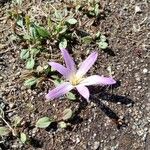
Colchicum filifolium
Care Guide
💧 Water
The false autumn crocus flourishes in environments that remain consistently moist. It prefers soil that is evenly watered and benefits from weekly irrigation. This hardy perennial's growth and flowering cycles are closely tied to water availability, emphasizing the need to maintain adequate hydration for it to thrive.
How should I water my False autumn crocus?
To properly water the False autumn crocus, it is best to use filtered water at room temperature or slightly warmer. Tap water may have harmful particles, so filtered water is safer for the plant. The False autumn crocus is accustomed to a warm environment, so cold water should be avoided to prevent shocking the plant. Additionally, watering from above can cause problems with the plant's leaves. Instead, it is recommended to thoroughly water the soil with filtered room temperature water until it is completely soaked. This method is beneficial as it hydrates the roots and aids in their growth and nutrient absorption.
What should I do if I give my False autumn crocus too much or too little water?
Overwatering is a more common issue for False autumn crocus than underwatering. When overwatered, the stems and leaves may wilt and turn yellow. Overwatering for an extended period may cause diseases like root rot, mold, and mildew that can kill the plant. Underwatering is less common but still possible, causing brittle and brown leaves. It is important to recognize signs of overwatering promptly. Diseases like root rot may become unfixable if not addressed early. Reduce watering immediately if you notice early signs of overwatering. Check the soil's drainage quality and replace it with a loose, well-draining potting mix if necessary. For underwatering, simply water more regularly until the signs subside.
How often do I need to water my False autumn crocus?
If your False autumn crocus is in a pot, the best way to determine if it needs water is to check the soil. Stick your finger into the soil and if the top two to three inches are dry, it's time to water. If you have the plant in the ground, you can use the same method. If the top few inches of soil are dry, it's time to water. In the spring and early fall, watering about once a week should suffice. However, during extremely hot weather, you may need to water more frequently, about twice a week or even more. It's worth noting that mature, well-established False autumn crocus plants can tolerate drought well.
How much water does my False autumn crocus require?
To properly water your False autumn crocus, be generous with the amount of water you provide. Wait until the top two to three inches of soil are dry before watering, and then give the plant a thorough soaking. Make sure to add enough water so that it completely saturates the soil and drains out of the pot's drainage holes. If you don't see any excess water draining, you may have underwatered the plant. However, be cautious not to let water accumulate in the soil, as this can harm the plant. On the other hand, if water isn't draining properly, it could indicate poorly draining soil, which isn't good for the plant's health. If the plant is outside, around 1 inch of rain per week should be enough.
How should I water my False autumn crocus as it grows?
The water needs of the False autumn crocus can vary depending on its growth stages. In the early years or when it has just been transplanted, it requires more water. During these stages, the plant focuses on developing new roots to support future growth, so they need extra moisture. As the False autumn crocus becomes more mature, it will require less water. Another period where it may need more water is during the bloom period because flower development requires a significant amount of moisture.
☀️ Light Full sun
The false autumn crocus does best with constant light throughout the day. Providing it with reduced light can hinder its growth and vigor. It naturally grows in open locations with full sun exposure, and a lack of light can cause weak flowering.
What are the sunlight requirements for False autumn crocus?
The False autumn crocus requires more than 6 hours of sunlight daily to thrive. It's crucial to observe the movement of sunlight through your garden, selecting spots that offer an optimal mix of light and shade. This balance ensures the plants' growth and health, as the False autumn crocus flourishes under continuous light exposure. Its natural habitat favors open areas where it can receive maximum sunlight, and insufficient light exposure can severely affect its growth and flowering.
How does artificial lighting benefit indoor False autumn crocus plants?
For indoor False autumn crocus plants, which demand adequate lighting, artificial lights serve as a crucial solution when natural sunlight is insufficient, particularly during winter or in less sunny spaces. These lights promote faster, healthier growth. Opting for LED lights, which can be customized to provide specific wavelengths needed by your plants, is advisable. The amount of artificial light required varies based on the type of plant: 30-50W/sq ft for full sun plants, 20-30W/sq ft for partial sun, and 10-20W/sq ft for full shade. Placing lights 12-36 inches above the plants and mimicking natural daylight hours, usually 8-12 hours per day, can significantly enhance their growth.
What are the common symptoms of light deficiency in False autumn crocus?
Light deficiency in False autumn crocus manifests through various symptoms. Smaller-sized new leaves might emerge, along with leggy or sparse growth, indicating a stretched-out appearance due to longer spaces between leaves or stems. Faster leaf drop can occur as the plant tries to conserve resources, leading to a halt in new growth or significantly delayed development. Leaves might display lighter colors or appear pale, a sign of insufficient chlorophyll and essential nutrients. Chlorosis, sunscald, leaf curling, wilting, and leaf scorching are also symptoms affecting plants either due to excessive sunlight, resulting in damage, or as defense mechanisms to adapt to intense light exposure.
What solutions can help manage light exposure for False autumn crocus?
Managing light exposure for False autumn crocus involves several strategies, whether for indoor, outdoor, or ground planting. Indoors, gradually relocating your plant to sunnier spots to achieve at least 6 hours of direct sunlight daily and using artificial lighting like plant grow lights can significantly help. Outdoors, acclimatizing your plants by gradually moving them to brighter locations can prevent sunburn. Reducing obstructions like pruning trees, and transplanting smaller plants to sunnier locations during their dormant period, significantly benefits their growth. It's critical to remember that areas of the plant damaged by insufficient light may not recover, but new growth will be healthy with improved light conditions.
🌡️ Temperature 10–35°C
False autumn crocus can tolerate a wide span of temperature conditions, but its distribution can still be limited by specific combinations of moisture and heat. It does best in warm summer climates with sufficient rainfall or irrigation. Long stretches of cloudy, rainy weather or prolonged high temperatures increase the chance of False autumn crocus dying. In winter, adequate protection from cold can boost the plant's survival rate.
💨 Humidity
🪴 Soil 6-7
🌱 Fertilizer
For the False autumn crocus, the main time to apply fertilizer is in early spring when the flowers are developing. The proper fertilizer promotes better blooms and helps the False autumn crocus produce attractive flowers. Fertilizing in early spring secures strong flowers during the season and supplies energy for dormant growth phases.
🪴 Pot & Repot
✂️ Pruning
False autumn crocus is a hardy perennial renowned for its lush foliage and vibrant autumn blooms. To maintain its health and appearance, prune in early spring to remove any dead leaves and encourage new growth. Be careful not to prune heavily, as this can harm the flower buds. Light pruning helps improve air circulation and sunlight penetration, reducing the risk of disease.
🌿 Propagating
🐛 Diseases & pets
☠️ Toxicity
Characteristics
- Plant Type
- Herb
- Life Cycle
- Perennial
- Genus
- Colchicum
- Family
- Colchicaceae
- Hardiness Zone
- 6-9
- Mature Height
- 10 cm
- Mature Spread
- 15 cm
- Leaf Color
- Dark Green
- Leaf Type
- Deciduous
- Flower Color
- Pink
- Flower Size
- 2.54 cm to 5.08 cm
- Bloom Time
- Late summer, Early fall
- Planting Time
- Autumn, Winter
- Harvest Time
- Mid fall, Late fall
- Native Area
- Morocco, Spain, Algeria, France