Coleus amboinicus
Cuban oregano · Mexican mint · Indian borage · Country · French thyme
Description
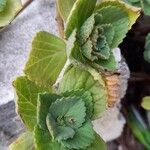
Source: leafsnapCuban Oregano (Coleus amboinicus, Plectranthus amboinicus), also known as the Mother or herbs, Mexican mint, or the Spanish thyme, is not genuine oregano. It's also not mint, borage, or thyme. It is, instead, a coleus plant species. This plant, unlike regular oregano, has a short, thick stem and somewhat mushy, serrated leaves. It is semi-succulent, which means the leaves retain some water but not as much as a succulent. The leaves range in length from two to two and a half inches and in width from one and a half to two and a half inches. The plant blooms with pink, purple, or white flowers that attract bees and butterflies from late winter to mid-spring.
💡 Plectranthus amboinicus is a widely used plant with a rich history. Older generations have many stories about it. In the past, people identified plants based on their shape and fragrance. Due to its distinctive strong aroma, this plant became known as Plectranthus amboinicus.
🌳 Although called a mint, Mexican mint goes against expectations by providing a habitat for small insects, which contrasts with the insect-repelling nature of most mint varieties. This unusual trait represents untapped potential, possibly including the use of these insects in creating biological insecticides. Its leaves, abundant in essential oils, give off a pleasant aroma and are used to enhance flavors in cooking and in perfumes. Remarkably, Mexican mint also contains Steviol glycosides similar to the well-known sweetener Stevia, making it a lesser-known alternative for producing a calorie-free sweetener appropriate for diabetics.
🎭 Joy and a positive outlook
Care Guide
💧 Water 1-2 times a week
Mexican mint, native to semi-arid regions, flourishes in dry conditions and is resistant to drought. It requires only moderate moisture, so watering once a week is usually sufficient. Commonly grown in containers, this plant needs well-draining soil to avoid waterlogging, which helps maintain its aromatic foliage.
☀️ Light Partial sun
The mexican mint prefers a balanced amount of light, flourishing with moderate sunlight while being able to tolerate stronger sun without harm. It comes from conditions of filtered light, which encourage healthy growth. However, too much or too little light can impede its development and cause it to wither.
🌡️ Temperature 20–37.8°C
The Mexican mint, native to tropical areas, thrives at temperatures between 68 and 100 °F (20 to 38 °C). In winter it should be kept no lower than 60 °F (15 °C) to prevent cold damage and no higher than 80 °F (27 °C) to avoid heat stress. In summer, it is better placed in partial shade to protect it from high temperatures.
💨 Humidity dry (<40%)
This plant prefers dry conditions, so don't mist it. However, watering it less often can also thrive in higher humidity.
🪴 Soil 6-7
🌱 Fertilizer
Mexican mint needs the most fertilizer during its active growth period, which takes place mainly in spring, summer, and early fall. Fertilization is needed to supply essential nutrients the soil may lack, supporting healthy root and stem growth and producing the attractive foliage that is a distinguishing feature of this plant.
🪴 Pot & Repot 2-3 years
When repotting Mexican mint, choose a pot 1–2 inches (2.5–5.1 cm) larger with ample drainage. Use a well-draining potting mix. Repot in spring or fall, ensuring that the root ball is slightly lower than the rim of the flower pot. Water thoroughly after repotting and place it in a warm spot with indirect sunlight.
✂️ Pruning
Mexican mint has aromatic, fleshy leaves and grows quickly. To encourage bushy growth, prune it from early to late spring. This process involves removing leggy stems and dead foliage. Make sure there is good air circulation and sunlight can reach the plant. Also, use clean tools to prevent over-pruning, which can stress the plant.
🌿 Propagating
🐛 Diseases & pets
☠️ Toxicity
Although it is safe for people to eat, Cuban oregano, like other coleus plants, is harmful to cats, dogs, and horses. It may attract your dogs, so consider growing it in a fenced-in area.
Characteristics
- Plant Type
- Herb
- Life Cycle
- Perennial
- Genus
- Coleus
- Family
- Lamiaceae
- Hardiness Zone
- 9-11
- Mature Height
- 15 cm to 30 cm
- Mature Spread
- 49 cm
- Leaf Color
- Green
- Leaf Type
- Evergreen
- Flower Color
- Lavender
- Flower Size
- 0.76 cm to 1.02 cm
- Bloom Time
- All year round
- Planting Time
- Spring, Autumn
- Harvest Time
- Mid summer, Late summer, Fall, Early winter
- Native Area
- India