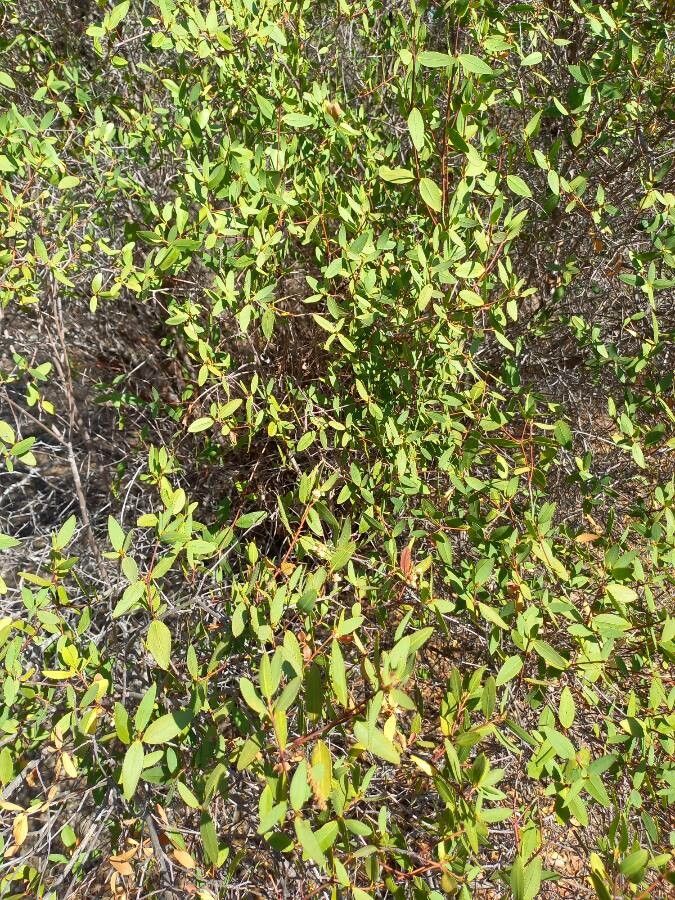
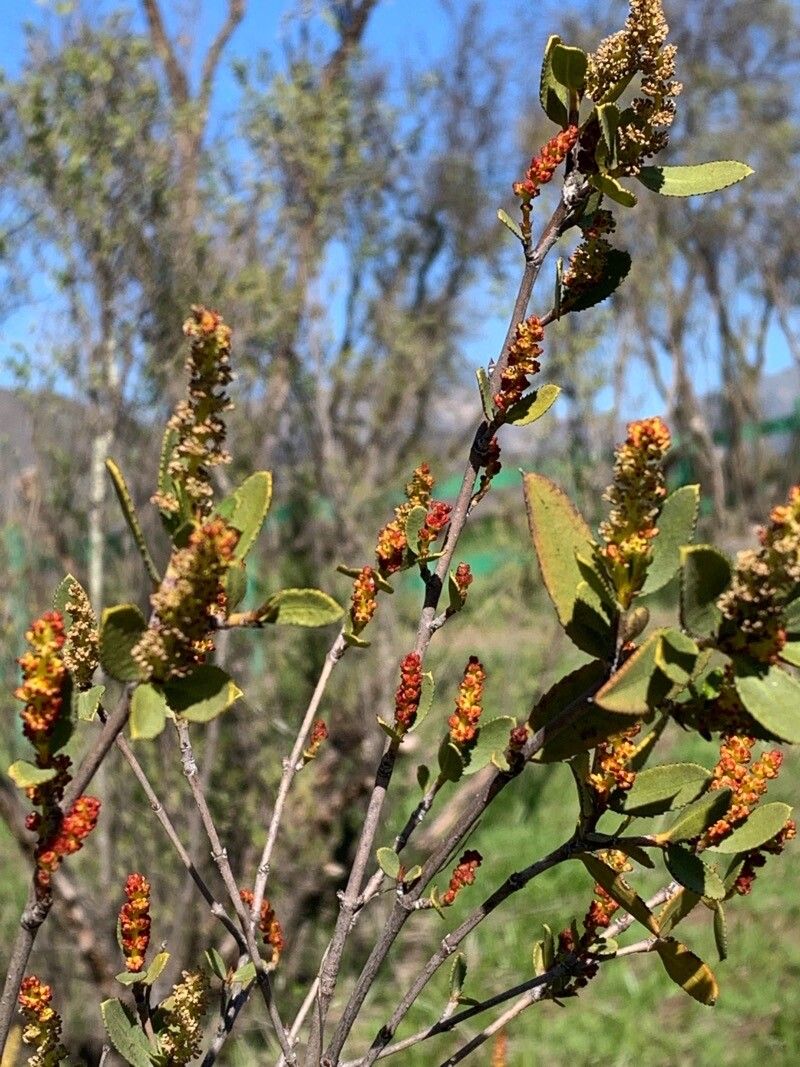
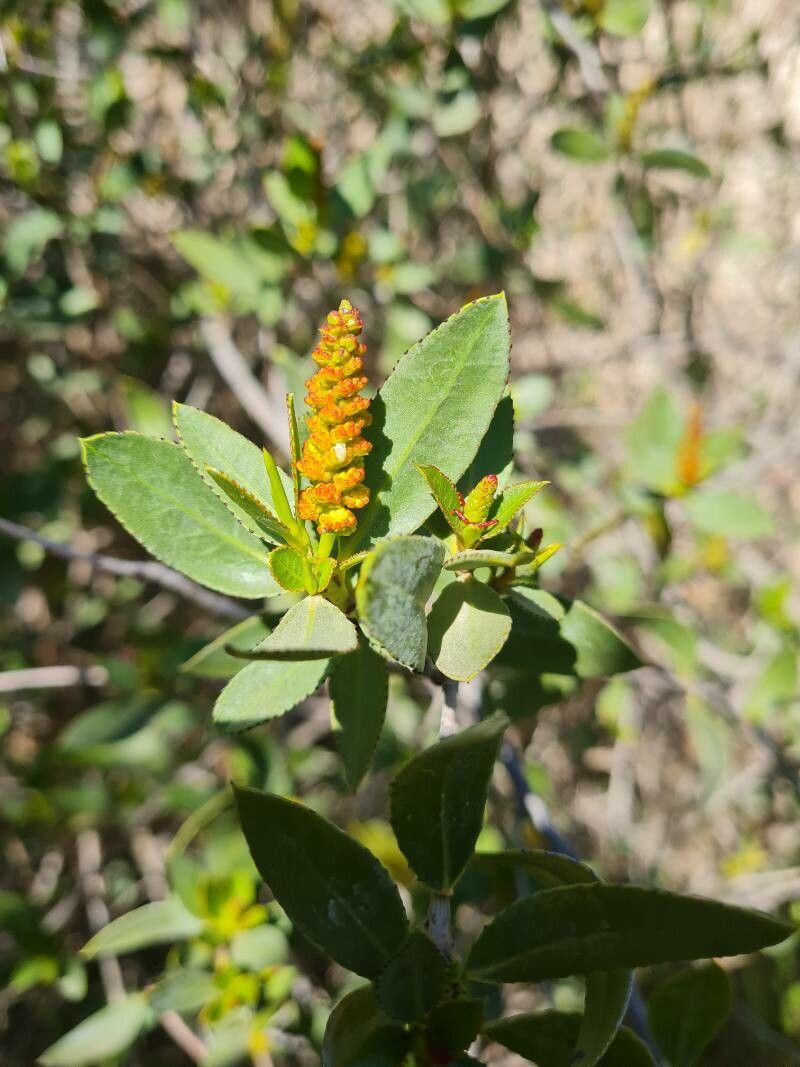
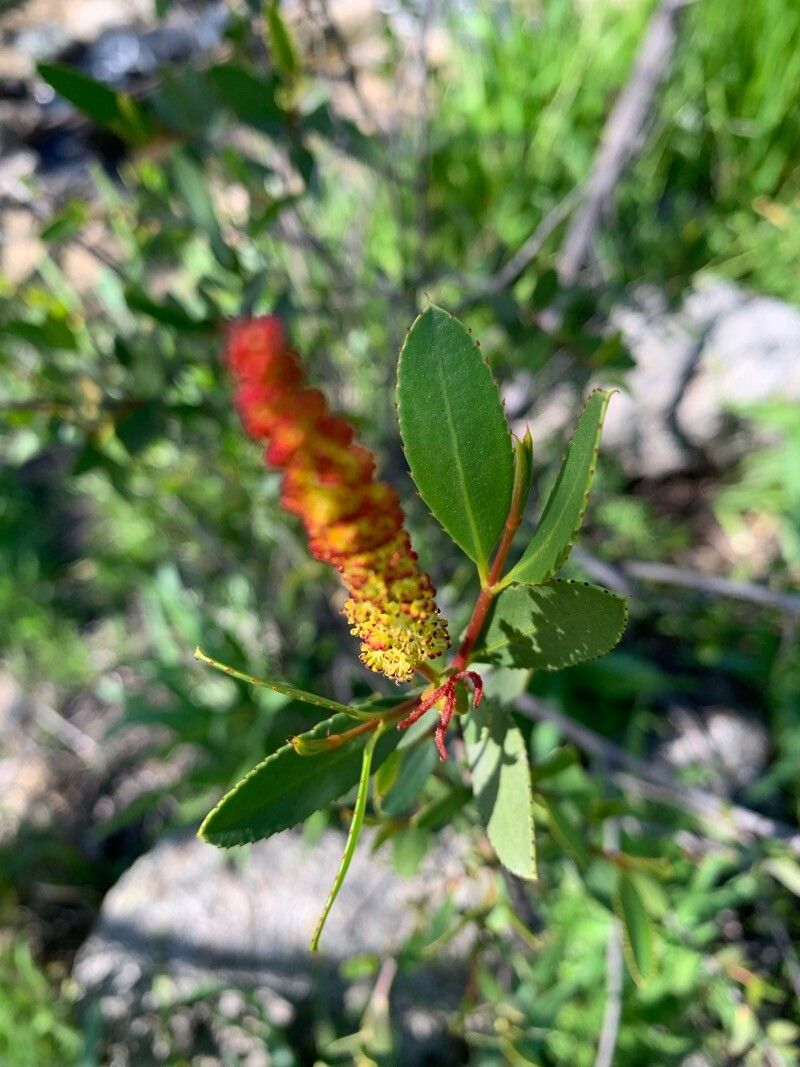
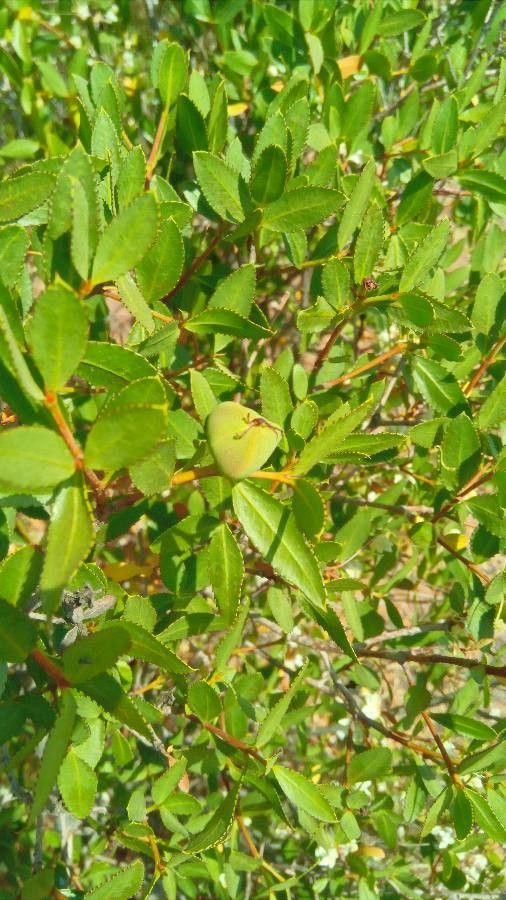
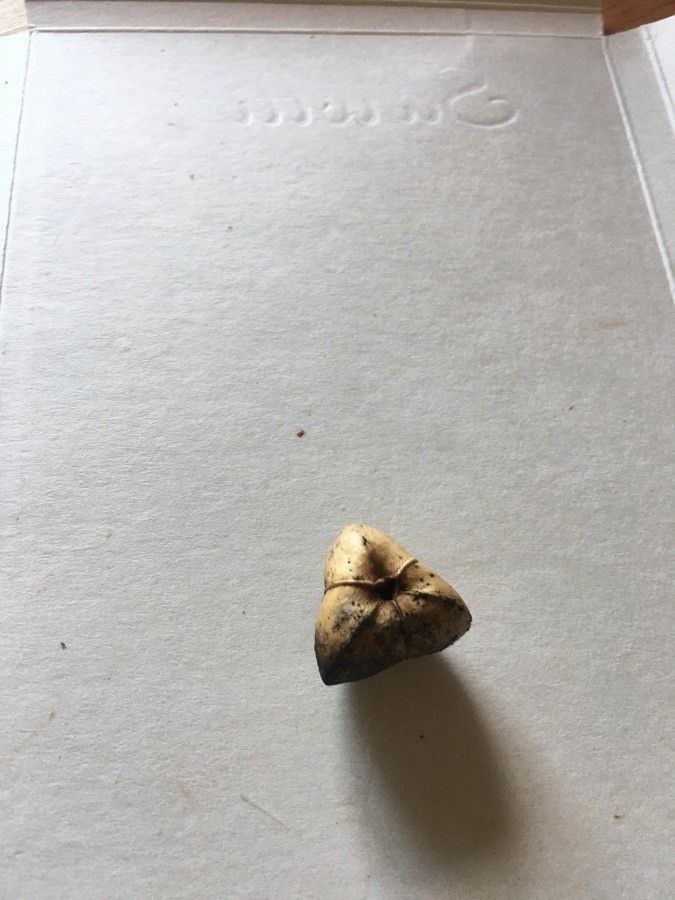
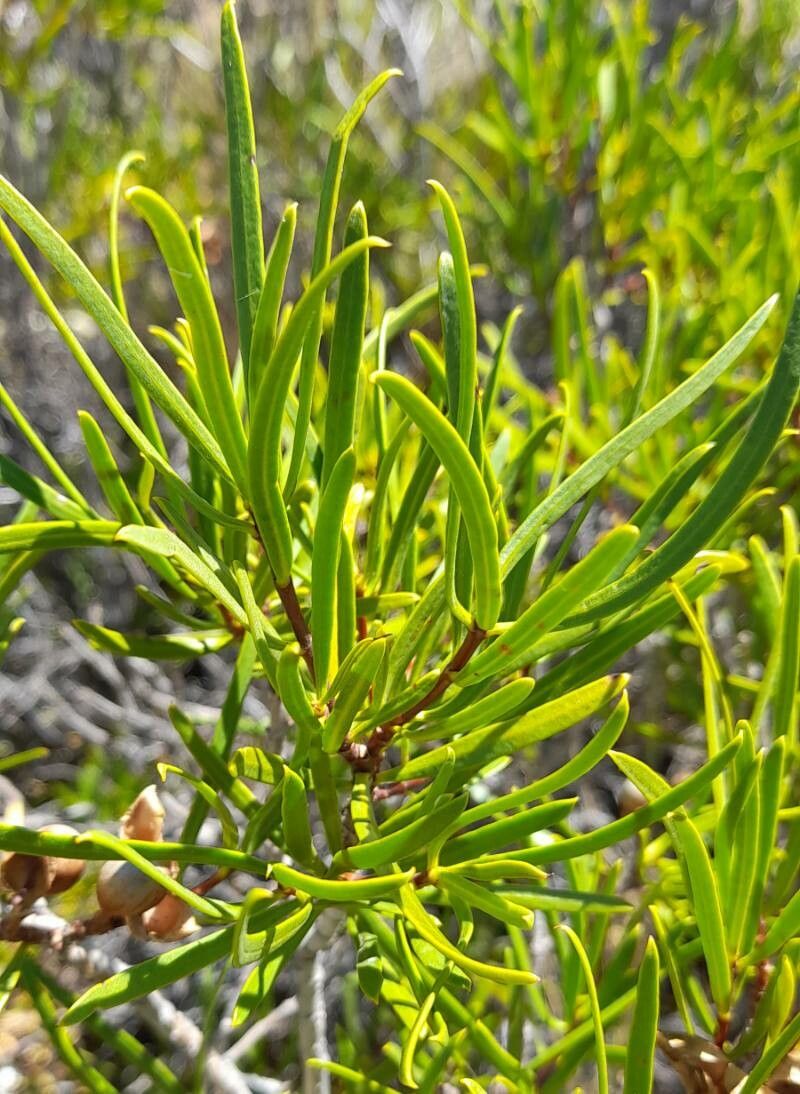
Colliguaja odorifera is a lignotuberous species of the family Euphorbiaceae. Occurrence is in portions of South America, specifically in the Chilean matorral, where it can be found on both south and north-facing slopes. Each of these slopes have different air and soil moisture levels as well as different amounts of sunlight exposure, to which the shrub is able to adapt. Its specific occurrence is noted in central Chile in the La Campana National Park and Cerro La Campana areas, where this lignotuber is found in the same forest as the endangered Chilean Wine Palm, Jubaea chilensis.
Colliguaja odorifera shows good resistance to disease and is generally not susceptible to illnesses. Regarding care, this plant is fairly low-maintenance. Planted outdoors, it needs only minimal watering, and larger specimens usually do not require pruning. However, smaller plants should be trimmed after they have finished blooming. Colliguaja odoriferat is appropriate for anyone with outdoor space, like a garden or deck, and does not require extensive care experience.
How to keep Colliguaja Odorifera.
Light
Colliguaja odorifera comes from open habitats, such as sunny meadows and forest edges, which provide plenty of light. It performs best in Full Sun but can also tolerate Partial Sun, adapting well to different light conditions.
Temperature
Colliguaja odorifera shows strong adaptability to a range of climate conditions, whether in scorching summers or cold winters. However, it does have an optimal temperature range for growth. When temperatures become excessively high, the plant is vulnerable to heat and humidity stress, which can cause its death. In areas where temperatures approach the lower limit of its cold tolerance, it is important to apply insulation measures to protect the plant.
Fertilizer
Fertilize your Colliguaja odorifera in early spring to encourage healthy growth. Regular feeding boosts overall health, leading to vigorous growth, increased resilience in harsh conditions, and stronger resistance to diseases and pests. Keep a consistent fertilization schedule for your Colliguaja odorifera to preserve vibrant, deeply colored, and lush foliage.
Pruning
To promote healthy growth and airflow for Colliguaja odorifera, prune the plant in early spring by removing any dead or damaged branches. Regular thinning is beneficial as it improves light penetration and reduces the risk of disease. However, be cautious not to prune too heavily, as this can stress the plant. By maintaining a strong structure and health, you ensure the plant's optimal growth and appearance.
Botanical profile.
- Plant Type
- Shrub
- Life Cycle
- Perennial
- Genus
- Colliguaja
- Family
- Euphorbiaceae
- Hardiness Zone
- 8-11
- Mature Height
- 0.91 m to 3.05 m
- Mature Spread
- 0.91 m to 2.13 m
- Leaf Color
- Dark Green
- Leaf Type
- Evergreen
- Flower Color
- Yellow
- Flower Size
- 0.25 cm to 0.51 cm
- Bloom Time
- Mid fall, Late fall
- Planting Time
- Spring, Summer
- Harvest Time
- Early winter, Mid winter
Reader questions.
What is Colliguaja odorifera?
Colliguaja odorifera, also known by its botanic name 'Colliguaja odorifera', does not have further details provided regarding its essentials or symptoms pertaining to its application or effects. The provided information does not include specifics about the essentials of Colliguaja odorifera or symptoms related to it, meaning more detailed research would be needed to fully understand this plant's characteristics and uses.