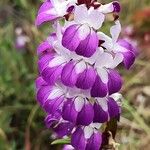
Collinsia heterophylla
Chinese-houses · Innocence · Purple Chinese houses · Pagoda collinsia
Description
Source: leafsnapCollinsia heterophylla, commonly known as Chinese houses or purple Chinese houses, is a flowering plant native to western North America. Belonging to the family Plantaginaceae, this annual herb can grow up to 30 cm tall. It features a slender stem with opposite leaves that vary in shape and size, ranging from narrow and lanceolate to broad and ovate. The flowers of Collinsia heterophylla are particularly striking, with two-lipped corollas that are either purple or pink. These blooms appear in clusters at the top of the stem from late spring to early summer, attracting bees, butterflies, and other pollinators. Collinsia heterophylla thrives in moist soils within shaded areas such as woodlands or streambanks but can also tolerate drier conditions. Often used as an ornamental plant for its stunning flowers, it also has medicinal properties, such as being used to treat coughs. In summary, Collinsia heterophylla is a beautiful wildflower native to western North America that adds color and charm to gardens and natural settings. Additionally, it offers practical health benefits.
Care Guide
💧 Water Every 7 days
Chinese houses thrive in moist, humid environments and have a moderate tolerance for drought. They benefit from weekly watering and prefer well-drained soil to prevent waterlogging. As an annual herb, Chinese houses typically grow during the rainy season.
☀️ Light Partial sun
Chinese houses grows best with a moderate amount of sunlight, though it can also tolerate intense light. Coming from habitats with tree and shrub cover, it thrives in places with dappled sunshine. Prolonged excessive light can cause leaf stress, while too little sun may hinder its optimal growth.
What are the sunlight requirements for Chinese houses (Collinsia heterophylla)?
Chinese houses, or Collinsia heterophylla, flourish when they receive a moderate to intense amount of sunlight. Originating from areas with both tree and shrub covers, this plant benefits from dappled sunshine, which simulates its natural habitat. Although it can handle considerable light exposure, continuous exposure to intense light might lead to leaf stress. Conversely, too little sunlight could inhibit the plant’s optimal growth. The plant thrives in partial sun, receiving about 3-6 hours of sunlight, but can also do well in full sun, with over 6 hours of sunlight. It's crucial to observe the movement of sunlight through your garden to find the perfect spot that offers a balance of light and shade, ensuring the plant's health and happiness.
How do artificial lights benefit indoor Chinese houses plants, and how should they be used?
Indoor Chinese houses plants benefit greatly from artificial lighting, especially in conditions where natural sunlight is insufficient, such as during winter or in spaces that receive limited sunlight. Artificial lights, such as LEDs, are favored for their ability to be customized to provide the specific wavelengths of light required by the plants. For optimal growth, full sun plants need 30-50W/sq ft of artificial light, partial sun plants require 20-30W/sq ft, and full shade plants should have 10-20W/sq ft. The light source should be placed 12-36 inches above the plant to mimic natural sunlight effectively. Regarding duration, it's recommended to mimic the natural daylight hours for the specific plant species, which generally means providing 8-12 hours of light per day.
What are the symptoms of inadequate light exposure in Chinese houses, and how can it affect the plant?
Inadequate light exposure in Chinese houses can lead to several symptoms indicating poor health or stress. When the plant doesn't receive enough light, new leaves might grow smaller than previous ones, and the plant may exhibit leggy or sparse growth due to longer spaces between leaves or stems. This results in a plant that looks thin, stretched-out, and may easily break. Faster leaf drop is another symptom, as the plant sheds older leaves early to conserve resources. The growth of the plant may also slow down or stop altogether. Pale or lighter-colored new leaves suggest a lack of chlorophyll and essential nutrients. Conversely, excessive sunlight can lead to chlorosis, sunscald, leaf curling, wilting, and leaf scorching, each damaging the plant's ability to photosynthesize and maintain overall health.
What solutions can improve the health of Chinese houses experiencing insufficient or excessive sunlight?
To counteract insufficient or excessive sunlight exposure for indoor Chinese houses, gradually moving the plants to spots with an optimal balance of sunlight is recommended. For indoor plants, you can start by shifting them to incrementally sunnier places each week, aiming for 3-6 hours of direct sunlight daily for a gradual adaptation. If moving the plant isn't feasible, consider supplementing with artificial light, ensuring it's on for at least 8 hours daily. Use desk or ceiling lamps or invest in professional plant grow lights for adequate light exposure. For outdoor plants, avoid sudden changes in light intensity to prevent sunburn, and gradually move them to better spots each week. When obstructions like trees block sunlight, consider pruning to allow more light through. For smaller plants, transplanting during their dormant period (late winter or early spring) to a location with more sunlight and good drainage can improve health. Note that parts of the plant affected by insufficient light might not recover, but new growth should be healthy after adjusting light exposure.
🌡️ Temperature 20–37.8°C
Chinese houses are native to climates where temperatures typically range from 68 to 100 °F (20 to 38 ℃). They prefer mild to warm conditions. Seasonal temperature adjustments may need to take their native temperature preferences into account.
What are the ideal temperature conditions for Chinese houses (Collinsia heterophylla)?
Chinese houses thrive in environments where temperatures typically range from 68 to 100 °F (20 to 38 °C), preferring mild to warm conditions. It is essential to maintain temperatures above 20°C during winter to facilitate growth, as the plant is extremely heat-loving. Any exposure to cold temperatures can be harmful, and temperatures nearing 10°C are detrimental. In regions experiencing autumn and winter seasons, it is advisable to bring outdoor-grown Chinese houses indoors, placing them near a bright window but at a safe distance from heaters, to protect them from the cold.
How does low temperature affect Chinese houses and what are the appropriate responses?
Chinese houses are not tolerant of low temperatures and flourish best when the temperature remains above 20°C. During winter, keeping the plant's environment above 10°C is crucial. Exposure to temperatures below 5°C can cause the leaves to lighten in color, and following frost, leaves may turn brown or black with symptoms including wilting and drooping. To mitigate frost damage, affected parts should be trimmed off, and the plant should be moved indoors to a warmer setting. Placing the plant near a south-facing window ensures it receives ample sunlight, while avoiding placement near heaters or air conditioning vents helps prevent air dryness.
What should be done if a Chinese houses plant is exposed to high temperatures?
In the summer, it is important to keep Chinese houses below 38°C to prevent heat stress. Should temperatures exceed 43°C, the plant may exhibit lighter leaf colors and increased susceptibility to sunburn. To address heat or sun damage, remove sunburned or dried parts of the plant. Relocating the plant to an area shaded from the midday and afternoon sun can help, as does watering the plant in the morning and evening to maintain soil moisture.
💨 Humidity
🪴 Soil 6-7
🌱 Fertilizer
When most of the blooms on Chinese houses have opened to full size, it's time to resume fertilizing. At the peak of bloom production, apply fertilizer every three to four weeks, as the weather allows. Then, once Chinese houses begin producing fewer new blooms, stop fertilizing; there's no need to feed the plant when it can no longer produce additional blooms.
🪴 Pot & Repot
✂️ Pruning
Chinese houses are known for their striking purple and white flowers. They thrive with light pruning from early to late spring. To promote bushiness, remove dead stems and pinch new growth. Avoid heavy trimming, as it can cause stress to the plants. Regular deadheading encourages longer blooming, ensuring a vibrant garden display.
🌿 Propagating
🐛 Diseases & pets
☠️ Toxicity
Characteristics
- Plant Type
- Herb
- Life Cycle
- Annual
- Genus
- Collinsia
- Family
- Plantaginaceae
- Hardiness Zone
- 11
- Mature Height
- 10 cm to 49 cm
- Mature Spread
- 30 cm
- Leaf Color
- Green
- Leaf Type
- Deciduous
- Flower Color
- White, Purple, Pink, Violet
- Flower Size
- 1.02 cm to 2.03 cm
- Bloom Time
- Spring
- Planting Time
- Autumn
- Harvest Time
- Late spring, Early summer, Mid summer