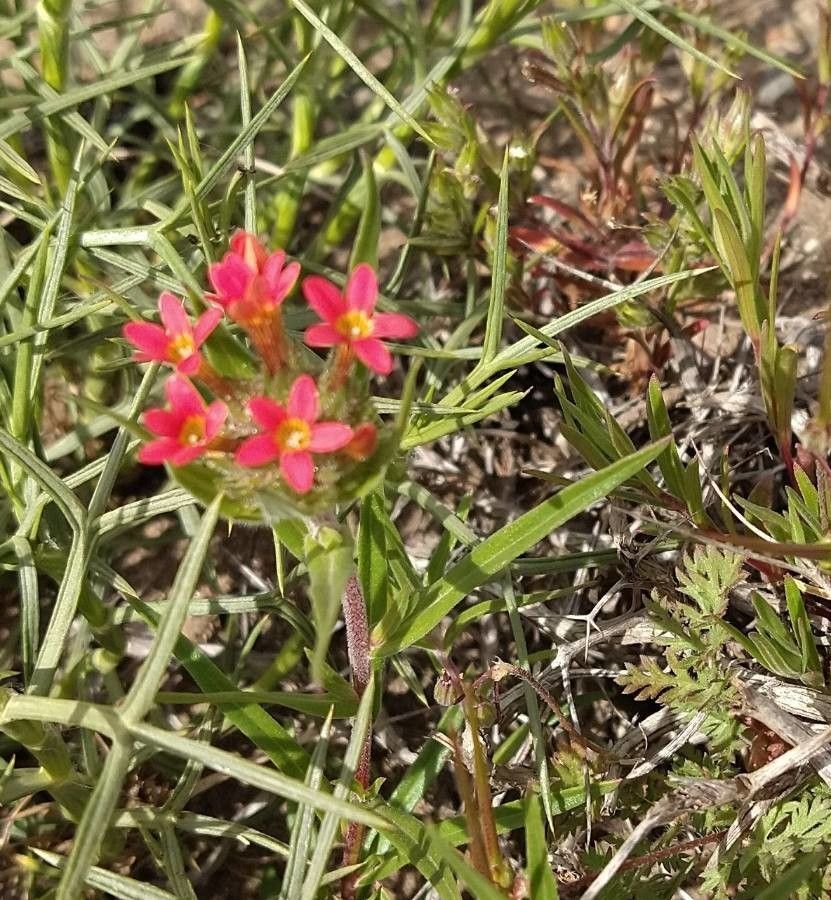
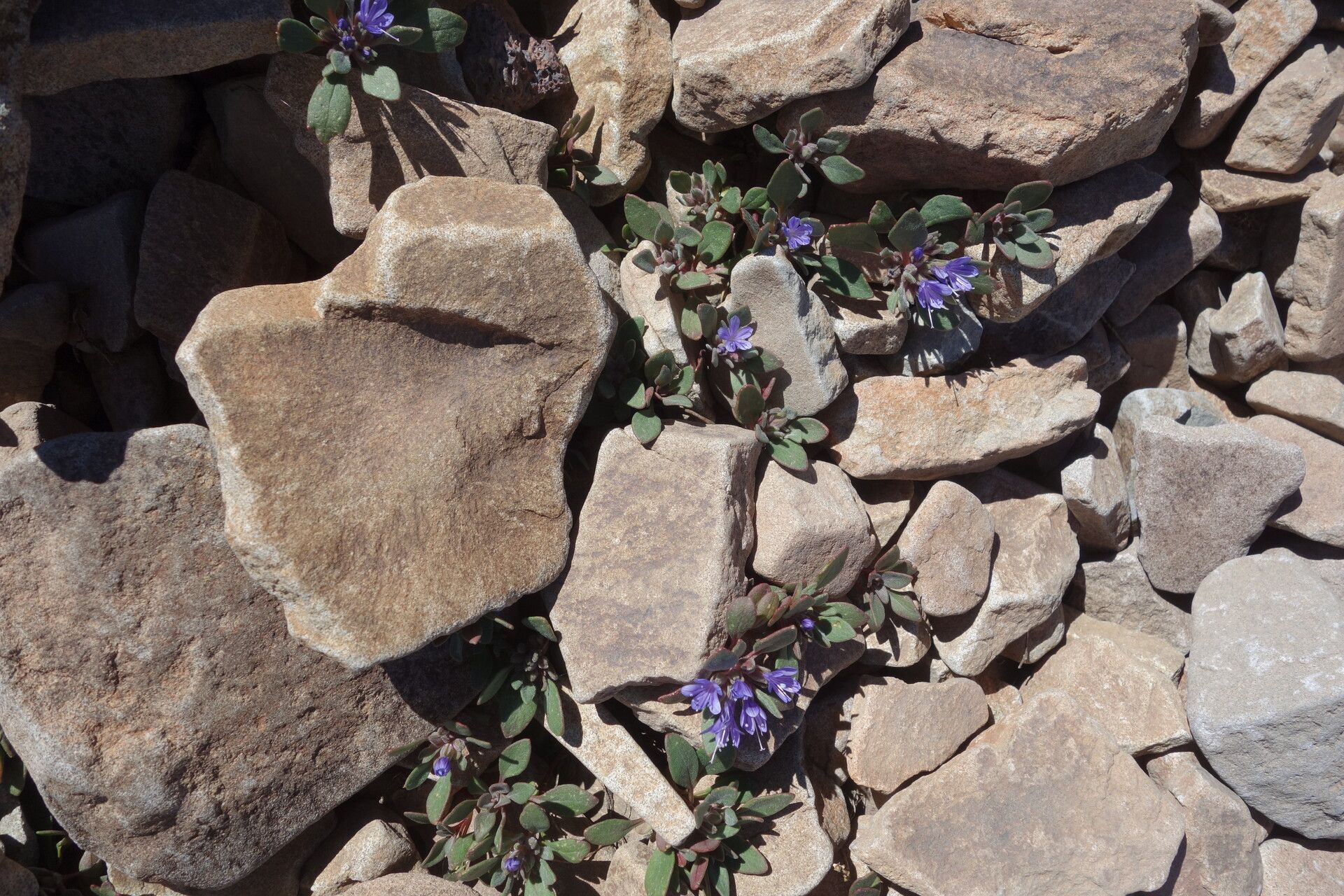
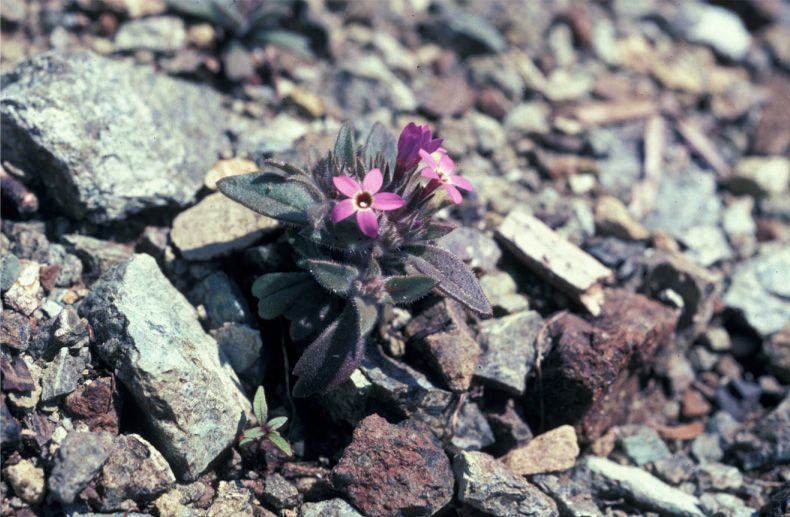
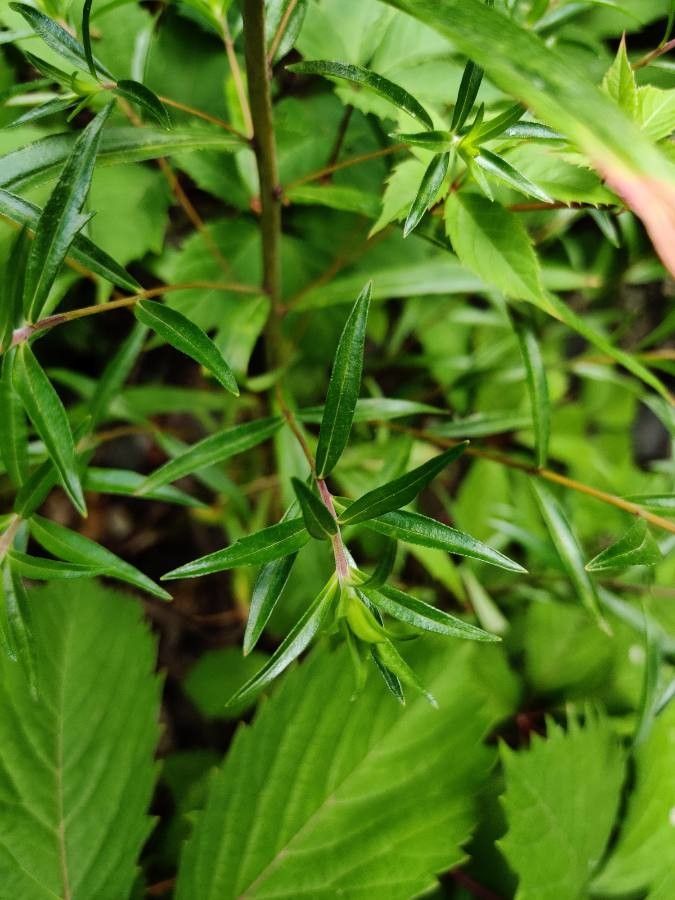
Collomia rawsoniana is a species of flowering plant in the phlox family known by the common name flaming trumpet. This perennial wildflower is endemic to California, where it is known from only two counties: Mariposa and Madera. It grows in the woodland understory in the Sierra Nevada foothills. This plant produces a thin, erect stem to about half a meter in height with widely spaced, deeply toothed hairy leaves each several centimeters long. Atop the stem is an inflorescence of three to seven showy red-orange flowers. Each flower is up to 4 centimeters long and trumpet-shaped, with a protruding pistil and stamens tipped with anthers covered in blue pollen. The species name commemorates the collector of its type material, Lucy Adeline Briggs Cole Rawson Peckinpah Smallman.
Flaming trumpet has strong disease resistance and is generally resistant to disease. It can, however, be vulnerable to pests and ailments present in its surroundings. Such infections are generally mild. In terms of care, this plant requires moderate maintenance. It should be pruned regularly to preserve a neat appearance and support healthy growth. Applying fertilizer can also help encourage flowering. Flaming trumpet is suitable for anyone with an outdoor area, such as a garden or patio, and does not demand much gardening experience. It may need more attention if grown indoors.
How to keep Collomia Rawsoniana.
Light
The flaming trumpet is native to locations that offer speckled sunlight, like the undergrowth of forests or rocky regions that naturally offer shade. It flourishes in semi-sunlight but can likewise acclimate to conditions of complete sun exposure.
Temperature
Flaming trumpet possesses the capability to acclimate to various temperature settings, although the amalgamations of heat and water conditions may still restrict its dissemination. Its optimum growth can be observed in hot climates during the summer, given sufficient rain or irrigation. Extended durations of overcast and rainy conditions, along with protracted high temperatures, could elevate the probability of the flaming trumpet's demise. During winter months, safeguarding effectively against chilly conditions can enhance the plant's chances of survival.
Fertilizer
When the Flaming trumpet has fully opened the majority of its flowers, it signifies the appropriate time to recommence fertilization. Start the fertilizing process again every three to four weeks, if the weather conditions allow, during the period when the flowers are maximally blooming. Once the Flaming trumpet begins to produce less new flowers, halt the fertilization, as it is unnecessary to do so when the plant is incapable of producing any more flowers.
Pruning
The flaming trumpet plant benefits from annual pruning, which involves removing dead stems and thinning out branches to improve airflow. The best time to prune is between early and late spring. This practice encourages healthy growth and abundant flowering, helps prevent diseases, and maintains an attractive shape.
Botanical profile.
- Plant Type
- Herb
- Life Cycle
- Annual
- Genus
- Collomia
- Family
- Polemoniaceae
- Hardiness Zone
- 7-9
- Mature Height
- 30 cm to 61 cm
- Mature Spread
- 20 cm to 30 cm
- Leaf Color
- Green
- Leaf Type
- Deciduous
- Flower Size
- 1.02 cm to 2.03 cm
- Bloom Time
- Early summer, Mid summer
- Planting Time
- Spring, Summer
- Harvest Time
- Late summer, Early fall