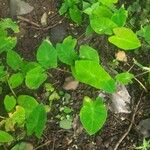
Colocasia antiquorum
Coco-Yam · Taro · Dasheen · Wild taro · Chinese potato
Description
Source: leafsnapEddoe or eddo is a tropical vegetable often considered identifiable as the species Colocasia antiquorum, closely related to taro (dasheen, Colocasia esculenta), which is primarily used for its thickened stems (corms). In most cultivars there is an acrid taste that requires careful cooking. The young leaves can also be cooked and eaten, but (unlike taro) they have a somewhat acrid taste.
🌳 A little-known aspect of taro is its use in purifying wastewater through phytoremediation. It effectively removes harmful substances, helping to restore water sources. It is also a source of valuable phytochemicals. Historically, oil was extracted from taro for use in lamps, and fibers from its stalks were woven into coarse fabrics and ropes. In Asia, warmed taro leaves are traditionally applied to relieve pain from swelling, sprains, and boils.
🎭 Sacredness, a bond with one's ancestors
Care Guide
💧 Water
☀️ Light Full sun
Taro prefers abundant daily sunlight to grow well, though it can tolerate lower light levels. Coming from environments with plenty of but not intense sun, it requires sufficient light to remain healthy. Too little sunlight can result in poor growth, while excessive sun may damage its leaves.
🌡️ Temperature 15–37.8°C
Taro naturally occurs in habitats with temperatures between 68 to 100 °F (20 to 38 ℃). It performs best in these warm conditions. During colder seasons, indoor adjustments might be required to maintain optimal temperature levels.
💨 Humidity
🪴 Soil 5-7
🌱 Fertilizer
Taro species benefit from one or two applications of organic natural fertilizers containing potassium and phosphorus. Apply the fertilizer before planting, work it into the soil and water thoroughly. One application is generally enough, but a second can be applied after the seedlings have become established. Avoid overusing fertilizer to prevent damage to the plants.
🪴 Pot & Repot Once a year
Repot Taro in spring or summer once it's warm enough, choosing a slightly larger pot with good drainage. Water thoroughly after repotting, and place it in a spot with bright, indirect light. Consider adding a moss pole to support the plant as it grows.
✂️ Pruning
🌿 Propagating
🐛 Diseases & pets
☠️ Toxicity
Characteristics
- Plant Type
- Herb
- Life Cycle
- Perennial, Annual
- Genus
- Colocasia
- Family
- Araceae
- Hardiness Zone
- 8-12
- Mature Height
- 0.91 m to 2.13 m
- Mature Spread
- 0.91 m to 1.83 m
- Leaf Color
- Green, Red, Variegated, Purple
- Leaf Type
- Evergreen
- Flower Color
- Green, White
- Flower Size
- 2.29 cm
- Bloom Time
- Early summer, Mid summer
- Planting Time
- Spring, Summer, Autumn
- Harvest Time
- Mid summer, Late summer
- Native Area
- Nepal, India, Malaysia, Indonesia, Papua New Guinea, Bhutan, Bangladesh, Laos, Thailand