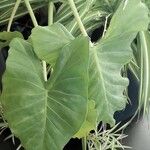
Colocasia esculenta
بابا آدم · تارو · Elephant's-ear · Taro · Elephant Ears
Description
Source: leafsnapColocasia esculenta, commonly known as taro or elephant ear, is a tropical plant belonging to the Araceae family. Native to Southeast Asia, this plant has been cultivated for thousands of years for its edible corms and leaves. It features large, heart-shaped leaves that can grow up to 1 meter in length, and a corm that can weigh several kilograms. Taro is a vital staple food in many regions, particularly in Asia, Africa, and the Pacific Islands. The corms are rich in carbohydrates, providing a significant source of energy for many people. The leaves are also edible when cooked properly. In addition to its culinary uses, taro has medicinal properties. It is rich in antioxidants, which help protect against various diseases such as cancer and heart disease. Taro plants thrive in warm temperatures (above 20°C) and high humidity. They prefer well-drained soils rich in organic matter but can tolerate waterlogged conditions for short periods. Overall, Colocasia esculenta is a significant plant with both culinary and medicinal uses. Its versatility makes it a beloved component of gardens and a staple in kitchens worldwide.
💡 According to legend, a king once fled into the mountains, exhausted and hungry. Insurgents at the mountain's base set it ablaze, but the king managed to survive. Amidst the smoke, he noticed a delightful aroma and discovered that taro in the fields had been roasted by the fire. He ate the taro and eventually made his escape.
🌳 A little-known aspect of taro is its use in purifying wastewater through phytoremediation. It effectively removes harmful substances, helping to restore water sources. It is also a source of valuable phytochemicals. Historically, oil was extracted from taro for use in lamps, and fibers from its stalks were woven into coarse fabrics and ropes. In Asia, warmed taro leaves are traditionally applied to relieve pain from swelling, sprains, and boils.
🎭 Sacredness, a bond with one's ancestors
Care Guide
💧 Water Every 7 days
Taro, a herbaceous perennial with tropical origins, requires high humidity and consistent moisture to thrive. It needs weekly watering to maintain wet soil and is not drought-tolerant. Regular hydration is essential for its vigorous growth, especially during its active growing season, commonly when it is cultivated outdoors.
When should I water my taro?
To determine the right time to water your taro (Colocasia esculenta), check the soil's moisture by inserting your finger about 1-2 inches deep near the plant's base. Water the plant if the soil at that depth feels dry. Additionally, observe the taro's leaves for drooping or changes in color, such as turning yellow or brown, as these can be indicators of the plant needing water. Assessing the weight of the pot can also help; a significantly lighter pot indicates it's time to water. Be mindful of the season and environmental conditions, as these affect your taro's watering needs. Watering too early or late poses risks like root rot or stunted growth, so understanding these signs is essential for maintaining your plant's health and promoting optimal growth.
How should I water my taro?
When watering your taro, opt for thorough watering that allows the soil to dry slightly between sessions. Considering taro's preference for consistently moist soil, bottom-watering by placing the pot in a tray of water lets the plant absorb moisture from the bottom up, minimizing the risk of fungal diseases due to excessive moisture on the foliage. When using a watering can, choose one with a narrow spout to direct the water flow to the base and avoid wetting the leaves. This method ensures the plant is properly hydrated at the root level while preventing potential issues from overwatering.
How much water does taro really need?
Taro plants require about 2 to 3 inches of water per week, ensuring that the entire root zone is adequately hydrated. This amount is crucial for plants in pots with a depth of 12 inches or more. Proper hydration will result in lush, vibrant leaves and consistent new leaf production. The soil should feel evenly moist, but not soggy. Watch out for signs of under or over-watering, such as wilting leaves or a yellowing and development of root rot, respectively. Maintain proper drainage by using pots with drainage holes and well-draining soil, and avoid letting the plant sit in standing water. Monitoring the soil's moisture levels regularly is key to providing consistent hydration.
What kind of water is best for taro?
For optimal growth, taro prefers being watered with rainwater or distilled water, as these are free from potentially harmful elements found in other water sources. If using tap water, it's recommended to let it sit for 24 hours before use to allow chlorine and other volatile compounds to evaporate. Filtered water that has been treated to remove chlorine and fluoride is also suitable. Be cautious of using hard water, as its high mineral content can lead to soil buildup, affecting the plant's nutrient absorption. Always use room temperature water to avoid shocking the plant's system.
How do taro's watering needs change with the seasons?
Taro's watering needs vary throughout the year. In the spring, maintain consistent soil moisture to support active growth. During the summer, reduce watering frequency to allow the soil to dry slightly between waterings, matching the plant's natural dormancy. As autumn approaches, further decrease watering frequency as the plant prepares for dormancy, but keep the soil lightly moist. In winter, water sparingly, allowing the topsoil to dry out between waterings, as the plant requires minimal moisture during this dormant period.
☀️ Light Full sun
Taro prefers abundant daily sunlight to grow well, though it can tolerate lower light levels. Coming from environments with plenty of but not intense sun, it requires sufficient light to remain healthy. Too little sunlight can result in poor growth, while excessive sun may damage its leaves.
What are the sunlight requirements for Taro plants?
Taro plants require full sunlight to thrive, needing more than 6 hours of sunlight daily. However, they can also grow under partial sun conditions, receiving about 3-6 hours of sunlight. It's essential to monitor the movement of sunlight through your garden to find the optimal balance of light and shade for your Taro plants, ensuring their well-being. Taro originates from regions with abundant sunlight, hence it desires ample daily exposure to light for vigorous growth, although it can tolerate lower sunlight levels. Insufficient sunlight can lead to poor plant growth, while excessive sunlight may damage the leaves.
How can artificial lighting be used for Taro plants?
Artificial lighting can be crucial for indoor Taro plants, especially when natural sunlight is insufficient, like in winter or less sunny areas. It supports optimal growth and health by substitifying for natural light. LED lights are recommended due to their customizability to provide specific light wavelengths needed by plants. The required intensity varies: full sun plants need 30-50W/sq ft, partial sun plants 20-30W/sq ft, and full shade plants 10-20W/sq ft of artificial light. Position the light source 12-36 inches above the plant to mimic natural conditions and maintain light for 8-12 hours daily, replicating natural daylight duration.
What are symptoms of insufficient or excessive light exposure in Taro plants?
Taro plants may exhibit several symptoms in response to inadequate or excessive light. Symptoms of insufficient sunlight include lighter-colored new leaves indicating a deficiency in chlorophyll, smaller new leaves, halted plant growth, early leaf drop as a resource conservation strategy, and chlorosis, where leaves lose their green color and turn yellow. On the other hand, excessive light can cause symptoms like sunscald, noticeable as bleached areas on plant tissue; leaf curling as a defense against water loss; wilting from transpiration-induced dehydration; and leaf scorching, evident by brown, dry patches on leaves due to overexposure to sunlight.
What solutions can address Taro plants' light-related issues?
To combat light-related issues in Taro plants, consider several strategies based on the plant's environment. Indoors, gradually increase sunlight exposure to a minimum of 6 hours daily by moving plants closer to a south-facing window or using artificial light for at least 8 hours daily. Outdoors, relocate plants gradually to sunnier spots, avoiding drastic changes that could cause sunburn. Ground-level solutions include reducing obstructions such as pruning trees to increase sunlight and transplanting smaller plants during their dormant period to sunnier locations with good drainage. Although parts of the plant affected by poor lighting may not recover, new growth should be healthy following these adjustments.
🌡️ Temperature 15–37.8°C
Taro naturally occurs in habitats with temperatures between 68 to 100 °F (20 to 38 ℃). It performs best in these warm conditions. During colder seasons, indoor adjustments might be required to maintain optimal temperature levels.
What is the ideal temperature range for growing Taro?
Taro is native to warm climates and thrives best in temperatures ranging from 68 to 100 °F (20 to 38 °C). It prefers these warmer conditions for optimal growth. During winter or cooler seasons, it's essential to maintain temperatures within this range to support the plant's health. If outdoor temperatures drop close to freezing, it's advisable to bring Taro plants indoors or provide added protection, such as a temporary greenhouse or wrapping the plant with materials like plastic film or fabric.
How does low temperature affect Taro, and what can be done?
Taro has moderate tolerance to low temperatures but does best within its ideal temperature range. If temperatures fall below the tolerable minimum, the leaves may darken, and in severe cases, water-soaked necrosis, wilting, and drooping can occur, with leaves gradually turning brown. If frost damage occurs, trim away the damaged parts, move the plant to a warm indoor space, or set up a makeshift greenhouse. Ensure the plant is placed near a south-facing window for sunlight, and consider supplemental lighting if natural light is insufficient.
How does high temperature affect Taro, and what is the solution?
During summer, Taro should be kept below its maximum suitable growth temperature to prevent stress and damage. Exceeding this temperature limit can slow down growth, lighten the color of the leaves, and increase susceptibility to sunburn. To mitigate high temperature stress, trim away any sunburned or dried parts of the plant, move it to a shaded location, especially from the afternoon sun, and water it in the morning and evening to maintain soil moisture.
💨 Humidity
🪴 Soil 5-7
🌱 Fertilizer Every 30 days
Taro species benefit from one or two applications of organic natural fertilizers containing potassium and phosphorus. Apply the fertilizer before planting, work it into the soil and water thoroughly. One application is generally enough, but a second can be applied after the seedlings have become established. Avoid overusing fertilizer to prevent damage to the plants.
Why should I add fertilizer to my Taro plant?
Taro is a fast-growing plant that needs a lot of energy to produce the delicious root vegetables we enjoy. It requires sunlight, oxygen, water, and nutrients to grow and develop roots. Although garden soil usually contains these nutrients due to organic matter decomposition, there are situations where the soil lacks enough nutrients for healthy Taro growth. In these cases, fertilizer can provide the necessary boost for Taro to thrive.
When should I fertilize my Taro plant?
To prepare your soil for planting, apply natural fertilizer. There is no specific time frame, but make sure to allocate enough time to incorporate the fertilizer into the soil and water it thoroughly before planting seeds or seedlings. Generally, one fertilizer application is sufficient for healthy Taro growth throughout the season. However, if you want to further increase their yield, you can do an additional application once the seedlings have established themselves. Just ensure to avoid excessive fertilizer that may harm the plants.
When is it not a good idea to fertilize my Taro plant?
To ensure effective fertilization, remember to avoid applying fertilizer when the soil is dry. After fertilizing, make sure to water your plants thoroughly as this helps deliver the nutrients properly. If you prioritize the growth of foliage over the root crops, then high-nitrogen fertilizers might be suitable for you. However, take care not to let fertilizer come into contact with the base of the plant, leaves, or stems as it can potentially damage them.
What kind of fertilizer does my Taro plant require?
When growing Taro, the roots are the main harvest, although the foliage is also edible. To promote healthy root growth, use a fertilizer with more phosphate and potassium compared to nitrogen. Natural options like bone meal and kelp are good choices, but chemical fertilizers can also work. Just be careful not to use a fertilizer with too much nitrogen, as it is less important for Taro. To determine the best fertilizer, take a soil sample from the area you plan to use and test it for nutrient levels, density, and pH. Treating the soil holistically based on these factors will contribute to the success of your Taro plants.
How do I give nutrients to my Taro plant?
To fertilize Taro, start by mixing an organic fertilizer like bone meal or kelp into the soil before planting. If you need to fertilize again later on, use compost or well-rotted manure as mulch around the base of the Taro plant. This will slowly break down and allow nutrients to reach the roots. If you prefer liquid fertilizers, dilute them according to the instructions for your specific crop and spray the mixture around the Taro plant, taking care not to splash it directly on the plant itself. Alternatively, you can sprinkle granular fertilizers around the base of the plant or between rows, or work them into the top layer of soil to prevent them from being washed or blown away.
🪴 Pot & Repot Once a year
Repot Taro in spring or summer once it's warm enough, choosing a slightly larger pot with good drainage. Water thoroughly after repotting, and place it in a spot with bright, indirect light. Consider adding a moss pole to support the plant as it grows.
✂️ Pruning
Prune taro plants from early to late spring by removing any dead or damaged leaves. This will improve air circulation and reduce the risk of disease. Also, trim excessively long stems to maintain the plant's shape and encourage healthy growth, which helps conserve energy for tuber development. Be sure to sanitize your tools to prevent infection.
🌿 Propagating
🐛 Diseases & pets
☠️ Toxicity
Characteristics
- Plant Type
- Herb
- Life Cycle
- Perennial, Annual
- Genus
- Colocasia
- Family
- Araceae
- Hardiness Zone
- 8-12
- Mature Height
- 0.91 m to 2.13 m
- Mature Spread
- 0.91 m to 1.83 m
- Leaf Color
- Green, Red, Variegated, Purple
- Leaf Type
- Evergreen
- Flower Color
- Green, White
- Flower Size
- 2.29 cm
- Bloom Time
- Early summer, Mid summer
- Planting Time
- Spring, Summer, Autumn
- Harvest Time
- Mid summer, Late summer
- Native Area
- Nepal, India, Malaysia, Indonesia, Papua New Guinea, Bhutan, Bangladesh, Laos, Thailand