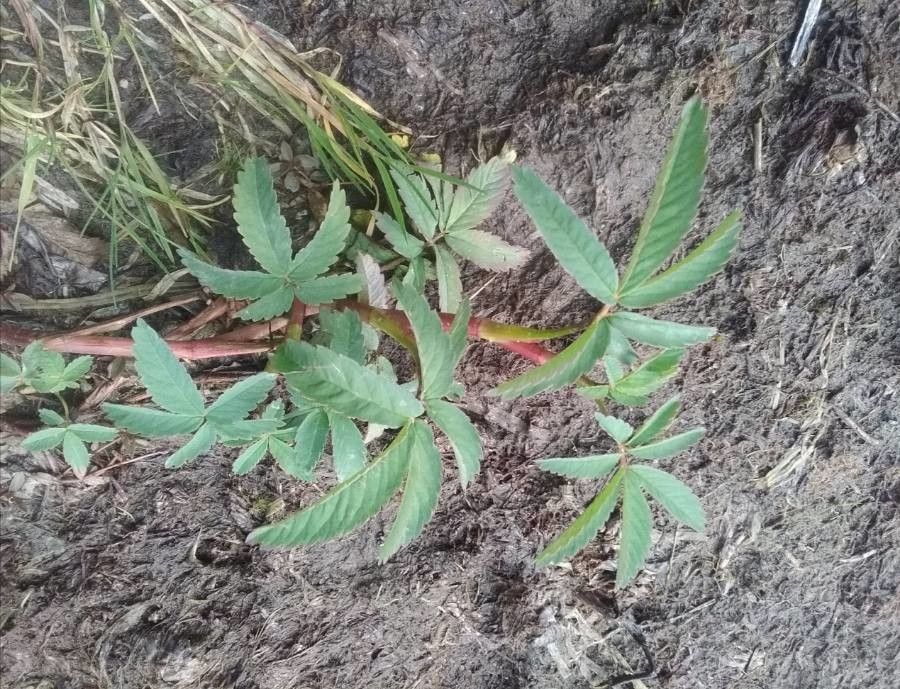
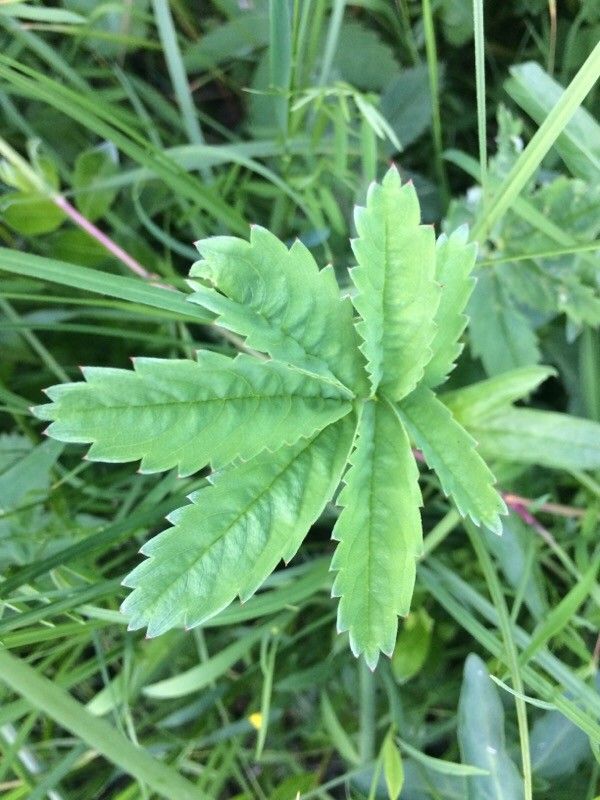
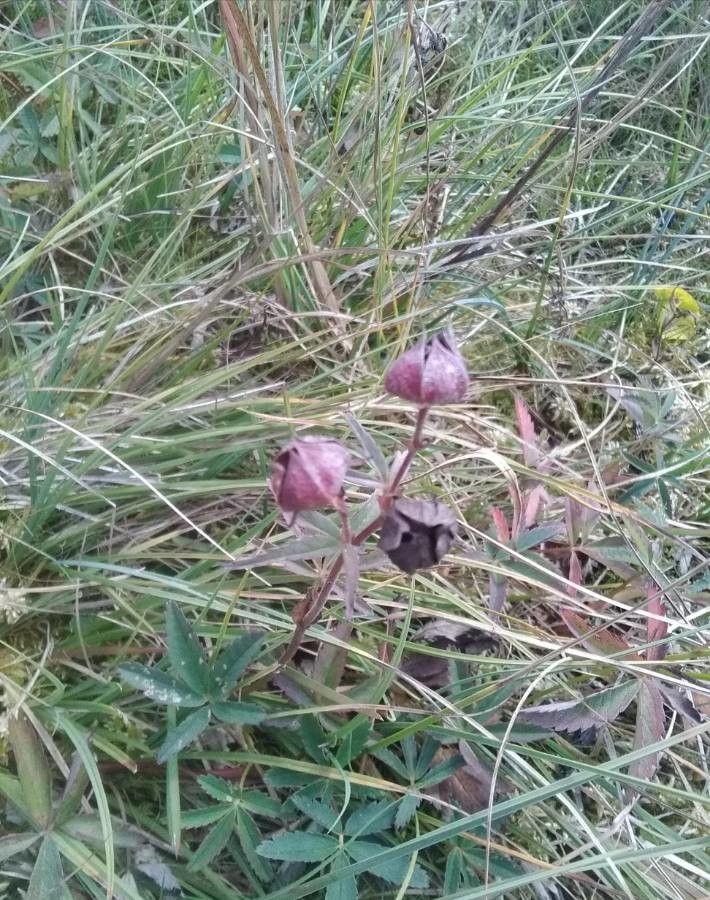
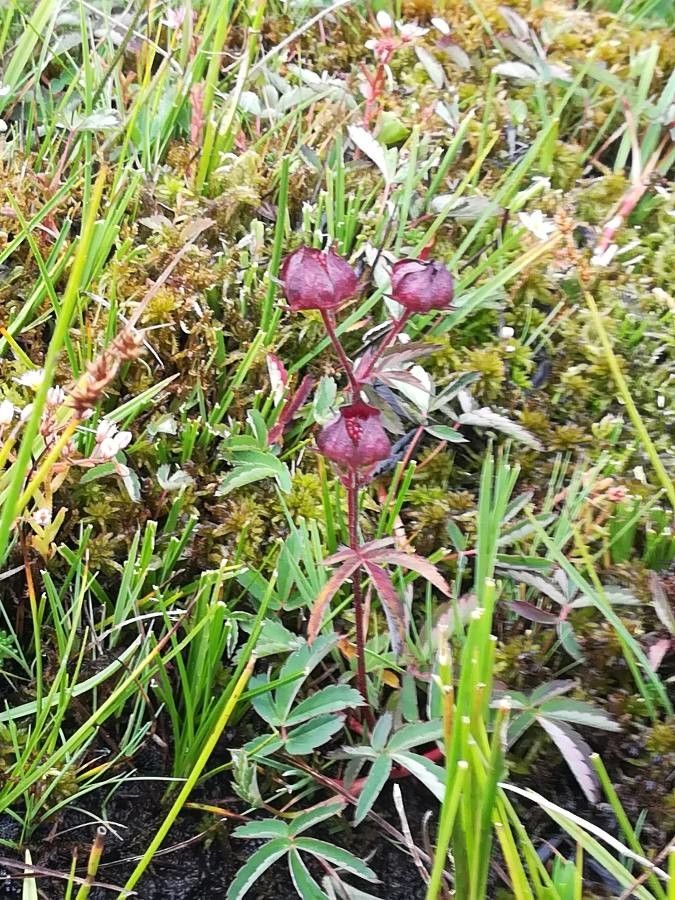
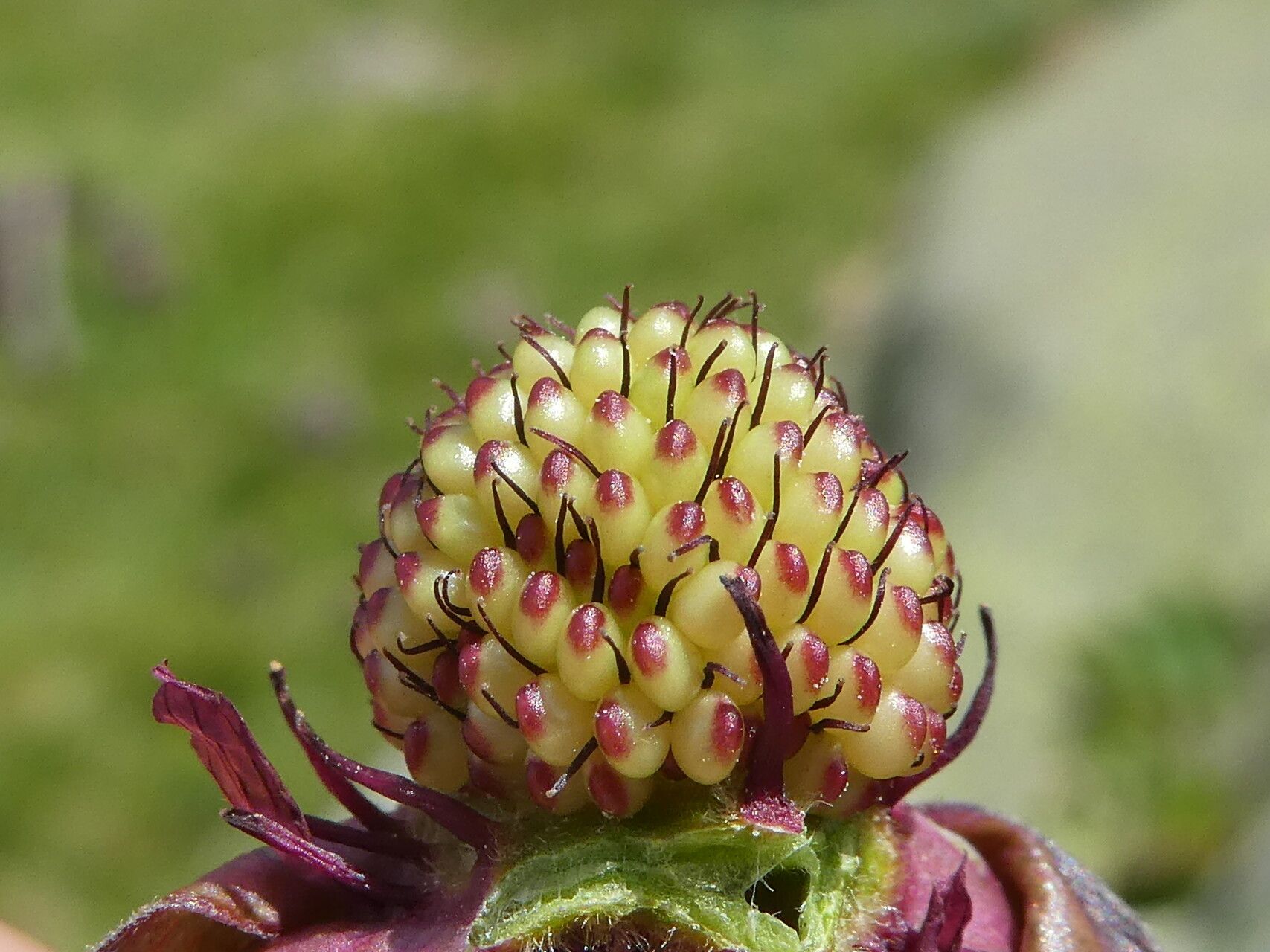
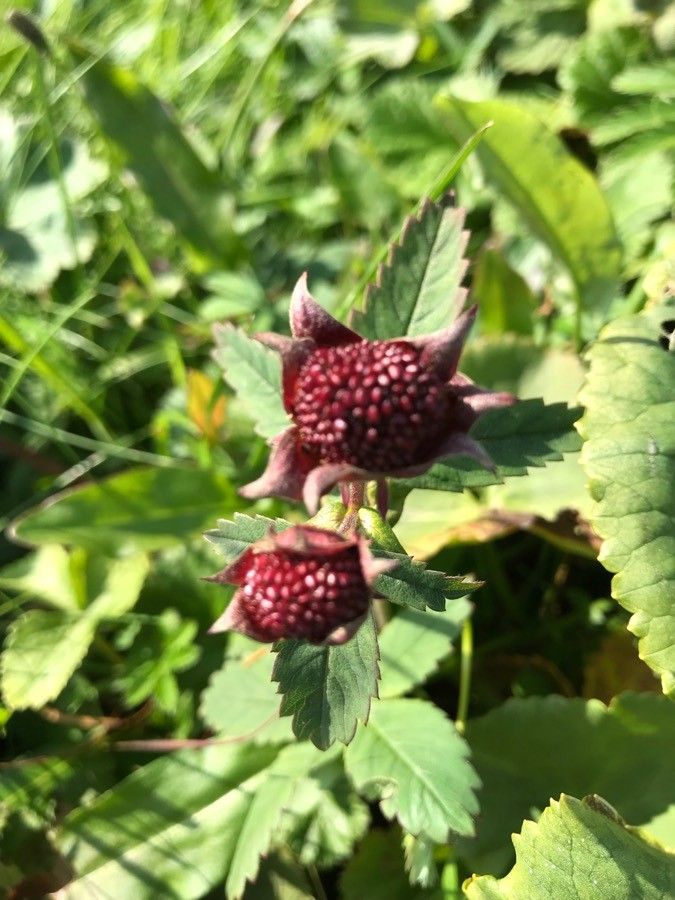
Comarum palustre, commonly known as marsh cinquefoil, is a perennial herbaceous plant in the Rosaceae family. Native to the wetlands of Europe and Asia, it thrives in marshes, bogs, fens, and wet meadows. The plant features a creeping rhizome that produces erect stems reaching up to 60 cm in height. Its pinnate leaves consist of 5-7 leaflets, which are elliptic or lanceolate with serrated edges. The flowers, either solitary or clustered at the ends of stems, have five bright yellow petals surrounded by numerous stamens and a central pistil. Marsh cinquefoil blooms from June to August, producing small red-brown fruits containing numerous seeds that are dispersed by water or animals.
Traditionally, marsh cinquefoil has been used for medicinal purposes due to its high tannin content, which provides an astringent effect on tissues. When applied topically or ingested as an infusion, it is used to treat ailments such as diarrhea, dysentery, and hemorrhoids.
Ecologically, marsh cinquefoil is significant as it provides habitat for various insects, including bees that pollinate its flowers. During the winter months, birds rely on its fruits as a food source when other options are scarce.
Overall, Comarum palustre is an important wetland species both ecologically and medicinally. Its unique adaptations allow it to thrive in waterlogged conditions, contributing valuable resources for wildlife biodiversity and conservation efforts.
Purple marshlocks has strong disease resistance and is generally unlikely to be affected by illnesses. However, it can be vulnerable to pests and diseases present in its surroundings. Such infections are usually mild. In terms of care, this plant needs moderate maintenance. Regular pruning is required to maintain a good appearance and support healthy growth. Fertilizing can also help encourage flowering. Purple marshlocks is suitable for anyone with an outdoor space, such as a garden or patio, and does not need much care experience. It may demand more attention when grown indoors.
How to keep Comarum Palustre.
Light
Purple marshlocks require ample sunlight for their health and growth. Native to sun-dominated habitats, this plant does best where sunlight is plentiful. Insufficient sunlight can impede its development, while excessive exposure generally has little effect. Different stages of growth do not require significant changes in sun exposure.
Water
Purple marshlocks thrive in wet, marshy conditions and require consistent hydration, needing to be watered every 1-2 weeks. While these plants can tolerate brief dry spells, they are best suited for outdoor settings that replicate the seasonal water fluctuations of their natural habitat.
Temperature
Purple marshlocks is native to climates with temperatures ranging from 32 to 77 °F (0 to 25 °C). It prefers cooler conditions and is not tolerant of high heat, so if you grow it elsewhere, provide shade from intense heat during warmer seasons.
Fertilizer
The best time to fertilize a Purple marshlocks is in early spring, as it comes out of dormancy and begins active growth. Fertilizing supplies essential nutrients for healthy growth. Although Purple marshlocks has fairly low fertilizer requirements, applying fertilizer annually can improve its survival and encourage better, longer-lasting flowers.
Pruning
Purple marshlocks are known for their striking purple flowers and thrive in wet areas. To encourage growth, shape the plant, and enhance flowering, it is best to prune them from early to late spring. Be sure to clean your tools before pruning to prevent diseases and support the plant's vitality and blooming cycle.
Botanical profile.
- Plant Type
- Herb
- Life Cycle
- Perennial
- Genus
- Comarum
- Family
- Rosaceae
- Hardiness Zone
- 3
- Mature Height
- 20 cm to 52 cm
- Mature Spread
- 30 cm
- Leaf Color
- Green, Silver
- Leaf Type
- Deciduous
- Flower Color
- Red, Purple, Black, Violet
- Flower Size
- 2.54 cm
- Bloom Time
- Late spring, Early summer, Mid summer
- Planting Time
- Spring, Autumn
- Harvest Time
- Late summer, Early fall
- Native Area
- Turkey, Sweden, Austria, Slovakia, Slovenia, Croatia, Belarus, Russia, Germany, Iceland, Estonia, Koppen, Romania, Latvia, Belgium, Netherlands, France, Czech Republic, Bulgaria, Armenia, Poland, Ukraine, Serbia, China, Lithuania, Norway, Italy, Kazakhstan, Spain, Switzerland, Denmark, Japan, Mongolia, Finland, Ireland, United Kingdom, Hungary
Other names.
Reader questions.
How should I water my Purple marshlocks?
To properly water Purple marshlocks, it is recommended to use filtered water at room temperature. Tap water may have contaminants that harm the plant, so filtering is preferred. Since the plant is native to warm environments, using cold water could be a shock. It's best to avoid watering from overhead to prevent issues with foliage. Instead, thoroughly soak the soil with filtered room temperature water. This ensures the roots stay moist and can effectively absorb nutrients, allowing them to spread through the soil.
Why do I have to put fertilizer on my Purple marshlocks?
The main structure of the Purple marshlocks consists of its leaves. Fertilization is an important way to maintain the appearance and functionality of these leaves. Proper fertilization ensures that the Purple marshlocks retain a consistent color and a healthy texture in their leaves. Additionally, fertilization benefits the plant by promoting the growth of new roots and preserving existing ones within the root system. This not only keeps the plant healthy in the present, but also enhances its ability to absorb nutrients from the soil in the future.
How much sunlight do Purple marshlocks require?
Purple marshlocks require full sun exposure for optimal growth, which means they need above 6 hours of sunlight each day. Originating from sunny environments, this plant thrives in areas where sunlight is abundant. While it can withstand excessive sun exposure without significant negative effects, insufficient sunlight may impede its growth. Monitoring the sunlight as it moves through your garden will help ensure that you choose locations which provide a perfect balance of light and shade, conducive to the plant's health.
What are the native climate conditions for Purple Marshlocks?
Purple marshlocks, botanically known as Comarum palustre, thrives in climates where temperatures range from 32 to 77 °F (0 to 25 °C). It prefers cooler climates and does not tolerate high heat well. In regions with warmer seasons, it's crucial to provide shade from intense heat to ensure the plant's well-being.
What should I do if I give my Purple marshlocks too much or too little water?
Both overwatering and underwatering can harm the health of your Purple marshlocks, but overwatering is a more common problem. When this plant gets too much water, its stems and leaves may wilt and turn yellow. Overwatering for too long can also cause diseases like root rot, mold, and mildew, which can be fatal. Underwatering is less common because Purple marshlocks can tolerate drought fairly well. However, it can still happen, resulting in dry and brown leaves. To care for your Purple marshlocks, it's important to quickly identify signs of overwatering. Some diseases, like root rot, may be irreversible if not addressed promptly. If you notice early signs of overwatering, reduce your watering immediately. Also, check the soil quality where your plant grows. Replace it with a loose, well-draining potting mix if it drains poorly. On the other hand, if you see signs of underwatering, simply water your plant more regularly until the signs improve.
What is the right time to add fertilizer to my Purple marshlocks?
If you grow Purple marshlocks outdoors, it will produce new growth in early spring. When the leaves emerge, it's a sign to start fertilizing. One application is usually enough, but if you want maximum growth, you can fertilize multiple times during spring and early summer. Feed the plant once every month to a month and a half.
What are the symptoms of insufficient or excessive sunlight for Purple marshlocks?
Symptoms of insufficient sunlight include small leaves compared to previous ones, leggy or sparse growth, faster leaf drop, slower or no new growth, lighter-colored new leaves, and a stretched-out weak appearance. Excessive sunlight can cause symptoms such as chlorosis (leaves turning yellow), sunscald (pale, bleached areas on tissue), leaf curling, wilting, leaf scorching (brown, dry edges), indicating negative effects on the plant's ability to photosynthesize and its overall health.
How does Purple Marshlocks cope with winter conditions?
Purple marshlocks is highly cold-tolerant and does not require additional frost protection measures during the winter. To prepare for the first freeze in autumn, it's advisable to water the plant generously. This ensures that the soil remains moist and enters a frozen state, which helps prevent drought and water scarcity for the plant during winter and early spring.
How often do I need to water my Purple marshlocks?
If your Purple marshlocks plant is in a pot, you can determine if it needs water by checking the soil. Plunge your finger into the soil and if the top two to three inches are dry, it's time to water it. For Purple marshlocks planted outdoors in the ground, you can use a similar method. Check the top few inches of soil, and if it's dry, water the plant. Usually, during the spring and early fall, you will need to water the plant once a week using this method. However, during very hot weather, watering twice or more per week may be necessary. It's worth noting that mature, well-established Purple marshlocks plants are capable of tolerating drought.
When is it not a good idea to use fertilizer on my Purple marshlocks?
During late fall and winter, Purple marshlocks go into a dormant phase and stop producing new growth. It is not recommended to fertilize them during this time. In spring and summer, if you choose to fertilize, gradually decrease the amount as summer approaches because their growth rate slows down. Overall, it is not advisable to fertilize Purple marshlocks during unusually hot weather or when the soil is extremely dry as it can cause stress and premature death.
Can artificial lighting be used for Purple marshlocks, and how?
Yes, artificial lighting can be used for Purple marshlocks, especially when natural sunlight is insufficient, like during winter or in less sunny spaces. It's essential for optimal growth. LED lights are recommended because they provide specific wavelengths needed by plants. Full sun plants require 30-50W/sq ft, partial sun plants need 20-30W/sq ft, and full shade plants need 10-20W/sq ft of artificial light. The light source should be placed 12-36 inches above the plant and be on for 8-12 hours per day to mimic natural daylight hours.
What should I do if the winter temperature drops below -35\u00b0C?
Although Purple marshlocks is extremely cold-tolerant, winter temperatures should be maintained above -35°C. If temperatures drop below this threshold, you may not notice any changes during winter, but there could be a decrease in sprouting or even no sprouting at all in spring. In spring, it's recommended to remove any parts of the plant that have failed to sprout.