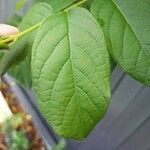
Combretum indicum
ياسمين هندي أحمر · الكيكوال الهندي · ملکه صبا · Rangoon creeper · Madhumalti
Description
Source: leafsnapCombretum indicum, also known as the Rangoon creeper, is a vine with red flower clusters which is native to tropical Asia.
🌳 Besides its ornamental use, rangoon creeper is employed in the perfume industry for its intoxicating aroma, especially in night-blooming varieties whose scent becomes stronger after dark. It is also used as a bioindicator: because it climbs and spreads extensively, it can indicate ecosystem health and reveal areas that have become ecologically vibrant or degraded. Additionally, rangoon creeper has been observed for its potential anti-pollution qualities, able to absorb harmful substances from the air and serve as an asset in green urban planning.
🎭 Fidelity
Care Guide
💧 Water
The Rangoon creeper comes from tropical regions and thrives in humid environments, where it requires consistent moisture. To maintain its health, water it weekly, taking care not to over-saturate or let it dry out. Although it is best suited for outdoor growth where it can benefit from natural rainfall, the Rangoon creeper needs a steady supply of water year-round to ensure vibrant foliage throughout all seasons.
How should I water my Rangoon creeper to make sure it grows well?
To promote excellent root development, it's recommended to place a garden hose at the base of the plant. Avoid spraying the leaves directly, especially if they are exposed to direct sunlight outdoors, as they will require more water. Moistening the roots can be done using bubblers or soaker hoses, ensuring coverage for the entire garden or bed. After adding or removing plants, it's important to drain excess water and allow the soil to dry before watering again. To prevent diseases, water at ground level instead of spraying the leaves. On sunny days, it can be beneficial to spray the entire bush. Whether the plant is potted or in-ground, it is important to remember that Rangoon creeper prefers deep watering rather than light sprinkling.
What should I do if I give Rangoon creeper too much or too little water?
If a Rangoon creeper is overwatered, it may develop yellow leaves that eventually fall off and wilt. The plant may also appear unhealthy, with mushy stems. When these signs start to show, it's important to adjust your watering schedule. On the other hand, wilting can also be a sign of under watering. In this case, the leaves may become crisp and dry. If the soil is dry and simply watering is not enough, give the plant a thorough watering. However, bear in mind that even with enough water, the Rangoon creeper may still have dry leaves and appear yellow for a few days due to damage to the root system. Once it returns to normal, the yellowing leaves will stop. If you have a Rangoon creeper indoors, always check the moisture levels in the pot. Avoid overwatering and watch out for black spots, which may indicate excess moisture. If black spots are present, allow the soil to dry out by abstaining from watering for a few days. Overwatering can lead to root rot, so if you observe discolored and slimy roots, consider transferring the plant to a different pot. To prevent root rot, avoid making the soil too soggy. When planting the Rangoon creeper outdoors, make sure to dig a little deeper. If the soil feels excessively dry when you check with your fingers, it may indicate under watering. Adequate watering is necessary for the plant's recovery.
How frequently do I need to water my Rangoon creeper?
The Rangoon creeper prefers deep and infrequent watering. If you have them in pots, it's important to soak them in a gallon of water each time. Potted plants dry out faster, so you'll need to water them every 3 to 5 days in cold regions. Watering in the morning when the soil is dry is best, whether you have the plants indoors or outdoors. You can also check the soil to see if it needs water - if the top 2-3 inches are dry, it's time to water. During hot days, you may need to check the moisture daily since the heat can quickly dry out the soil in the pot. If you have a garden, you'll need to irrigate the soil too. In hot climates, watering once a week is sufficient. Make sure to only water when the top 2-3 inches of soil are too dry. Consider the rainfall on the plant and avoid adding water to prevent root rot. If there is a lot of rain, additional watering may not be necessary. Rangoon creeper typically grows during spring and fall. When planted outdoors, adding 3 to 4 inches of mulch helps conserve water. Sandy soil requires more frequent watering as it drains faster, while clay soil requires less frequent watering to prevent root rot. It may be helpful to mark the watering dates on a calendar and keep an eye on drooping leaves, as this could indicate the need for water.
How much water should I give my Rangoon creeper plant?
To ensure proper watering for your Rangoon creeper, follow these guidelines. For potted plants, water deeply until you see water dripping from the bottom of the pot. Then, allow the soil to dry before watering again. Use a water calculator or moisture meter to monitor the amount of water given to your plant each week. During the flowering period, provide ample water, but allow the moisture to evaporate to prevent root rot. If your Rangoon creeper is planted outdoors and receives adequate rainfall, additional watering may not be necessary. However, when the plant is young or newly planted, ensure it receives 1-2 inches of rain per week. As the Rangoon creeper grows, it can rely solely on rainfall. Only in hot weather or during extended periods without rainfall should you consider a full watering during the cooler part of the day to prevent heat damage. Additional watering may be required during prolonged dry spells.
Do I need to change how often I water my Rangoon creeper depending on the time of year or the weather?
The Rangoon creeper prefers outdoor conditions with rain, but only in persistently dry weather should you water it. Keep the soil moist but not soggy during the spring and fall growing seasons. Alternating between dry and moist soil conditions is ideal for its growth. Hot weather in the summer can cause water to evaporate quickly, so if there is little rainfall, water it more often to keep the soil moist. In the winter, the Rangoon creeper requires less water as it becomes dormant and loses its leaves. Use a well-draining soil mixture, such as terracotta, to allow for quicker water evaporation. Once the Rangoon creeper starts to leaf out in the spring, you can skip watering it and rely on fall and winter rains. Avoid ponding or drought when the plant is flowering, and ensure good drainage at all times, especially in winter. When in a pot, the plant has limited root growth, so water it well, especially during summer. Deeply soak the entire root system once or twice a week, depending on the weather, and avoid shallow sprinkles that reach the leaves. Do not let the Rangoon creeper dry out completely in the fall or winter, even during dormancy. Avoid overwatering as well, as the plant does not thrive in sitting water. Use mulch to reduce stress, conserve water, and promote healthy blooms whenever possible.
☀️ Light Full sun
Rangoon creeper grows best when it gets a moderate amount of sunlight during the day. It readily adjusts to different light levels. In the wild, it is often found where other plants partially filter the sun's rays. Too much or too little light can inhibit its growth.
What are the sunlight requirements for Rangoon creeper?
Rangoon creeper requires about 3-6 hours of sunlight daily to thrive, preferring spots with a perfect balance of light and shade. It adapts well to variations in light exposure, often found in its natural habitat where sunlight is filtered through other vegetation. Insufficient or excessive light exposure can hinder its growth.
How important is artificial lighting for Rangoon creeper when natural sunlight is insufficient?
Artificial lighting is crucial for Rangoon creeper's growth, especially when natural sunlight is insufficient, like in winter or less sunny spaces. LED lights are recommended because they can provide specific wavelengths needed by plants. Full sun plants require 30-50W/sq ft, partial sun plants need 20-30W/sq ft, and full shade plants should have 10-20W/sq ft of artificial light. The light source should be placed 12-36 inches above the plant for 8-12 hours per day to mimic natural daylight.
What are the signs of lighting issues in Rangoon creeper?
Rangoon creeper may show several symptoms due to improper lighting, such as smaller new leaves, leggy or sparse growth, faster leaf drop, slower or no new growth, lighter-colored new leaves or irregular color patterns indicating lack of chlorophyll and nutrients. Chlorosis, sunscald, leaf curling, wilting, and leaf scorching are also common signs that lighting conditions need to be adjusted.
What solutions are recommended for Rangoon creeper experiencing light-related issues?
For indoor Rangoon creepers, gradually increasing sunlight exposure to 3-6 hours daily or using artificial lights for at least 8 hours can be effective. Outdoor plants should be moved gradually to sunnier spots to avoid sunburn due to sudden light intensity changes. Reducing obstructions like pruning branches can increase sunlight access. If necessary, transplanting smaller plants during their dormant period to a location with ample sunlight and good drainage is advised. Note that parts of the plant affected by insufficient sunlight may not recover fully, but new growth will be healthy after adjusting the light exposure.
🌡️ Temperature 20–37.8°C
Rangoon creeper originates from regions where average temperatures range from 68 to 100°F (20 to 38°C). Tolerant of both heat and cool conditions, it prefers warm climates. To promote healthy growth, keep its surroundings within this temperature range and adjust for seasonal changes.
What is the native temperature range for Rangoon creeper?
Rangoon creeper thrives in areas with average temperatures between 68 to 100°F (20 to 38°C). It is very heat-loving and does well in warm climates. To maintain its health, it's important to keep the surrounding temperature within this range across the different seasons. However, it is sensitive to cold temperatures, and special care should be taken in the autumn and winter months to protect it from the cold by moving it indoors and keeping it in a bright location away from heaters.
How should I care for Rangoon creeper during low temperatures?
In low temperatures, Rangoon creeper requires special attention as it prefers warmth and doesn't tolerate cold well. It performs best when the temperature is above 20°C and should be kept above 5°C during the winter. Exposure to temperatures below 1°C can cause the leaves to lighten in color, and frost damage may lead to brown or black discoloration as well as wilting and drooping. If frost damage occurs, you should trim off the damaged parts and move the plant indoors to a warm spot near a south-facing window to ensure it gets enough sunlight while avoiding placing it too close to heaters or air conditioning vents, which can cause the air to become excessively dry.
How does high temperature affect Rangoon creeper, and what are the solutions?
Rangoon creeper should ideally be kept below 38°C during summer, as temperatures above 43°C can cause the leaves to lighten in color and make the plant more prone to sunburn. To care for a plant affected by high temperatures, trim away the sunburned and dried parts. Relocate the plant to a shaded area, especially during the midday and afternoon sun, to protect it. Ensure to water the plant in the morning and evening to keep the soil moist and help the plant cope with the heat.
💨 Humidity normal (40-60%)
This plant will thrive in moderate humidity, which is probably the level in your home. However, misting it a few times a week can be very beneficial. Make sure the room has good ventilation.
🪴 Soil 6-7
🌱 Fertilizer
The best time to fertilize a Rangoon creeper is in early spring, as it breaks dormancy. This encourages overall growth and flower development. Fertilizing improves the foliage, stems, and branches, and encourages flowers that are larger, more vivid, and longer-lasting. It helps transfer nutrients from the roots to the flowers and enhances the plant's health and resistance to disease.
Why should I put fertilizer on my Rangoon creeper plant?
Fertilization is crucial for the overall health and well-being of a Rangoon creeper. Providing the right energy and nutrients leads to the development of lush foliage, strong stems, and branches. However, the flowers of the Rangoon creeper are particularly valued by gardeners. Luckily, fertilization also plays a role in producing large, vibrant, and long-lasting flowers. This happens because the proper fertilizer facilitates the easy transfer of fuel from the plant's roots to its flowers through its stems. Furthermore, proper fertilization ensures the plant's general health remains in good condition, enhancing its ability to fight off diseases.
When should I put fertilizer on my Rangoon creeper plant?
For optimal growth and flower development, it is recommended to fertilize your Rangoon creeper during the early spring when it is coming out of its dormant phase and preparing to bloom. This provides your plant with the necessary energy. However, feeding during this time is not the only beneficial option. Another feeding in the fall can also benefit the plant, although it doesn't need to be as large as the first one. Some gardeners choose to fertilize while planting, but this is not always necessary.
When is it not a good time to fertilize my Rangoon creeper?
During the winter, your Rangoon creeper does not require fertilization because it is in a dormant phase and does not need a lot of energy from the soil to grow. Fertilizing during this time can lead to overfertilization and negative consequences. The best times to fertilize your Rangoon creeper are in early spring and fall. During most of the spring and summer, this plant does not need fertilizer. It is also recommended to refrain from fertilizing if the plant is exposed to extremely hot or dry conditions.
What kind of plant food does my Rangoon creeper need?
When fertilizing Rangoon creeper plants, using a general-purpose fertilizer with balanced ratios of nitrogen, phosphorus, and potassium is often fine. However, these plants tend to thrive when given a specific type of fertilizer. Nitrogen and phosphorus are the most crucial nutrients for Rangoon creeper plants, so it is important to have higher amounts of these compared to potassium in the fertilizer you use. A fertilizer with an N-P-K ratio of 10-10-8 or similar should be suitable. Additionally, applying organic materials like compost at least once a year can be beneficial. Granular fertilizer is the most commonly used type for Rangoon creeper plants.
How should I add fertilizer to my Rangoon creeper plant?
Feeding your Rangoon creeper with fertilizer is easy even for inexperienced gardeners. To use granular fertilizer, simply sprinkle it on the soil after moistening it with water. Another option is to amend the plant's soil with compost or manure. To do this, place the organic material on top of the soil and gently work it into the first few inches with a hand rake, taking care not to disturb the roots.
🪴 Pot & Repot Every 12 months
✂️ Pruning
The Rangoon creeper is a robust climbing plant known for its fragrant flowers. To keep it healthy and blooming, it's important to prune it in early spring. Start by trimming the plant down to 3-4 main stems, removing any dead branches, and thinning out crowded areas to improve air circulation. Regular pruning helps control the plant's size and promotes more flowering. Young plants need support as they grow, while mature vines can benefit from rejuvenating cuts to maintain their vitality.
🌿 Propagating
🐛 Diseases & pets
☠️ Toxicity
Characteristics
- Plant Type
- Vine
- Life Cycle
- Perennial
- Genus
- Combretum
- Family
- Combretaceae
- Hardiness Zone
- 10-11
- Mature Height
- 7.92 m
- Mature Spread
- 4.88 m
- Leaf Color
- Green, Blue
- Leaf Type
- Evergreen
- Flower Color
- White, Pink
- Flower Size
- 2.54 cm to 5.08 cm
- Bloom Time
- Late spring, Summer
- Planting Time
- Spring, Autumn
- Harvest Time
- Mid summer, Late summer
- Native Area
- Nepal, Sri Lanka, India, Malaysia, Angola, Philippines, Bangladesh, Laos, Nigeria, Tanzania, China, Benin, Mali, Sierra Leone, Indonesia, Cambodia, Vietnam, Myanmar, Togo, Ghana, Côte d'Ivoire, Congo (DRC), Thailand