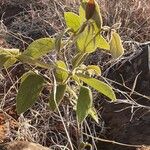
Combretum molle
Velvet bushwillow
Description
Source: leafsnapCombretum molle, commonly known as velvet bushwillow, is a species of flowering plant in the family Combretaceae. Native to southern Africa, it can be found in countries such as South Africa, Zimbabwe, and Mozambique. This plant typically grows to a height of 5-10 meters and features a spreading crown with drooping branches. The leaves are simple, alternate, and oval-shaped, with a velvety texture on the underside. During the summer months, small yellowish-green flowers appear, arranged in dense spikes at the ends of branches. The velvet bushwillow is renowned for its medicinal properties and has been traditionally used to treat various ailments such as fever, coughs, and colds. It also possesses anti-inflammatory properties, making it useful for treating arthritis. The plant prefers well-drained soils but can tolerate poor soil conditions. While it thrives best under full sun exposure, it can also grow in partial shade. Due to its attractive foliage, which turns reddish-brown in autumn, it is often used for ornamental purposes. Overall, Combretum molle is a valuable species not only for its medicinal properties but also for its ornamental appeal. It provides shade during hot summer months and enhances the beauty of gardens or landscapes where it is planted.
Care Guide
💧 Water Every 7 days
The velvet bushwillow, originally from savannas, is known for its drought resilience. It thrives with moderate moisture and typically needs watering twice a week. While it is usually grown outdoors, its water requirements change depending on the season. During its dormant period, it requires less water and benefits from natural rainfall.
☀️ Light Full sun
Velvet bushwillow comes from open habitats, such as sunny meadows and forest edges, that provide abundant light. It thrives in Full Sun but can also tolerate Partial Sun, adapting well to different sunlight conditions.
What are the sunlight requirements for Velvet bushwillow (Combretum molle)?
Velvet bushwillow requires specific amounts of sunlight to thrive. It needs full sun, which is above 6 hours of direct sunlight per day, or partial sun, which is about 3-6 hours of sunlight daily. It's important to observe how sunlight moves through your garden throughout the day. Selecting the ideal spots that offer a balance of light and shade will significantly contribute to the health and happiness of your plants.
Is there any specific advice on where to plant Velvet bushwillow (Combretum molle) in the garden?
When planting Velvet bushwillow in your garden, ensure to select locations that provide the right balance of light and shade as per the plant's needs. The plant thrives in both full sun and partial sun locations. Observing the movement of sunlight and understanding the pattern of light and shade in your garden throughout the day are crucial steps in choosing the best spot for your Velvet bushwillow, ensuring it grows healthy and happy.
🌡️ Temperature 20–37.8°C
Velvet bushwillow is native to regions where temperatures range from 68 to 100.4 °F (20 to 38 ℃). It naturally thrives in warm climates and prefers a consistently mild, balmy environment. During colder months, it may benefit from being kept in a warmer indoor setting.
What is the native climate for Velvet bushwillow?
Velvet bushwillow, known botanically as Combretum molle, is native to regions where the temperature ranges from 68 to 100.4°F (20 to 38°C). This plant thrives in warm climates, preferring a steady, balmy environment. It adapts well to its natural warm surroundings and during the colder months, it may benefit from being kept in a warmer indoor setting to mimic its native conditions.
💨 Humidity
🪴 Soil 5-7
🌱 Fertilizer
Fertilizing is essential for the care of Velvet bushwillow. Regular feeding during the growing season preserves the energy required for its showy foliage and supports overall growth. Failing to fertilize can lead to unhealthy leaves, reduced ornamental value, and stunted or weak growth that is more susceptible to breakage.
🪴 Pot & Repot
✂️ Pruning
The velvet bushwillow is a plant with soft, velvety leaves that can grow quite tall. For the best results, prune it in early spring before new growth begins. When pruning, focus on removing dead or diseased branches and thin out the plant to improve airflow. This process encourages healthy growth and abundant flowering. Always use clean, sharp tools to make precise cuts, which will help enhance the plant's structure and prevent overcrowding.
🌿 Propagating
🐛 Diseases & pets
☠️ Toxicity
Characteristics
- Plant Type
- Shrub
- Life Cycle
- Perennial
- Genus
- Combretum
- Family
- Combretaceae
- Hardiness Zone
- 9-11
- Mature Height
- 7.92 m
- Mature Spread
- 3.96 m to 6.1 m
- Leaf Color
- Green
- Leaf Type
- Deciduous
- Flower Color
- Yellow
- Flower Size
- 6.35 cm to 11.43 cm
- Bloom Time
- Fall
- Planting Time
- Summer
- Harvest Time
- Winter, Early spring
- Native Area
- Burkina Faso, Djibouti, Somalia, Angola, Rwanda, Eritrea, Nigeria, Yemen, Kenya, Niger, Tanzania, Zimbabwe, Guinea-Bissau, Mali, Benin, Sierra Leone, Cameroon, Burundi, Mozambique, Ghana, Ethiopia, Botswana, Congo, Central African Republic, Saudi Arabia, Malawi, South Africa, Zambia, Sudan, Guinea, Chad, Togo, Senegal, Eswatini, Côte d'Ivoire, Gambia, Congo (DRC)