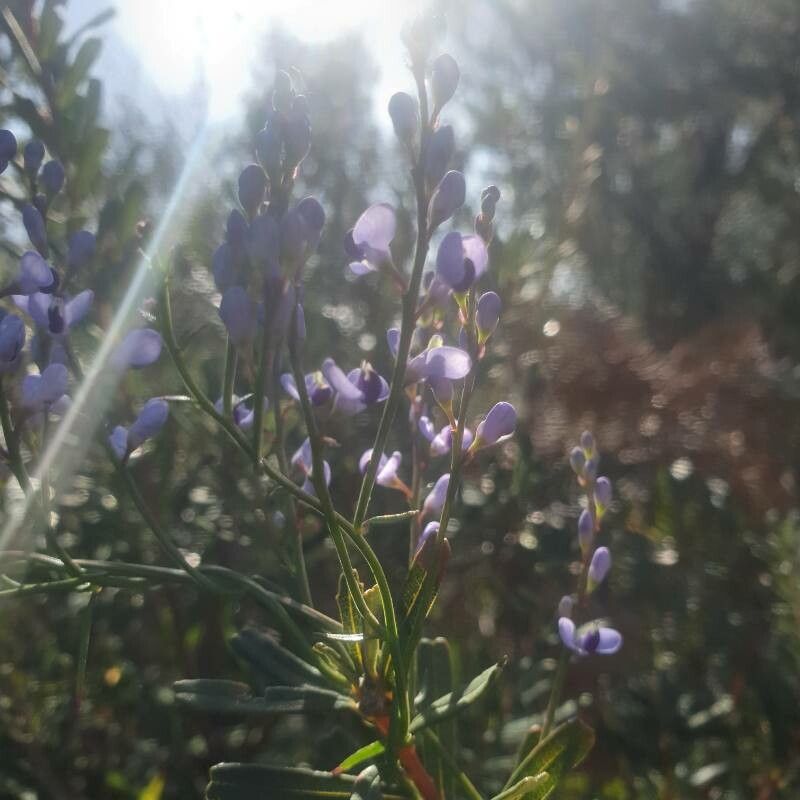
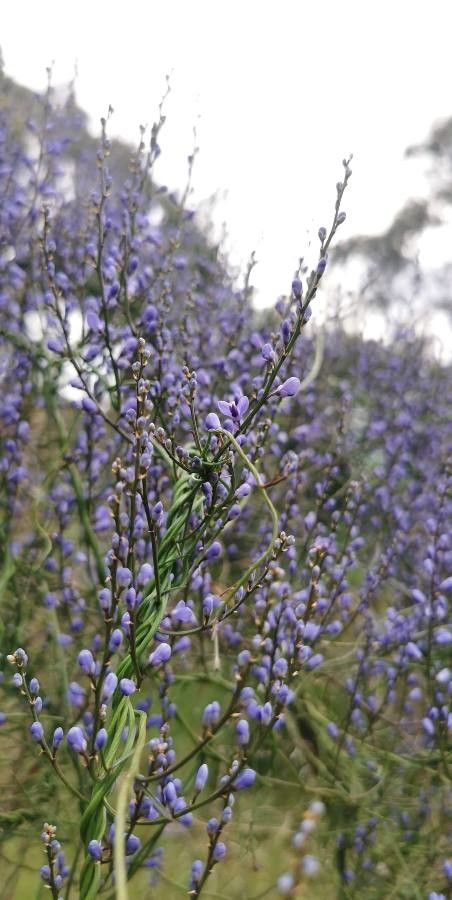
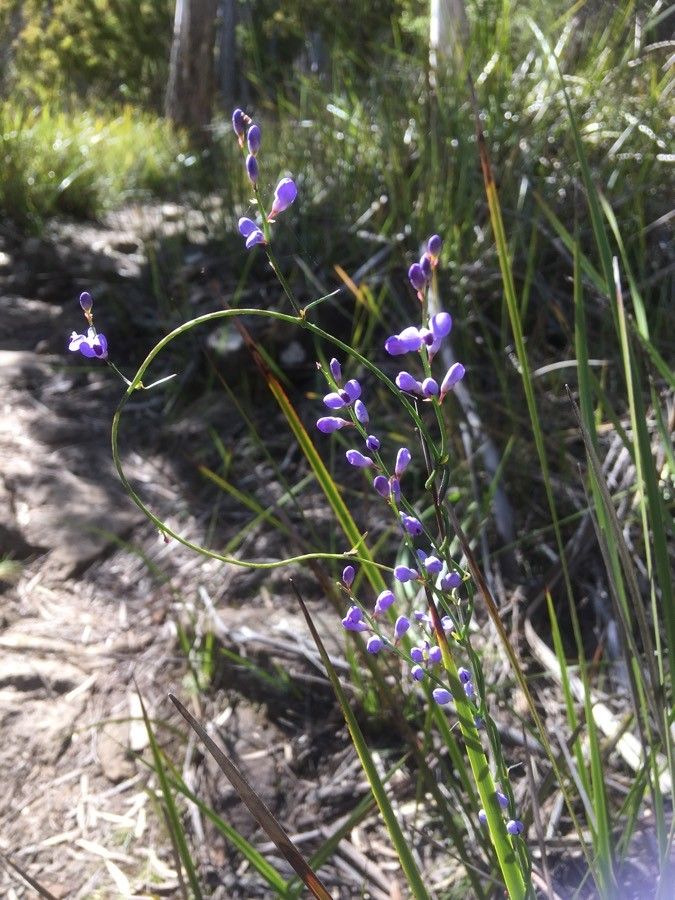
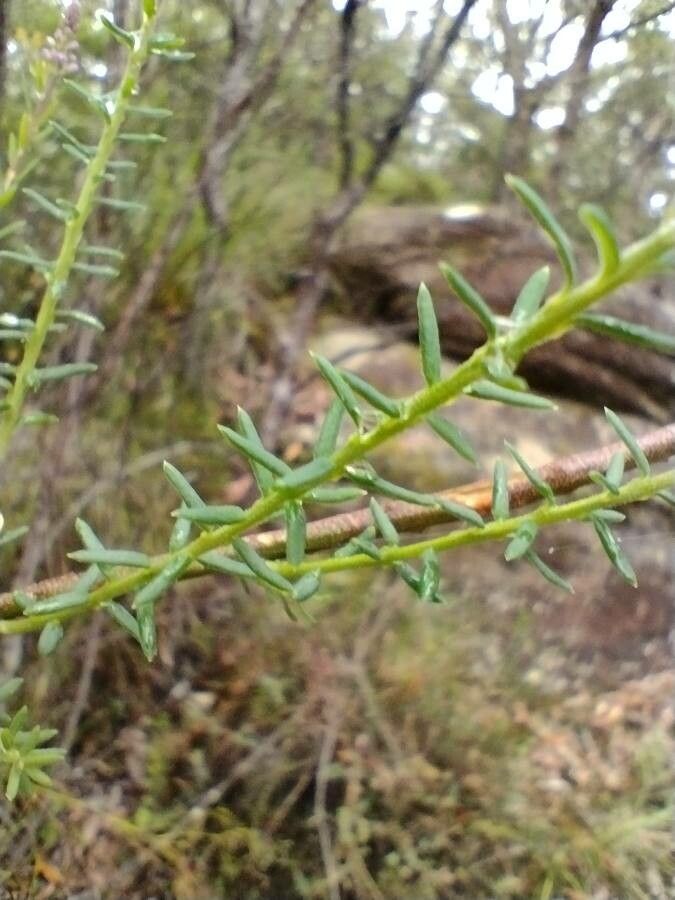
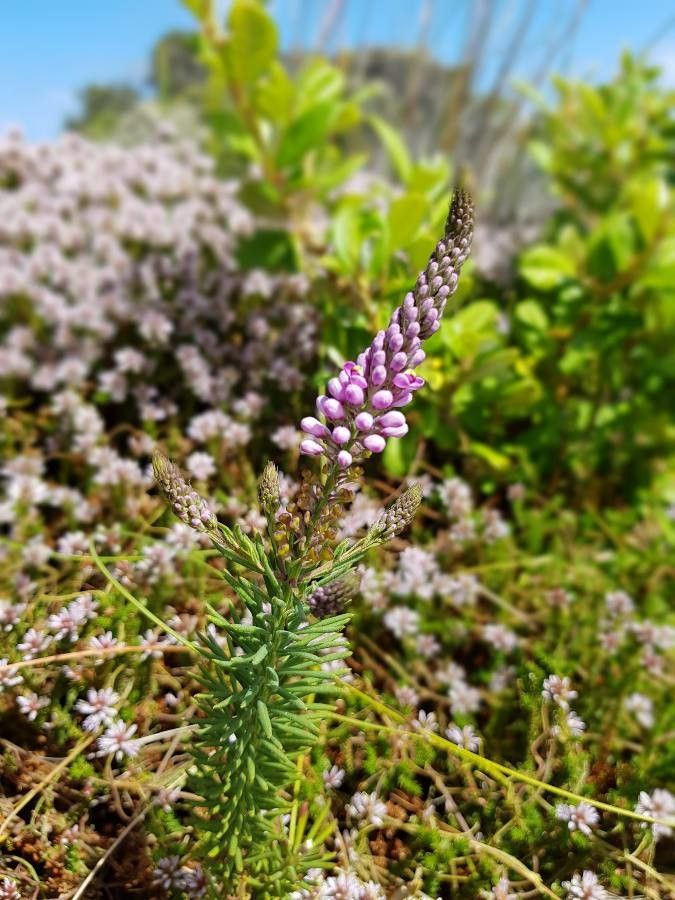
Comesperma volubile, commonly known as love creeper, is a slender climber in the family Polygalaceae. It grows to between 1 and 2 metres high. The leaves are 10 to 50 mm long and 1 to 5 mm wide. Blue or pale purple flowers are produced in sprays from July to December in the species' native range. It occurs in heathland and forest in the states of Western Australia, South Australia, Tasmania, Victoria, New South Wales and Queensland in Australia.It was first described in 1806 by Jacques Labillardière, in Novæ Hollandiæ plantarum specimen.
Love creeper is well resistant to disease and is generally unlikely to develop problems. In terms of care, this plant is fairly low-maintenance. Planted outdoors it needs very little watering, and larger specimens typically don’t require pruning; smaller plants, however, should be pruned after they finish blooming. Love creepert is suitable for anyone with an outdoor area, such as a garden or deck, and does not demand much gardening experience.
How to keep Comesperma Volubile.
Light
Love creeper is native to open habitats, such as sunny meadows and forest edges, which offer abundant light. It does best in full sun but can also tolerate partial sun, adapting well to a range of sunlight conditions.
Temperature
Love creeper comes from temperate regions and does best at temperatures of 68 to 95°F (20 to 35℃). As seasons shift, promote optimal growth by slightly adjusting temperature settings to replicate its natural climate.
Fertilizer
The timing of fertilizing Love creeper is important. Apply fertilizer in early spring and then once a month until early summer. Fertilizer encourages attractive blooms and supplies energy both during dormancy and during active growth.
Pruning
The love creeper is a delicate climbing plant cherished for its vibrant flowers. To promote growth and flowering, prune it in early spring. During this time, remove any dead or damaged stems to improve the plant's shape, air circulation, and access to light. This approach aligns with the love creeper's natural growth cycle, enhancing its resilience and blooming efficiency.
Botanical profile.
- Plant Type
- Vine
- Life Cycle
- Perennial
- Genus
- Comesperma
- Family
- Polygalaceae
- Hardiness Zone
- 9
- Mature Height
- 0.91 m to 2.13 m
- Mature Spread
- 49 cm to 91 cm
- Leaf Color
- Green
- Leaf Type
- Semi-evergreen
- Flower Color
- Purple, Blue
- Flower Size
- 0.51 cm to 0.76 cm
- Bloom Time
- Mid fall, Late fall, Early winter
- Planting Time
- Spring, Summer
- Harvest Time
- Winter
Other names.
Reader questions.
What are the sunlight requirements for Love Creeper?
Love Creeper (Comesperma volubile) thrives in conditions where it can receive varying amounts of sunlight throughout the day. For optimal growth, it should be exposed to full sun, which means it needs above 6 hours of sunlight daily. However, it can also do well in partial sun, requiring about 3-6 hours of sunlight. It's important to observe how sunlight moves through your garden to find spots that offer the right balance of light and shade, ensuring your Love Creeper plants are happy and healthy.
What is the native environment of Love Creeper?
Love Creeper, botanically known as Comesperma volubile, thrives in temperate environments. It grows best within a thermal range of 68 to 95°F (20 to 35°C). To ensure its optimal growth, especially as seasons change, it is advisable to moderately adjust the temperature settings of its environment to closely mimic its native climate.