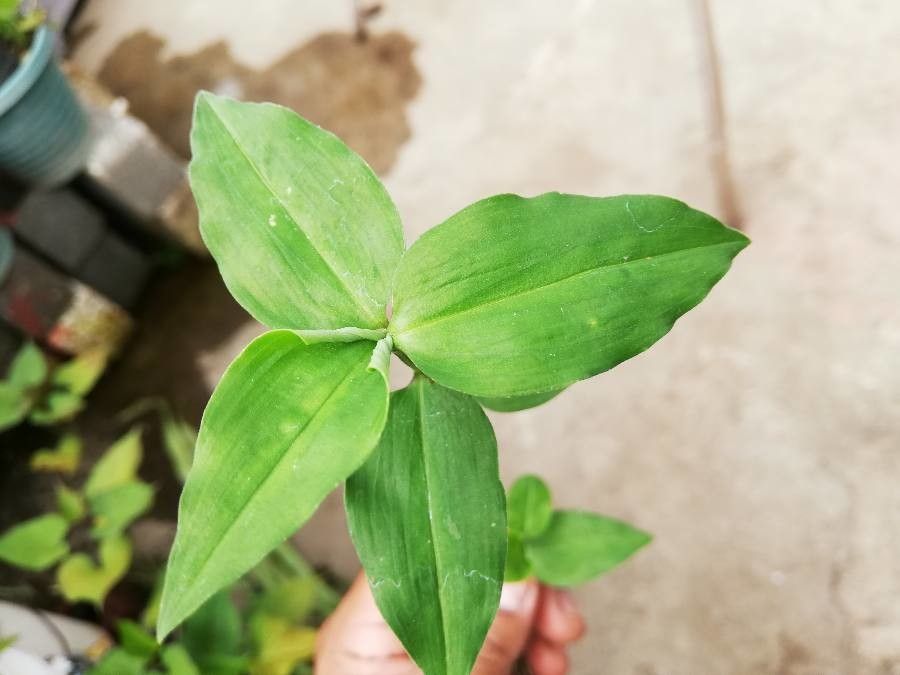
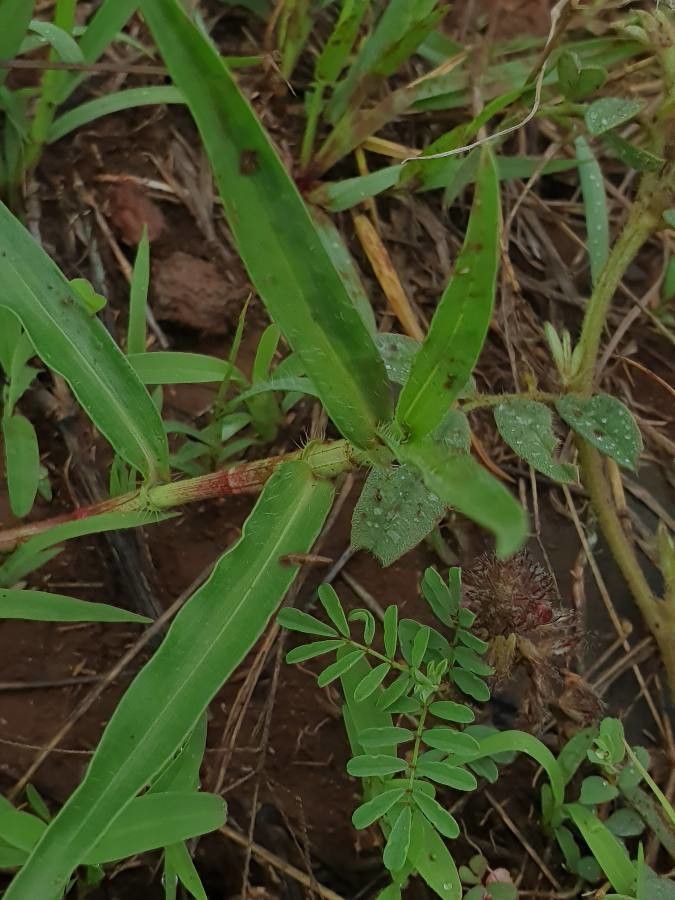
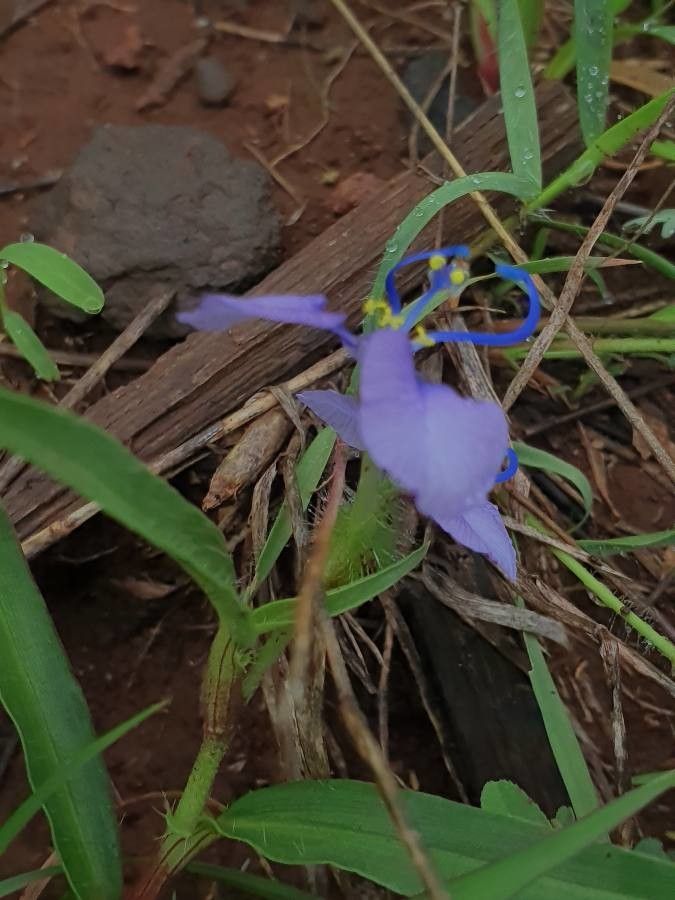
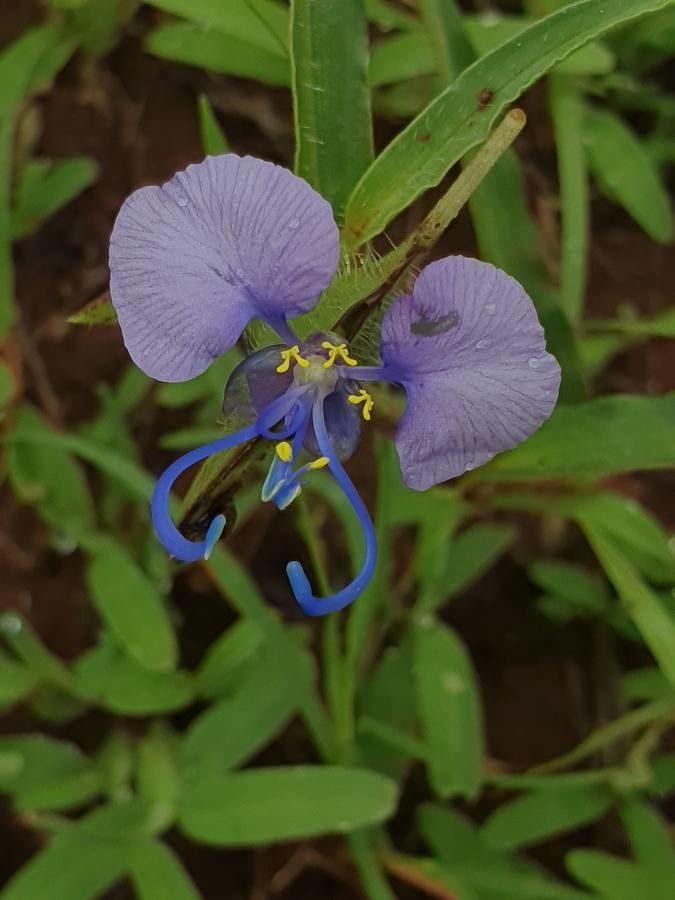
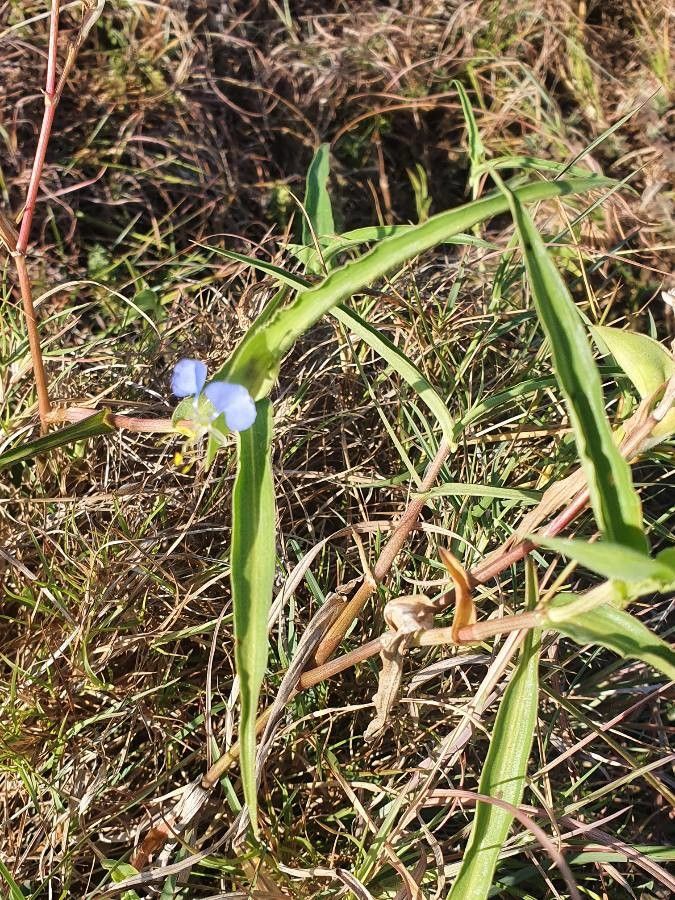
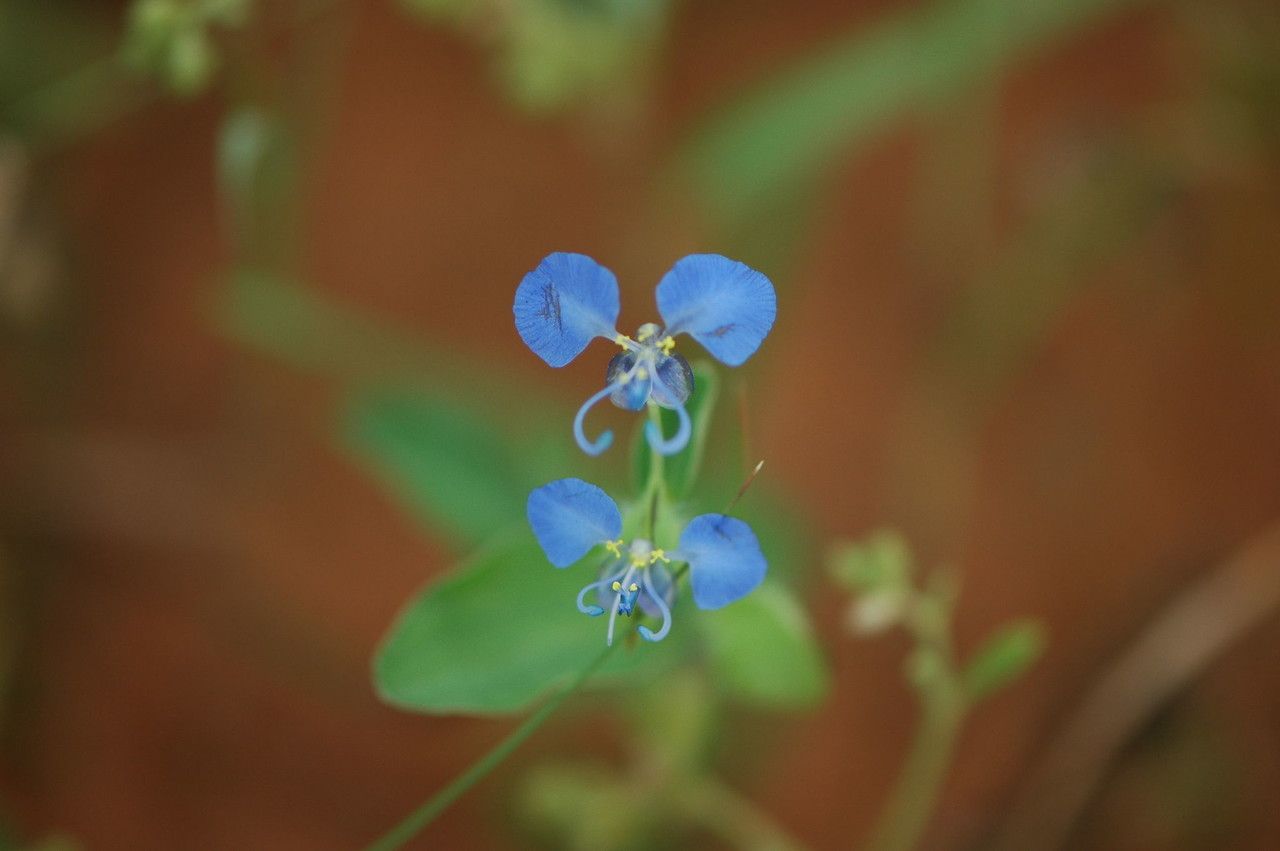
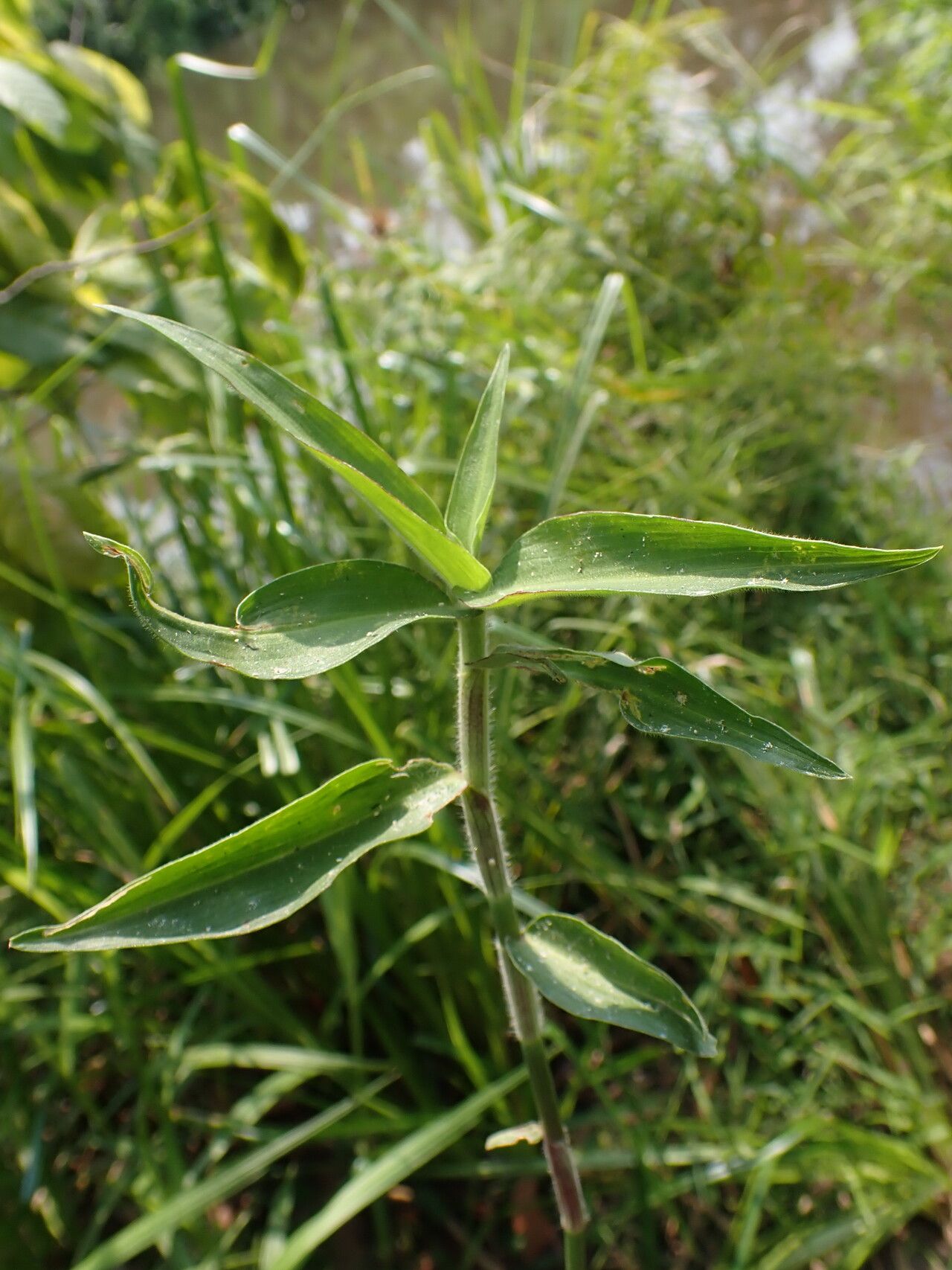
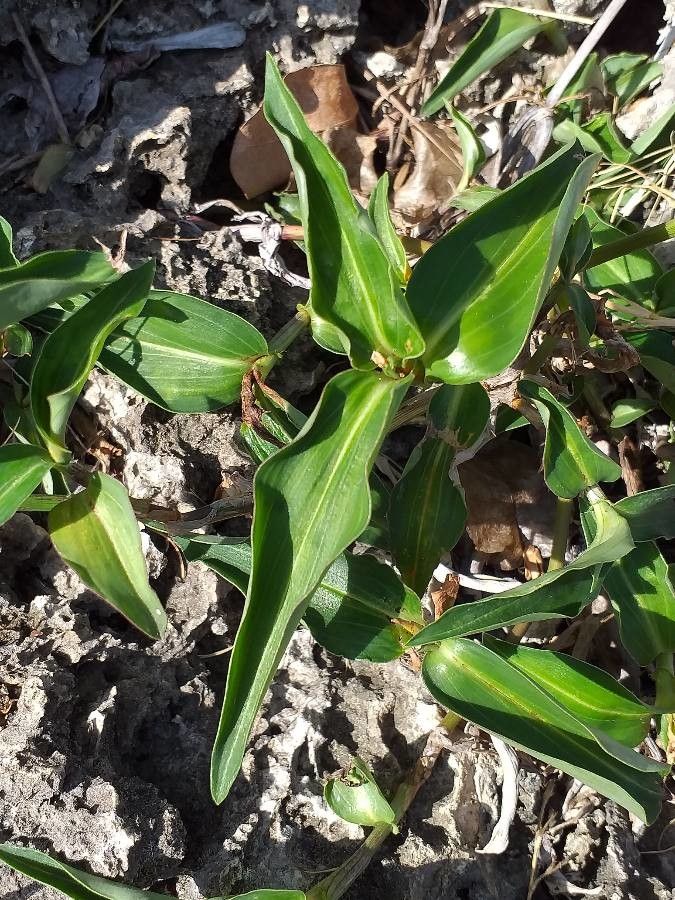
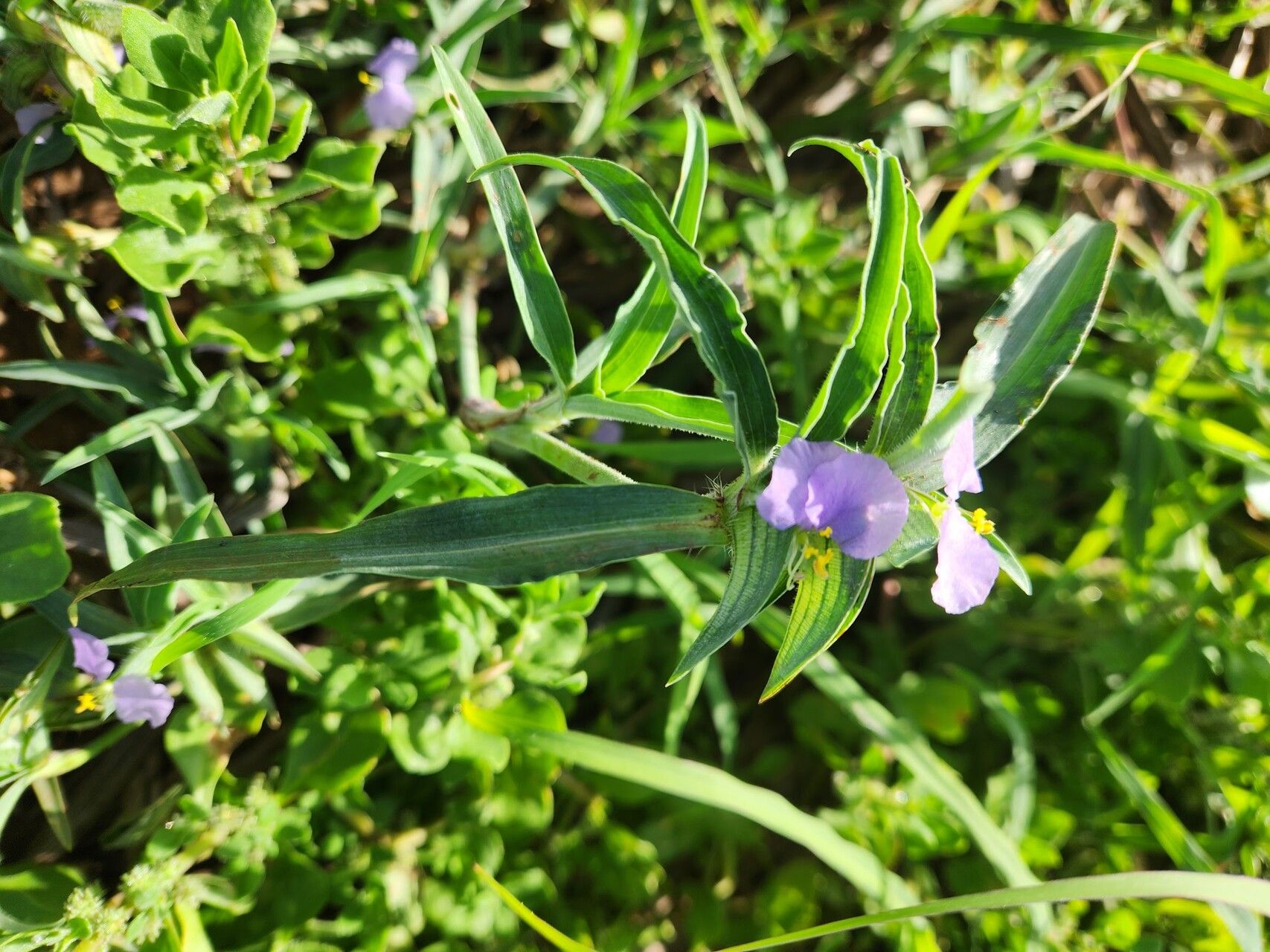
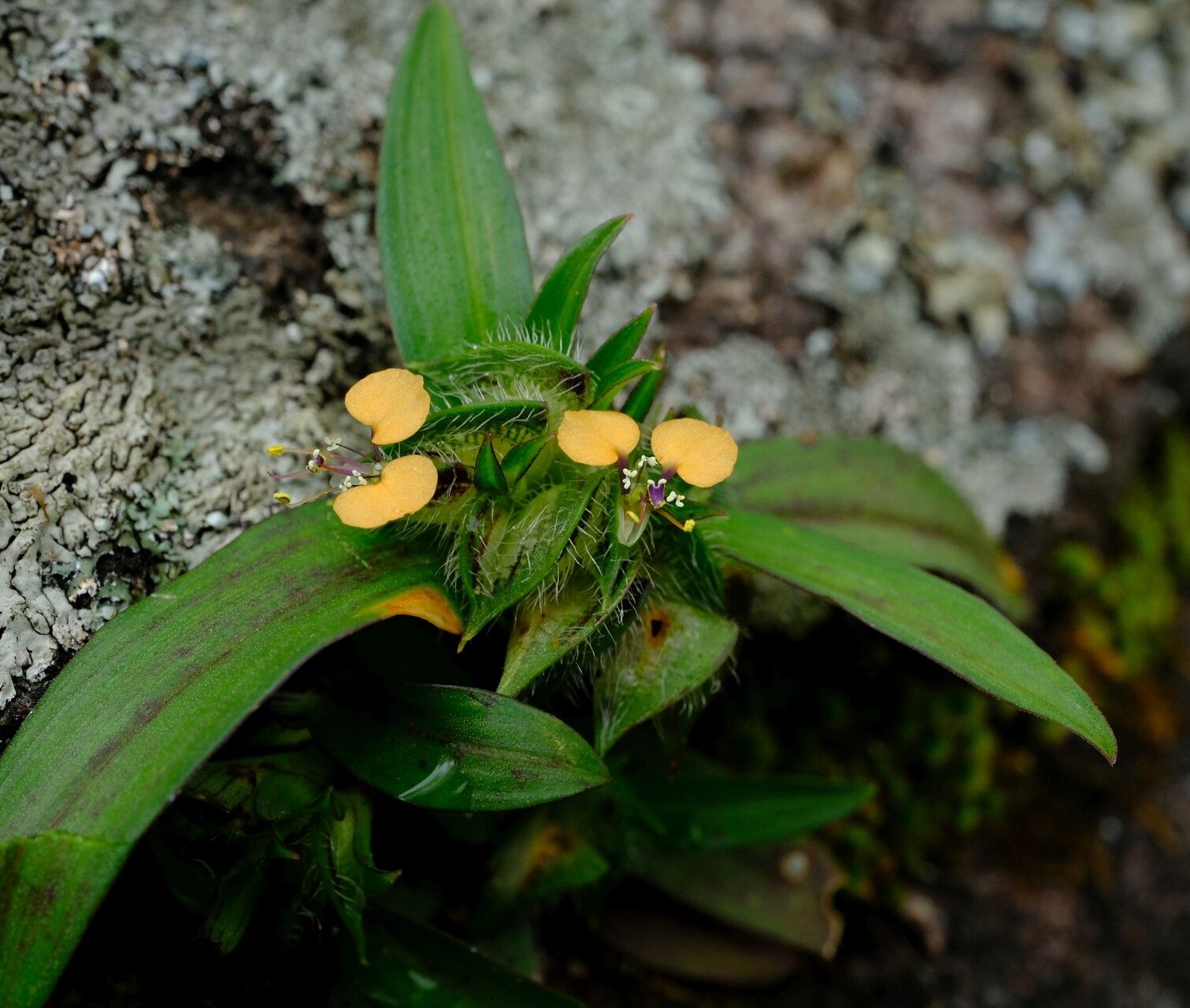
Commelina forskaolii, sometimes known as rat's ear, is an herbaceous plant in the dayflower family native to much of Africa, Arabia, and India. It has also been introduced to Florida in the United States. It is considered a common species in most of its range. It can be easily recognized by its bright blue flowers with winged stamen filaments. The seeds are also distinctive with distinctive irregular ridges on their sides. It often forms dense mats, and can be found most commonly in sandy soils in at least somewhat sunny situations. The species is considered a weed in many areas because of its hardiness and ability to produce cleistogamous flowers.
Rat's ear has strong resistance to disease and is generally not susceptible to illnesses. However, it can be affected by pests and diseases present in its environment. Such infections are typically mild. Regarding care, this plant needs moderate maintenance. It should be pruned regularly to keep a neat appearance and healthy growth. Applying fertilizer can also encourage flowering. Rat's ear is suitable for anyone who has an outdoor area, such as a garden or patio, and does not demand extensive gardening experience. It may need more attention when grown indoors.
How to keep Commelina Forskaolii.
Light
Rat's ear comes from habitats with dappled sunlight, such as forest understories or rocky locations that provide natural shade. It performs best in partial sun but can also adjust to full sun.
Temperature
Rat's ear comes from tropical areas, where the weather is normally warm and humid. Consequently, it is well suited to high heat and moisture. It does not tolerate sudden temperature shifts and prefers a consistent temperature, so avoiding indoor temperature fluctuations is important. It generally cannot endure cold and needs warmer conditions to grow. If the surrounding temperature falls too low, the plant may stop growing or even die.
Fertilizer
Rat's ear benefits from regular, light applications of fertilizer to encourage healthy leaf growth. You should fertilize Rat's ear about once a month during the summer. Nitrogen is vital for foliage, and supplying nitrogen-rich sources helps Rat's ear thrive.
Pruning
Pruning rat's ear in early spring is beneficial for both its health and appearance. To do this, remove any dead stems, thin out crowded areas, and trim back long stems. This will enhance flower production and help prevent disease. Regular pruning encourages robust growth and extends the blooming period.
Botanical profile.
- Plant Type
- Herb
- Life Cycle
- Annual, Perennial
- Genus
- Commelina
- Family
- Commelinaceae
- Hardiness Zone
- 9-11
- Mature Height
- 30 cm to 61 cm
- Mature Spread
- 20 cm to 40 cm
- Leaf Color
- Green, Dark Green
- Leaf Type
- Deciduous
- Flower Color
- Blue
- Flower Size
- 1.02 cm to 2.03 cm
- Bloom Time
- Summer, Early fall, Mid fall
- Planting Time
- Spring, Summer, Autumn
- Harvest Time
- Late summer, Fall, Early winter
Other names.
Reader questions.
What is Rat's ear?
Rat's ear refers to a plant known botanically as Commelina forskaolii. It does not have any information provided regarding its essentials, contents, additional details, or symptoms.