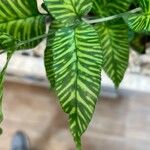
Coniogramme emeiensis
Chinese bamboo fern · Zebra Fern
Description
Source: leafsnapConiogramme is frequently referred to as the bamboo fern, not because it actually resembles a bamboo, but rather because of the pairs of ribbon-like leaves that are aligned along the middle rib of the fronds. They come from Asia, but Coniogramme Emeiensis is only found there, on and around Mount Emeie in China. With its striking variegation, it is a rather unique fern. Although younger growth exhibits this the most, there is usually enough of it to keep a clump appearing fascinating. As far as we are aware, Golden Zebra is not a registered variety name; rather, it refers to the striped appearance of those gorgeous leaves and is occasionally marketed as such.
Care Guide
💧 Water 1-2 times a week
The bamboo fern flourishes in humid environments and needs consistent moisture, although it's important to avoid waterlogging. It should be watered twice a week and thrives in shaded areas, making it an excellent choice for indoor spaces. As an evergreen fern, it retains its leaves throughout the year.
☀️ Light Full shade
Bamboo fern is native to habitats like forest understories and rocky areas that provide natural shade. It prefers Full Shade but can tolerate Partial Sun.
🌡️ Temperature 15–35°C
Bamboo fern adapts well to temperature, tolerating high heat and wide temperature fluctuations. In hot conditions, attention should be paid to watering and to providing appropriate shade to avoid sunburn. Conversely, bamboo fern has relatively low tolerance for cold; although it can endure some chill, very low temperatures may cause frost damage.
💨 Humidity
🪴 Soil 6-7
🌱 Fertilizer
When it comes to the zebra plant's capacity to flower, fertilizer application can be quite advantageous to growth. The zebra plant should be fertilized every one to two weeks throughout its peak growth season (usually spring and early summer) with a fertilizer that is suitable for both leaves and blooms.
🪴 Pot & Repot Every 12 months
✂️ Pruning
Bamboo ferns flourish in shaded, moist environments, showcasing graceful, arching fronds. To encourage healthy growth and improve air circulation, prune any dead or damaged fronds early in the spring, cutting them at the base. Be sure to use clean, sharp tools for these cuts, as this helps promote vigorous growth, maintain the plant's attractive appearance, and reduce the risk of disease.
🌿 Propagating
🐛 Diseases & pets
☠️ Toxicity
The zebra plant is completely safe for pets, despite having a shape and dimensions that are quite similar to aloe, which is harmful to cats and dogs. These durable succulents require little maintenance and add a unique ornamental element to any space, especially when placed in a unique pot. According to the ASPCA, zebra plants are also good for cats, horses, and dogs.
Characteristics
- Plant Type
- Fern
- Life Cycle
- Perennial
- Genus
- Coniogramme
- Family
- Pteridaceae
- Hardiness Zone
- 8-10
- Mature Height
- 1 cm to 2 cm
- Mature Spread
- 37 cm to 46 cm
- Leaf Color
- Green, Yellow, Variegated
- Leaf Type
- Evergreen
- Planting Time
- Spring, Autumn
- Native Area
- China