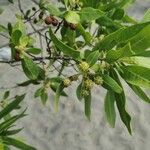
Conocarpus erectus
کنوکارپوس، چنار دریایی · Button mangrove · Buttonwood · Caribbean mangrove · Button Tree
Description
Source: leafsnapConocarpus erectus, commonly known as buttonwood or button mangrove, is a species of flowering plant in the Combretaceae family. This plant can grow as a small to medium-sized tree or shrub, reaching heights of up to 10 meters, and features a dense, rounded crown. Native to the coastal regions of the Americas, Conocarpus erectus is found from Florida in the United States, through Central America, and into South America. The leaves of Conocarpus erectus are simple, alternate, and leathery, with an oval shape that tapers at both ends. The plant produces small, inconspicuous flowers that have five greenish-white petals. The fruit is a woody capsule that contains a single seed. Conocarpus erectus is valued for various reasons, including its use as an ornamental plant in landscaping due to its attractive foliage and tolerance for salt spray from ocean winds. Additionally, the plant provides habitat for various wildlife, such as birds, insects, crabs, and fish, thanks to its ability to thrive near saltwater environments. Beyond its ornamental appeal, Conocarpus erectus possesses medicinal properties. Indigenous peoples have traditionally used it to treat a range of ailments, including diarrhea, fever, coughs, colds, sore throats, skin infections, wounds, and burns, among others. Overall, Conocarpus erectus's hardiness makes it an ideal choice for coastal gardens. It can withstand harsh conditions while providing year-round beauty and ecological benefits by supporting local wildlife populations through habitat creation.
🌳 Buttonwood timber is a sought-after building material in parts of the Middle East and Africa. Renowned for its durability and its resistance to both termites and marine borers, it is a preferred material for constructing buildings and building boats. It also provides environmental benefits as a phytoremediator, able to absorb toxic heavy metals from contaminated sites, highlighting its usefulness in environmental clean-up.
Care Guide
💧 Water Every 7 days
Buttonwood is a plant that originates from coastal areas and is quite drought-tolerant. It thrives when watered every 1-2 weeks. As an evergreen, it prefers soil that remains consistently moist, but it can endure short dry spells, which makes it adaptable to a variety of climate zones.
How should I water my Buttonwood plant?
Your Buttonwood is not particular about how you water it, so you can use any common watering tool. This includes watering cans, hoses, or even cups. It is important to water the soil directly, making sure to evenly moisten all areas. Using filtered water is recommended, as tap water may contain harmful particles. Additionally, using water at or slightly above room temperature is beneficial to avoid shocking the plant. However, the Buttonwood generally responds well to any water you give it.
What should I do if I give my Buttonwood plant too much water or too little water?
Outdoor plants, especially new ones or seedlings, can easily be left without enough water. It's important to remember to water them consistently for a few months, especially when they're small or newly planted. Once the roots are established, Buttonwood plants can rely on rain most of the time. When Buttonwood plants are in pots, overwatering is a common issue. If you accidentally overwater, it's important to act quickly to fix the situation. First, stop watering the plant immediately to minimize the negative effects. Then, inspect the roots by removing the plant from its pot. If you don't find any signs of root rot, you can return the plant to its container. However, if there is root rot, trim away the affected roots and consider applying a fungicide to prevent further damage. Finally, repot the Buttonwood in well-draining soil. On the other hand, underwatering is easier to fix. Signs of underwatering include drooping, drying out, and falling leaves. Simply water the plant more frequently, and the leaves should quickly return to fullness. It's important to correct your watering frequency as soon as you notice signs of underwatering.
How many times should I wet my Buttonwood?
Naturally growing outdoor plants usually rely on rainfall. But if your area doesn't get enough rain, you'll need to water your plants every 2 weeks in the spring and fall, and more often in the summer. In winter, when plants grow slower and need less water, you can water them sparingly or not at all. Young or newly planted Buttonwood plants should be watered more often to help them establish and grow. For potted plants, there are two main ways to determine watering frequency. One way is to follow a set schedule, like once a week or every other week. However, this may not work well if your specific growing conditions are different. Another option is to check the soil moisture. Ideally, the top two to four inches of soil should be completely dry before watering again. This method is especially important during the summer when the plant's water needs are highest.
How much water does my Buttonwood plant need?
When watering your Buttonwood, you might be surprised to learn that it doesn't always require a lot of water. Instead, if the soil has only dried a few inches since the last watering, giving the plant about five to ten ounces of water each time can promote healthy growth. You can also adjust the amount of water based on the moisture of the soil. Remember to take note of how many inches of soil have dried out between waterings. To ensure your Buttonwood gets sufficient moisture, water enough to dampen all the dry soil layers since the last watering. If more than half of the soil is dry, it may be necessary to give more water. In those cases, continue watering until you see excess water draining from the pot's drainage holes. If you have planted your Buttonwood in a location that receives ample outdoor rain, additional watering may not be necessary. However, when the Buttonwood is young or still establishing, it should receive 1-2 inches of rain per week. As it grows and becomes established, it can rely solely on rainwater. Only in instances of hot weather and no rainfall for 2-3 weeks should you consider giving your Buttonwood a thorough watering to prevent stress.
How do I know if I am giving enough water to my Buttonwood plant?
The Buttonwood plant is more commonly affected by overwatering, which is characterized by yellowing leaves, leaf drop, shriveled plant structure, and potential root rot. Conversely, if the Buttonwood is underwatered, it will start to wilt, and its leaves may turn brown or become brittle. Regardless of whether you notice signs of overwatering or underwatering, it is important to take action and restore the plant's health.
☀️ Light Full sun
The buttonwood does best when it receives abundant light for most of the day, which improves its growth and health. It can survive with less light, but too much shade may impede its full development. In its native habitat it generally gets substantial light exposure, indicating that light is important for its well-being.
What are the sunlight requirements for Buttonwood plants?
Buttonwood plants thrive under different sunlight conditions, requiring full sun exposure of over 6 hours of sunlight to perform best, but they can also tolerate partial sun with about 3-6 hours of sunlight. It is important to observe how sunlight moves through your garden to ensure you position your Buttonwood plants in spots that offer an ideal balance of light and shade, catering to their needs for optimal growth and health.
What are the essentials for growing Buttonwood plants effectively?
Growing Buttonwood plants effectively requires giving them abundant light for the majority of the day, as this enhances their growth and health. Although Buttonwood can grow with less light, too much shading can inhibit its full development. In habitats where Buttonwood naturally occurs, there is typically rich light exposure, indicating the importance of sufficient lighting. For indoor plants, artificial lighting such as LED lights can be used to supplement natural sunlight, especially in conditions where natural light is inadequate. It's important to select the right type of artificial light, determine the appropriate distance from the plant, and mimic natural daylight hours, adjusting the intensity and duration based on whether the plant needs full sun, partial sun, or shade conditions.
What are the symptoms of insufficient light in Buttonwood plants, and how can they be addressed?
Symptoms of insufficient light in Buttonwood plants include smaller new leaves, leggy or sparse growth, faster leaf drop, slower or no new growth, lighter-colored new leaves, chlorosis, sunscald, leaf curling, wilting, and leaf scorching. To address these issues, indoor plants can be gradually moved to a sunnier location to receive at least 6 hours of direct sunlight daily, utilizing a south-facing window and keeping curtains open during the day. Artificial lighting can supplement natural light, especially for larger or non-movable plants, by keeping lamps on for at least 8 hours daily or using professional plant grow lights. For outdoor plants, gradually moving them to a sunnier spot and ensuring they're not subjected to sudden light intensity changes can help. Additionally, reducing obstructions such as pruning trees that block sunlight and considering transplanting smaller plants during their dormant period to sunnier locations can optimize light exposure.
🌡️ Temperature 20–37.8°C
Buttonwood prospers in its native habitat at temperatures ranging from 68℉ to 100℉ (20℃ to 38℃). This temperate woody species favors the warmer portion of that range. In cooler conditions, it may need protection from frost to maintain its growth and health.
What is the ideal temperature range for Buttonwood?
Buttonwood thrives in temperatures ranging from 68°F to 100°F (20°C to 38°C), preferring the warmer end of that spectrum. It loves heat and requires measures to protect it from frost in cooler temperatures. During winter or cooler periods, maintaining temperatures above 20°C and avoiding exposures to temperatures nearing 5°C is crucial for its growth and health. If grown outdoors, it is advisable to bring the plant indoors in autumn and keep it near a bright window, but away from direct heat sources to prevent damage.
How should Buttonwood be cared for in low temperatures?
Buttonwood is sensitive to low temperatures and thrives best above 20°C. It should be kept above 5°C during winter to avoid damage. Exposure to temperatures below 1°C can lead to discoloration of the leaves, which may turn brown or black after frost damage, manifesting symptoms like wilting and drooping. To care for Buttonwood in cold conditions, trim off frost-damaged parts and move the plant to a warm, well-lit indoor space. Position it near a south-facing window for ample sunlight without placing it too close to heaters or air conditioning vents to avoid excessive dryness.
How to manage high temperatures for Buttonwood?
During the summer, it's important to ensure Buttonwood's exposure to temperatures stays below 38°C, as exceeding 43°C can bleach the leaves and increase susceptibility to sunburn. To manage high temperatures, trim away sunburned or dried parts of the plant. It's beneficial to relocate Buttonwood to shade, especially during peak sun exposure in the midday and afternoon. Also, watering the plant in the morning and evening will help keep the soil moist and improve the plant's resilience to heat.
💨 Humidity
🪴 Soil 6-7
🌱 Fertilizer
Fertilizing is essential for Buttonwood care. Consistent feeding throughout the growing season maintains the energy needed for its showy foliage and promotes overall development. Skipping fertilization can lead to unhealthy leaves, reduced ornamental value, and stunted or weak growth that is more likely to break.
Why should I put fertilizer on my Buttonwood plant?
Buttonwood plants require regular fertilization because their showy leaves require a significant amount of energy to develop and maintain. It is a challenge for Buttonwood to allocate enough energy to keep its leaves healthy and also support the growth of its stems, branches, roots, and other vital structures. Neglecting fertilization can lead to two likely outcomes. Firstly, the leaves may lose their natural color and texture, making them appear unhealthy and diminishing their ornamental appeal. Secondly, the overall growth of the Buttonwood plant may slow down or result in weak growth that is susceptible to breakage.
When should I put fertilizer on my Buttonwood plant?
Buttonwood plants do well with occasional feedings, so you don't need to establish a strict feeding schedule when planting them. An easy way to fertilize your Buttonwood is by applying fertilizer during your regular watering routine. Additionally, during the growing season, it is important to give your Buttonwood an adequate amount of water. You can feed the plant every two to three weeks, consistently throughout its period of producing new growth.
When is it not a good idea to fertilize my Buttonwood plant?
For most of the year, you can fertilize your Buttonwood regularly. This is fine during the active growing season in spring, summer, and early fall. However, in the winter, you should not give any fertilizer to your plant. This is because the Buttonwood enters a dormant growth phase during the winter. During this phase, the plant does not produce much new growth. Since the plant is using less energy during this time, fertilization is not necessary.
What kind of plant food does my Buttonwood tree need?
Buttonwood plants require a specific fertilizer blend with low amounts of various nutrients. The ideal fertilizer should have an N-P-K ratio of 3-1-2, but a general-purpose fertilizer with an even blend can still work. However, even with a balanced fertilizer, the ratio for each nutrient should be 3 or lower. You can choose between granular or liquid-based fertilizers. If using liquid fertilizer, it's recommended to dilute it by half. Granular fertilizer doesn't have many downsides, but using liquid fertilizer is usually the more sensible option, especially when watering your Buttonwood.
How can I give nutrients to my Buttonwood plant?
There are two main methods for fertilizing a Buttonwood plant. The first method involves mixing liquid fertilizer with water and pouring it onto the soil, allowing it to reach the roots. This can be done by gathering a watering can and diluting the fertilizer with water before pouring it onto the soil. The second method involves using granular fertilizer, which can simply be sprinkled onto the soil around the plant. Granular fertilizers are usually slow-release, so they don't need to be applied as frequently as liquid fertilizers. Whichever method you choose, it is important to water the plant while you fertilize it.
🪴 Pot & Repot 2-3 years
When repotting Buttonwood, select a pot 1-2 inches (2.5–5.1 cm) larger with adequate drainage. Use a well-draining potting mix. Repot in spring or fall, making sure the root ball sits slightly lower than the rim of the flower pot. Water thoroughly after repotting and place in a warm spot with indirect sunlight.
✂️ Pruning
The Buttonwood is a hardy and adaptable plant, featuring leathery leaves and dense, bushy growth. For best results, prune it from early to late winter to remove any damaged branches and encourage healthy new growth. Thinning the plant not only enhances light and air circulation but also helps reduce the risk of disease, all while maintaining its shape and promoting vigorous, attractive foliage.
🌿 Propagating
🐛 Diseases & pets
☠️ Toxicity
Characteristics
- Plant Type
- Shrub
- Life Cycle
- Perennial
- Genus
- Conocarpus
- Family
- Combretaceae
- Hardiness Zone
- 10-11
- Mature Height
- 3.96 m to 20.12 m
- Mature Spread
- 4.57 m to 6.1 m
- Leaf Color
- Green, Blue
- Leaf Type
- Evergreen
- Flower Color
- White, Green
- Flower Size
- 2.54 cm
- Bloom Time
- Late spring, Early summer, Mid summer
- Planting Time
- Spring, Autumn
- Harvest Time
- Mid summer, Late summer, Fall
- Native Area
- Belize, Angola, Honduras, Mexico, Peru, Nigeria, Guinea, Gabon, Guinea-Bissau, Panama, Jamaica, Benin, Colombia, Bahamas, Cuba, Sierra Leone, Equatorial Guinea, Cameroon, Liberia, Venezuela, Brazil, Guyana, Ghana, El Salvador, Senegal, Nicaragua, Côte d'Ivoire, Ecuador, Costa Rica, Congo