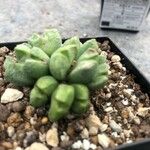
Conophytum bilobum
Description
Source: leafsnapConophytum bilobum is a plant in the family Aizoaceae, native to southern South Africa. It blooms in autumn. It is scentless and grows to a height of 7 cm (2.8 in). The specific epithet bilobum comes from the two-lobed bodies these plants possess.
Care Guide
💧 Water
☀️ Light Full sun
Living pebble thrives when exposed to abundant sunlight, which supports healthy growth. It comes from a habitat with intense sunlight. While it can tolerate varying light levels, insufficient sun can stunt its growth, and excessive exposure may cause the plant to get sunburned.
What are the sunlight requirements for a Living Pebble (Conophytum bilobum)?
The Living Pebble, or Conophytum bilobum, thrives under full sun conditions, requiring more than 6 hours of sunlight daily to maintain healthy growth. Originating from environments with intense sunlight exposure, it is crucial to ensure the plant receives adequate sunlight. However, monitoring the garden's sun exposure throughout the day is advisable to find the best balance of light and shade, preventing potential sunburn while fostering plant health. When sunlight is insufficient, especially during winter or in less sunny indoor spaces, artificial lighting such as LED lights can be used to supplement natural light, ensuring the plant receives the required 30-50W/sq ft for full sun plants.
What symptoms indicate insufficient or excessive sunlight in Living Pebbles?
Living Pebbles may exhibit several symptoms when exposed to suboptimal lighting conditions. Insufficient sunlight can lead to small leaves, leggy or sparse growth, faster leaf drop, slower or no new growth, and lighter-colored new leaves. Conversely, excessive sunlight might cause chlorosis, sunscald, leaf curling, wilting, and leaf scorching. These symptoms reflect the plant's struggle with either a lack of or too much sunlight, impacting its ability to photosynthesize effectively and maintain health.
How can light-related issues be solved for Living Pebbles both indoors and outdoors?
To address light-related issues in Living Pebbles, a gradual adjustment to the ideal lighting condition is key. For indoor plants, gradually move them to sunnier spots till they receive at least 6 hours of direct sunlight daily, keeping them near south-facing windows or using artificial lighting such as desk or grow lights for at least 8 hours a day. For outdoor plants, a similar gradual relocation to sunnier areas helps, ensuring to avoid abrupt changes that might lead to sunburn. If the issue is due to physical obstructions, consider pruning obstructions or transplanting the plant to a sunnier location with proper drainage. However, it's important to note that while new growth can thrive under improved conditions, parts of the plant that were previously affected may not recover.
🌡️ Temperature 15–37.8°C
The living pebble comes from an environment where temperatures range from 59 to 100 °F (15 to 38 °C). It grows best under these conditions. When cultivating this plant indoors, seasonal temperature adjustments should be taken into account.
What is the ideal temperature range for Living pebble?
The Living pebble plant, botanically known as Conophytum bilobum, thrives in an environment where the temperature ranges from 59 to 100°F (15 to 38°C). It is best suited to these conditions for optimal growth. Seasonal temperature adjustments are essential for the plant's care, especially when cultivating it indoors. To maintain its health and growth, attention should be given to its preference for heat, as well as the necessary adjustments during the colder months to prevent dormancy or damage.
How should Living pebble be cared for in winter?
During winter, the Living pebble enters a dormant state and requires special care, particularly when outdoor temperatures drop below -5°C. It's crucial to move the plant indoors to avoid cold damage. Positioning it near a south-facing window ensures it receives ample sunlight. In cases of insufficient natural light, supplementary lighting should be considered. Moreover, when temperatures fall below 15°C, the plant's growth slows, necessitating reduced or ceased watering to prevent root rot. For those grown outdoors, halt watering entirely during low temperatures. Employing temporary insulation methods, such as setting up a greenhouse or using protective materials, can shield the plant from harsh conditions.
What are the symptoms of low temperature exposure in Living pebble?
Exposure to low temperatures significantly affects the Living pebble, as it prefers high temperatures above 15°C and should be kept above -5°C during winter. Should temperatures plummet below -10°C, the plant may exhibit wilting, weakness, and a high risk of root rot. Symptoms of frost damage might not appear immediately but can lead to gradual withering a week after exposure. The best response to frost damage is to trim off affected areas, check for root rot, and propagate through cuttings if necessary, while ensuring the plant is moved to a warmer location with enough sunlight or supplemented light.
How can high temperatures affect Living pebble, and what are the solutions?
Living pebble is sensitive to extreme heat, with ideal conditions below 38°C for its well-being. When temperatures soar above 43°C, the plant ceases growth, incurs water loss, wilts, and becomes prone to sunburn. Managing heat stress involves removing damaged parts of the plant, protecting it from direct afternoon sun until it recovers, and ensuring it is not overwatered, especially if root rot has occurred. Careful monitoring and adjustment of its environment mitigate the impact of high temperatures and promote recovery and growth.
💨 Humidity
🪴 Soil 6-7
🌱 Fertilizer
For Living pebble, light amounts of fertilizer 1-2 times a year during the growing season are enough. Avoid fertilizing in winter and summer when the plant is dormant. Use less fertilizer for repotted plants and wait a couple of months after repotting before fertilizing. Fertilizing helps maintain healthy growth and promotes blooming.
🪴 Pot & Repot Every 2 years
When repotting a Living pebble, choose a pot slightly larger than the current one that has good drainage. Use a gritty, well-draining succulent or cactus mix. Gently remove the plant from its old pot, brush off excess soil, and place it at the same depth in the new pot. Wait a few days before watering so any root damage can heal. Repot in spring or fall and keep the plant in a brightly lit location.
✂️ Pruning
To preserve the shape of living pebbles, prune any redundant or dense branches in the spring and autumn using a knife or scissors. After pruning, apply sulfur powder to the cuts. For propagation, choose sturdy stems with 5-6 leaves. Cut the stems, treat the wounds with sulfur, and then plant them in slightly moist soil.
🌿 Propagating
🐛 Diseases & pets
☠️ Toxicity
This beautiful and one-of-a-kind succulent is non-toxic to both people and animals. You may enjoy its beauty indoors as well as among children and pets without fear of poisoning.
Characteristics
- Plant Type
- Herb
- Life Cycle
- Perennial
- Genus
- Conophytum
- Family
- Aizoaceae
- Hardiness Zone
- 8-11
- Mature Height
- 10 cm
- Mature Spread
- 20 cm
- Leaf Color
- Light Green, Gray
- Leaf Type
- Semi-evergreen
- Flower Color
- Pink, Yellow
- Flower Size
- 1.02 cm to 2.03 cm
- Bloom Time
- Fall
- Planting Time
- Spring, Autumn
- Harvest Time
- Winter
- Native Area
- South Africa