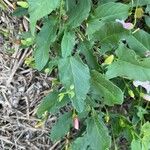
Convolvulus arvensis
پیچک · پیچک وحشی و نام محلی دیگر آن در منطقه ما نوجوک nowjuk نامیده شده · Wild morning-glory · Bindweed · Field Bindweed
Description
Source: leafsnapConvolvulus arvensis, the field bindweed, is a species of bindweed that is rhizomatous and is in the morning glory family (Convolvulaceae), native to Europe and Asia. It is a climbing or creeping herbaceous perennial plant with stems growing to 0.5–2 metres in length, usually found at ground level, with small, white and pink flowers. Other common names, mostly obsolete, include lesser bindweed, European bindweed, withy wind (in basket willow crops), perennial morning glory, small-flowered morning glory, creeping jenny, and possession vine.
💡 According to legend, bindweed is also known as "Our Lady's Little Glass." The story unfolds with the Virgin Mary encountering a wagoner whose cart was stuck. She offered to assist him, but on the condition that he give her a glass of wine. When the wagoner explained that he didn't have a glass, Mary handed him a field bindweed flower. He filled the flower with wine, and true to her word, she helped him free his cart.
🌳 Unlike most plants, field bindweed is frequently regarded as an agricultural pest because of its persistent growth and hardiness. This vigorous species can reduce crop yields and is difficult to control with common herbicides. Researchers are studying field bindweed's toughness to possibly develop more resilient crops in the future. Additionally, the plant's charming flowers are sometimes used in gardens for their attractive appearance.
🎭 Modesty, steadfastness
Care Guide
💧 Water
Field bindweed flourishes in fields and open areas, where it requires a moderate amount of water. While it demonstrates drought resistance, it also benefits from weekly watering. Typically grown outdoors, this herbaceous plant needs more water during its active growing season to ensure optimal development.
When should I water my Field Bindweed?
Watering is critical for the growth and health of Field Bindweed (Convolvulus arvensis). Look for signs like dry soil around the plant base, which should be dry to the touch for the top 1 to 2 inches, and wilted or lackluster leaves. Additionally, during the pre-flowering stage, insufficient flowering indicates a need for watering. High temperatures and sunlight exposure also increase the plant's water needs. Avoid early watering that could lead to root diseases and late watering that risks the plant's health. Observing these signs ensures you water your Field Bindweed appropriately, promoting vibrant growth and disease resistance.
How should I water my Field Bindweed?
Proper watering techniques for Field Bindweed include bottom-watering, where the plant container is placed in a tray of water, allowing moisture to absorb from the bottom. Using a watering can with a narrow spout helps target water at the base of the plant, preventing foliage wetness and potential fungal diseases. These methods ensure the roots receive adequate moisture without overhead water exposure, crucial for maintaining the plant's health.
How much water does Field Bindweed really need?
Field Bindweed prefers moderately moist, well-draining soil, mimicking its natural habitat conditions. Watering should be thorough until it exits the drainage holes of the pot. Signs of under-watering include drooping leaves and slow growth, while over-watering signs include root rot and weak, fast growth. The desired balance is achieved by allowing the topsoil to dry between watering sessions, ensuring the plant receives the optimal water amount for healthy growth.
What kind of water is best for Field Bindweed?
The best water types for Field Bindweed are rainwater or distilled water, considering its moderate sensitivity to chlorine and fluoride. Tap water can be used if dechlorinated and de-fluoridated. Letting tap water sit to evaporate chlorine or boiling to remove hardness are methods to make tap water suitable for the plant. Using room-temperature water prevents root shock, promoting a healthier plant environment.
How do Field Bindweed's watering needs change with the seasons?
Seasonal changes impact Field Bindweed's watering needs significantly. In spring, ensure balanced, regular watering. During summer's active growth phase, the soil should remain consistently moist. As the plant prepares for dormancy in autumn, reduce watering accordingly. Water minimally in winter to prevent root rot, matching the plant's reduced water requirements during dormancy. These adjustments help maintain healthy growth and flowering throughout the year.
☀️ Light Full sun
Field bindweed grows best in locations where it receives uninterrupted sunlight for most of the day. However, this hardy plant can adapt to sites where sunlight is only partly available. Sunlight is essential for its health, promoting vigorous growth. Too little light or too much exposure can reduce growth and stress the plant.
What are the sunlight requirements for Field bindweed (Convolvulus arvensis)?
Field bindweed (Convolvulus arvensis) flourishes best under full sun conditions, requiring more than 6 hours of sunlight daily to thrive. However, it can also adapt to partial sun, with about 3-6 hours of sunlight. The plant shows resilience and can grow in varying conditions of sunlight exposure, but optimal growth is stimulated under full sunlight. It's important to observe your garden's sunlight pattern and choose a planting spot that ensures a good balance of light and shade, contributing to the plant's health and happiness.
How can artificial lighting be used for Field bindweed?
Artificial lighting serves as an excellent supplementation for Field bindweed, especially when natural sunlight is inadequate. Indoor plants can benefit greatly from LED lights, which can be customized to emit specific light wavelengths needed by the plant. For full sun plants, 30-50W/sq ft of artificial light is recommended, 20-30W/sq ft for partial sun plants, and 10-20W/sq ft for full shade plants. The artificial light source should be placed 12-36 inches above the plant to mimic natural sunlight conditions. Moreover, mimicking natural daylight hours by keeping the artificial lights on for 8-12 hours per day can promote healthier and faster growth.
What are some common symptoms of inappropriate light conditions in Field bindweed?
Field bindweed may exhibit several symptoms if exposed to inappropriate light conditions, including smaller new leaves, leggy or sparse growth, faster leaf drop, and halted new growth. Poor light conditions can lead to lighter-colored new leaves, indicative of chlorophyll and nutrient deficiencies. Excessive sunlight can cause chlorosis, sunscald, leaf curling, wilting, and leaf scorching—symptoms that highlight the plant’s struggle to adapt to harsh light conditions or its need for more sunlight.
What solutions can be implemented to address light-related issues in Field bindweed?
To address light-related issues in Field bindweed, consider gradually moving the plants to sunnier locations to ensure they receive at least 6 hours of direct sunlight daily. For indoor plants, using artificial light can be beneficial. Keep lamps on for at least 8 hours daily or invest in grow lights. Outdoors, ensure plants are gradually adapted to sunlight changes to prevent sunburn. Reduce obstructions like overhanging branches to improve sunlight access. For smaller plants, consider transplanting during their dormant period to a location with ample sunlight and good drainage. Remember, while parts of the plant damaged by insufficient light may not recover, new growth can be healthy with improved light conditions.
🌡️ Temperature 0–35°C
Field bindweed comes from regions where temperatures are typically between 68 and 95 °F (20 to 35 ℃). It does best in those warm conditions. If you are growing it in cooler areas, recreating those temperatures in its environment would give the best results.
What is the optimal temperature range for growing Field Bindweed?
Field bindweed, scientifically known as Convolvulus arvensis, thrives in climates with temperatures ranging from 68 to 95 °F (20 to 35 °C). These conditions are ideal for the plant, as it favors warmth. If you're growing it in cooler areas, adjusting the environment to replicate these temperatures will yield the best results. Despite its preference for warmth, Field bindweed possesses strong cold resistance, meaning it usually doesn't require special frost protection measures during winter.
How should Field Bindweed be protected against extremely cold temperatures?
Although Field bindweed is resilient to cold, it's important to offer additional protection if winter temperatures are expected to drop below -35°C. Protecting the plant can involve wrapping the trunk and branches with insulating materials, such as non-woven fabric or cloth, to safeguard it against the cold. Before the arrival of the first freeze in autumn, it's also recommended to water the plant abundantly. This practice ensures the soil remains moist and enters a frozen state, which helps prevent drought and water scarcity for the plant during the colder months and into early spring.
What are the symptoms and solutions for Field Bindweed exposed to low temperatures?
Field bindweed is cold-tolerant and generally thrives best when temperatures are maintained above 20°C, and it should ideally be kept above 0°C during winter. Exposure to temperatures below -35°C can lead to no noticeable changes during winter; however, in spring, the branches may become brittle and dry, with no new shoots emerging. To address this, it's advisable to prune away any dead branches that have failed to produce new leaves in the spring.
What are the symptoms and solutions for Field Bindweed exposed to high temperatures?
In the summer, it's critical to ensure Field bindweed remains in temperatures below 35°C. Temperatures exceeding 41°C may cause the leaves to lighten in color, tips to become dry and withered, and increase the plant's susceptibility to sunburn. To mitigate these issues, trim away the sunburned and dried-up parts of the plant. Additionally, relocating the plant to a shaded area or using a shade cloth to protect it from the midday and afternoon sun is beneficial. Regular watering in the mornings and evenings will help keep the soil moist and further assist in maintaining the plant's health during high temperatures.
💨 Humidity normal (40-60%)
This plant will thrive in moderate humidity, which is probably the level in your home. However, misting it a few times a week can be very beneficial. Make sure the room has good ventilation.
🪴 Soil 6-7
🌱 Fertilizer
One application of fertilizer in spring is generally enough for Field bindweed, although several feedings can maximize growth. Feed about once a month to every six weeks. Fertilizing improves leaf appearance and function, helping maintain even color and a healthy texture. It also encourages root growth and nutrient uptake for long-term plant health.
🪴 Pot & Repot Every 12 months
✂️ Pruning
🌿 Propagating
🐛 Diseases & pets
☠️ Toxicity
Seeds of Convolvulus Arvensis contain LSD like chemical. Eating them at large quantity can cause symptoms like diarrhea to hallucinations that will need medical care.
Characteristics
- Plant Type
- Vine, Herb
- Life Cycle
- Perennial, Annual
- Genus
- Convolvulus
- Family
- Convolvulaceae
- Hardiness Zone
- 3-10
- Mature Height
- 0.49 m to 2.13 m
- Mature Spread
- 0.91 m to 1.83 m
- Leaf Color
- Green
- Leaf Type
- Deciduous
- Flower Color
- White, Pink
- Flower Size
- 1.02 cm to 2.54 cm
- Bloom Time
- Late spring, Summer
- Planting Time
- Spring, Summer
- Harvest Time
- Summer, Early fall
- Native Area
- Libya, Turkey, Sweden, India, United Arab Emirates, Slovakia, Montenegro, Pakistan, Slovenia, Morocco, Croatia, Belarus, Germany, Indonesia, Ethiopia, Romania, Latvia, Belgium, Portugal, Netherlands, Saudi Arabia, Tunisia, Cyprus, Bulgaria, Ukraine, Chad, Lebanon, Afghanistan, Syria, Kyrgyzstan, Kazakhstan, Italy, Mongolia, Finland, Iran, Azerbaijan, Egypt, Austria, Eritrea, Yemen, Uzbekistan, Russia, Iraq, Estonia, Oman, France, Nepal, Tajikistan, Czech Republic, Sudan, Mauritania, Armenia, Poland, Greece, Serbia, Lithuania, Norway, Spain, Switzerland, Denmark, Myanmar, Bhutan, Albania, Ireland, United Kingdom, Hungary, Algeria, Turkmenistan