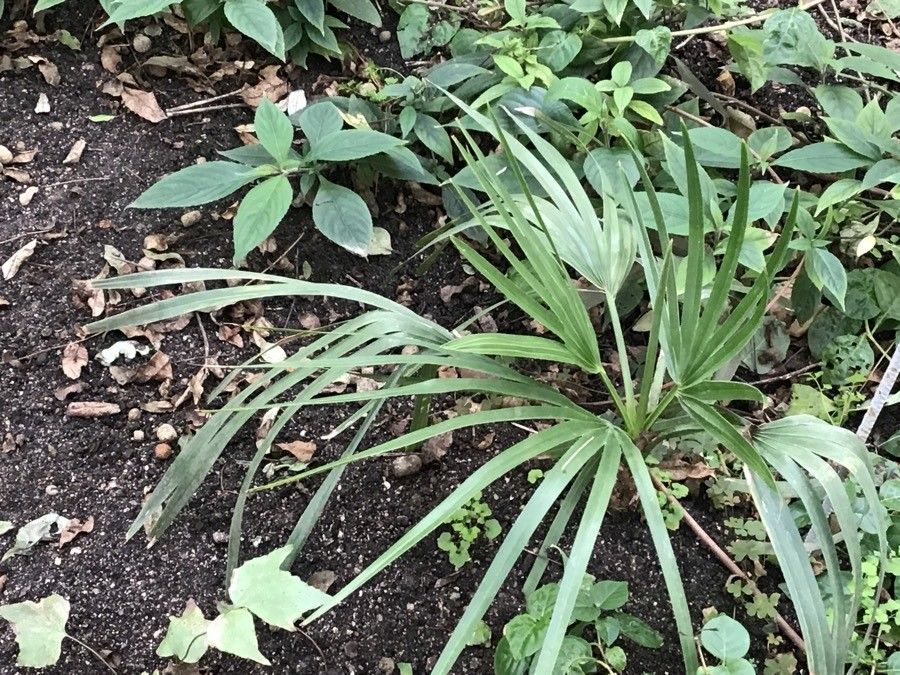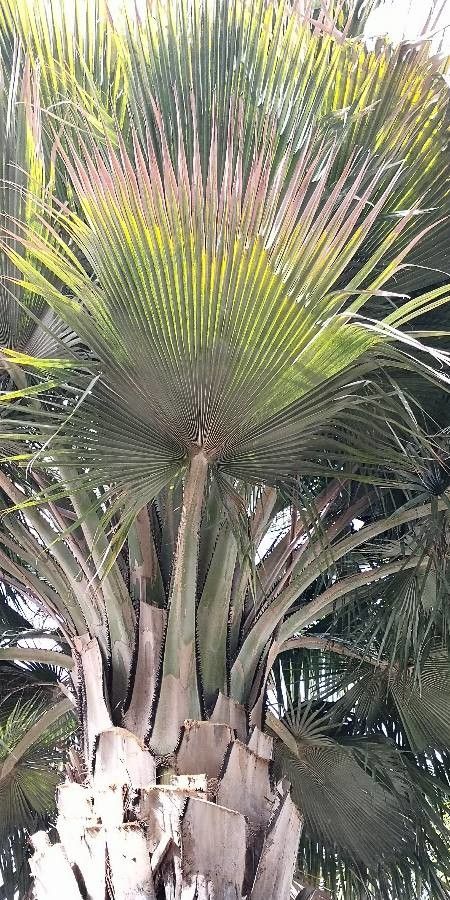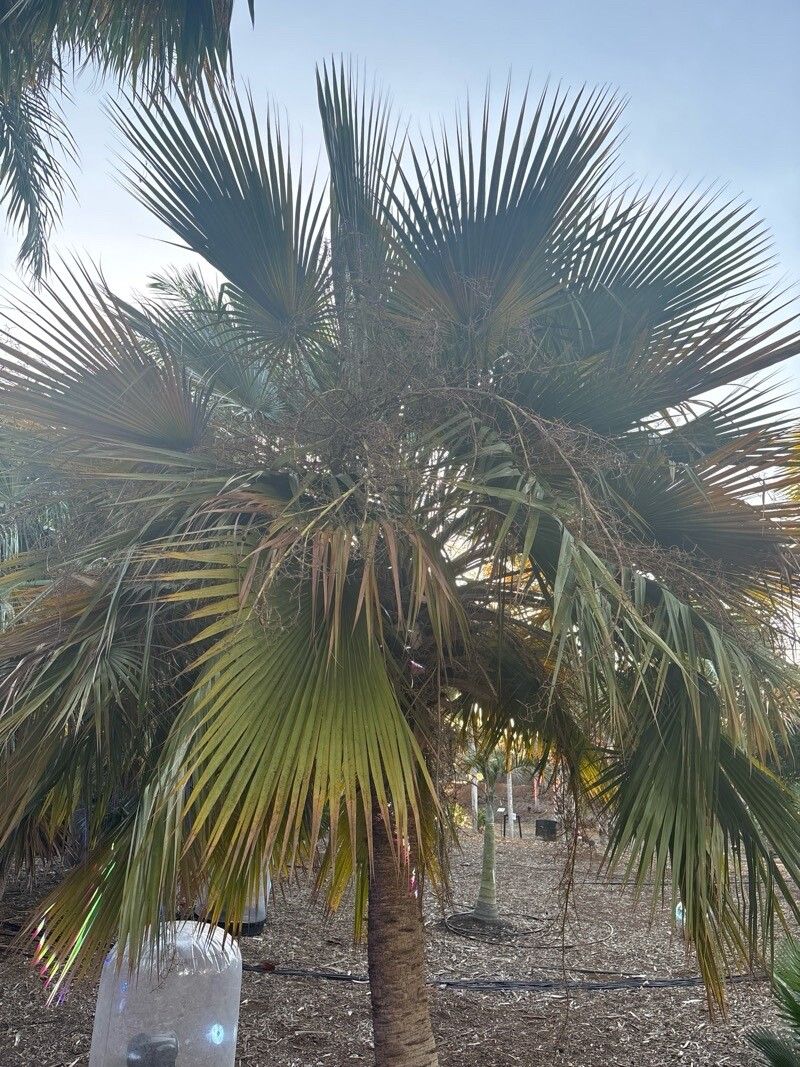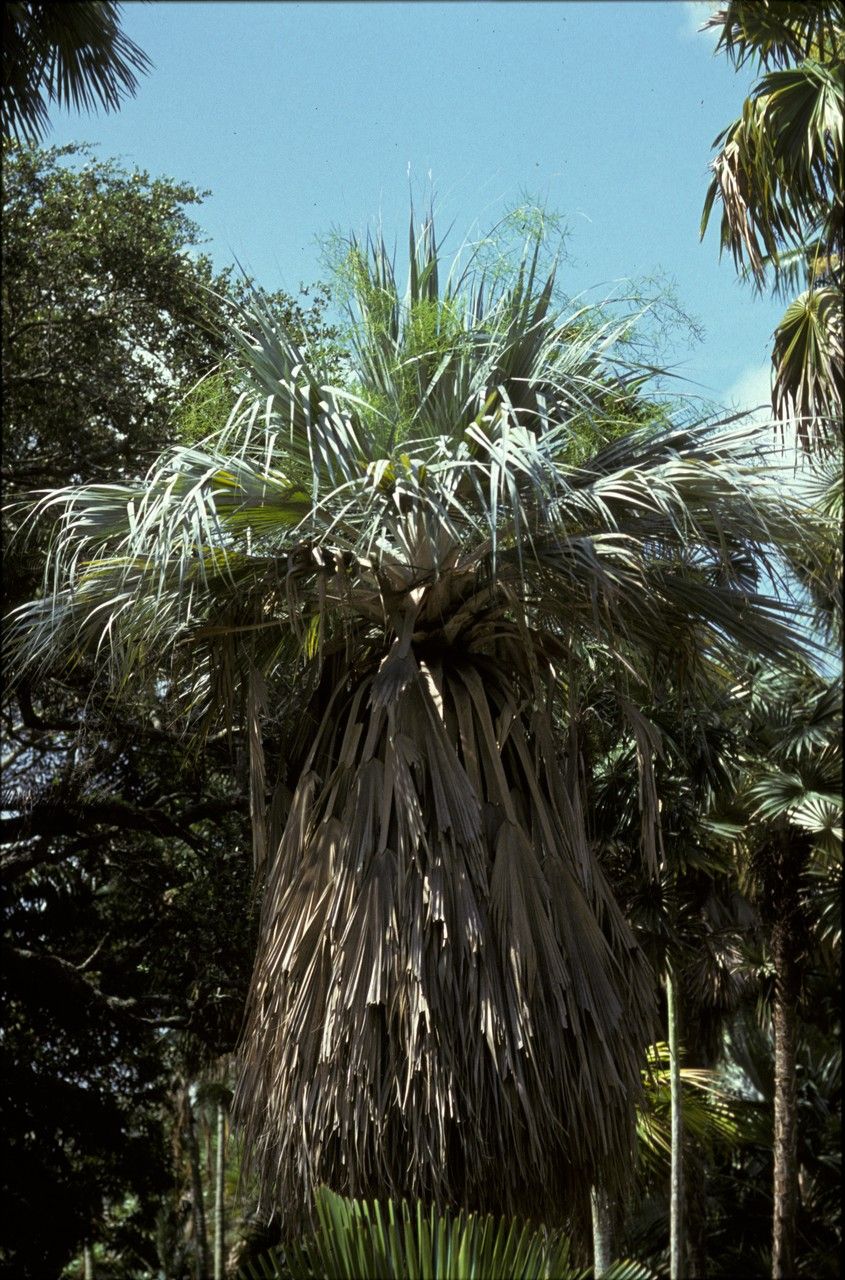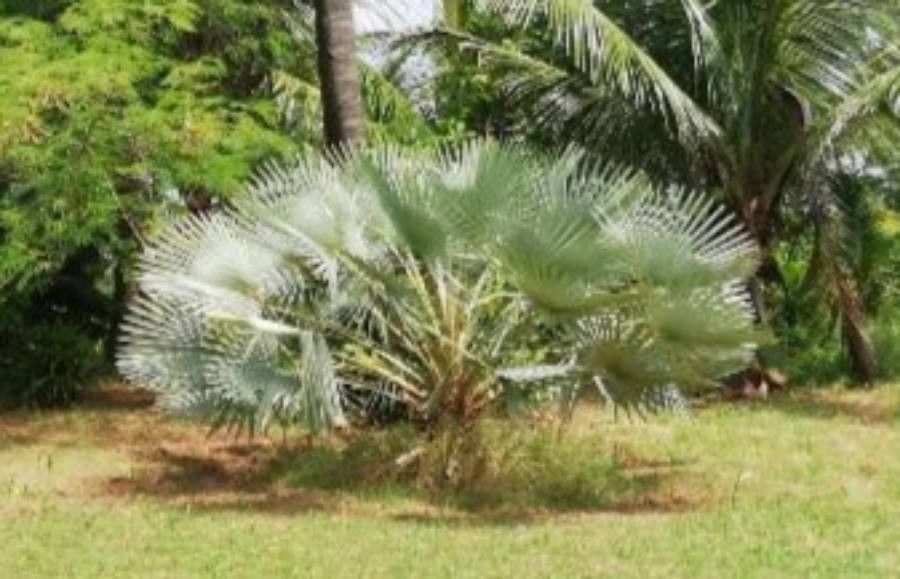
Copernicia prunifera or the carnaúba palm or carnaubeira palm (Portuguese pronunciation: [kaɦnaˈubɐ]) is a species of palm tree native to northeastern Brazil (mainly the states of Ceará, Piauí, Maranhão, Rio Grande do Norte and Bahia). Known by many as 'tree of life' because of its many uses, the Carnaúba is also the symbol tree of Ceará. The initiative to use it as a symbol vies to promote its conservation and sustainable use.
The Brazilian wax palm is well resistant to disease and generally not prone to illnesses. Regarding care, this plant is fairly low-maintenance. When grown outdoors it needs only minimal watering, and larger plants typically do not require pruning. Smaller plants, however, should be pruned after they finish blooming. The Brazilian wax palm is suitable for anyone with an outdoor area, such as a garden or deck, and does not demand much gardening experience.
How to keep Copernicia Prunifera.
Light
The Brazilian wax palm comes from open habitats such as sunny meadows and forest edges, which offer abundant light. It grows best in Full Sun but can also tolerate Partial Sun, adapting well to different sunlight conditions.
Water
The Brazilian wax palm is well-suited for arid environments due to its strong drought tolerance. It requires watering every 2-3 weeks. Being an evergreen, it needs consistently moist soil throughout the year. This palm is best suited for outdoor settings that mimic its natural habitat.
Temperature
The Brazilian wax palm comes from tropical regions, where conditions are generally warm and humid. As a result, it is well adapted to high temperatures and humidity. It does not tolerate sudden temperature changes and prefers a stable temperature environment, so indoor temperature fluctuations should be avoided. It usually cannot withstand cold and needs higher temperatures to grow. If the ambient temperature falls too low, the plant may stop growing or even die.
Fertilizer
The best time to fertilize a Brazilian wax palm is in early spring when it comes out of dormancy. This supports overall growth and flower development. Fertilizing improves the leaves, stems, and branches and encourages flowers that are large, bright, and long-lasting. It helps move nutrients from the roots to the flowers and enhances the plant’s health and resistance to disease.
Pruning
To ensure the Brazilian wax palm remains healthy and vibrant, it is important to prune it annually in early spring. This involves removing any dead or damaged fronds, which helps promote new growth and improve air circulation. Additionally, light trimming of older fronds can enhance the plant's vitality. Be sure to use clean, sharp tools to prevent disease and minimize stress on the plant.
Botanical profile.
- Plant Type
- Tree
- Life Cycle
- Perennial
- Genus
- Copernicia
- Family
- Arecaceae
- Hardiness Zone
- 10-12
- Mature Height
- 10.06 m to 14.94 m
- Mature Spread
- 3.05 m to 4.88 m
- Leaf Color
- Green, Dark Green
- Leaf Type
- Evergreen
- Flower Color
- Yellow, Green
- Flower Size
- 0.25 cm to 0.51 cm
- Bloom Time
- Summer
- Planting Time
- Spring, Summer, Autumn
- Harvest Time
- Late summer, Early fall, Mid fall
- Native Area
- Brazil
Other names.
Reader questions.
What are the sun requirements for the Brazilian wax palm?
The Brazilian wax palm thrives in environments that offer full to partially sunny conditions. Specifically, it requires above 6 hours of sunlight daily for full sun exposure and about 3-6 hours of sunlight daily for partial sun exposure. When selecting a location for your Brazilian wax palm, it's advised to observe how sunlight moves through your garden to pick spots that ensure a healthy balance between light and shade, conducive to the plant's growth and happiness.
What are the essentials for the Brazilian wax palm concerning light conditions?
Originating from sunny, open environments such as meadows and forest edges, the Brazilian wax palm is well-suited to full sun but can also adapt to partial sun conditions. For indoor plants, where natural sunlight might be insufficient, especially in winter or less sunny spaces, artificial lighting becomes essential. LED lights are recommended for their ability to mimic the specific wavelengths of light needed by plants, with full sun plants requiring 30-50W/sq ft, partial sun plants 20-30W/sq ft, and full shade plants 10-20W/sq ft of artificial light. The distance between the plant and the light source should be 12-36 inches to replicate natural sunlight, and the duration should align with the natural day length, generally 8-12 hours of light per day.
What symptoms indicate light deficiency or overexposure in the Brazilian wax palm?
When the Brazilian wax palm, typically accustomed to abundant sunlight, is subjected to suboptimal lighting, it may exhibit several symptoms indicating distress. Light deficiency can lead to small leaves, leggy or sparse growth, quicker leaf drop, slowed or halted growth, and pale or irregularly colored new leaves. Conversely, excessive sunlight may cause chlorosis (yellowing leaves due to chlorophyll breakdown), sunscald (damaged areas on leaves or stems), leaf curling (to minimize sunlight exposure), wilting (due to increased water loss), or leaf scorching (brown, dry edges on leaves). These symptoms highlight the plant's struggle to adapt to inappropriate lighting conditions.
What solutions can alleviate light-related issues for the Brazilian wax palm?
To address light-related challenges for the Brazilian wax palm, gradually transitioning the plant to a sunnier spot can be beneficial, aiming for at least 6 hours of direct sunlight if indoor or adjusting outdoor placement carefully to avoid sunburn. For indoor plants, especially large ones that are challenging to move, supplementing with artificial light, such as keeping a desk or ceiling lamp on for a minimum of 8 hours daily or investing in professional plant grow lights, can offer a remedy. It is also crucial to minimize obstructions to sunlight, possibly by pruning trees or relocating smaller plants during their dormant period to a location with ample sunlight and good drainage. It's important to note that while parts of the plant that have suffered due to insufficient light might not recover, new growth following improved light conditions should be healthy.