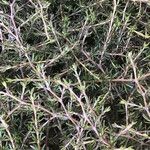
Coprosma acerosa
Sand coprosma
Description
Source: leafsnapCoprosma acerosa, commonly called sand coprosma, is a shrub that is native to New Zealand. It is a coastal plant found on the landward side of sand dunes. C. acerosa is a low, spreading shrub with yellow-brownish leaves, red bark and blue fruit.It is declining over large parts of its original range due to competition from marram grass.
Care Guide
💧 Water
The sand coprosma is highly drought-tolerant, able to thrive with minimal watering every 2 to 3 weeks. It flourishes in environments that balance dryness with occasional moisture, as it retains water in its tissues. This makes it an ideal plant for areas with sporadic rainfall.
☀️ Light Full sun
The sand coprosma does best with abundant sunlight. Its health and growth efficiency are greatly affected by these light conditions. Having evolved in a sunny habitat, it prospers in similar environments. It tolerates little to no shade and may exhibit signs of poor health if it receives insufficient light.
What are the sunlight requirements for Sand coprosma?
Sand coprosma requires more than 6 hours of sunlight daily to thrive. It is crucial to observe the movement of sunlight through your garden and find an area that ensures a balance of light and shade suitable for the plant's needs. Originating in environments rich in sunlight, the Sand coprosma does best under similar conditions and demonstrates poor health when exposed to insufficient light, having little to no tolerance for shade.
What should be done if natural sunlight is insufficient for Sand coprosma?
When natural sunlight is insufficient for Sand coprosma, especially during winter or in areas that receive less sunlight, artificial lighting can serve as an effective alternative. For optimal growth, indoor plants may require LED lighting, which can be adjusted to provide specific wavelengths of light needed by the plants. The guideline suggests 30-50W/sq ft of artificial light for full sun plants, 20-30W/sq ft for partial sun plants, and 10-20W/sq ft for full shade plants. Place the light source 12-36 inches above the plant to mimic natural sunlight and keep it on for 8-12 hours daily to match the natural daylight hours for the specific plant species.
What are the common symptoms of light deficiency in Sand coprosma?
Light deficiency in Sand coprosma can lead to several symptoms, indicating its need for better light conditions. These symptoms include smaller new leaves, leggy or sparse growth caused by elongated spaces between leaves or stems, early leaf drop to conserve resources, delayed growth or a complete halt in new leaf production, paler new leaves signaling a lack of chlorophyll, and conditions such as chlorosis (leaf yellowing), sunscald (damaged leaves/stems from intense exposure), leaf curling (reduced surface area exposed to sunlight), wilting (loss of turgor pressure causing droopiness), and leaf scorching (brown, dry edges or patches on leaves).
How can you improve Sand coprosma's growth if it's not receiving enough sunlight?
To optimize Sand coprosma's growth under insufficient sunlight, gradually acclimate it to receive more direct sunlight, aiming for at least 6 hours of sunlight daily. For indoor plants that are too large or not easily moved, consider using artificial lighting, like desk lamps or professional grow lights, for at least 8 hours a day. For outdoor plants, move them to sunnier spots each week to allow gradual adaptation to the light, avoiding sudden intensity changes that could cause sunburn. Should there be obstructions blocking sunlight, like trees, consider pruning to enhance light penetration. Moreover, for small plants that can be moved, transplanting during their dormant period to a location with ample sunlight and good drainage could significantly improve their condition.
🌡️ Temperature 15–35°C
Sand coprosma is native to habitats where temperatures vary between 59 and 95 °F (15 and 35 °C). It grows best within that temperature range, though it can adapt to cooler climates if given adequate protection during the winter months.
What is the ideal temperature range for Sand coprosma?
Sand coprosma, scientifically known as Coprosma acerosa, thrives in environments with temperatures ranging from 59 to 95 °F (15 to 35 °C). This plant is indigenous to areas that naturally fall within this temperature band. Although the Sand coprosma has strong cold resistance and can adapt to cooler climates, it requires adequate protection during the winter months if the environment is colder than its ideal range.
What should be done to protect Sand coprosma from cold temperatures?
To protect Sand coprosma from cold temperatures, especially if winter temperatures are expected to drop below -15°C, it's important to take specific measures. Wrapping the trunk and branches with non-woven fabric or a similar cloth can provide cold protection. Additionally, before the onset of the first freeze in autumn, watering the plant abundantly to ensure the soil remains moist and then enters a frozen state can be beneficial. This helps prevent drought and water scarcity for the plant during the winter and early spring.
How does Sand coprosma react to low temperatures and what can be done?
Sand coprosma is cold-tolerant and generally thrives well above 15°C. However, if temperatures fall below -10°C and especially under -15°C, the branches might not show immediate damage during winter but can become brittle and dry by spring, failing to produce new shoots. To address this, it is advised to prune away any dead branches that have failed to produce new leaves in the spring.
How should Sand coprosma be cared for in high temperatures?
During the summer, it's crucial to keep the Sand coprosma's environment below 35°C. Exposure to temperatures above 41°C can cause the leaves to lighten in color and the tips to become dry and withered, making the plant more susceptible to sunburn. To mitigate these issues, sunburned and dried-up parts of the plant should be trimmed away. Moving the plant to a shadier location or using a shade cloth to protect it from the midday and afternoon sun can be helpful. Additionally, watering the plant in the morning and evening to maintain soil moisture is advisable.
💨 Humidity
🪴 Soil 5-6
🌱 Fertilizer
To encourage healthy growth, apply fertilizer to your Sand coprosma in early spring. Consistent feeding boosts overall health, leading to vigorous growth, greater tolerance of harsh conditions, and better resistance to diseases and pests. Follow a regular fertilization schedule for your Sand coprosma to maintain vibrant, deeply colored foliage and a lush appearance.
🪴 Pot & Repot
✂️ Pruning
The sand coprosma is a dense shrub known for its wind resistance, small leaves, and tangled branches. To keep it healthy, prune it from early to late winter. Focus on removing dead branches and thinning out crowded areas to improve airflow and sunlight exposure. For best results, use clean, sharp tools to ensure precise cuts, which will help maintain the plant's health and prevent disease.
🌿 Propagating
🐛 Diseases & pets
☠️ Toxicity
Characteristics
- Plant Type
- Shrub
- Life Cycle
- Perennial
- Genus
- Coprosma
- Family
- Rubiaceae
- Hardiness Zone
- 7-10
- Mature Height
- 20 cm to 30 cm
- Mature Spread
- 0.61 m to 1.22 m
- Leaf Color
- Green, Yellow, Brown
- Leaf Type
- Evergreen
- Flower Size
- 2.54 cm
- Bloom Time
- Mid fall, Late fall, Early winter
- Planting Time
- Autumn
- Harvest Time
- Late winter, Early spring, Mid spring
- Native Area
- New Zealand