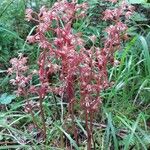
Corallorhiza mertensiana
Pacific coralroot · Western coralroot · Mertens' coralroot
Description
Source: leafsnapCorallorhiza mertensiana, or Pacific coralroot, is a coralroot orchid native to the shady conifer forests of northwestern North America. It also goes by the common names Western coralroot and Mertens' coralroot. Corallorhiza mertensiana was previously considered a subspecies of Corallorhiza maculata but was given species rank in 1997 by Freudenstein.
Care Guide
💧 Water
The Pacific coralroot flourishes in humid environments, favoring consistently moist soil and needing to be watered weekly. Often cultivated indoors for its decorative appeal, it thrives best in areas with controlled humidity, which mimics its natural rainforest habitat and encourages lush growth.
How should I water my Pacific coralroot plant to keep it healthy?
To water your Pacific coralroot effectively, consider the plant's growth phase and the prevailing weather conditions. During active growth periods, water both the soil and the plant's leaves, especially in warm weather. In winter or when it's cool and wet, focus on watering the soil alone instead of overhead watering. Signs that your Pacific coralroot needs more water include thin, dry leaves or discoloration. On the other hand, if the plant receives excessive water, it may appear mushy and limp. To cultivate your Pacific coralroot in a pot, choose a potting mix with excellent drainage. During the growing season, water the plant multiple times a week, ensuring that the water drains quickly to prevent standing water. Adjust the amount of water according to the pot size, with larger pots requiring less frequent watering and smaller pots needing more frequent watering. For best results, use rainwater or distilled water that matches the air temperature as closely as possible.
What should I do if I give too much or too little water to my Pacific coralroot plant?
To prevent your Pacific coralroot from dying, avoid keeping it in excessively moist soil for too long. While these plants require frequent watering during active growth, they also need well-draining soil. When overwatered, the plant becomes mushy and develops root rot. In such cases, use sterile pruning shears to remove any rotten roots, repotting the plant in a container with good drainage and fast-draining potting mix. However, excessive repotting may not be beneficial for Pacific coralroot, so it's important to find the right watering balance. If the plant starts shriveling or feeling dry to the touch, it's likely because the soil is drying out faster than expected, indicating the need for more frequent watering.
How often do I need to water my Pacific coralroot?
To properly care for your Pacific coralroot, the watering needs will vary depending on the season. During the active growth stage in the spring and summer, it is recommended to water the plant once or twice a week. However, during extended periods of hot and dry weather, this should be increased to three times per week or more. In the winter, watering is still necessary but not as frequent. You should aim for watering two to three times per month during the coldest months. Keep in mind that if you keep your Pacific coralroot indoors during winter, the soil may dry out quicker than usual due to indoor conditions. In this case, you may need to water it more frequently. As you transition from summer to winter, gradually reduce the watering frequency.
What do I need to think about when watering my Pacific coralroot at different times of the year and when it's growing?
When planning the watering schedule for your Pacific coralroot, consider two important growth phases. The first phase is the active growth period, which occurs in spring and summer. During this time, the plant needs to be watered multiple times per week. The second phase is the rest period, which lasts for about two to three months in winter. During this period, the plant requires less water and fertilization. Watering once or twice per month is sufficient. In the fall, gradually reduce the frequency of watering from multiple times per week to once or twice per month to prepare for the winter rest period.
How should I water my Pacific coralroot if I grow it inside?
The Pacific coralroot is a plant that thrives in a humid environment. However, it's important to note that most indoor growing spaces lack the necessary air moisture for this plant. As a result, the plant and its soil tend to dry out faster than if it were grown outdoors. To address this issue, it would be beneficial to have a humidifier in the room where you house the Pacific coralroot. In addition, you may need to water the plant more frequently. It's worth mentioning that while the plant does require humidity, it is also important to ensure proper air circulation to prevent excessive moisture buildup and related diseases. Therefore, adding a fan to the room can help maintain the appropriate airflow.
☀️ Light Full shade
Pacific coralroot does best when it receives partial light throughout the day. The light should be moderate — not so strong that it damages the plant, but enough to promote its growth. Its native habitat reflects this, as it comes from places where moderate light filters through. An imbalance in light exposure can negatively affect the plant's healthy growth.
What are the sunlight requirements for Pacific coralroot?
Pacific coralroot thrives best in conditions that offer partial daylong light, approximately 3-6 hours of sunlight daily. It's crucial to ensure the light is not too intense to avoid damaging the plant but moderate enough to foster its growth. The natural habitats of Pacific coralroot are environments where moderate light filters through, supporting its healthy growth cycle. Observing how sunlight moves through your garden and choosing spots with a perfect balance of light and shade can significantly contribute to the plant's well-being. Additionally, when natural sunlight is insufficient, especially in winter or less sunny spaces, artificial lighting becomes essential for indoor plants. Optimal growth is achieved by employing artificial lights, such as LED lights that provide the specific wavelengths needed by the plants. The amount of artificial light required varies depending on the type of plant, with recommendations ranging from 10-20W/sq ft for full shade plants to 30-50W/sq ft for full sun plants.
What are the symptoms of light deficiency in Pacific coralroot?
When grown indoors or under insufficient light conditions, Pacific coralroot may exhibit several symptoms signaling light deficiency. These include new leaves growing smaller in size compared to older leaves, a leggy or sparse growth pattern with longer spaces between leaves or stems, and faster leaf drop as plants shed older leaves early to conserve resources. Other symptoms include slower or completely halted new growth, indicating the plant is in survival mode due to poor lighting conditions. Leaves may develop irregular color patterns or appear paler, suggesting a lack of chlorophyll and essential nutrients. Conditions such as chlorosis (yellowing leaves), sunscald (damage from intense sunlight exposure), leaf curling, wilting, and leaf scorching can also occur, highlighting the importance of providing adequate sunlight or artificial lighting to maintain plant health.
How can you mitigate symptoms of light deficiency in Pacific coralroot?
To optimize plant growth and mitigate symptoms of light deficiency in Pacific coralroot, it's important to gradually adapt the plant to changing light conditions. For indoor plants, shifting them to sunnier spots each week until they receive adequate sunlight (3-6 hours daily) can be beneficial. Additionally, employing artificial lighting, such as desk lamps or professional grow lights, for at least 8 hours daily can provide necessary support. For outdoor plants, gradually moving them to sunnier locations each week helps them adapt without experiencing sunburn. Minimizing obstructions by pruning trees or branches that block sunlight can improve light exposure. Transplanting smaller plants during their dormant period to a location with ample sunlight and good drainage can also promote healthier growth. It's crucial to note that parts of the plant affected by insufficient sunlight may not recover, but new growth following increased light exposure will be healthy.
🌡️ Temperature 5–32.2°C
Pacific coralroot is native to areas where temperatures range from 41 to 90 °F (5 to 32 ℃). It prefers cooler conditions and may require minor adjustments to avoid overheating at the height of summer.
What is the ideal temperature range for Pacific coralroot?
Pacific coralroot thrives in regions where temperatures fluctuate between 41 to 90 °F (5 to 32 °C). It prefers cooler temperatures and may require slight adjustments to prevent overheating during the peak of summer. The plant has a strong resistance to cold and typically does not need special frost protection measures during winter. However, if winter temperatures are expected to fall below -30°C, it's important to provide cold protection by covering the plant with soil or straw. To help prevent drought and water scarcity for the plant during winter and early spring, it's recommended to water the plant abundantly before the first freeze in autumn, ensuring the soil remains moist and enters a frozen state.
What should I do if the temperature falls below the Pacific coralroot's tolerance in winter?
Pacific coralroot is cold-tolerant, thriving best when temperatures are above 5°C and should be kept above -25°C during winter. If temperatures fall below -30°C, although there may not be any noticeable changes during winter, the plant may exhibit decreased sprouting or fail to sprout in spring. In such cases, it is suggested to remove any parts of the plant that have failed to sprout once spring arrives.
How should I care for Pacific coralroot during high temperatures?
During summer, it's crucial to keep the Pacific coralroot's temperature below 32°C. Exposure to temperatures above 35°C can cause the leaves to lighten in color, become prone to curling, suffer from sunburn, and in severe cases, the entire plant may wilt and dry up. To combat these issues, trim away any sunburned and dried-up parts. Move the plant to a shadier location away from the midday and afternoon sun, or use a shade cloth to provide relief. Additionally, water the plant in the morning and evening to keep the soil moist, helping to prevent overheating.
What is the scientific name of Pacific coralroot?
The scientific name of Pacific coralroot is Corallorhiza mertensiana. This information helps in distinguishing it from other species and is useful for botanical study or when searching for more specific care information.
💨 Humidity
🪴 Soil 5-6
🌱 Fertilizer
One fertilizer application in spring is typically enough for Pacific coralroot, but additional feedings can optimize growth. Apply fertilizer once a month to every month and a half. Fertilization improves the leaves’ appearance and function, supporting uniform color and a healthy texture. It also encourages root development and nutrient uptake for the plant’s long-term health.
🪴 Pot & Repot
✂️ Pruning
The Pacific coralroot is a perennial orchid known for its leafless stems and coral-like roots. Pruning should be minimal; simply remove any dead stems in the spring to maintain the plant's health. Avoid excessive pruning. Regularly inspect the plant for pests and diseases, and promote good air circulation to improve both the blooms and the overall health of the orchid.
🌿 Propagating
🐛 Diseases & pets
☠️ Toxicity
Characteristics
- Plant Type
- Herb
- Life Cycle
- Perennial
- Genus
- Corallorhiza
- Family
- Orchidaceae
- Hardiness Zone
- 4-8
- Mature Height
- 30 cm to 61 cm
- Mature Spread
- 5 cm to 10 cm
- Leaf Color
- Yellow, Brown
- Leaf Type
- Deciduous
- Flower Color
- Pink, Brown
- Flower Size
- 2.54 cm
- Bloom Time
- Early summer, Mid summer
- Planting Time
- Spring, Summer, Autumn
- Harvest Time
- Late summer, Early fall