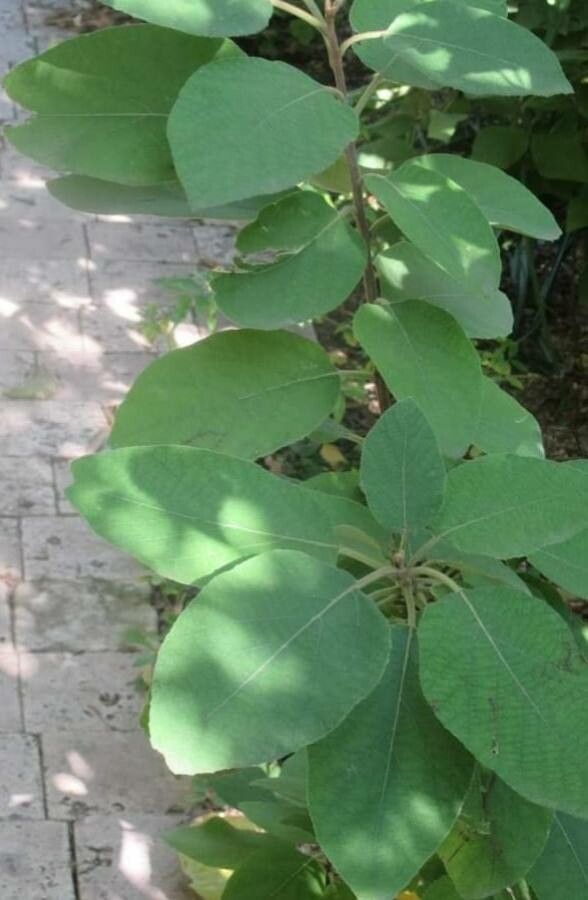
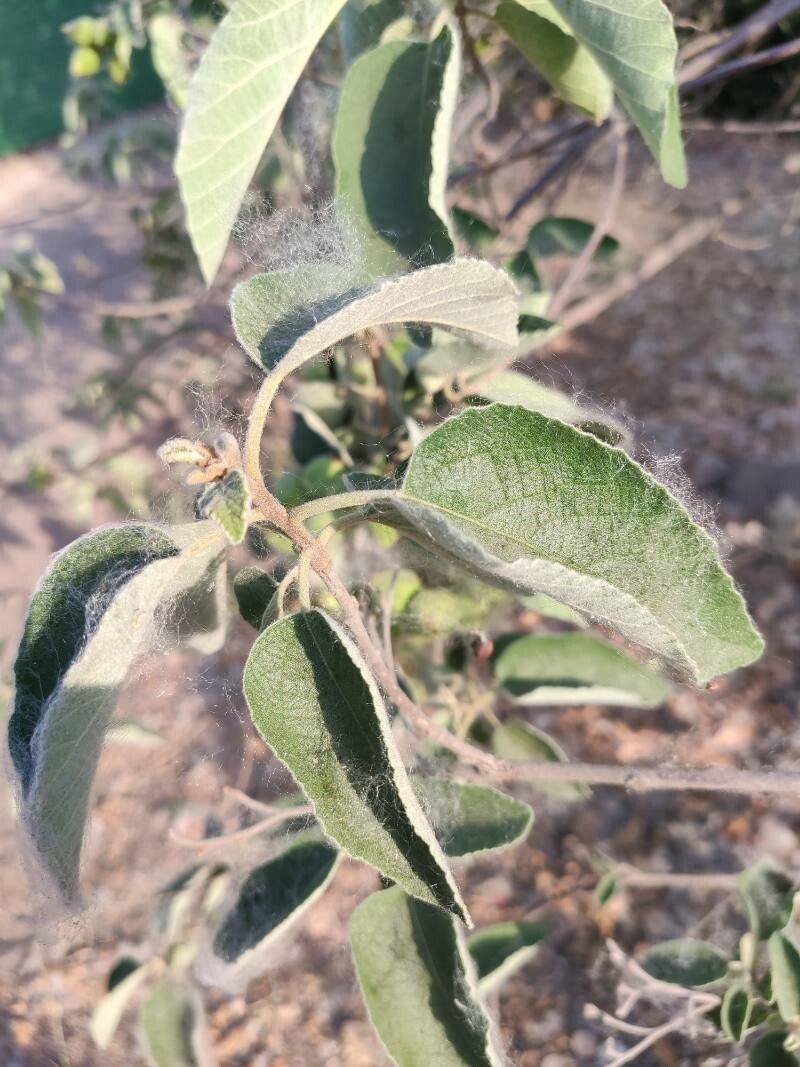
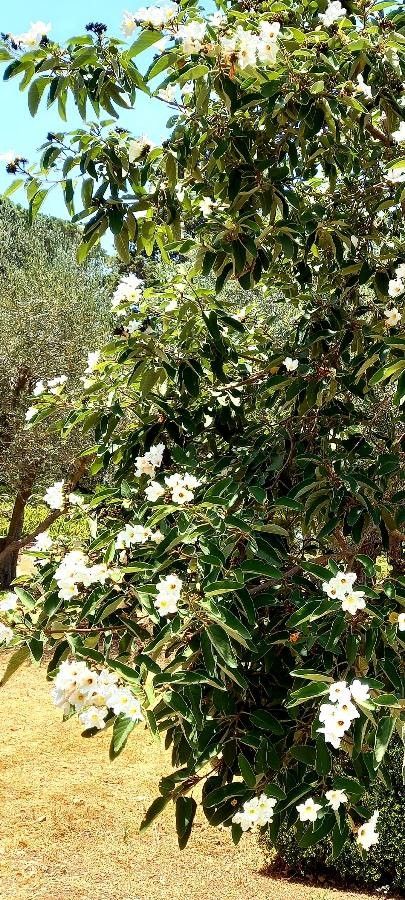
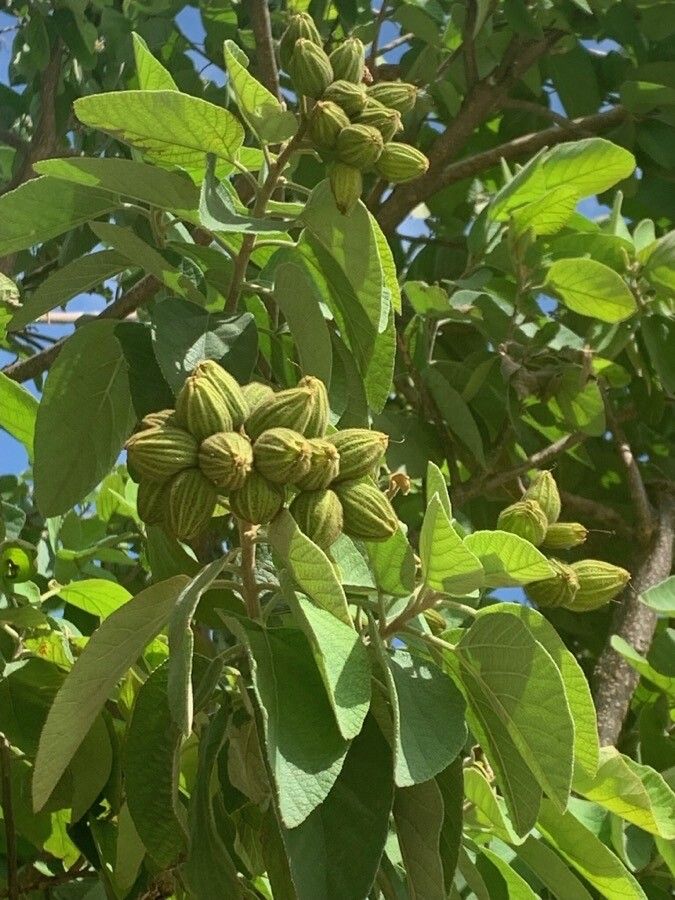
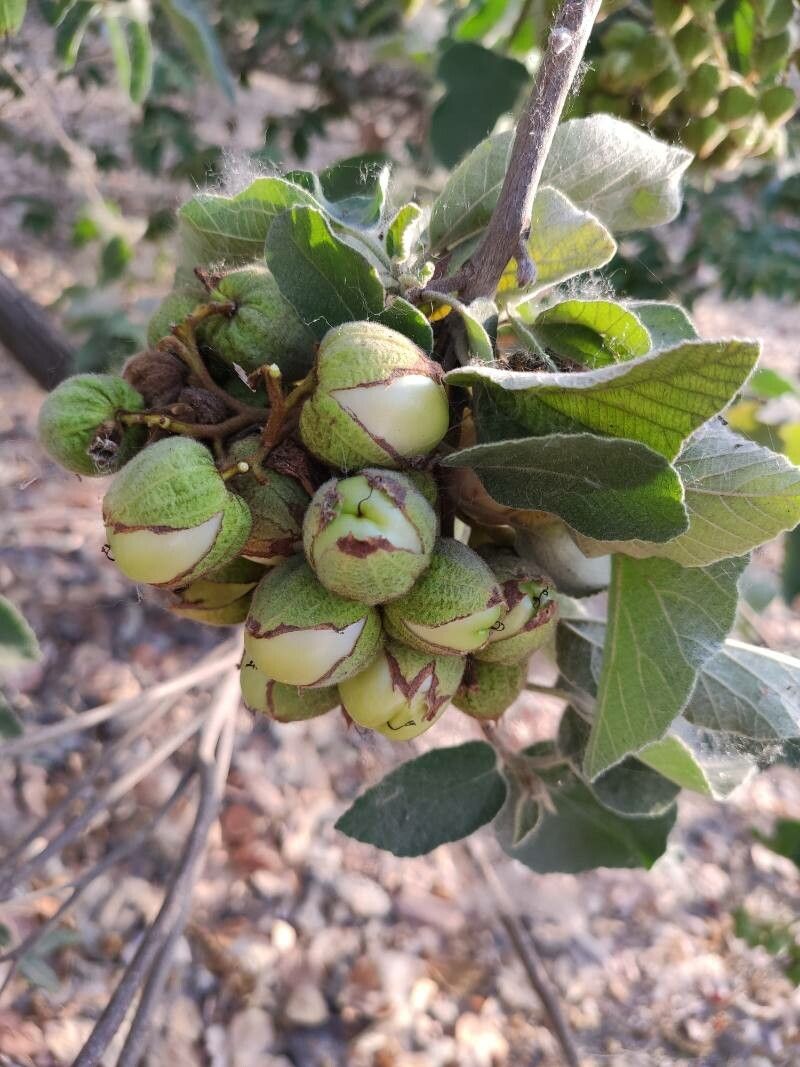
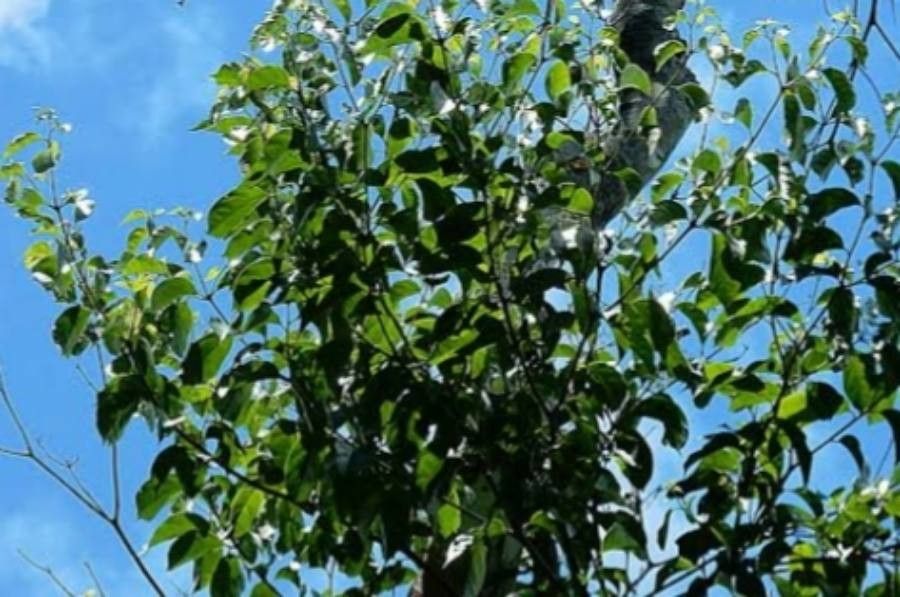
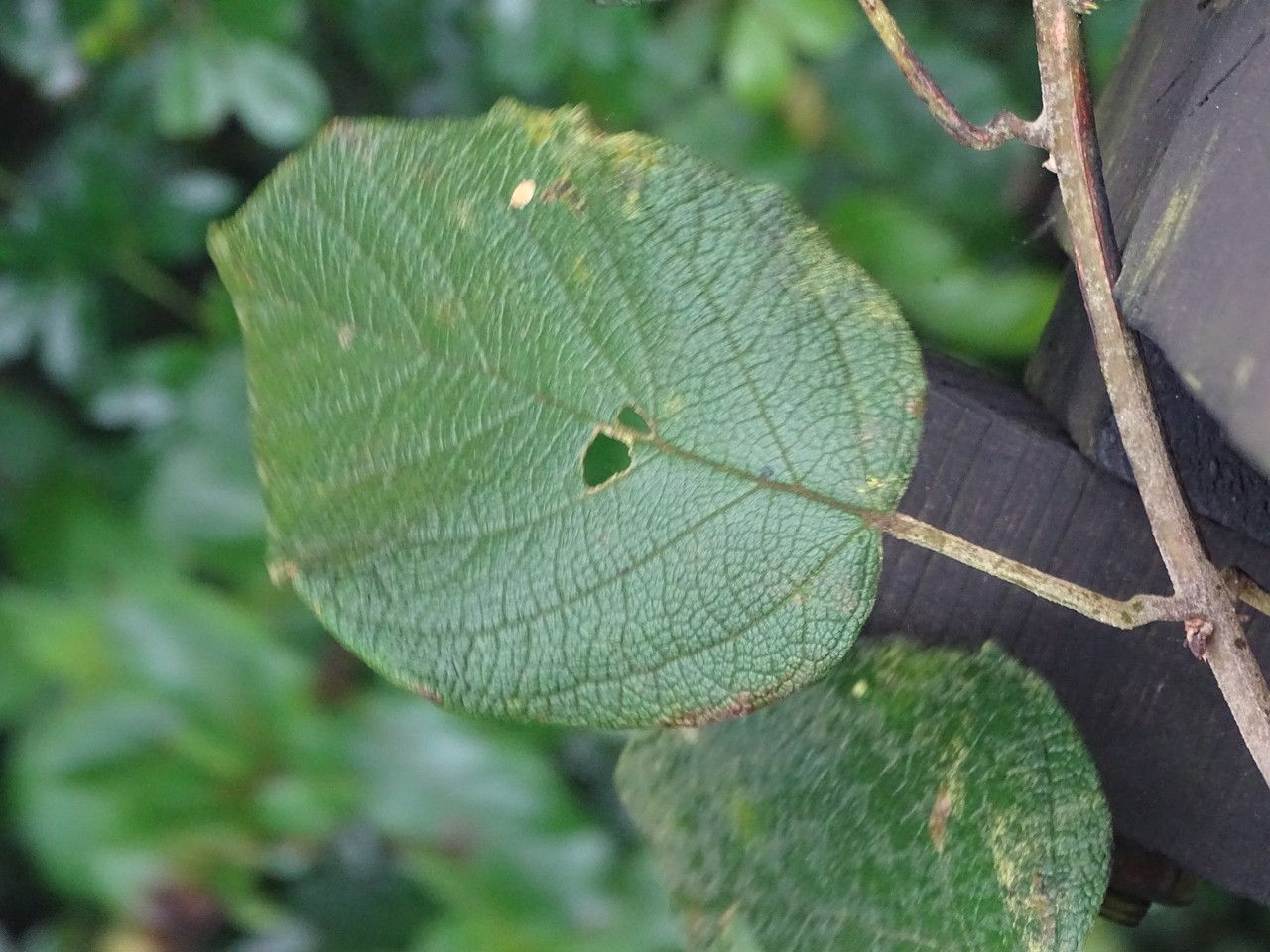
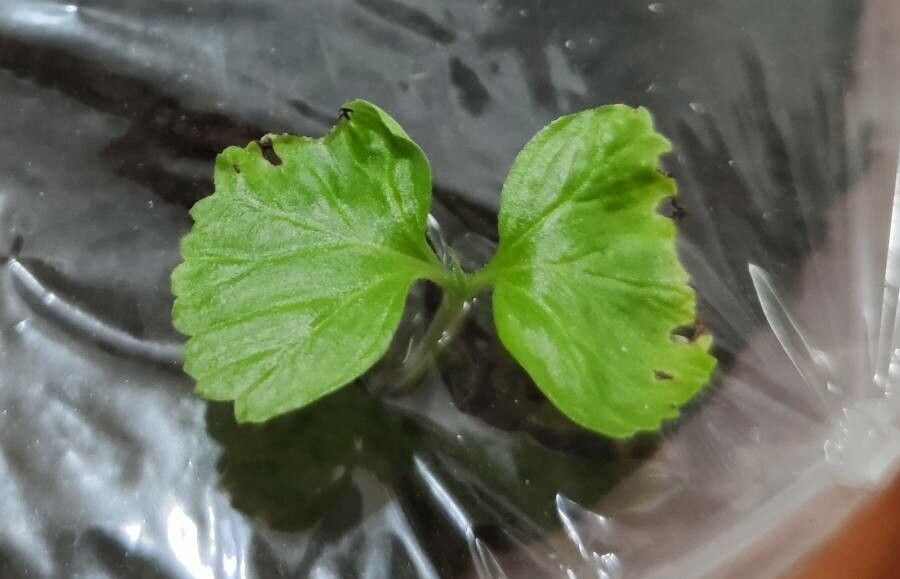
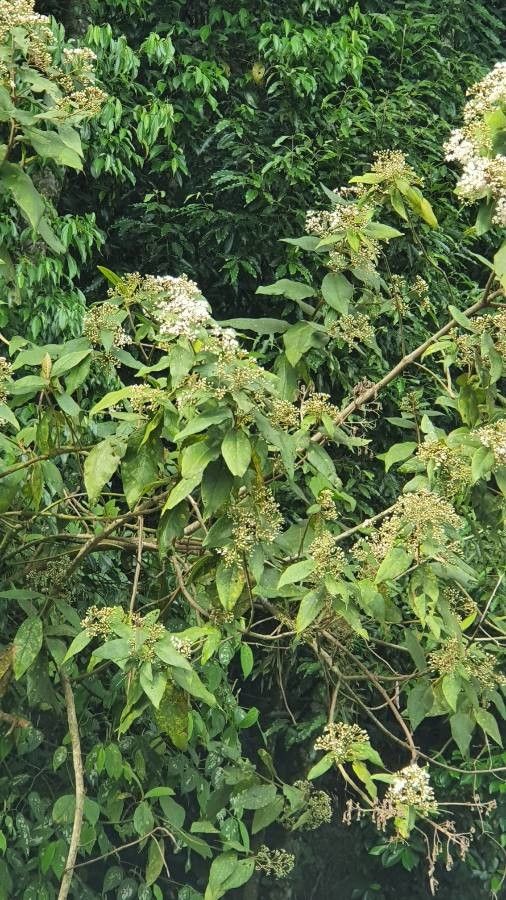
Cordia boissieri, commonly known as Texas olive or anacahuita, is a small to medium-sized evergreen tree or shrub native to Texas, Mexico, and Central America. Belonging to the borage family, it can reach up to 20 feet in height and spread about 15 feet wide. The tree features a dense canopy of glossy green, oval-shaped leaves with pointed tips that can grow up to 6 inches long.
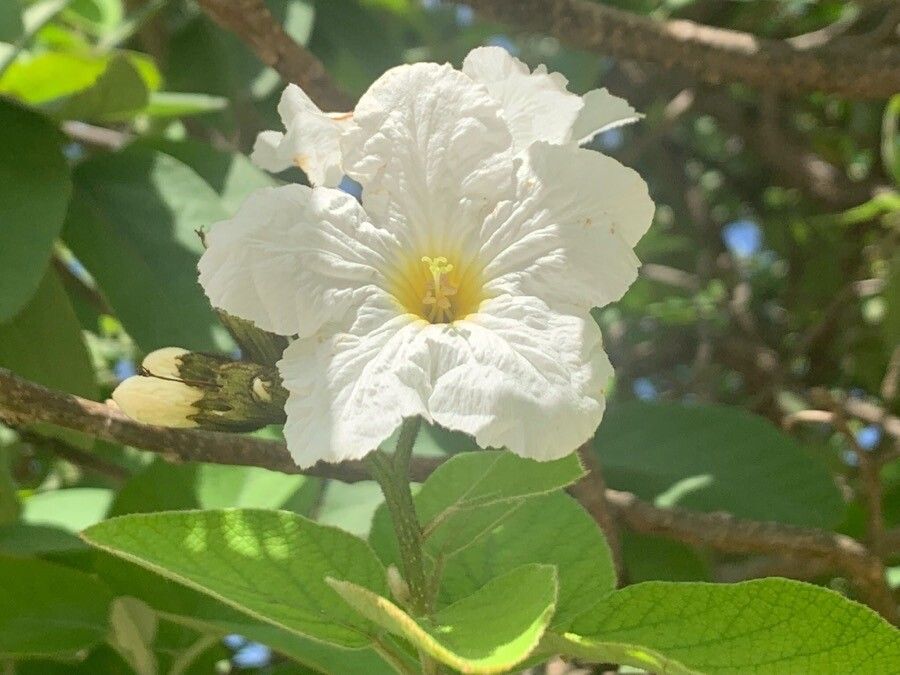
From late spring through summer, the plant produces fragrant white flowers in clusters. These trumpet-shaped flowers have five petals and yellow throats, attracting bees, butterflies, hummingbirds, and other pollinators.
The fruit of Cordia boissieri is an edible drupe that resembles an olive in shape but has a sweet taste when ripe. The fruit transitions from green to yellow as it matures.
Cordia boissieri prefers full sun exposure but can also tolerate partial shade and various soil types, including sandy loam or clay soils, as long as they are well-drained. It requires moderate watering during its growing season but becomes drought-tolerant once established.
This plant is commonly used for landscaping due to its attractive foliage, fragrant flowers, and edible fruit, making it a favorite among gardeners in warm climates such as southern California. Its drought tolerance makes it easy to maintain and a practical choice for these regions.
The Mexican olive shows good resistance to disease and is generally not susceptible to illnesses. Regarding care, this plant is fairly low-maintenance. When grown outdoors it needs only minimal watering, and larger plants typically do not require pruning. Smaller plants, however, should be pruned after they finish blooming. The Mexican olive is suitable for anyone with an outdoor area, such as a garden or deck, and does not demand much experience in plant care.
How to keep Cordia Boissieri.
Light
The Mexican olive does best in full sun, which is crucial for its vigorous growth and bright flowering. It comes from regions where that light is plentiful. A lack of light can hamper its growth, and a severe deficit may cause the leaves to wither. By contrast, it tolerates light levels that would scorch other plants.
Water
The Mexican olive thrives in well-drained soils and can withstand drought conditions, making it ideal for semi-arid climates. To maintain a balance between moisture and drought tolerance, it should be watered every two weeks. This plant is usually grown outdoors and is efficient at conserving water in its tissues, enabling it to endure the heat and temperature fluctuations of summer.
Humidity
This plant will thrive in moderate humidity, which is probably the level in your home. However, misting it a few times a week can be very beneficial. Make sure the room has good ventilation.
Temperature
Mexican olive originates from habitats where temperatures range from 68 to 100 °F (20 to 38 ℃). The plant prefers warmer conditions but can adapt if necessary. Modify the temperature with seasonal shifts, supplying extra warmth during colder months.
Fertilizer
Early spring, when the Mexican olive comes out of dormancy, is the best time to apply fertilizer. This supports overall growth and flower development. Fertilization improves the foliage, stems, and branches, while encouraging flowers that are larger, more vibrant, and longer-lasting. It helps move nutrients from the roots to the flowers and enhances the plant’s health and resistance to disease.
Pruning
The Mexican olive plant showcases vibrant white flowers and is remarkably drought-resistant. To maintain its health and appearance, prune it in early spring. This helps remove dead branches, shape the plant, improve airflow, and enhance blooming. Ensure you use clean tools to prevent the spread of disease, and consult horticultural guides for additional best practices.
Pot & Repot
Repot your Mexican olive every 2 to 3 years in the spring to promote healthy growth. Choose a large, sturdy pot and fill it with well-draining soil. After repotting, place the Mexican olive in partial shade and water it sparingly to prevent root rot. Keep in mind that the Mexican olive thrives with ample space and proper care!
Botanical profile.
- Plant Type
- Tree
- Life Cycle
- Perennial
- Genus
- Cordia
- Family
- Boraginaceae
- Hardiness Zone
- 9-11
- Mature Height
- 4.88 m to 7.01 m
- Mature Spread
- 4.57 m to 9.14 m
- Leaf Color
- Green, Gray
- Leaf Type
- Semi-evergreen
- Flower Color
- White
- Flower Size
- 3.05 cm to 5.08 cm
- Bloom Time
- Early summer, Mid summer
- Planting Time
- Spring, Summer, Autumn, Winter
- Harvest Time
- Mid summer, Late summer, Early fall
- Native Area
- Mexico
Other names.
Reader questions.
What are the sunlight requirements for Mexican olive plants?
Mexican olive plants thrive under full sun, requiring above 6 hours of sunlight daily for optimal growth and vibrant flowering. These plants originate from environments where sunlight is plentiful, and they depend on it for robust growth. However, it's important to observe how sunlight moves through your garden to find the perfect balance of light and shade, as insufficient light can stifle growth and lead to withered leaves, while too much light can scorch other species.
What are the ideal temperature conditions for Mexican olive?
The Mexican olive thrives in environments where temperatures fluctuate between 68 to 100 °F (20 to 38 °C). It prefers warmer climates but can adapt to necessary changes. During colder months, it's recommended to adjust the temperature to provide extra warmth, keeping it above 20°C to ensure healthy growth. In colder seasons, especially autumn, it's advisable to bring outdoor-grown Mexican olive plants indoors, placing them near a bright window while maintaining a safe distance from heaters to prevent harm. It's crucial to avoid temperatures approaching 0°C, as these can be detrimental to the plant.
How can artificial lighting support the growth of indoor Mexican olive plants?
Indoor Mexican olive plants require adequate lighting for optimal growth, especially when natural sunlight is insufficient, such as in winter or in less sunny spaces. Artificial lights, like LED lights which can be customized to provide specific wavelengths needed by plants, offer a vital solution. For full sun plants, 30-50W/sq ft of artificial light is recommended, partial sun plants need 20-30W/sq ft, and full shade plants require 10-20W/sq ft. The light source should be placed 12-36 inches above the plant to mimic natural sunlight, and most plants need 8-12 hours of light per day.
How should I care for a Mexican olive in low temperature conditions?
Mexican olive plants prefer warmth and do not tolerate low temperatures well, thriving best when the temperature is above 20°C. During winter, ensure temperatures remain above 0°C. Exposure to temperatures below -5°C may cause the leaves to lighten in color, with frost damage leading to a gradual browning or blackening of the leaves, accompanied by symptoms such as wilting and drooping. In such cases, trim off the frost-damaged parts and move the plant indoors to a warm environment for cold protection. Positioning the plant near a south-facing window can ensure it receives ample sunlight, but be careful to avoid placing it near heaters or air conditioning vents to prevent air dryness.
What are the symptoms of light deficiency in Mexican olive plants?
When Mexican olive plants receive insufficient light, they may exhibit several symptoms indicating light deficiency. These include small and mature leaves, leggy or sparse growth, leading to a stretched-out and weak appearance. The plant may experience faster leaf drop to conserve resources and show slower or no new growth entering a survival mode. Insufficient sunlight can also lead to lighter-colored new leaves and chlorosis, where leaves lose their green color and turn yellow, signs of breakdown of chlorophyll and lack of essential nutrients.
What measures should be taken when a Mexican olive is exposed to high temperatures?
During the summer, it's important to keep the Mexican olive below 38°C to prevent heat stress. Temperatures exceeding 43°C can lead to lighter leaf colors and increased susceptibility to sunburn. If sunburn occurs, trim away the sunburned and dried-up parts of the plant. Relocate the plant to a shaded location, especially during the intense midday and afternoon sun, to protect it. Ensuring the soil remains moist by watering the plant in the morning and evening can also help mitigate the effects of high temperatures.
What are some solutions to address light deficiency for Mexican olive plants?
To combat light deficiency in Mexican olive plants, gradually increasing sunlight exposure is key. For indoor plants, move them weekly to sunnier locations until they receive at least 6 hours of direct sunlight daily, utilizing south-facing windows and keeping curtains open. Artificial lights can supplement natural sunlight, especially for large plants. Outdoors, move plants gradually to prevent sunburn. Reducing obstructions, such as pruning trees that block sunlight, and transplanting to sunnier locations with good drainage during the plant's dormant period can also help.