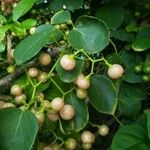
Cordia dichotoma
Fragrant manjack · Snotty gobbles · Glue berry · Anonang · Pink pearl
Description
Source: leafsnapCordia dichotoma, commonly known as the Indian cherry or Gondhal in Hindi, is a small to medium-sized deciduous tree in the Boraginaceae family. Native to India, this tree can be found in various regions such as the Himalayas and the Western Ghats. The tree features a straight trunk with grayish-brown bark that peels off in small flakes. Its leaves are simple, alternate, and ovate with serrated edges. They are dark green on the top and pale green underneath. Cordia dichotoma blooms small white or yellowish flowers from March to May. These flowers are followed by round fruits that resemble cherries but are not edible. The plant possesses various medicinal properties and is used in traditional medicine for treating ailments such as fever, coughs, asthma, and diarrhea. In addition to its medicinal uses, Cordia dichotoma's wood is used for making furniture and as fuelwood, while its leaves serve as fodder for livestock. Overall, Cordia dichotoma is an important plant species due to its ecological significance and its role in traditional medicine. Its numerous uses make it a valuable part of Indian flora, and conservation efforts should be made to preserve this species for future generations.
Care Guide
💧 Water Every 7 days
The Bird Lime Tree thrives in environments with intermittent rainfall, showcasing its tolerance to drought. It needs watering every 2-3 weeks and benefits from mulching, which helps retain soil moisture and regulate root temperature. Although it is a resilient plant, the Bird Lime Tree is best grown outdoors to ensure optimal health.
How should I water my Bird lime tree in the best way?
To promote excellent root development, place a garden hose at the base of your plant. Be careful not to spray the leaves directly, as this can cause issues. If your plant is outdoors and exposed to direct sunlight, the leaves may require additional watering. One option is to use bubblers on each plant to moisten the roots. Another option is to use soaker hoses that cover the entire garden or bed, ensuring that the roots are effectively watered when adding or removing plants. Once watering is complete, make sure to drain any excess water and allow the soil to dry before watering again. To prevent diseases, water at ground level rather than spraying the leaves. On a sunny day, consider spraying the entire bush with water. Whether your lime tree is potted or in the ground, remember to give it deep watering rather than light sprinkling.
What should I do if I give my Bird lime tree too much or too little water?
A Bird lime tree that is overwatered may exhibit yellowing, dropping, and wilting leaves, as well as a generally unhealthy appearance. Mushy stems may also be present. If these signs are observed, it is recommended to adjust watering schedule accordingly. Conversely, wilted leaves can also indicate under watering, characterized by crispy and dry leaves. When the soil is dry, simply giving the plant a thorough watering may be insufficient. In such cases, it is important to ensure the soil is adequately hydrated. However, even with proper watering, the Bird lime tree may exhibit dryness and yellow leaves for a few days due to damage to the root system. Normal conditions will cause the yellowing to cease. When caring for an indoor Bird lime tree, always check the moisture levels in the pot and avoid overwatering. Look for black spots as an indication of overwatering, and if present, allow the soil to dry out by refraining from watering for a few days. Overwatering can lead to root rot, indicated by discolored and slimy roots. If root rot is detected, consider transferring the plant to a different pot and take precautions to prevent any further damage. When planting a Bird lime tree outdoors, ensure the soil is adequately hydrated by checking for dryness with your fingers. Inadequate watering can hinder the plant's recovery, so make sure to provide sufficient water.
How many times a week should I water my Bird lime tree?
The Bird lime tree prefers deep and infrequent watering. If they are planted in pots, it's important to soak them in a gallon of water each time. This is because the water storage capacity of pots is limited, causing the soil to dry out faster. In cold regions, watering is necessary every 3 to 5 days. It's best to water the tree early in the morning when the soil is dry, whether it's placed outdoors or indoors. You can also check the soil inside to determine if watering is needed. If the top 2-3 inches of soil are dry, it's time for a full watering. During hot days, it may be necessary to check the moisture daily as the heat can quickly dry out the soil in the pot. If you have a garden, it's important to irrigate the soil. In hot climates, watering once a week is recommended. Only water when you notice that about 2 to 3 inches of soil have become too dry, both outdoors and indoors. Take into consideration any rainwater that the plant has received and avoid adding more water to prevent root rot. If there has been a lot of rainfall, additional watering may not be necessary. Bird lime trees generally grow during spring and fall. When they are placed outdoors, adding mulch that is about 3 to 4 inches deep can help conserve more water. Sandy soil tends to drain faster, so plants in this type of soil will need more frequent watering. However, clay soil retains moisture better, so you can water less frequently, allowing the plant to dry out for 2-3 days without developing root rot. You can keep track of when you water the plants by marking the date on the calendar. If you notice that the leaves are starting to droop, it could be an indication that you need to water the tree sooner.
How much water should I give my Bird lime tree?
The Bird lime tree generally needs about a gallon of water on a regular schedule. For potted plants, water them deeply until water drips out the bottom, then wait for the soil to dry before watering again. Use a water calculator or moisture meter to measure how much water you give your plant each week. Provide plenty of water during the flowering period, but let the moisture evaporate afterwards to prevent root rot. If the Bird lime tree is planted outdoors with sufficient rainfall, it may not need extra watering. When the tree is young or newly planted, ensure it receives 1-2 inches of rain per week. As the tree grows, it can rely solely on rainfall. Only water it fully during hot weather or if there is no rain for 2-3 weeks. Water during cooler times of the day to avoid heat damage. Additional watering will be necessary during prolonged dry periods.
Should I change how often I water my Bird lime tree depending on the season or weather?
The Bird lime tree prefers to be outdoors where it can receive rain, but if there is persistent dry weather, you may need to water it. During the spring and fall growing seasons, keep the soil moist but not soggy. Alternating between dry and moist soil conditions will help the Bird lime tree thrive. In the summer, hot weather can cause water to evaporate quickly, so you may need to water more frequently if there is a lack of rainfall. During the winter, the tree needs less water as it goes dormant, so you can use a well-draining soil mixture to help with water evaporation. Once the tree starts to leaf out in the spring, you can stop watering and rely on fall and winter rains. Good drainage is important for the tree, especially during winter. If the tree is in a pot, make sure to water it more often, especially in the summer. Deep soaking the roots once or twice a week is best, as shallow sprinkles can encourage fungal growth and do not reach the roots effectively. Avoid letting the tree dry out completely in the fall and winter. Do not overwater the tree as it does not like sitting in water for too long, and ensure the soil drains well to prevent winter damage. Applying mulch can also help reduce stress, conserve water, and promote healthy blooms.
☀️ Light Full sun
For healthy development, the bird lime tree generally prefers conditions similar to its native habitat, where sunlight is plentiful throughout the day and shade is only occasionally present. Both too much and too little light can negatively affect the tree, with consequences ranging from reduced vigor to poor health.
What are the sunlight requirements for a Bird Lime Tree?
A Bird Lime Tree requires full sun, which means above 6 hours of sunlight a day, but it can also tolerate partial sun, about 3-6 hours of sunlight. It's important to watch how sunlight moves through your garden to ensure you pick spots that offer the right balance of light and shade, which is crucial for the plants' health and happiness.
What are the essentials for healthy growth of a Bird Lime Tree?
For healthy growth, the Bird Lime Tree needs an environment similar to its native one, where sunlight is abundant throughout the day, with only occasional shade. Both excessive and insufficient light can harm the tree, potentially reducing its vigor or causing ill health. When natural sunlight is inadequate, especially indoors during winter or in less sunny spaces, artificial lighting becomes crucial. Indoor plants benefit from artificial lights like LEDs, which can provide the necessary wavelengths for optimal growth. Full sun plants need 30-50W/sq ft of artificial light, partial sun plants 20-30W/sq ft, and full shade plants 10-20W/sq ft.
What are the symptoms of insufficient light for a Bird Lime Tree?
Symptoms of insufficient light in Bird Lime Trees include smaller new leaves, leggy or sparse growth, faster leaf drop, slower or no new growth, lighter-colored new leaves, chlorosis, sunscald, leaf curling, wilting, and leaf scorching. These indicate the tree is not receiving adequate sunlight, affecting its ability to photosynthesize and maintain health.
What solutions can help a Bird Lime Tree receive adequate sunlight?
To ensure a Bird Lime Tree receives enough sunlight, gradually move it to a sunnier spot each week, aiming for at least 6 hours of direct sunlight daily. For indoor trees, use south-facing windows and consider artificial lighting if moving the tree isn't feasible. Outdoor and ground-planted trees benefit from gradual relocation to sunnier areas and reducing obstructions like overhanging branches. Remember, parts of the plant damaged by low light might not recover, but new growth will be healthy with increased light exposure.
🌡️ Temperature 20–37.8°C
Bird lime tree is native to regions with moderate temperatures, preferring a range of 68 to 100 °F (20 to 38 ℃). In colder months, providing a regulated, warmer indoor environment can improve its vitality.
What is the native environment of the Bird lime tree?
The Bird lime tree, botanically known as Cordia dichotoma, thrives in moderate temperatures, ideally between 68 to 100 °F (20 to 38 °C). It is native to environments that maintain these temperature ranges, making it a heat-loving plant that requires a controlled, warmer indoor climate during the colder months to sustain its vitality.
How should the Bird lime tree be cared for in autumn and winter?
In the autumn, Bird lime trees that are grown outdoors should be brought indoors to protect them from the cold. They should be placed near a bright window to ensure they receive enough light but kept at a distance from heaters to avoid excessive dryness. During winter, it's beneficial for the plant's growth to maintain indoor temperatures above 20°C and ensure temperatures do not approach 5°C, as cold temperatures can harm the plant.
What are the symptoms of cold damage in Bird lime trees?
Bird lime trees show a preference for warm temperatures and do not tolerate low temperatures well. They thrive best when temperatures are above 20°C. During winter, temperatures should be kept above 5°C. Exposure to temperatures below 1°C can cause the leaves to lighten in color. Frost damage leads to the leaves gradually turning brown or black, accompanied by wilting and drooping.
How can you remedy cold damage in Bird lime trees?
To remedy cold damage in Bird lime trees, trim off the frost-damaged parts and move the plant indoors to a warm environment for protection against the cold. Place the plant near a south-facing window to ensure it receives ample sunlight. It is also essential to keep the plant away from heaters or air conditioning vents to avoid air that is too dry.
How does high temperature affect Bird lime trees?
Bird lime trees should be kept below 38°C during summer to avoid stress from high temperatures. When temperatures exceed 43°C, the leaves may lighten in color and the plant becomes more susceptible to sunburn, indicating that it is not coping well with the excessive heat.
💨 Humidity
🪴 Soil 6-7
🌱 Fertilizer
The best time to fertilize a Bird lime tree is in early spring, as it comes out of dormancy. This encourages overall growth and the development of flowers. Fertilization improves the foliage, stems, and branches, and helps produce flowers that are large, vibrant, and long-lasting. It also assists in moving nutrients from the roots to the blooms and enhances the plant’s health and resistance to disease.
🪴 Pot & Repot
✂️ Pruning
The bird lime tree benefits from early spring pruning, done before new growth begins. Use thinning cuts to improve air circulation and sunlight exposure. Light pruning helps maintain the tree's natural shape, encourages healthy growth, and promotes flowering. Be careful not to over-prune, as this can cause stress and diminish its ornamental appeal.
🌿 Propagating
🐛 Diseases & pets
☠️ Toxicity
Characteristics
- Plant Type
- Tree
- Life Cycle
- Perennial
- Genus
- Cordia
- Family
- Boraginaceae
- Hardiness Zone
- 10-11
- Mature Height
- 10.06 m
- Mature Spread
- 5.79 m
- Leaf Color
- Green, Dark Green
- Leaf Type
- Deciduous
- Flower Color
- White
- Flower Size
- 6.35 cm to 10.16 cm
- Bloom Time
- Late spring, Early summer, Mid summer
- Planting Time
- Spring, Summer, Autumn
- Harvest Time
- Late summer, Early fall, Mid fall
- Native Area
- Sri Lanka, India, Malaysia, Philippines, Bangladesh, Pakistan, Laos, Fiji, China, Indonesia, Cambodia, Vietnam, Myanmar, Japan, Singapore, Thailand