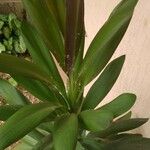
Cordyline australis
Cabbage-palm · Cabbage tree · New Zealand cabbagetree · Fountain-dracaena · Giant-dracaena
Description
Source: leafsnapCordyline is a genus of evergreen plants native to the tropical regions of Asia, Australia, and the Pacific Islands. These plants are popularly grown as ornamentals due to their attractive foliage and ease of care. Cordyline plants feature long, narrow leaves that can be green, red, or variegated. The leaves typically grow in a rosette pattern at the top of either a single stem or multiple stems. Cordyline plants prefer well-draining soil and thrive in conditions ranging from partial shade to full sun. While they can tolerate drought, they do require regular watering during hot summer months. Beyond their ornamental appeal, Cordyline plants have been used for medicinal purposes by indigenous cultures for centuries. The plant contains compounds with anti-inflammatory properties, which may be beneficial in treating various ailments. Overall, Cordyline is an attractive and low-maintenance plant, making it an excellent choice for both indoor and outdoor gardening enthusiasts.
🌳 The cabbage tree plays an important role in landscaping because of its distinctive appearance and also serves as a versatile material for artistic carving. Its wood is known for its durability and has traditionally been used by Māori artisans to make intricate sculptures and building components.
🎭 Survival and revival of democracy
Care Guide
💧 Water Every 7 days
The cabbage tree is native to the temperate coastal regions of New Zealand, where it thrives in environments with moderate humidity and regular rainfall. To keep it healthy, ensure it receives consistent moisture by watering it every 1-2 weeks. Adding mulch can help retain soil moisture during the growing season, especially when the tree is planted in outdoor landscapes.
☀️ Light Full sun
The cabbage tree flourishes with abundant sunlight, although it can tolerate lighter shade. Native to regions with strong sun, it prefers bright light for optimal health and growth at all stages. Too little sunlight can limit growth, while excessive exposure may cause leaf burn.
What are the sunlight requirements for a Cabbage tree?
The Cabbage tree, or Cordyline australis, thrives best under full sunlight conditions, which means it requires more than 6 hours of sunlight daily. However, it can also manage with partial sun, roughly around 3-6 hours of sunlight. Ensuring the plant receives the right amount of sunlight is crucial for its growth and health, as the amount of sunlight directly impacts the plant's ability to photosynthesize and produce energy. It's essential to observe your garden's sunlight patterns to find the ideal location that provides a balance of light and shade suitable for your Cabbage tree, enhancing its growth and ensuring its happiness.
What should I do if natural sunlight is insufficient for my Cabbage tree?
When natural sunlight is insufficient, especially during winter or in less sunny spaces, artificial lighting becomes a crucial solution for keeping your Cabbage tree healthy. Indoor plants, including the Cabbage tree, require adequate supplemental lighting for optimal growth. Using artificial lights, such as LED lights tailored to provide specific wavelengths, can promote healthier and faster growth. For plants needing full sun, aim for 30-50W per square foot of artificial light, 20-30W for partial sun plants, and 10-20W for full shade plants. The artificial light source should be placed 12-36 inches above the plant to mimic natural sunlight while ensuring the plant receives 8-12 hours of light daily. This setup will help compensate for the lack of natural sunlight and support the Cabbage tree's health and growth.
How can I tell if my Cabbage tree is getting too much or too little sunlight?
Your Cabbage tree may exhibit several symptoms indicating issues with sunlight exposure. Insufficient sunlight can lead to lighter-colored new leaves, indicative of a lack of chlorophyll and essential nutrients. It may also cause slower or no new growth, leggy or sparse growth, all signs of inadequate light. On the other hand, too much sunlight can result in chlorosis (yellowing of leaves), sunscald, leaf curling, wilting, and leaf scorching. These symptoms suggest the plant is receiving more light than it can handle, potentially damaging its health. Monitoring your Cabbage tree's response to sunlight and adjusting its placement or shading accordingly can help maintain its optimal health.
What solutions can I apply to address sunlight-related issues in my Cabbage tree?
To address sunlight-related issues in Cabbage trees, consider gradually moving indoor plants to sunnier locations, ensuring they receive at least 6 hours of direct sunlight daily. Use south-facing windows for maximum sunlight exposure, or supplement with artificial light for at least 8 hours daily. For outdoor plants, avoid sudden changes in light intensity to prevent sunburn, and gradually acclimate plants to sunnier areas. Reduce obstructions that block sunlight, consider pruning if trees are the culprits, and ensure ample sunlight reaches your plants. Transplanting smaller plants during dormant periods to sunnier locations with good drainage can also promote healthier growth. Remember, parts of the plant damaged by insufficient sunlight might not recover, but new growth should be healthy with improved light conditions.
🌡️ Temperature 20–37.8°C
The cabbage tree is native to temperate regions and prefers a temperature range of 68 to 100 ℉ (20 to 38 ℃). In summer it can tolerate highs up to 104 ℉ (40 ℃), and in winter it can withstand lows down to 25 ℉ (-4 ℃). In hotter areas, planting the cabbage tree in partial shade is advised to prevent heat stress.
What is the ideal climate for the Cabbage Tree?
The Cabbage Tree, or Cordyline australis, thrives in a temperate climate, preferring temperatures between 68 to 100 °F (20 to 38 °C). It can withstand summer highs up to 104 °F (40 °C) and winter lows down to 25 °F (-4 °C). In regions with high temperatures, it's advisable to plant the Cabbage Tree in partial shade to avoid heat stress. During colder months, it is beneficial to maintain temperatures above the plant's minimum tolerance and bring outdoor plants indoors to a spot near a bright window, while avoiding direct heat sources.
How should you care for a Cabbage Tree in low temperatures?
Cabbage Trees prefer warm climates and struggle in low temperatures, showing optimal growth above their suitable growth minimum temperature. In winter, it's crucial to keep them above their tolerable growth minimum temperature. Exposure to temperatures below their growth limit results in lighter leaf color, eventually turning brown or black after frost damage, alongside wilting and drooping. To mitigate frost damage, trim the affected parts and move the plant indoors to a warmer location. A south-facing window can provide sufficient sunlight without the harm of direct heat from heaters or air conditioners, helping in cold protection.
How to care for a Cabbage Tree during high temperatures?
In the summer, it's important to keep the Cabbage Tree's temperature below its suitable growth maximum to prevent heat stress and sunburn, which can cause the leaves to lighten and make the plant more prone to damage. To care for a Cabbage Tree during high temperatures, trim away any sunburned or dried parts and relocate the plant to a shaded area, particularly away from the harsh midday and afternoon sun. Ensure the soil remains moist by watering in the cooler parts of the day, such as morning and evening.
💨 Humidity normal (40-60%)
This plant will thrive in moderate humidity, which is probably the level in your home. However, misting it a few times a week can be very beneficial. Make sure the room has good ventilation.
🪴 Soil 6-7
🌱 Fertilizer
Fertilizing is essential for the Cabbage tree's care. Regular applications during the growing season maintain the energy needed for its showy leaves and encourage overall growth. Skipping fertilization can lead to unhealthy leaves, reduced ornamental value, and stunted or weak growth that is more likely to break.
🪴 Pot & Repot 2-3 years
When repotting Cabbage tree, pick a pot 1-2 inches (2.5–5.1 cm) larger with good drainage. Use a well-draining potting mix. Repot in spring or fall, making sure the root ball sits slightly below the rim of the flower pot. Water thoroughly after repotting and place it in a warm spot with indirect sunlight.
✂️ Pruning
Cabbage trees benefit from pruning in early spring, which involves removing dead leaves and leggy growth to promote fullness. Pruning during the period of active growth also improves the plant's health and reduces the risk of pests. To minimize the potential for infection, be sure to use clean, sharp tools.
🌿 Propagating
🐛 Diseases & pets
☠️ Toxicity
Characteristics
- Plant Type
- Shrub
- Life Cycle
- Perennial
- Genus
- Cordyline
- Family
- Asparagaceae
- Hardiness Zone
- 9-11
- Mature Height
- 0 cm to 66 cm
- Mature Spread
- 4.88 m
- Leaf Color
- Green
- Leaf Type
- Evergreen
- Flower Color
- White
- Flower Size
- 0.51 cm to 0.51 cm
- Bloom Time
- Late spring, Early summer, Mid summer
- Planting Time
- Spring, Autumn
- Harvest Time
- Mid summer
- Native Area
- New Zealand