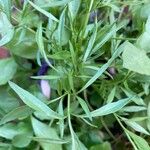
Coreopsis basalis
Golden-mane coreopsis · Rock Tickseed · Coreopsis Daisy · Goldenwave coreopsis · Goldenmane Tickseed
Description
Source: leafsnapCoreopsis basalis, commonly known as the Golden Tickseed, is a perennial flowering plant belonging to the Asteraceae family. Native to North America, it thrives in regions such as Texas, Oklahoma, and Kansas. The plant typically reaches a height of up to 2 feet and spreads about 1-2 feet wide. Golden Tickseed features bright yellow flowers that bloom from late spring through summer. The flowers have a daisy-like appearance, with yellow petals encircling a brownish-red central disk. The leaves are narrow, lance-shaped, and toothed at the edges. This plant prefers full sun but can also tolerate partial shade in hotter climates. It requires well-drained soil and, once established, can handle dry conditions. Due to its ease of growth and low maintenance, Coreopsis basalis is an excellent choice for gardeners seeking resilient and easy-to-care-for plants. Golden Tickseed attracts pollinators such as bees, butterflies, and birds, making it a valuable addition to pollinator gardens or wildlife habitat gardens. In summary, Coreopsis basalis, or Golden Tickseed, is an appealing perennial flowering plant that produces bright yellow, daisy-like flowers from late spring through summer. Its ability to attract pollinators while requiring minimal maintenance makes it an ideal choice for gardeners seeking low-maintenance plants for their gardens or landscapes.
💡 Chinese proverbs often convey good fortune and emphasize the value of hard work. Coreopsis drummondii, a vibrant and resilient flower, embodies this spirit perfectly. It bravely showcases its beauty without being overly particular about its surroundings. This characteristic not only represents the essence of youth but also suggests that young people should continually seek self-improvement and enhance their ability to overcome challenges.
🌳 Goldenmane Tickseed is an annual herbaceous plant often found in flower gardens. It's highly valued for its abundant bright blooms. With its tall height, it's perfect for the back of a garden border and makes excellent cut flowers. This plant is also well-suited for pollinator and rock gardens. For a striking color contrast, consider pairing it with companion plants like African lilies or daylilies.
🎭 Competitive drive, ambition
Care Guide
💧 Water Every 7 days
Goldenmane Tickseed thrives best with regular watering, as it prefers consistent moisture but can endure short periods of dryness. To keep the soil adequately moist without overwatering, provide water on a weekly basis. This plant flourishes in full sunlight, which enhances its blooming, creating a vibrant display reminiscent of its natural habitat.
How should I water my Goldenmane Tickseed?
To water Goldenmane Tickseed, you have several options: a garden hose with a spray nozzle, a watering can, or any common watering tool. The plant is not too particular about the type of water it receives - it can thrive with rainwater, tap water, or filtered water. However, it's best to avoid watering from above as it can harm the leaves and flowers and increase the risk of disease. A drip irrigation system is often the most effective method for watering this plant, as it delivers water evenly and directly to the soil. If you have a container-grown Goldenmane Tickseed, you can use a cup, watering can, or tap to water it by applying water directly to the soil.
What should I do if I give my Goldenmane Tickseed plant too much or too little water?
If you notice that your Goldenmane Tickseed lacks moisture, you should start watering it more regularly. Overwatering can lead to serious problems, such as diseases that can cause the plant to decline and die. To prevent this, it's important to choose a growing location that receives plenty of sunlight to dry the soil and has good drainage to prevent water from pooling. If you accidentally overwater your Goldenmane Tickseed in a pot, you may need to transfer it to a new pot with better drainage. When repotting, make sure to use loose soil and a pot that drains efficiently."
How much should I water my Goldenmane Tickseed?
Goldenmane Tickseed needs regular watering throughout the growing season. In spring, water it once per week, and as the season gets warmer, increase watering to two to three times per week. However, watering too much can harm the plant. Regardless of watering frequency, make sure the soil remains moist but not soaked. When watering Goldenmane Tickseed in a pot, you'll need to water more frequently since pot soil dries out faster. In most cases, water a container-grown Goldenmane Tickseed a few times per week, compared to once per week for a plant in the ground.
How much water does my Goldenmane Tickseed plant require?
There are a few different ways to decide how much water to give to your Goldenmane Tickseed. One method is to feel the soil for moisture and water until the top six inches are moist. Another option is to use a set measurement and give your plant about two gallons per week, depending on the temperature and how quickly the soil dries out. However, be aware that following strict guidelines may lead to overwatering. When growing in a container, you need to use a different approach. Give enough water to moisten all the dry layers of soil, which you can check by feeling with your finger or ensuring a slight trickle of excess water is exiting the drainage holes.
How do I know if I'm giving enough water to my Goldenmane Tickseed?
Avoiding overwatering your Goldenmane Tickseed can be somewhat difficult due to the plants' deep roots requiring weekly soil moistening. However, overwatering can lead to root rot and browning. Underwatering is less likely but can cause wilting and dry leaves if the plant goes too long without water.
☀️ Light Full sun
Goldenmane Tickseed does best with steady, all-day sunlight. Its native habitat is largely sunny. It makes good use of sunlight for robust growth and vigor, and its various growth stages are not affected by changes in solar intensity. Too little light can slow its growth, while too much can lead to wilting or sunburn.
What are the sunlight requirements for Goldenmane Tickseed?
Goldenmane Tickseed requires full sun, meaning it thrives best with above 6 hours of sunlight daily. However, it can also grow in partial sun, which refers to about 3-6 hours of sunlight. For optimal plant health and growth, it's essential to observe your garden's sunlight exposure and choose locations that offer a balance of light and shade, aligning with the plant's needs. Originally from predominantly sunny habitats, Goldenmane Tickseed uses sunlight for vigorous growth and vitality. Insufficient sunlight can slow its growth, while excessive exposure may lead to wilting or sunburn.
What essential information should I know about Goldenmane Tickseed's sunlight needs?
Goldenmane Tickseed requires continuous, full-day sun exposure for optimal growth, reflecting its origin in sunny conditions. It utilizes sunlight efficiently throughout its different growth stages, with its health and vitality being closely tied to solar intensity levels. Inadequate sunlight may impair its growth, whereas excessive sunlight can cause damage. In indoor settings or during less sunny seasons, artificial lighting can be critical for maintaining healthy growth. LED lights, specifically, are recommended for their ability to provide the necessary wavelengths of light, with required intensities varying based on the plant's sunlight needs - 30-50W/sq ft for full sun plants, 20-30W/sq ft for partial sun, and 10-20W/sq ft for full shade plants.
What are common light deficiency symptoms in Goldenmane Tickseed?
When Goldenmane Tickseed doesn't receive enough light, it may show several symptoms indicating light stress. These include smaller new leaves, leggy or sparse growth, accelerated leaf drop, slowed or halted new growth, and paler new leaves. Excessive sunlight, conversely, can cause chlorosis (yellowing leaves due to chlorophyll breakdown), sunscald, leaf curling (a defense to minimize water loss), wilting from excessive water loss, and leaf scorching. These symptoms reveal the plant's struggle with inappropriate light levels and the need for environment adjustment.
What solutions can aid Goldenmane Tickseed experiencing light-related issues?
For Goldenmane Tickseed facing light deficiency or overexposure, gradual adjustment to light conditions is key. Indoors, you can move the plant to sunnier spots step by step each week or use artificial lighting like desk or ceiling lamps, or professional grow lights for at least 8 hours a day, especially for large, stationary plants. Outdoors, carefully moving the plant to sunnier locations over time helps prevent shock from sudden exposure changes. Addressing obstructions like overhanging trees by pruning can also improve sunlight access. For small plants, considering transplantation during their dormant period to areas with better sunlight and drainage can significantly benefit their health. Note that while affected parts of the plant might not recover, new growth will be healthy with appropriate light adjustments.
🌡️ Temperature 0–37.8°C
Goldenmane Tickseed originates from temperate regions and grows best at temperatures of 68 to 100 °F (20 to 38 ℃). It favors warmth and commonly thrives during the summer months. In fall and winter, protective measures are required if the average temperature falls below 68 °F (20 ℃).
What is the native environment of Goldenmane Tickseed?
Goldenmane Tickseed, or Coreopsis basalis, is native to temperate environments. It thrives in temperatures ranging from 68 to 100°F (20 to 38°C), particularly enjoying the warmth found in summer months. While the plant possesses strong cold resistance, allowing it to generally withstand cooler temperatures without special frost protection, care should be taken in fall and winter. Protective measures are advised if average temperatures are expected to fall below 68°F (20°C). In regions where winter temperatures dip below -35°C, cold protection measures, such as covering the plant with soil or straw, become important. It's also recommended to water the plant abundantly before the first freeze in autumn to ensure the soil remains moist and enters a frozen state, aiding the plant through winter and early spring.
How does low temperature affect Goldenmane Tickseed, and what are the solutions?
Goldenmane Tickseed is notably cold-tolerant, best performing when temperatures remain above 20°C. During the winter months, it's crucial to keep the temperature above 0°C to prevent damage. However, if temperatures fall below -35°C, the plant might not show immediate signs of distress, but there could be a noticeable decrease in sprouting, or the plant may not sprout at all come springtime. The solution for any parts of the plant that fail to sprout in spring is to remove them, allowing for healthy regeneration.
What impact does high temperature have on Goldenmane Tickseed, and how can it be mitigated?
During the hotter summer periods, it's vital to ensure that Goldenmane Tickseed's temperature does not exceed 38°C. Temperatures above 43°C can lead to the leaves lightening in color, curling, becoming prone to sunburn, and in severe cases, causing the entire plant to wilt and dry out. To mitigate these effects, affected parts of the plant should be trimmed away. Moving the plant to a shaded area or employing a shade cloth to protect it from the midday and afternoon sun can also be beneficial. Additionally, watering the plant in the morning and evening will help keep the soil moist, further protecting the plant from heat stress.
💨 Humidity
🪴 Soil 6-7
🌱 Fertilizer
When most of Goldenmane Tickseed's blooms have opened to full size, resume fertilizing. At the time of peak bloom, apply fertilizer every three to four weeks, weather permitting. Once Goldenmane Tickseed begins producing fewer new blooms, stop fertilizing; there's no need to feed the plant when it can no longer produce more blooms.
Why should I add fertilizer to my Goldenmane Tickseed?
Plants, including Goldenmane Tickseed, require nutrients to survive. This is a well-known fact among gardeners, regardless of their level of experience. Without sufficient nutrients, Goldenmane Tickseed will quickly die out after its first pollination. To ensure the plant thrives throughout the blooming season and produces large, beautiful flowers, it is crucial to provide the right type and amount of nutrients. Fertilizer plays a vital role in helping Goldenmane Tickseed develop a robust root system. Since the plant's root system is thin and easily damaged, it requires additional support. When properly fertilized at planting, Goldenmane Tickseed can establish a strong root structure that not only provides stability but also sets the stage for an impressive flowering display. By timing the fertilizer application correctly, the flowering period of Goldenmane Tickseed can be significantly extended.
When should I fertilize my Goldenmane Tickseed?
Goldenmane Tickseed grows rapidly in the early growing season, after the last frost has passed. To ensure optimal growth, it is recommended to fertilize Goldenmane Tickseed during planting, whether it is placed in the ground or in planters. This initial dose of fertilizer will be sufficient until later in the year when the plant is in full bloom. Once the season is in full swing and the Goldenmane Tickseed has bloomed to its maximum size, it is time to start fertilizing again. This should be done every three to four weeks, taking into consideration the weather conditions. However, once the plant starts producing fewer new blooms, it is time to stop fertilizing. There is no need to continue fertilizing when the plant is no longer capable of producing additional blooms.
When is it not a good idea to fertilize my Goldenmane Tickseed?
Regular fertilizing is important for Goldenmane Tickseed, but it's crucial to apply it at the right time. There are situations where it's better to hold back on fertilizing, such as climate-related issues or other factors that can be controlled. If something is wrong with the plant, soil, or climate, it's best to wait until things have improved and the plant has recovered before fertilizing. For example, if there are sudden severe weather changes like a cold snap in the middle of summer, wait until it warms up again before fertilizing. Similarly, if the soil is too dry or compacted, fertilizing may not be effective as it won't be properly absorbed by the roots. Avoid fertilizing during extremely hot temperatures, especially during the hottest parts of the day when temperatures are around 90 degrees Fahrenheit, as the fertilizer can break down too quickly. It's also important to treat any pests or diseases and allow them to be cleared up before re-fertilizing.
What kind of fertilizer does my Goldenmane Tickseed plant need?
Goldenmane Tickseed plants thrive when given a fertilizer that is specifically designed for high-yield blooming plants. Ideally, this fertilizer should have a higher level of phosphorus, indicated by a higher P number in its NPK number, such as 10-30-10. Many fertilizer brands offer pre-mixed options that are perfect for plants like Goldenmane Tickseed, making it easy and hassle-free to provide the necessary nutrients. If you decide to use a pre-mixed fertilizer, make sure to carefully follow the instructions on the package to avoid over or under-fertilizing the plants, as both scenarios can negatively impact their growth and may even cause wilting.
How can I fertilize my Goldenmane Tickseed?
The type of fertilizer you have will determine specific directions for fertilizing Goldenmane Tickseed. However, there are some general tips that apply to most types of fertilizer. When you first plant Goldenmane Tickseed, mix the recommended amount of fertilizer into the soil and water it in. For subsequent fertilizing, the process may be slightly different. For pellet fertilizers, mix them into the top inch of soil around the plant's outer edge and water them in well initially, then regularly water afterwards. Other fertilizers can be mixed in a watering can and applied like regular watering. Follow the instructions on the fertilizer packaging for consistency, but if you prefer a regular schedule, aim for every three to four weeks.
🪴 Pot & Repot
✂️ Pruning
Goldenmane Tickseed is a vibrant plant known for its yellow blooms. To encourage bushier growth and more abundant flowering, prune it from early to late spring. Make sure to remove any dead stems, ensuring your cuts are clean to prevent disease. Be careful not to prune too heavily, as this could alter the plant's natural shape.
🌿 Propagating
🐛 Diseases & pets
☠️ Toxicity
Characteristics
- Plant Type
- Herb
- Life Cycle
- Annual
- Genus
- Coreopsis
- Family
- Compositae
- Hardiness Zone
- 3-12
- Mature Height
- 49 cm to 91 cm
- Mature Spread
- 49 cm to 91 cm
- Leaf Color
- Green, Dark Green
- Leaf Type
- Deciduous
- Flower Color
- Yellow, Red, Brown
- Flower Size
- 7.62 cm
- Bloom Time
- Late spring, Early summer, Mid summer
- Planting Time
- Spring, Summer
- Harvest Time
- Summer