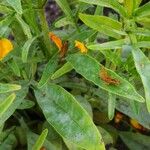
Coreopsis grandiflora
اشرفی درشت، · Large-flowered Tickseed · Tickseed · Large-flower tickseed · American tickseed
Description
Source: leafsnapCoreopsis grandiflora, commonly known as large-flowered tickseed, is a perennial plant in the Asteraceae family. Native to North America, it thrives in diverse habitats such as prairies, meadows, and open woods. Growing up to 2 feet tall, this plant features bright yellow flowers that bloom from late spring through summer. Each flower has a daisy-like appearance, with a dark central disk surrounded by yellow petals. The leaves are lance-shaped, green, and have a slightly hairy texture. Coreopsis grandiflora is easy to cultivate, requiring full sun exposure and well-drained soil for optimal growth. While it can withstand drought conditions, it prefers regular watering during dry spells. The plant's bright flowers attract pollinators, including bees and butterflies. Beyond its ornamental value in gardens and landscapes, Coreopsis grandiflora has medicinal properties, primarily due to its anti-inflammatory qualities. These properties make it useful for treating various ailments such as arthritis pain relief and reducing fever symptoms. Overall, Coreopsis grandiflora is an attractive perennial flower that adds color and beauty to any location. Additionally, it offers potential health benefits through its medicinal properties.
💡 The large-flowered tickseed derives its name from its small, bug-like seeds, but don't let the name mislead you—it doesn't attract ticks, contrary to some myths. In the language of flowers, the large-flowered tickseed symbolizes cheerfulness. It's a delightful gift to brighten the day of a friend or family member. Just be sure to let them know that neither the flower nor its seeds will attract ticks or fleas.
🌳 Large-flowered tickseed is commonly seen in informal or cottage gardens. Its large blooms and ease of cultivation make it ideal for planting in large, dramatic groupings. As a self-seeding plant, it is an excellent choice for enhancing beds and borders. Cranesbill and lavender are great companion plants due to their contrasting colors, providing a pleasing visual contrast.
🎭 Cheerfulness and love
Care Guide
💧 Water
☀️ Light Full sun
🌡️ Temperature 5–35°C
💨 Humidity
🪴 Soil 6-7
🌱 Fertilizer
🪴 Pot & Repot
✂️ Pruning
🌿 Propagating
🐛 Diseases & pets
☠️ Toxicity
Characteristics
- Plant Type
- Herb
- Life Cycle
- Perennial, Annual
- Genus
- Coreopsis
- Family
- Asteraceae
- Hardiness Zone
- 4-9
- Mature Height
- 20 cm to 91 cm
- Mature Spread
- 46 cm to 61 cm
- Leaf Color
- Green
- Leaf Type
- Deciduous
- Flower Color
- Yellow, Gold
- Flower Size
- 4.06 cm to 5.08 cm
- Bloom Time
- Late spring, Summer
- Planting Time
- Spring, Summer
- Harvest Time
- Summer, Early fall
- Native Area
- Prairie and woodlands of North America