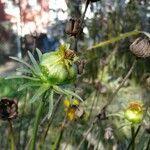
Coreopsis tinctoria
Plains coreopsis · Calliopsis · Garden tickseed · Painted tickseed · Annual coreopsis
Description
Source: leafsnapCoreopsis tinctoria, commonly known as Plains Coreopsis or Golden Tickseed, is a flowering plant native to North America. Belonging to the Asteraceae family, this annual plant can grow up to 2 feet tall. It features a slender stem with narrow, deeply lobed leaves arranged alternately. The flowers of Coreopsis tinctoria are bright yellow with striking maroon centers, blooming from early summer until fall. These vibrant flowers attract bees, butterflies, and other pollinators, making them an excellent addition to any garden or landscape. Coreopsis tinctoria thrives in full sun but can tolerate partial shade in hotter climates. It prefers well-drained soil but can also grow in poor soil conditions, making it a hardy choice for various garden environments. Plains Coreopsis has been used for medicinal purposes by Native Americans for centuries, as it contains compounds with anti-inflammatory properties. Moreover, the bright yellow flowers of this species have been traditionally used as natural dyes. Overall, Coreopsis tinctoria is an attractive flowering annual that adds color and beauty to any landscape while providing ecological benefits by attracting pollinators.
💡 Named the 2017 Wildflower of the Year by the Kansas Native Plant Society, the plains coreopsis is a prolific bloomer that attracts a wide array of native insects and pollinators. This resilient plant thrives in the wild, often found along roadsides and in woodland clearings. It was recognized for its ease of growth and its traditional use in producing red, yellow, and brown dyes.
🌳 The bright yellow and red pigments in the flowers of plains coreopsis make it an excellent natural dye for fabrics and craft uses, distinguishing it in the realm of artisanship. Additionally, plains coreopsis's sensitivity to certain soil conditions allows it to function as a bioindicator, informing ecologists about the presence of heavy metals or soil pH irregularities.
🎭 Cheerful at all times
Care Guide
💧 Water Every 3 days
Plains coreopsis, native to the prairies of North America, thrives in environments with periodic rainfall and well-draining soil. It can withstand short dry spells but grows best with balanced moisture levels. To keep the plant healthy, it should be watered weekly. Being an outdoor plant, plains coreopsis is resilient to changes in precipitation, making it an excellent choice for gardens in temperate climates.
How can I water my Plains coreopsis plants effectively?
To water Plains coreopsis, you have various options such as a garden hose with a spray nozzle or a watering can. This plant is not too particular about its water source and can thrive with rainwater, tap water, or filtered water. However, it's best to avoid watering from above as it can harm the leaves and flowers, and even cause disease. A great watering method for Plains coreopsis is using a drip irrigation system, which evenly and directly provides water to the soil. If you have a container-grown Plains coreopsis, you can still follow a similar approach but use tools like a cup, watering can, or tap to water the soil directly.
What do I do if I give my Plains coreopsis too much water or not enough water?
To fix underwatering issues with Plains coreopsis, simply water it more regularly when you notice it lacks moisture. Overwatering, on the other hand, can be more dangerous if not caught early. It can cause diseases that lead to the plant's decline and death. To prevent this, select a proper growing spot that receives ample sunlight, which helps dry out the soil, and ensures good drainage to avoid waterlogged soils. If you overwater your potted Plains coreopsis, consider transferring it to a new pot with better drainage and loose soil.
How often do I need to water my Plains coreopsis?
Plains coreopsis requires regular watering throughout the growing season. In the spring, water it once a week. As the season progresses and it gets warmer, you may need to water it two to three times a week. However, watering it more than that can harm the plant. It's important to keep the soil moist but not wet, regardless of how often you water. If you have Plains coreopsis in a pot, you'll need to water it more often because pot soil can dry out faster. Generally, water container-grown Plains coreopsis a few times a week, while in-ground plants can be watered once a week.
How much water does my Plains coreopsis plant need?
To determine how much water your Plains coreopsis needs, there are a few options. Some gardeners go by the feel of the soil, watering until the top six inches feel moist. Others use a set measurement, like giving about two gallons per week depending on the weather and soil dryness. However, following strict guidelines might overwater if your plant needs less. For container-grown coreopsis, check the soil layers and water enough to moisten them, using your finger to test for moisture or waiting for slight excess water to drain out.
How do I know if I water my Plains coreopsis enough?
To avoid overwatering your Plains coreopsis, it's important to strike a balance. While these plants have deep roots that require weekly watering, they are also very prone to root rot and browning. Underwatering is not typically a concern, as Plains coreopsis can survive without additional watering for a period of time. However, if you neglect to water them for too long, they will start to wilt and their leaves may become dry.
☀️ Light Full sun
Plains coreopsis grows best with abundant light but tolerates moderate shade. Its natural habitat is important, since it performs well in open locations with clear skies. Too little light can restrict growth, while excessive exposure may damage the plant.
What are the sunlight requirements for Plains Coreopsis?
Plains Coreopsis, known botanically as Coreopsis tinctoria, thrives best under full sun, requiring more than 6 hours of sunlight daily, but it can also tolerate partial sun, which amounts to about 3-6 hours of sunlight. It's essential to observe the movement of sunlight through your garden to identify spots that offer the right balance of light and shade, ensuring optimal growth and health of your plants.
What are the essential lighting conditions for growing Plains Coreopsis?
The Plains Coreopsis flourishes in environments with ample exposure to light, tolerating some degree of moderate shading. Its success is significantly influenced by its inherent preference for open, sunny areas. Lack of sufficient light can impede growth, while too much direct exposure may cause damage. For indoor plants, artificial lighting can be a crucial solution, especially during winter or in less sunny spaces. LED lights, providing 30-50W/sq ft for full sun plants, 20-30W/sq ft for partial sun plants, and 10-20W/sq ft for full shade plants, are recommended. The light source should be placed 12-36 inches above the plant, ensuring 8-12 hours of light per day to mimic natural light conditions.
What symptoms indicate inadequate lighting for Plains Coreopsis?
Symptoms of insufficient lighting in Plains Coreopsis include smaller new leaves, leggy or sparse growth, premature leaf drop, stunted or ceased new growth, pale or irregularly colored new leaves, and chlorosis (yellowing of leaves due to chlorophyll breakdown). Excessive sunlight can lead to sunscald (pale, bleached areas on leaves), leaf curling, wilting, or leaf scorching, which are signs of damage or stress in the plant. These symptoms help in diagnosing light-related issues, guiding adjustments to the plant's environment.
How can I address light deficiency symptoms in Plains Coreopsis?
To combat light deficiency in Plains Coreopsis, gradually acclimate your plants to sunnier conditions, aiming for at least 6 hours of direct sunlight daily. This can be done by moving plants closer to a south-facing window or using artificial light sources, such as desk lamps or professional grow lights, for at least 8 hours a day. For outdoor plants, ensuring a gradual transition to sunnier spots is crucial to prevent sunburn. Additionally, reducing any obstructions that block sunlight and considering transplanting smaller plants during their dormant period can help increase light exposure. It's important to note that parts of the plant already affected may not recover, but new growth should flourish with improved light conditions.
🌡️ Temperature 5–35°C
Plains coreopsis is native to climates with ambient temperatures between 68 and 95 °F (20 to 35 ℃). The plant prospers within this range and may need adjustment in colder seasons, such as being moved to a warmer indoor location or supplied with supplemental heat.
What is the optimal temperature range for Plains coreopsis?
Plains coreopsis, or Coreopsis tinctoria, flourishes in climates where the ambient temperatures are between 68 to 95 °F (20 to 35 °C). This temperature range is ideal for the plant's growth, and if conditions become colder, measures such as moving it indoors to a warmer setting or providing additional heat may be necessary. Although Plains coreopsis has strong cold resistance, it usually does not require special frost protection measures. However, in areas where winter temperatures are expected to drop below -25°C, it's important to protect the plant using soil or straw coverings and to water it abundantly before the first freeze of autumn to ensure the soil remains moist.
How does low temperature affect Plains coreopsis and what are the solutions?
Plains coreopsis is notably cold-tolerant, preferring temperatures above 20°C, and should be kept above 0°C during winter. If temperatures fall below -25°C, the plant's ability to sprout in spring may be diminished, leading to decreased sprouting or potentially no sprouting at all. If this occurs, the solution is to remove any parts of the plant that have failed to sprout in spring, to promote new growth and vitality.
How does high temperature affect Plains coreopsis and what are the solutions?
In the summer, it's crucial to ensure that the Plains coreopsis is not exposed to temperatures above 35°C. Exposure to temperatures exceeding 38°C can cause the plant's leaves to lighten in color, curl, become susceptible to sunburn, and in severe cases, lead to wilting and drying of the entire plant. To mitigate these issues, remove any sunburned or dried parts of the plant, relocate it to a shaded area during the peak sun hours, or use a shade cloth. Additionally, watering the plant in the morning and evening helps maintain soil moisture and prevent heat stress.
💨 Humidity normal (40-60%)
This plant will thrive in moderate humidity, which is probably the level in your home. However, misting it a few times a week can be very beneficial. Make sure the room has good ventilation.
🪴 Soil 6-6
🌱 Fertilizer
When most Plains coreopsis flowers are fully open, resume fertilizing. As the blooms reach their peak, apply fertilizer every three to four weeks, weather permitting. Once the plant begins producing fewer new blooms, stop fertilizing; there’s no need to feed it when it can no longer produce additional flowers.
Why should I put fertilizer on my Plains coreopsis?
Plants need nutrients to survive, which all gardeners understand. For Plains coreopsis, without food, it will die soon after pollination. To keep it thriving and producing beautiful flowers all season long, it's important to provide the right nutrients in the right amounts. Fertilizer is particularly helpful for building a strong root system, especially since Plains coreopsis has thin and delicate roots. By fertilizing when planting, the plant can establish a solid root structure that not only provides stability, but also ensures a sensational display of flowers. With proper timing, fertilization can greatly prolong the flowering period of Plains coreopsis.
When should I fertilize my Plains coreopsis?
Plains coreopsis experiences rapid growth in the beginning of the growing season, once the last frost has passed. This is the best time to fertilize the plant, specifically during planting. Whether you choose to plant it in the ground or in planters, make sure to apply fertilizer at this stage. This will be the only fertilization until later in the year when the blooms are in full bloom. Once the season is in full swing and Plains coreopsis has fully bloomed, it's time to resume fertilizing. Start fertilizing again every three to four weeks, as weather permits, around the time when the blooms are at their peak. However, once the plant starts producing fewer new blooms, there's no need to continue fertilizing.
When is it a bad idea to add fertilizer to my Plains coreopsis?
Regular fertilizing is important for Plains coreopsis, but it is crucial to apply it at the right time. In some cases, it is advisable to hold back on fertilizing. These situations are mainly related to climate but can also include controllable factors. Basically, if there is something wrong with the plant, soil, or climate, it is best to wait until the issues are resolved and the plant has recovered. For instance, do not fertilize if there are severe or unexpected weather changes. If there is a sudden cold snap during summer, wait until it warms up before applying fertilizer. The same applies if the soil is too dry or compacted to absorb the fertilizer effectively. In such cases, the fertilizer will go straight to the roots, which is not ideal for Plains coreopsis. Moreover, when the temperatures reach the scorching 90-degree Fahrenheit range during the hottest parts of the day, avoid fertilizing. This is because fertilizer can break down at different rates depending on the temperature, and it is crucial not to allow high temperatures to cause too rapid of a breakdown. Additionally, it is important to treat and clear up any pests or diseases before applying fertilizer again.
What kind of fertilizer does my Plains coreopsis plant need?
Most types of Plains coreopsis require a balanced fertilizer with specific nutrients for high-yield blooming. It is best to use a fertilizer formulated for blooming plants with a higher phosphorus level, such as one with a higher P number like 10-30-10. Many fertilizer brands offer options suitable for Plains coreopsis, which makes it easy to provide the necessary nutrients. When using a pre-mixed fertilizer, it is important to follow the package instructions to avoid over or under-fertilizing, both of which can negatively impact the plant's growth and even cause wilting.
How do I add fertilizer to my Plains coreopsis plant?
Applying fertilizer to Plains coreopsis may vary depending on the type of fertilizer you have. Here are some general tips to follow. When first planting Plains coreopsis, mix the recommended amount of fertilizer into the soil before planting and water it in. For subsequent fertilizing, the method may differ. With pellet fertilizers, mix them into the top inch of soil around the edges of the plant where the roots are. Water them in well initially and then regularly water the plant afterward. Other fertilizers can be mixed into a watering can and applied like a regular watering. To maintain consistency, refer to the instructions on the fertilizer packaging. Alternatively, you can aim for fertilizing every three to four weeks.
🪴 Pot & Repot
When repotting Plains coreopsis, choose a pot that is 1–2 inches (2.5–5.1 cm) larger in diameter and has good drainage. Use a well-draining potting mix and consider adding perlite for extra drainage. Repot in spring or early summer, water thoroughly afterward, and place in a shady spot at first.
✂️ Pruning
To encourage healthy growth and vibrant blooms in plains coreopsis, prune them from early to late spring. Use techniques like deadheading and trimming overgrown stems. Make sure to use clean, sharp tools to prevent disease. For more detailed instructions, consult horticultural guides.
🌿 Propagating
🐛 Diseases & pets
☠️ Toxicity
Coreopsis plants are non-toxic to both humans and animals.
Characteristics
- Plant Type
- Herb
- Life Cycle
- Annual, Perennial, Biennial
- Genus
- Coreopsis
- Family
- Asteraceae
- Hardiness Zone
- 5-9
- Mature Height
- 30 cm to 91 cm
- Mature Spread
- 30 cm to 61 cm
- Leaf Color
- Green
- Leaf Type
- Deciduous
- Flower Color
- Yellow
- Flower Size
- 2.54 cm to 4.57 cm
- Bloom Time
- Early summer, Mid summer
- Planting Time
- Spring, Summer
- Harvest Time
- Mid summer
- Native Area
- Mexico