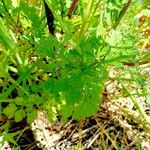
Coriandrum sativum
گشنیز · كزبرة · Cilantro · Coriander · ধনীয়া
Description
Source: leafsnapCoriandrum sativum, commonly known as coriander or cilantro, is an annual herb belonging to the Apiaceae family. It is native to regions of Southern Europe, North Africa, and Southwest Asia. The plant typically grows up to 50 cm in height and features thin stems with bright green, feathery leaves. These leaves are used as a culinary herb, prized for their distinct aroma and flavor. Coriander produces small white or pink flowers that bloom in umbels during the summer months. These flowers eventually develop into small, round fruits known as coriander seeds, which are used as a spice in cooking. Coriander is widely cultivated for its culinary uses across Asia, Europe, Africa, and America. It is commonly used fresh or dried in dishes such as curries, soups, stews, and salads. In addition to its culinary applications, coriander has traditionally been used for medicinal purposes, particularly in treating digestive issues like bloating and gas, thanks to its anti-inflammatory properties. Overall, Coriandrum sativum holds significant culinary value due to its unique aroma and flavor, as well as medicinal importance because of its anti-inflammatory properties. This makes it an important plant species across various cultures worldwide.
🌳 Aside from its culinary role, cilantro has other frequently overlooked applications, for example in the production of natural biofuels because of its high caloric content. Its essential oils are used in fragrance industries, and it is even mentioned historically in tapes and textiles for its scent. The use of cilantro in pollution reduction through bio-remediation techniques is likewise a novel field of interest.
🎭 Steadfast true love, healing, recovering from a broken heart
Care Guide
💧 Water Every 7 days
Coriander grows best in moderate climates and needs regular watering without becoming waterlogged. To keep it healthy, water the plant twice a week and ensure the soil stays evenly moist. Rainfall during the growing season is especially beneficial, as it helps promote the growth of lush foliage.
When Should I Water My Coriander?
Proper and timely watering is crucial for the health and development of coriander, influencing its growth, foliage production, and resistance against diseases. To determine when to water coriander, check the soil moisture level by inserting your finger into the soil up to a depth of 1-2 inches; if it feels dry, it's time to water. Observing the plant for signs like wilting leaves, yellowing or browning leaves, and stunted growth can also indicate the need for water. However, watering too early can risk root diseases, and watering too late might stunt growth or lead to dehydration.
How Should I Water My Coriander?
Coriander requires moderate watering and thrives with bottom-watering to avoid wetting the foliage and prevent fungal diseases. While misting is not necessary, using a watering can with a long spout helps target water at the base of the plant. Employing a moisture meter can ensure that coriander is not over or under-watered. Keeping the soil well-drained and avoiding excessive watering are key practices to prevent root rot and foster healthy plant growth.
How Much Water Does Coriander Really Need?
Coriander, with its shallow roots, prefers well-drained soil and requires about 1 inch (2.5 cm) of water per week for optimal growth. Proper hydration is indicated by vibrant green leaves and an upright growth habit. Both over and underwatering can lead to issues such as yellowing leaves, wilting, or brittleness. It's important to water deeply to reach the root zone while avoiding soil saturation. Using a well-draining potting mix and ensuring adequate drainage are beneficial for maintaining the proper moisture level.
What Kind of Water is Best for Coriander?
Coriander thrives well with various types of water, including tap water, filtered water, rainwater, or distilled water, with rainwater being considered optimal for its potential nitrogen content. Though not highly sensitive to chlorine, coriander can be affected by long-term exposure, and letting tap water sit for 24 hours before use can help evaporate chlorine. Minimizing fluoride exposure and avoiding excessive mineral content in water are also recommended, along with using room temperature water for watering.
How Do Coriander's Watering Needs Change with the Seasons?
Coriander's watering needs vary seasonally. In spring, consistent moisture supports germinating seeds and growing seedlings, requiring damp soil. Summer demands more frequent watering due to higher evaporation rates and active growth. As coriander's growth slows in autumn, reducing the watering frequency and quantity is advisable, while in winter, especially in indoor settings, less frequent watering is needed due to slower evaporation, taking care to avoid overwatering.
☀️ Light Full sun
Cilantro thrives when it receives uninterrupted direct sunlight. In its native habitat it requires open skies for strong growth, although it can moderately tolerate lower light levels. Both excessive and insufficient light impair cilantro's health, potentially causing discoloration or stunted growth.
What are the sunlight requirements for coriander?
Coriander requires full sun exposure, defined as above 6 hours of direct sunlight daily, to thrive. It can also grow under partial sun conditions, which means about 3-6 hours of sunlight. The plant originates from habitats with clear skies and strong sun, essential for its growth. However, it has a moderate tolerance for less sunlight. Insufficient or excessive light can lead to issues such as discoloration or stunted growth. It is beneficial to observe how sunlight moves through your garden to find the ideal balance of light and shade for coriander.
How can artificial lighting support coriander growth indoors?
When natural sunlight is insufficient, especially during winter or in less sunny locations, artificial lighting can be a vital supplement for indoor coriander plants. Optimal growth is supported by providing adequate artificial light, with LED lights being a popular and efficient choice due to their adjustability to meet plant-specific light wavelength needs. For full sun plants, 30-50W per square foot is recommended, partial sun plants require 20-30W per square foot, and full shade plants need 10-20W per square foot. The light source should be positioned 12-36 inches above the plant, simulating the natural sunlight's distance, and plants typically need 8-12 hours of light per day.
What are the symptoms of insufficient light in coriander?
Coriander may show various symptoms when grown indoors or in conditions with limited light, which can include smaller new leaves, leggy or sparse growth, faster leaf drop, slower or halted growth, and lighter-colored or chlorotic (yellow) new leaves indicating insufficient sunlight. Additionally, symptoms such as sunscald, leaf curling, wilting, and leaf scorching can appear due to excessive sunlight. These issues highlight the importance of providing coriander with the optimal amount of sunlight or artificial light to ensure healthy plant development.
How can I improve the sunlight exposure for my coriander plants?
To enhance sunlight exposure for coriander, gradually relocate your plants to sunnier areas, aiming for at least 6 hours of direct sunlight daily. For indoor plants, placing them near a south-facing window and using artificial grow lights for additional light can be effective. For outdoor plants, it's crucial to make gradual changes to prevent sunburn. Reducing obstructions such as pruning branches from overhanging trees can also increase sunlight exposure. If necessary, consider transplanting smaller plants to a sunnier location, preferably during their dormant period for minimal stress.
🌡️ Temperature 0–37.8°C
Cilantro originates from areas that favor average temperatures of 68 to 100.4 °F (20 to 38 ℃). Cooler temperatures can hinder its growth in winter months, so maintaining an ambient temperature of 68 °F (20 ℃) is recommended for optimal growth.
What is the native climate for Coriander?
Coriander is native to regions that enjoy a preferred average temperature range between 68 to 100.4 °F (20 to 38 °C). In these conditions, Coriander can grow optimally, benefiting from the warmth to thrive throughout its growth cycle.
What temperatures are best for growing Coriander?
For optimal growth, Coriander prefers temperatures above 20°C, especially during the winter months to ensure the plant continues to grow. The plant's growth can be inhibited by lower temperatures, so it's crucial to maintain an ambient temperature of at least 68°F (20°C). Moreover, it's essential to keep the minimum temperature above the freezing point to prevent the plant from sustaining freezing damage.
How should Coriander be protected during cold weather?
When the outdoor temperature approaches or drops below -5°C (25°F), it's advisable to bring Coriander indoors or to provide it protection. This can be achieved by setting up a temporary greenhouse or using materials such as plastic film or fabric to wrap the plant, ensuring it is shielded from the harmful cold.
What should be done if Coriander is exposed to low temperatures?
Coriander has a moderate tolerance to low temperatures but thrives best between 20°C and 38°C. If temperatures drop below 0°C, or worse, to -40°C, the plant may show signs of distress like darkening leaves, water-soaked necrosis, wilting, and gradual browning. To mitigate damage, trim the frost-affected parts and immediately move the plant to a warm environment. If needed, set up a makeshift greenhouse for additional cold protection and ensure it is placed near a south-facing window for sufficient sunlight or use supplemental lighting if natural light is inadequate.
How should Coriander be cared for during high temperatures?
During the summer months, it is crucial to ensure Coriander's temperature does not exceed 38°C. Should the temperature surpass 43°C, the plant may slow in growth, exhibit lighter leaf coloration, and become prone to sunburn. In such cases, remove the sunburned and dried parts, move the plant to a shaded area, particularly from the afternoon sun, and water it during the morning and evening to maintain soil moisture.
💨 Humidity normal (40-60%)
This plant will thrive in moderate humidity, which is probably the level in your home. However, misting it a few times a week can be very beneficial. Make sure the room has good ventilation.
🪴 Soil 6-7
🌱 Fertilizer
To maximize Cilantro's yield and flavor, provide sufficient nitrogen throughout the entire growth period, from pre-planting through harvest. Plants that are well watered and fertilized produce plentiful, healthy leaves and are less likely to be bitter. Before planting, improve the soil by adding organic matter such as compost or manure, preferably 2 to 8 weeks beforehand.
Why is it necessary to use fertilizer on my coriander?
Coriander, being grown for its edible leaves, has specific nutritional requirements unlike other plants. Nitrogen is the most crucial nutrient for foliage development, and it can be challenging for coriander to obtain enough nitrogen from the soil. To ensure a satisfying harvest, many gardeners choose to supplement coriander with a nitrogen source through heavy feeding.
When should I fertilize my Coriander plant?
To optimize the growth of your Coriander, it is recommended to apply fertilizer at different stages of the growing season. First, when preparing the ground for planting, amend the soil with nutrient-rich organic material like compost or manure, ideally between 2 to 8 weeks prior to planting. Once it's time to plant, amend the soil again using the same method. When your seedlings emerge and reach a height of around 2 inches, apply the next dose of fertilizer. From there, it's recommended to continue regularly feeding your Coriander with organic matter or commercial fertilizer until harvest. A common schedule is to fertilize every two to three weeks. Additionally, it's a good practice to add a layer of compost or manure around the plant to maintain a steady supply of nutrients.
When is it not a good time to add fertilizer to my Coriander?
When choosing a fertilizer, remember that nitrogen-rich ones are ideal for promoting healthy foliage growth. However, be cautious when applying them near vegetables that require energy for fruiting rather than foliage. Otherwise, you may end up with plants that have lots of leaves but few vegetables. Additionally, make sure to avoid getting any fertilizer on the leaves of your Coriander, as this can cause damage. It is best to keep the fertilizer a few inches away from the base of the plant. If your Coriander is experiencing issues like disease, pests, or drought, it is important to address those problems before fertilizing. Fertilizer can benefit healthy plants, but it can harm plants that are in poor condition.
What kind of fertilizer does my Coriander plant need?
Choosing the best fertilizer for Coriander depends on several factors including the specific type of plant, environmental conditions, and soil composition. Generally, high-nitrogen fertilizers are a good option as Coriander requires a lot of nitrogen. Start by amending the soil with manure or compost at the beginning of the growing season, and then use dry or liquid fertilizer throughout the rest of the season. During the seedling stage, feed lightly and gradually increase the amount as the plant matures. Many people prefer organic fertilizers for a better taste, but chemical fertilizers also work. Some popular organic options with high nitrogen content include fish emulsion, soil meal, compost tea, alfalfa meal, blood meal, and chicken manure. If using chemical fertilizers, check the NPK number, which indicates the ratio of nitrogen, phosphorus, and potassium in the mixture. For high-nitrogen options, choose a fertilizer with a higher first number, such as a 13-2-5, or even one that only contains nitrogen, like a 16-0-0.
How should I give nutrients to my Coriander plant?
To fertilize your Coriander, you have a few options depending on the type of fertilizer. If you're amending the soil, dig at least 6 inches deep and mix in your amendment at a 2:1 ratio with the soil. For granular or powder fertilizers, spread them around the base of the plant according to the retailer's recommendation. Mix them into the top layer of soil to prevent them from being washed or blown away, and make sure to keep the fertilizer about 2 to 3 inches away from the plant to avoid burning it. After adding dry fertilizer, water the soil thoroughly. If you use water soluble chemical fertilizers, dissolve them in water and use the diluted mixture to water your Coriander if you are using a container to water your plants rather than other methods like irrigation.
🪴 Pot & Repot Every 12 months
When repotting Cilantro, choose a pot about 1–2 inches (2.5–5 cm) larger in diameter that provides good drainage. Use a well-draining potting mix and consider adding perlite for extra drainage. Repot in spring or early summer, water thoroughly afterward, and place it in a shady spot at first.
✂️ Pruning
To help coriander grow fuller and avoid legginess, it's important to prune it carefully from early to late spring. Regularly trim the leaves and remove any yellowing foliage to improve air circulation and reduce the risk of pests. Pruning encourages the plant to become bushier and increases its yield, leading to a healthy growing season.
🌿 Propagating
🐛 Diseases & pets
☠️ Toxicity
Cilantro is completely edible and a staple in many dishes worldwide. Not only that, but it is considered non-toxic to dogs, cats, and horses.
Characteristics
- Plant Type
- Herb
- Life Cycle
- Annual
- Genus
- Coriandrum
- Family
- Apiaceae
- Hardiness Zone
- 2-11
- Mature Height
- 20 cm to 91 cm
- Mature Spread
- 23 cm to 30 cm
- Leaf Color
- Green
- Leaf Type
- Deciduous
- Flower Color
- White, Purple, Pink
- Flower Size
- 0.10 cm to 0.13 cm
- Bloom Time
- Late spring, Early summer
- Planting Time
- Spring, Summer, Autumn, Winter
- Harvest Time
- Mid summer
- Native Area
- Russia, Saudi Arabia, Afghanistan, Iraq, Syria, Turkey, Egypt, Iran, Cyprus, Greece, Yemen, Lebanon