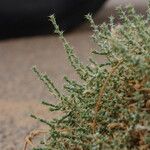
Cornulaca monacantha
Description
Source: leafsnapCornulaca monacantha is a species of flowering plant in the genus Cornulaca, that is now included in the family Amaranthaceae, (formerly Chenopodiaceae). It is a desert plant found in the Middle East and the Sahara, and the southern end of its range is considered to delineate the edge of the desert. In Arabic it is known as had and djouri, and the Tuareg people call it tahara. It was first described in 1813 by the French botanist Alire Raffeneau Delile.
Care Guide
💧 Water
☀️ Light Full sun
Cornulaca monacantha is native to open habitats, such as sunny meadows and forest edges, which supply abundant light. It does best in Full Sun but can also tolerate Partial Sun, adapting well to different sunlight conditions.
🌡️ Temperature 20–37.8°C
Cornulaca monacantha is native to tropical areas, where the climate is generally warm and humid. Consequently, it is adapted to high temperatures and humidity. It is sensitive to abrupt temperature changes and prefers a steady thermal environment, so avoiding temperature fluctuations indoors is important. It typically cannot tolerate cold and requires warmer conditions to grow. If the ambient temperature becomes too low, the plant may stop growing or even die.
💨 Humidity
🪴 Soil 6-8
🌱 Fertilizer
🪴 Pot & Repot
✂️ Pruning
🌿 Propagating
🐛 Diseases & pets
☠️ Toxicity
Characteristics
- Plant Type
- Succulent, Shrub
- Life Cycle
- Annual
- Genus
- Cornulaca
- Family
- Amaranthaceae
- Hardiness Zone
- 9-11
- Mature Height
- 30 cm to 49 cm
- Mature Spread
- 40 cm to 61 cm
- Leaf Color
- Gray, Light Gray
- Leaf Type
- Deciduous
- Flower Size
- 0.20 cm to 0.25 cm
- Bloom Time
- Summer
- Planting Time
- Summer, Autumn
- Harvest Time
- Late summer, Early fall, Mid fall
- Native Area
- Saudi Arabia, Libya, Egypt, Tunisia, United Arab Emirates, Sudan, Mauritania, Pakistan, Morocco, Yemen, Niger, Chad, Mali, Afghanistan, Iraq, Israel, Oman, Iran, Kuwait, Algeria, Qatar