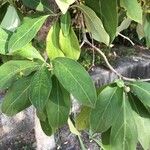
Cornus capitata
Bentham's cornel · Bentham's dogwood · Evergreen dogwood · Strawberry dogwood
Description
Source: leafsnapCornus capitata, commonly known as the Himalayan strawberry tree or evergreen dogwood, is a small to medium-sized tree belonging to the dogwood family. Native to the Himalayan region of Asia, this tree can be found in China, India, Nepal, and Bhutan. It boasts a rounded crown with glossy green leaves measuring 3-6 inches long and 1-2 inches wide. The tree produces small, yellowish-green flowers, although they are not particularly showy. The most distinctive feature of Cornus capitata is its fruit, which resembles a strawberry in shape but turns orange-red when ripe. This edible fruit has a sweet flavor, making it popular for use in jams or as an ingredient in desserts. Cornus capitata prefers well-drained soil with moderate moisture levels and can thrive in both full sun and partial shade conditions. It grows best in temperate climates where temperatures do not drop below -10°C (14°F). Once established, this plant requires minimal maintenance, although occasional pruning may be needed to maintain its shape. Overall, Cornus capitata is an attractive ornamental tree that provides year-round interest with its glossy leaves, yellowish-green flowers, and unique orange-red fruits. Its hardiness makes it suitable for use as an ornamental plant or in edible landscaping projects, where its fruits can be harvested for consumption by both humans and wildlife.
Care Guide
💧 Water Every 7 days
Bentham's cornel, a plant native to the Himalayas, prefers moderate moisture levels and can withstand short periods of drought. It thrives in well-drained soil and should be watered every 1 to 2 weeks, taking care to avoid waterlogging. This plant is best suited for outdoor cultivation and adapts well to temperate climates with favorable rainfall patterns.
How should I water my Bentham's cornel plant?
Your Bentham's cornel is not particular about how you water it. You can use any common watering tool, such as watering cans, hoses, or even cups. When watering your Bentham's cornel, it is best to apply the water directly to the soil. Make sure to evenly moisten all areas of the soil to provide water to the entire root system. Using filtered water is recommended to avoid harming the plant with particles found in tap water. It is also beneficial to use water at or slightly above room temperature, as extremely hot or cold water can shock the Bentham's cornel. However, the plant generally responds well to any kind of water.
What should I do if I give my Bentham's cornel plant too much or too little water?
Outdoor plants, especially newly planted ones or seedlings, can be prone to lack of watering. It's important to water them enough for a few months while they are small or recently planted. Once the roots are established, Bentham's cornel can rely on rain most of the time. When Bentham's cornel is planted in pots, overwatering is more likely to occur. If you accidentally overwater your Bentham's cornel, there are steps you can take to remedy the situation. First, stop watering the plant immediately to minimize the effects. Then, remove the plant from its pot and inspect the roots. If there is no root rot, you can return it to the container. However, if there are signs of root rot, trim away the affected roots and consider applying a fungicide to prevent further damage. Finally, repot the Bentham's cornel in well-draining soil. If your Bentham's cornel is underwatered, simply water it more frequently. This is typically an easy fix as the plant's leaves will droop, dry out, and fall off when underwatered. Once properly watered, the leaves will regain fullness quickly. Make sure to adjust your watering frequency as soon as you notice underwatering.
How frequently should I give water to my Bentham's cornel?
If your outdoor plants receive enough natural rainfall, they can grow normally without additional watering. However, if your area experiences a lack of rainfall, it is important to water your plants adequately every 2 weeks in the spring and fall, and more frequently during the summer. In the winter, when plants require less water due to slower growth, you should water them sparingly or not at all. For young or newly planted Bentham's cornel plants, more frequent watering is necessary to help them establish and grow into more adaptable and drought-tolerant plants. When it comes to potted plants, there are two main ways to determine how often to water your Bentham's cornel. One way is to follow a predetermined watering schedule, such as once a week or once every other week. However, this approach may not always be accurate as it doesn't account for the specific growing conditions of your plant. Additionally, the watering frequency may need to be adjusted depending on the season. During the summer, when the plant requires more water, a predetermined schedule might not be sufficient. An alternative method is to base your watering frequency on the moisture level of the soil. It is generally recommended to wait until the top two to four inches of soil (about ⅓ to ½ depth of the pots) have completely dried out before watering again.
How much water does my Bentham's cornel plant need?
When watering your Bentham's cornel, it's important to remember that it doesn't always require a large amount of water. If only a few inches of soil have dried since the last watering, giving the plant about five to ten ounces of water will support healthy growth. Monitoring the soil moisture can help determine the appropriate amount of water to provide. Pay attention to how many inches of soil have dried out between waterings. To ensure the plant receives enough moisture, water enough to moisten all the dry soil layers since the last watering. If more than half of the soil is dry, it may be necessary to give extra water. In this case, continue watering until you see excess water draining from the pot's drainage holes. If your Bentham's cornel is planted in an area that receives sufficient rain, it may not need additional watering. However, when the plant is young or still establishing itself, it should receive 1-2 inches of rain per week. As it continues to grow, it can rely on rainwater. Only during hot weather or extended periods without rainfall should you consider giving the plant a full watering to prevent stress.
How can I know if I am giving enough water to my Bentham's cornel?
Overwatering is a common problem for the Bentham's cornel, and there are specific signs to look out for. An overwatered plant will have yellowing leaves and may lose some leaves. Additionally, overwatering can cause the plant's structure to shrivel and promote root rot. On the other hand, an underwatered plant will also wilt and may have brown or brittle leaves. No matter if you see signs of overwatering or underwatering, you should take action to restore the plant's health.
☀️ Light Full sun
Bentham's cornel flourishes in full sunlight and tolerates moderate shade. Native to areas with abundant sun, its growth is boosted by bright conditions. Too much sun can cause some leaf injury, while too little light can impede its progress. Ensuring balanced sun exposure during all stages of growth is important for healthy development.
What are the sunlight requirements for Bentham's cornel?
Bentham's cornel requires full exposure to sunlight for optimal growth and can also manage moderate shading. It originates from environments with plentiful sunlight, which promotes its development. However, excessive sun exposure might lead to leaf damage, whereas insufficient light can impede growth. It's crucial to maintain balanced sun exposure throughout all growth stages to ensure healthy development. Generally, full sun is defined as above 6 hours of sunlight per day, and partial sun is about 3-6 hours of sunlight.
How does artificial lighting support indoor plants like Bentham's cornel?
Indoor plants, including Bentham's cornel, may require artificial lighting to achieve optimal growth, especially in conditions where natural sunlight is limited, such as during winter or in areas with less sunlight. Artificial lights, such as LED lights, can provide the necessary wavelengths of light needed by plants. Full sun plants need 30-50W/sq ft of artificial light, partial sun plants need 20-30W/sq ft, and full shade plants need 10-20W/sq ft. The artificial light source should be placed 12-36 inches above the plant to mimic natural sunlight, and most plants benefit from 8-12 hours of artificial light per day.
What are common symptoms of light deficiency in Bentham's cornel?
When Bentham's cornel does not receive adequate sunlight, it may display several symptoms indicating light deficiency. These include smaller new leaves compared to mature ones, leggy or sparse growth, faster dropping of older leaves, slower or halted new growth, and the development of lighter-colored or pale new leaves. Additionally, excessive sunlight can lead to chlorosis (leaves turning yellow), sunscald (damaged leaves or stems from intense sunlight exposure), leaf curling, wilting, and leaf scorching, which are characterized by brown, dry, and crispy edges on leaves.
What solutions are available for managing light exposure for Bentham's cornel?
To manage light exposure for optimal growth of Bentham's cornel, gradually move plants to sunnier locations, ensuring they receive at least 6 hours of direct sunlight daily. This can be achieved by using south-facing windows and keeping curtains open or employing artificial lighting for additional support. Gradual transition to sunlight is crucial to prevent sunburn. Indoors, keep a desk or ceiling lamp on for at least 8 hours daily, or use professional grow lights. Outdoors, reduce obstructions by pruning trees or moving plants to sunlit areas. Consider transplanting smaller plants to sunnier spots with good drainage during their dormant period. Note that parts of the plant affected by insufficient sunlight may not recover, but new growth should be healthy following improved light exposure.
🌡️ Temperature 5–35°C
Bentham's cornel occurs naturally in temperate climates and favors a temperature range of 41 to 95 °F (5 to 35 ℃) for optimal growth. In extreme conditions, seasonal adjustments may be necessary to keep temperatures within that range.
What is the optimal temperature range for the growth of Bentham's cornel?
Bentham's cornel thrives in temperate climates, with an optimal temperature range between 41 to 95 °F (5 to 35 °C) for growth. It has strong cold resistance, so it usually doesn't require special frost protection measures during winter. However, in climates where winter temperatures are expected to drop below -25°C, providing cold protection by wrapping the trunk and branches with non-woven fabric or cloth is important. Additionally, watering the plant abundantly before the first freeze in autumn to ensure the soil remains moist can help prevent drought and water scarcity during winter and early spring.
How does Bentham's cornel react to low temperatures?
Bentham's cornel is cold-tolerant and performs best when temperatures remain above 5°C. However, during winter it's important that temperatures stay above -20°C. If temperatures fall below -25°C, while there might not be immediate visible damage, the branches can become brittle and dry with no new shoots emerging in the spring. To mitigate damage from such low temperatures, dead branches that failed to produce new leaves should be pruned away in the spring.
What are the effects of high temperatures on Bentham's cornel and how can they be mitigated?
During the summer, it's important to keep Bentham's cornel temperatures below 35°C. When temperatures exceed 38°C, the plant's leaves can lighten in color, the tips may become dry and withered, and the plant becomes more susceptible to sunburn. To cope with these conditions, sunburned and dried-up parts should be trimmed away. Moving the plant to a shaded location or using a shade cloth to protect it from the midday and afternoon sun can prevent further damage. Additionally, watering the plant in the morning and evening to keep the soil moist is beneficial.
💨 Humidity
🪴 Soil 5-6
🌱 Fertilizer
Proper timing is essential when fertilizing Bentham's cornel. Apply fertilizer in early spring and continue monthly until early summer. The fertilizer promotes attractive blooms and supplies energy during both dormant and active growth phases.
Why do I have to put fertilizer on my Bentham's cornel plant?
To ensure your Bentham's cornel produces beautiful blooms, it's important to fertilize it. Fertilizing in early spring is particularly effective in helping your plant have excellent flowers during that season. Additionally, fertilizer provides your Bentham's cornel with ample energy that it can store in the ground while dormant. By giving it extra nutrients during fall planting or late spring, you can help your plant store more energy to use once it becomes active again.
When should I fertilize my Bentham's cornel plant?
Timing is key when fertilizing Bentham's cornel. Applying fertilizer too early, when the plant is dormant, is ineffective and the fertilizer may be washed away by rain, causing waste and pollution. The first application of fertilizer should be in early spring, and continue applying once a month until early summer.
When is it best to not fertilize my Bentham's cornel plant?
To ensure healthy growth and blooming of Bentham's cornel, it is important to consider the following recommendations: 1. Avoid using fertilizers with high nitrogen content for Bentham's cornel since it can result in excessive leaf growth but limited blooms. Instead, opt for fertilizers with a lower nitrogen level compared to other nutrients. 2. Refrain from fertilizing Bentham's cornel after early autumn, as this can cause excessive growth just before winter. Fertilization during hot and dry periods should also be avoided since dry soil is less effective in delivering nutrients, and the growth stimulated by fertilization may require more water than what is available. It is best to apply fertilizer during cooler temperatures earlier in the season. 3. Keep in mind that Bentham's cornel can absorb fertilizer applied to nearby plants or lawns, so be cautious to avoid inadvertently providing the tree/shrub with an excessive amount of fertilizer.
What kind of fertilizer does my Bentham's cornel plant need?
For a Bentham's cornel, the ideal fertilizer should have a balanced mix of the main plant nutrients, with slightly more phosphorus. Another option is to improve the soil by adding organic materials like compost, worm castings, and manure. Experienced gardeners recommend supplementing with water-soluble fertilizers containing phosphorus when flower buds appear. This helps the flowers grow better, become larger, and bloom for a longer time. Fertilizers come in various forms, but liquid or powdered forms are most effective for Bentham's cornel. Regardless of the form, dilute the fertilizer and apply it while watering the plant.
How can I fertilize my Bentham's cornel plant?
To properly fertilize your Bentham's cornel, it is important to follow specific directions for the type of fertilizer you are using. To avoid over-fertilization, determining the correct amount is crucial. A general guideline is to use the tree's age or trunk diameter to estimate the appropriate amount, aiming for one-tenth of a pound per year or per inch of trunk (up to one pound maximum). Granular fertilizers and organic options like blood meal should be sprinkled around the tree's base, extending to the drip line but ensuring it doesn't touch the trunk. These substances will gradually break down and seep into the soil, benefiting the roots. After fertilizing, spread a one-inch layer of compost around the base and thoroughly water the tree.
🪴 Pot & Repot 2-3 years
Repot Bentham's Cornel every 2 to 3 years in the spring, using a spacious pot with good drainage. After repotting, place the plant in partial shade and ensure the soil remains moist. Providing adequate water is crucial, especially during the recovery period after repotting.
✂️ Pruning
Bentham's cornel is a hardy, evergreen tree known for its intricate flowers and berries. To maintain its health and appearance, prune the tree during its dormant phase, from early to late winter. Focus on removing dead or diseased branches, thinning overcrowded growth, and improving its shape for aesthetic purposes. Pruning at the right time boosts growth, enhances the tree's ornamental value, and ensures it has vibrant blooms and a strong structure.
🌿 Propagating
🐛 Diseases & pets
☠️ Toxicity
Characteristics
- Plant Type
- Tree
- Life Cycle
- Perennial
- Genus
- Cornus
- Family
- Cornaceae
- Hardiness Zone
- 5-9
- Mature Height
- 11.89 m
- Mature Spread
- 6.1 m to 11.89 m
- Leaf Color
- Green, Red, Purple, Gray, Silver
- Leaf Type
- Evergreen
- Flower Color
- White, Cream
- Flower Size
- 1.27 cm
- Bloom Time
- Early summer, Mid summer
- Planting Time
- Spring, Summer, Autumn
- Harvest Time
- Fall
- Native Area
- Nepal, India, Vietnam, Myanmar, Bhutan, Laos, China