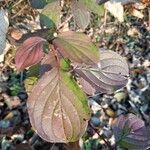
Cornus sanguinea
آل قرمز یا شفت · Common Dogwood · Dogwood · Pegwood · Red dogwood
Description
Source: leafsnapCornus sanguinea, commonly known as European dogwood or bloodtwig dogwood, is a deciduous shrub that belongs to the Cornaceae family. Native to Europe and western Asia, this shrub can grow up to 3 meters in height. It features a multi-stemmed growth habit with an upright form and arching branches, which are adorned with green leaves during the summer. The oval-shaped leaves of Cornus sanguinea have pointed tips and are a dark green color. In autumn, the leaves transform into vibrant shades of red before falling off for winter dormancy. During late spring or early summer, the plant produces clusters of small white flowers, which are followed by blue-black berries that attract birds. One of the most distinctive features of Cornus sanguinea is its bright red stems, which give rise to its common name "bloodtwig dogwood." These striking stems add winter interest when other plants have lost their leaves. Cornus sanguinea thrives in moist but well-drained soil and can tolerate both full sun and partial shade. It is commonly used as an ornamental shrub in landscaping due to its attractive foliage, flowers, berries, and striking stem coloration. In addition to its ornamental uses, some parts of Cornus sanguinea possess medicinal properties. When consumed in small amounts under medical supervision, they can help treat fever or diarrhea. However, excessive consumption can be toxic due to the high levels of tannins present in parts such as the bark or roots. Overall, Cornus sanguinea is an attractive deciduous shrub with year-round interest, making it popular among gardeners seeking low-maintenance plants with aesthetic appeal.
💡 The hard, straight woody shoots have been traditionally used to make skewers, spears, and arrows. In fact, Otzi the Iceman, who was discovered in the Otztal Alps in 1991, was carrying dogwood arrow shafts in his quiver. He is believed to be about 4,000 years old.
🌳 The common dogwood, apart from its ornamental use in gardens, has several lesser-known practical applications. Its dense wood is prized for tool handles and machine parts because of its toughness. In some regions, the branches are traditionally used for weaving baskets. The bark, rich in tannins, has been used in leather tanning. Additionally, the common dogwood’s ability to indicate the presence of certain heavy metals in soil makes it a natural bioindicator for environmental studies.
🎭 Renewal, Endurance, Innocence, Fondness, Power, The Christian faith
Care Guide
💧 Water Every 7 days
Originating from European woodlands, the common dogwood thrives best in consistently moist soil, but it's important to avoid waterlogging. For optimal moisture, water it weekly, and reduce the frequency during its dormant period in winter. This plant strikes a balance between retaining moisture and allowing drainage, showing resilience to drought when needed.
What is the best way to water my Common dogwood tree?
To ensure excellent root development, it is recommended to place a garden hose at the base of the plant. It is important to avoid spraying the leaves directly and keep in mind that leaves might need more water if they are exposed to direct sunlight outside. Additionally, using bubblers or soaker hoses can help moisten the roots, with soaker hoses being particularly useful for covering the entire garden or bed when adding or removing plants to encourage deep root growth. After watering, make sure to drain any excess water and wait for the soil to dry before watering again. To prevent diseases, it is best to water at ground level rather than spraying the plant. On sunny days, consider spraying the entire bush with water. Whether potted or in the ground, remember that Common dogwood plants prefer deep watering instead of light sprinkling.
What should I do if I give the Common dogwood tree too much or too little water?
Overwatering can cause Common dogwood leaves to turn yellow, drop off, and wilt. The plant may also appear dull and unhealthy, with mushy stems. Adjusting your watering schedule can help prevent these symptoms. However, wilting can also be a sign of under watering. Underwatered leaves may become crispy and dry, while overwatered leaves will be soft and wilted. If the soil is dry and simply watering is not enough, give the plant a full watering. Although this will help the Common dogwood recover, it may still have dry and yellow leaves for a few days due to damage to the roots. Once the plant returns to normal, the yellowing of the leaves will stop. When keeping a Common dogwood indoors, always check the moisture levels in the pot. Avoid overwatering and watch for signs of black spots. If present, allow the soil to dry out by withholding water for a few days. Overwatering can lead to root rot, so if your plant shows signs of this, consider transferring it to a different pot, especially if the roots are discolored and slimy. It is important to prevent root rot by avoiding overly soggy soil. When planting a Common dogwood outdoors, dig a little deeper to check for soil dryness. If the soil is too dry, it may indicate underwatering. Adequate watering is necessary for the plant's recovery.
How frequently do I need to water my Common dogwood?
The Common dogwood prefers deep and infrequent watering. If they are planted in pots, it's important to soak them in a gallon of water each time because the water storage in pots is limited and the soil dries out faster. In cold regions, watering is needed every 3 to 5 days. Ideally, water the plants early in the morning when the soil is dry, whether they are indoor or outdoor plants. You can also check if watering is necessary by examining the soil. If the top 2-3 inches of soil are dry, it's time to give the plant a full watering. On hot days, it's a good idea to check the moisture daily as the heat can quickly dry out the soil in the pot. If you have a garden, soil irrigation is also required. In hot climates, watering once a week is sufficient. Only water when you notice that about 2 to 3 inches of soil have become too dry, whether indoors or outdoors. Take into consideration the amount of rainwater received by the plant and avoid adding more water to prevent root rot. If there is a lot of rainfall, additional watering may not be necessary. Common dogwood typically grows during spring and fall. If they are planted outdoors, it's beneficial to add mulch about 3 to 4 inches deep to conserve water. Sandy soil requires more frequent watering as it tends to drain faster, while clay soil can be watered less frequently, usually every 2-3 days, to avoid root rot. Keeping track of watering dates on a calendar and observing drooping leaves can help determine if watering is needed. If the leaves are drooping, it may indicate that watering is overdue.
How much water does my Common dogwood need?
The Common dogwood generally needs about a gallon of water on a regular schedule. For potted plants, water them deeply until water drips from the bottom of the pot, then let the soil dry before watering again. Use a water calculator or moisture meter to track how much water you give your plants each week. During the flowering period, provide plenty of water but allow it to evaporate afterward to avoid root rot. If the Common dogwood is outdoors and receives adequate rainfall, it may not need extra watering. When it is young or newly planted, ensure it gets 1-2 inches of rain per week. As it grows, it can rely solely on rainfall. Only in very hot weather or if there has been no rain for 2-3 weeks should you consider giving the Common dogwood a full watering during cooler parts of the day to prevent heat damage. Additional watering will be necessary during extended dry periods.
Should I water my Common dogwood more or less depending on the time of year or the weather?
To keep the Common dogwood healthy and thriving, it is important to provide the right amount of water. During the spring and fall, the soil should be kept moist but not overly soggy. Alternating dry and moist conditions will promote good growth. In the summer, hot weather and lack of rainfall may cause the water to evaporate quickly, so regular and additional watering may be needed to maintain moisture. During winter, the Common dogwood requires less water as it goes into a dormant phase. Well-draining soil with moisture-retentive properties, like terracotta, can help maintain the right water levels. Once the plant starts to leaf out and go dormant, watering can be skipped as it can rely on fall and winter rains for survival. When the temperature gets warmer, you can encourage growth and blooming by cultivating the Common dogwood. Ensure good drainage at all times, as the plant is not fond of excessive water or drought. If planted in pots, water them well, especially during summer, and provide adequate drainage to prevent cold and wet roots. It is recommended to water the entire root system deeply once or twice a week, depending on the weather, avoiding shallow sprinkles. Even during winter dormancy, do not let the plants dry out completely. On the other hand, avoid waterlogging the plants, as they can suffer and die if the soil does not drain well. Applying mulch when possible can help reduce stress, conserve water, and promote healthy blooms.
☀️ Light Full sun
The typical dogwood plant needs a large amount of sunlight every day for vigorous growth; it generally prefers to be in the sun for the majority of the day. It's a plant species that can, if needed, withstand extensive periods of reduced sunlight without major negative impacts, although it flourishes best in more optimal light conditions. Too much sun can result in leaf burn, while not enough sunlight might result in a thinning of its leaves.
What are the sunlight requirements for Common Dogwood?
Common Dogwood thrives best in conditions where it can receive more than 6 hours of sunlight daily, qualifying as a full sun plant. However, it can also adapt to partial sun conditions, getting about 3-6 hours of sunlight daily. It's important to monitor the movement of sunlight through your garden to find the ideal spot for your plants. This ensures they receive the right balance of light and shade, fostering their growth and maintaining their health.
What essentials do I need to know about the sunlight needs of Common Dogwood?
Common Dogwood requires a significant amount of sunlight each day for optimal growth and prefers being in the sun for the majority of the day. While the plant can endure periods of reduced sunlight without severe effects, it flourishes best outside of these conditions. Overexposure may cause leaf scorch, while too little light can result in sparse foliage. For indoor plants, when natural light is insufficient, artificial lighting is essential. LED lighting is recommended as it can be customized to provide the wavelengths needed by your plant. The light intensity should be adjusted based on whether the plant is typically in full sun, partial sun, or full shade, and positioned 12-36 inches above the plant for 8-12 hours per day to mimic natural sunlight.
What are the symptoms of improper sunlight exposure for Common Dogwood?
Common Dogwood may show several symptoms due to improper sunlight exposure, including smaller leaves, leggy or sparse growth, faster leaf drop, slower or no new growth, lighter-colored or yellow leaves (chlorosis), sunscald, leaf curling, wilting, and leaf scorching. These symptoms signify either too much or too little light. For example, chlorosis and sunscald indicate too much light, while sparse growth and faster leaf drop can indicate insufficient light.
How can I address sunlight-related issues with my Common Dogwood?
To address sunlight-related issues with Common Dogwood, follow a gradual approach to increase their exposure to sunlight, aiming for at least 6 hours of direct sunlight daily. For indoor plants, consider using artificial light sources like desk lamps or grow lights for at least 8 hours a day if the plant is large or hard to move. Outdoor plants should be moved to sunnier locations gradually to avoid sunburn. If your plants are blocked from sunlight, prune nearby branches or transplant smaller plants to a sunnier spot with ample lighting and good drainage. Remember, while the damaged parts of the plant might not recover, new growth should be healthier with better light access.
🌡️ Temperature 5–32.2°C
The common dogwood is typically native to moderate climate regions and has an optimal temperature range for growth between 41 and 89.6 °F (5 to 32 ℃). During the chillier winter periods, considering methods of heating could prove beneficial for its best growth.
Where is common dogwood originally found and what are its optimal growth temperatures?
Common dogwood, botanically known as Cornus sanguinea, originates from naturally temperate environments. It thrives in a broad range of temperatures between 41 to 89.6°F (5 to 32°C). Considering its strong cold resistance, common dogwood can endure cold conditions without special frost protection. However, in regions where winter temperatures might drop below -25°C, cold protection measures could be beneficial for the plant's optimal growth. Wrapping the trunk and branches with non-woven fabric or cloth can provide necessary protection during extremely cold conditions. Additionally, to prevent drought and ensure water availability for the plant during winter and early spring, watering the plant abundantly before the first freeze in autumn is recommended, helping to maintain moist soil.
How does common dogwood react to low temperatures and what are the recommended care steps?
Common dogwood displays remarkable cold tolerance, performing best in temperatures above 5°C (41°F) and ideally being kept above -20°C (-4°F) during winter. When temperatures fall below -25°C (-13°F), there may not be immediate visible damage during the winter months; however, come spring, the branches might become brittle and dry, with new shoots failing to emerge. The recommended care step for these symptoms is to prune away any dead branches that are not producing new leaves in the spring, which helps the plant to recover and encourages new growth.
How should common dogwood be cared for in high temperatures?
During the summer months, it's crucial to keep common dogwood in conditions below 32°C (89.6°F) to prevent stress on the plant. Exposure to temperatures above 35°C (95°F) can result in lighter-colored leaves, dry and withered tips, and an increased risk of sunburn. To address these issues, trim away sunburned and dried-up parts of the plant. Relocating the plant to a shaded area during the midday and afternoon sun or using a shade cloth can protect the plant from excessive sunlight. Moreover, watering the plant in the morning and evening will help keep the soil moist and support the health of the plant under high temperature conditions.
💨 Humidity normal (40-60%)
This plant will thrive in moderate humidity, which is probably the level in your home. However, misting it a few times a week can be very beneficial. Make sure the room has good ventilation.
🪴 Soil 6-7
🌱 Fertilizer
It is vital to time the fertilization of Common dogwood properly. Apply fertilizer at the start of spring, and continue on a monthly basis until the beginning of summer. The fertilizer aids in creating beautiful flowers and supplies energy during both dormant and active growth stages.
Why should I put fertilizer on my Common dogwood plant?
There are several important reasons you should fertilize a Common dogwood. Firstly, fertilizing will help your Common dogwood produce beautiful blooms. To achieve excellent flowers during the spring, it's best to fertilize in early spring. Secondly, fertilizer provides your Common dogwood with energy that it can store in the ground when it is not actively growing. By giving your Common dogwood extra nutrients during the fall planting or late spring, it will have more energy to use when it resumes active growth.
When should I fertilize my Common dogwood tree?
To effectively fertilize Common dogwood, timing is crucial. Applying fertilizer too early while the plant is still dormant will be wasteful and harmful to the environment, as rainwater can wash it away. Instead, the first application of fertilizer should be done in early spring, followed by monthly fertilization until early summer.
When is the best time to not put fertilizer on my Common dogwood?
To ensure optimal growth and blooming of Common dogwood, it is important to be mindful of the type and timing of fertilizer used. Avoid fertilizers high in nitrogen, as they can cause excessive leaf growth but minimal flowering. Instead, opt for fertilizers with lower nitrogen levels compared to other nutrients. Furthermore, refrain from fertilizing after early autumn, as this can result in excessive growth just before winter. Similarly, avoid fertilizing during hot and dry periods, as dry soil hinders fertilizer absorption and stimulates growth that may require more water than available. It is advisable to apply fertilizer earlier in the season when temperatures are cooler. Lastly, be aware that Common dogwood can absorb fertilizer from neighboring plants or lawns, so avoid unintentionally providing double-doses of fertilizer to the tree or shrub.
What kind of fertilizer does my Common dogwood tree need?
To help your Common dogwood thrive, it's best to use a fertilizer with a balanced mix of nutrients, but slightly more phosphorus. Another option is to enhance the soil by adding organic materials like compost, worm castings, or manure. Experienced gardeners may also opt to supplement with water-soluble fertilizers containing phosphorus when flower buds begin to appear. This promotes better flower development and longer-lasting blooms. Fertilizers for Common dogwood come in various forms, but liquid or powdered ones are highly recommended. Regardless of the type, remember to dilute the fertilizer and apply it while watering your Common dogwood.
How can I add nutrients to my Common dogwood plant?
To properly fertilize your Common dogwood, always follow the directions for the specific type of fertilizer and do some research on how to use it. It's crucial not to over-fertilize, so it's important to determine the correct amount to use. A general guideline is to calculate the amount based on the age of the tree or the trunk's diameter. Estimate about one-tenth of a pound of fertilizer per year or inch of trunk, with a maximum of one pound. For granular fertilizers and organic options like blood meal, sprinkle the substance around the base of the tree, extending all the way to the drip line (the space below the farthest-reaching branches). Be careful not to let the fertilizer come in contact with the trunk. Over time, the granules will break down and filter into the soil for root absorption. After fertilizing, apply a one-inch layer of compost around the base of the tree and water thoroughly.
🪴 Pot & Repot 2-3 years
The common dogwood is a deciduous shrub that grows to a height of 2 to 3 meters. Repot the plant every 2 to 3 years in the spring, using a medium-sized pot filled with well-draining soil. Keep the soil consistently moist, but be careful not to let it become waterlogged. Provide plenty of light to enhance the foliage color. Its hardiness makes the plant easier to care for.
✂️ Pruning
Pruning your common dogwood in late spring can significantly benefit the plant. This process involves removing dead branches, thinning out crowded sections, and trimming back established stems to encourage new growth. Pruning after the plant has bloomed not only improves air circulation but also boosts the plant's health and helps prevent disease, all while maintaining its attractive shape. For the best results, make sure to use clean, sharp tools.
🌿 Propagating
🐛 Diseases & pets
☠️ Toxicity
Characteristics
- Plant Type
- Shrub
- Life Cycle
- Perennial
- Genus
- Cornus
- Family
- Cornaceae
- Hardiness Zone
- 5-8
- Mature Height
- 2.13 m to 6.1 m
- Mature Spread
- 1.83 m to 4.57 m
- Leaf Color
- Green, Red
- Leaf Type
- Deciduous
- Flower Color
- White
- Flower Size
- 0.25 cm to 0.51 cm
- Bloom Time
- Late spring, Early summer
- Planting Time
- Spring, Autumn
- Harvest Time
- Mid summer
- Native Area
- Much of North America