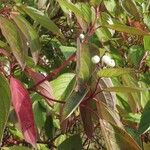
Cornus sericea
Red-osier Dogwood · Red Willow · Redtwig Dogwood · Redosier dogwood · Redosier
Description
Source: leafsnapCornus sericea, commonly known as red osier dogwood, is a deciduous shrub native to North America. Typically reaching a height of 6 to 9 feet, it has an upright, spreading habit. In spring and early summer, the plant produces clusters of small white flowers. These are followed by small white berries in the fall, which are particularly attractive to birds. One of the most striking features of Cornus sericea is its bright red stems, which provide year-round visual interest. The stems are especially vibrant during the winter months when other plants have lost their leaves. Cornus sericea prefers moist soils and can tolerate wet conditions like those found along streams or in marshy areas. It can also thrive in drier soils with regular watering. This plant is commonly used for erosion control due to its extensive root system and rapid growth. Additionally, it makes an excellent ornamental shrub for landscaping because of its attractive foliage and colorful stems. Overall, Cornus sericea is a hardy plant with numerous desirable features, making it a popular choice among gardeners and landscapers.
💡 The inner bark of the red osier dogwood was historically used in various smoking mixtures by different Indigenous tribes in North America. The widespread Algonquian peoples incorporated it into kinnikinnick, an herbal smoking blend used for social and spiritual practices. Similarly, the Lakota people of what is now the United States used red osier dogwood as a form of traditional tobacco.
🌳 Red osier dogwood is more than an ornamental shrub. Historically, Indigenous peoples used its twigs for basketry and the inner bark as a folk remedy for ailments such as colds and toothaches. That same bark can be boiled to yield a reddish‑purple dye because it contains tannins. The plant’s small white berries also attract various birds, providing food and helping to sustain local ecosystems.
🎭 Desires, protection, charm, strength, purity, a marriage proposal
Care Guide
💧 Water Every 7 days
Red osier dogwood thrives in moist, well-drained soil and prefers a consistent level of moisture, similar to the conditions found in its native riverbank and wetland habitats. To keep the plant well-hydrated, it's important to water it weekly. In temperate regions, natural rainfall further supports its growth during critical developmental stages.
When should I water my Red Osier Dogwood?
Watering your red osier dogwood is pivotal for its growth, vibrant leaf color, and flower production. The best time to water is when the top 1-2 inches of soil are dry, indicated by wilted or drooping leaves, or through a simple finger soil test. During spring and early summer, the plant's active growth phase, it may require more frequent watering, especially on hot or windy days. Beware of over or under-watering; symptoms include stunted growth, yellow or brown leaves due to too much water, and wilting from not enough water. Monitoring the plant regularly for these signs helps maintain the right watering balance.
How should I water my Red Osier Dogwood?
Proper watering technique is key for the health of your red osier dogwood, which thrives in consistently moist soil but is at risk of root rot from overwatering. Use a watering can with a long neck to target the base of the plant, avoiding foliage to prevent diseases. Introduce water slowly and deeply, ensuring you reach the roots without saturating the soil. Utilizing a moisture meter will help gauge the soil's moisture level accurately. Focus the hydration towards the soil at the base and avoid shallow watering that encourages weaker root growth.
How much water does Red Osier Dogwood really need?
The red osier dogwood requires vigilant watering to mimic its natural wetland habitat, suggesting a high demand for consistent moisture, especially considering its shallow root system. An average-sized plant should receive about 1-2 inches of water per week, with adjustments during hotter or drier periods. Proper hydration keeps the leaves lush and supports healthy growth, while over or under-watering can lead to yellowing leaves or wilting, respectively. It's crucial to adapt the watering amount based on the plant's environment, including weather conditions and the pot's size.
What kind of water is best for Red Osier Dogwood?
The ideal water for red osier dogwood is rainwater or distilled water, due to the plant's sensitivity to chlorine and fluoride commonly found in tap water. If using tap water, let it sit for 24-48 hours to allow chlorine to evaporate. High levels of calcium and magnesium, found in hard tap water, can also impede the plant's growth. To circumvent this, water conditioner treatments can help neutralize harmful elements more quickly. Red osier dogwood prefers room temperature water to avoid shock.
How do Red Osier Dogwood's watering needs change with the seasons?
Seasonal changes significantly impact the watering needs of red osier dogwood. In spring, the plant's growth phase demands keeping the soil consistently moist. Summer may require additional water to prevent drought stress and maintain flower development. By autumn, as the plant prepares for dormancy, water less frequently, allowing the soil to dry out slightly at the root level. Winter demands minimal watering, only sufficient to prevent the roots from drying out, provided temperatures stay above freezing during the day.
☀️ Light Partial sun
The red osier dogwood prefers partial light but can tolerate brighter conditions. Its native habitat typically has variable light levels. Too much light can harm its health, while too little light slows its development and growth.
What are the sunlight requirements for red osier dogwood?
Red osier dogwood thrives in both partial sun, which is about 3-6 hours of sunlight, and full sun, receiving more than 6 hours of sunlight daily. It's essential to watch how sunlight moves through your garden to find spots that offer a mix of light and shade, catering to the plant's needs for balanced growth.
What essentials should be considered for the growth of red osier dogwood?
The red osier dogwood prefers partial to full light intensity but can adapt to varied light conditions thanks to its origin in diverse habitats. However, too much or too little light can impact its health and growth. When natural light is inadequate, especially in winter or less sunny spaces, artificial lighting can compensate. Indoor plants may need LED lights, with full sun plants requiring 30-50W/sq ft, partial sun plants 20-30W/sq ft, and full shade plants 10-20W/sq ft of artificial light. The artificial light should be placed 12-36 inches above the plant for 8-12 hours daily to mimic natural light conditions effectively.
What are the symptoms of insufficient or excessive light exposure in red osier dogwood?
Red osier dogwood exhibits various symptoms under poor light conditions, including smaller new leaves, leggy growth, faster leaf drop, halted new growth, and paler new leaves, indicating insufficient sunlight. Excessive sunlight can cause chlorosis, sunscald, leaf curling, wilting, and leaf scorching, reflecting too much direct exposure. These symptoms highlight the plant's struggle to adapt to inappropriate light levels, affecting its overall health and growth.
What solutions are available for red osier dogwood experiencing insufficient or excessive light?
For indoor plants, gradually increasing sun exposure to 3-6 hours of direct sunlight or using artificial light for at least 8 hours daily can help. Outdoors, moving plants to sunnier spots weekly allows them to adapt to new light conditions without shock. Reducing obstructions like tree branches can also enhance sunlight access. For small plants, transplanting during dormancy to locations with better sunlight and drainage is advisable. It's crucial to avoid sudden changes in light intensity to prevent sunburn and ensure new growth after adjusting light conditions will be healthy.
🌡️ Temperature 0–32.2°C
The red osier dogwood naturally occurs in regions where temperatures range from -25 ℉ (-32 ℃) to 60 ℉ (16 ℃). It prefers temperatures of 32 to 90 ℉ (0 to 32 ℃). In spring, the plant adapts well to temperatures between 50 to 70 ℉ (10 to 21 ℃), and in winter it can tolerate freezing temperatures as low as -25 ℉ (-32 ℃).
What temperatures can the red osier dogwood plant tolerate?
The red osier dogwood, botanically known as Cornus sericea, is adapted to a wide range of temperatures and is native to areas where temperatures vary between -25°F (-32°C) and 60°F (16°C). It thrives best in temperatures ranging from 32°F (0°C) to 90°F (32°C). In spring, it adjusts well to 50°F to 70°F (10°C to 21°C), and in winter, it can withstand freezing temperatures as low as -25°F (-32°C). The plant exhibits strong cold resistance, and special frost protection measures are not typically required, unless winter temperatures are expected to plummet below -35°C.
How should you protect the red osier dogwood in extremely cold winters?
In cases where winter temperatures are anticipated to fall below -35°C, providing cold protection for the red osier dogwood is crucial. This can be done by wrapping the plant's trunk and branches with non-woven fabric or cloth. Additionally, watering the plant abundantly before the first autumn freeze is advisable to ensure the soil remains moist and enters a frozen state. This strategy helps prevent drought and water scarcity for the plant during the harsh winter and the following early spring.
What are the symptoms of temperature stress in red osier dogwood?
For red osier dogwood, temperature stresses manifest in certain symptoms. Low temperature stress, particularly when temperatures drop below -35°C, may not show immediate changes during winter, but can lead to brittle and dry branches in spring, with no new shoots emerging. High temperature stress occurs when temperatures exceed 32°C during summer, leading to lighter colored leaves, dry and withered tips, and increased susceptibility to sunburn. Effective response involves pruning dead branches in spring for low temperature damage, and trimming sunburned parts, providing shade, and keeping the soil moist through regular watering in mornings and evenings for high temperature stress.
💨 Humidity normal (40-60%)
This plant will thrive in moderate humidity, which is probably the level in your home. However, misting it a few times a week can be very beneficial. Make sure the room has good ventilation.
🪴 Soil 5-7
🌱 Fertilizer
Fertilize your Red osier dogwood in early spring to encourage healthy growth. Consistent fertilization boosts overall vigor, producing vigorous growth, greater tolerance of harsh conditions, and improved resistance to diseases and pests. Maintain a regular fertilizing schedule for your Red osier dogwood to preserve lush foliage with rich, deep color.
Why should I add fertilizer to my Red osier dogwood?
To ensure a healthy Red osier dogwood, it is important to regularly fertilize the plant. This will provide the necessary nutrients for strong growth and increased resilience against difficult growing conditions, pests, and diseases. The foliage of the Red osier dogwood is particularly appealing, so it's crucial to maintain it. By implementing a consistent fertilization routine specifically designed for your Red osier dogwood, you can promote the development of vibrant, richly colored leaves and an overall lush appearance.
When should I fertilize my Red osier dogwood?
To ensure healthy growth, it's best to fertilize your Red osier dogwood in late winter or early spring. This will give the plant the nutrients it needs for beautiful growth when the weather warms up. If you live in a warm climate region, it can be beneficial to also provide an additional fertilizer feeding in early fall. This helps the Red osier dogwood acquire more nutrients for the following growing season and enhances its ability to survive winter without foliage damage. Fertilizing earlier in fall ensures that new branches have enough time to grow and withstand the cold.
When is it best to not fertilize my Red osier dogwood?
To ensure optimal growth for your Red osier dogwood, it is important to avoid fertilizing during certain periods throughout the year. Firstly, during the early and mid-winter months when the plant is dormant, it does not require any feeding. Additionally, it is not recommended to fertilize the dogwood during the late spring and summer. The hotter and drier weather during this time can have a detrimental effect on the plant's response to fertilization. To prevent any negative outcomes, it is best to stick to a fertilization schedule that focuses on feeding during the early spring and early fall.
What kind of fertilizer should I use for my Red osier dogwood?
Red osier dogwood primarily requires nitrogen as its most important nutrient, however, this does not diminish the significance of phosphorus and potassium. It is essential for your Red osier dogwood to receive a sufficient amount of all three main nutrients. Therefore, a balanced fertilizer such as a 10-10-10 can be effective. Nonetheless, for optimal growth, a more nuanced nutrient ratio is often beneficial. Higher nitrogen content in fertilizers, such as a ratio of 10-6-4, tends to yield better results. When fertilizing, both granular and liquid-based fertilizers can be used.
How should I fertilize my Red osier dogwood plant?
To fertilize your Red osier dogwood, you have two options: using a granular fertilizer or a liquid fertilizer. If you choose the granular fertilizer, simply sprinkle it on the soil at the right time. This type of fertilizer releases nutrients slowly over time. However, it's a good idea to lightly water your Red osier dogwood before applying the fertilizer. The less common alternative is to use a liquid fertilizer. In this case, you mix the fertilizer with water and pour it onto the soil around the base of your Red osier dogwood. Sometimes, it's useful to perform a soil test beforehand to determine if you need to adjust the pH.
🪴 Pot & Repot Every 12 months
✂️ Pruning
The red osier dogwood, known for its striking red stems, thrives with annual pruning in early spring. You should trim about one-third of the oldest stems and remove any dead wood. By thinning out crowded branches, you promote regrowth, enhance the vibrant color, and increase foliage density, all of which enhance its ornamental appeal. For the best results, refer to reliable horticultural resources.
🌿 Propagating
🐛 Diseases & pets
☠️ Toxicity
Cornus sericea has no toxic effects reported.
Characteristics
- Plant Type
- Shrub
- Life Cycle
- Perennial
- Genus
- Cornus
- Family
- Cornaceae
- Hardiness Zone
- 3-8
- Mature Height
- 1.52 m to 3.96 m
- Mature Spread
- 3.05 m to 4.88 m
- Leaf Color
- Green, Yellow
- Leaf Type
- Deciduous
- Flower Color
- White, Cream
- Flower Size
- 0.51 cm to 1.02 cm
- Bloom Time
- Late spring, Early summer
- Planting Time
- Spring, Autumn
- Harvest Time
- Mid summer
- Native Area
- Mexico