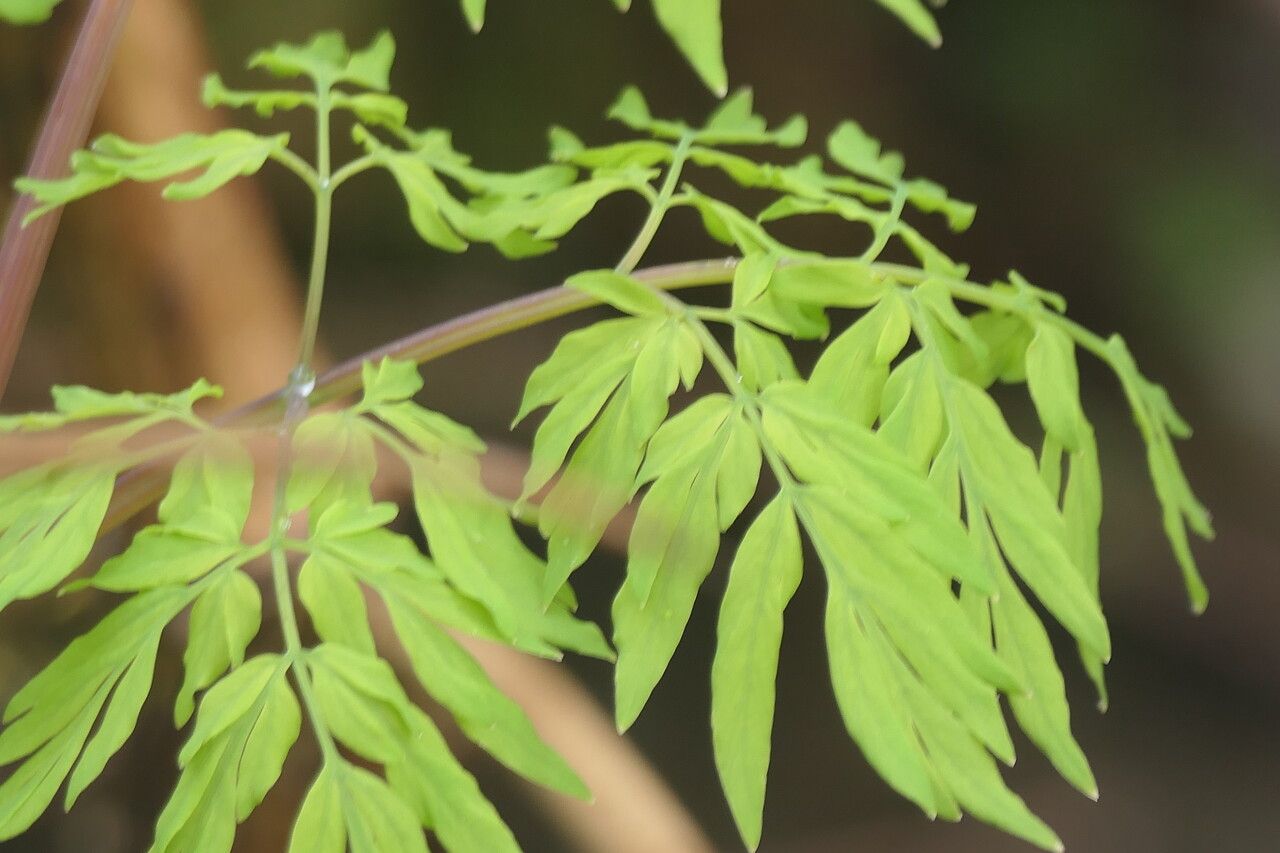
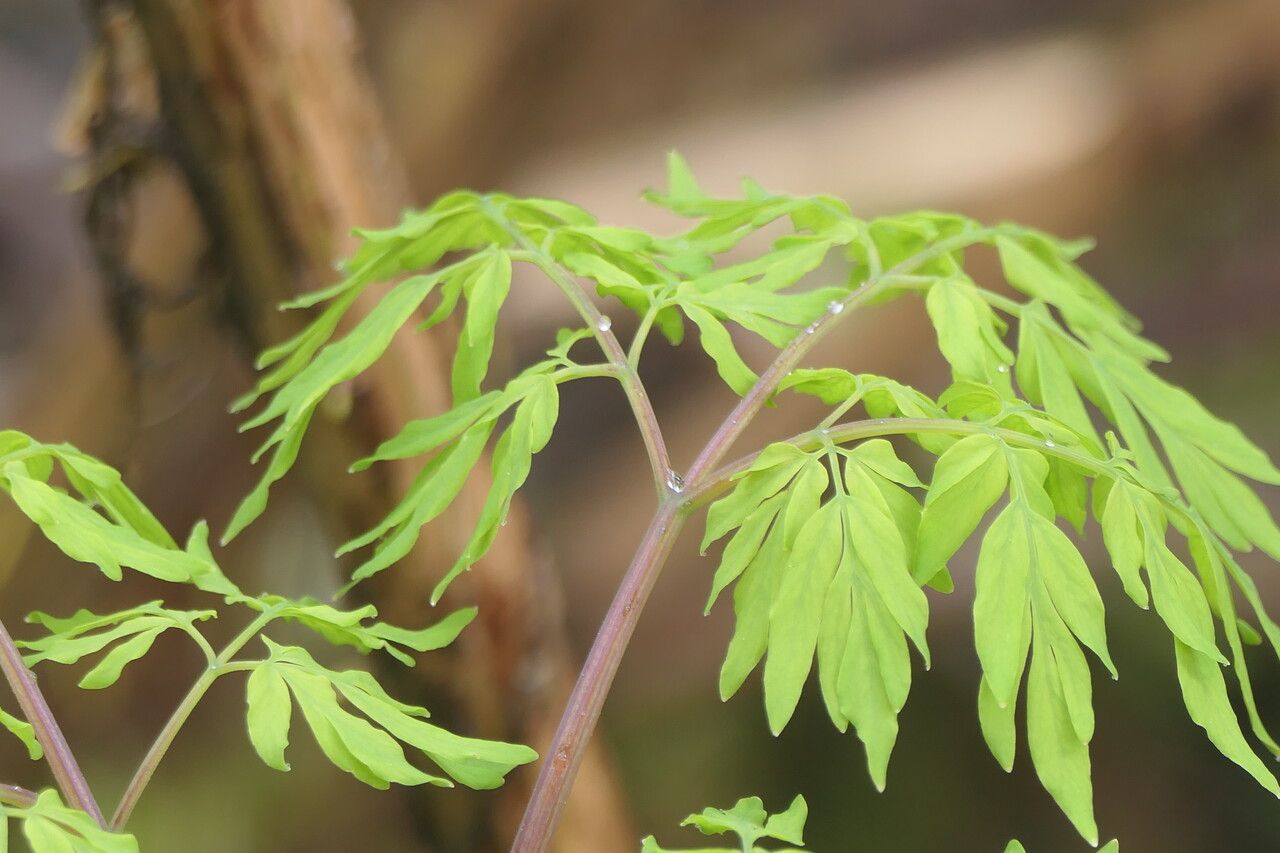
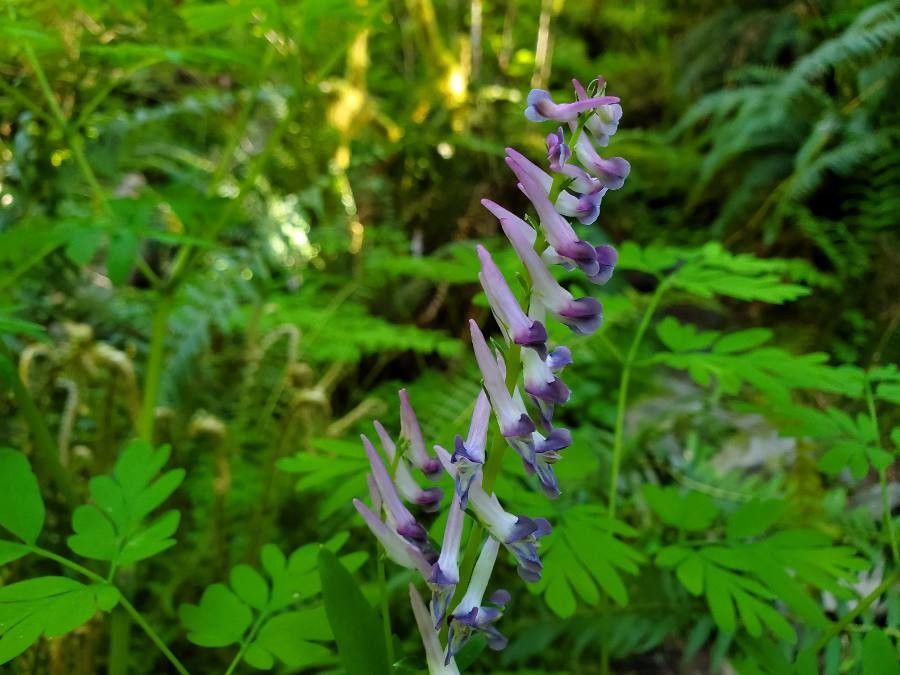
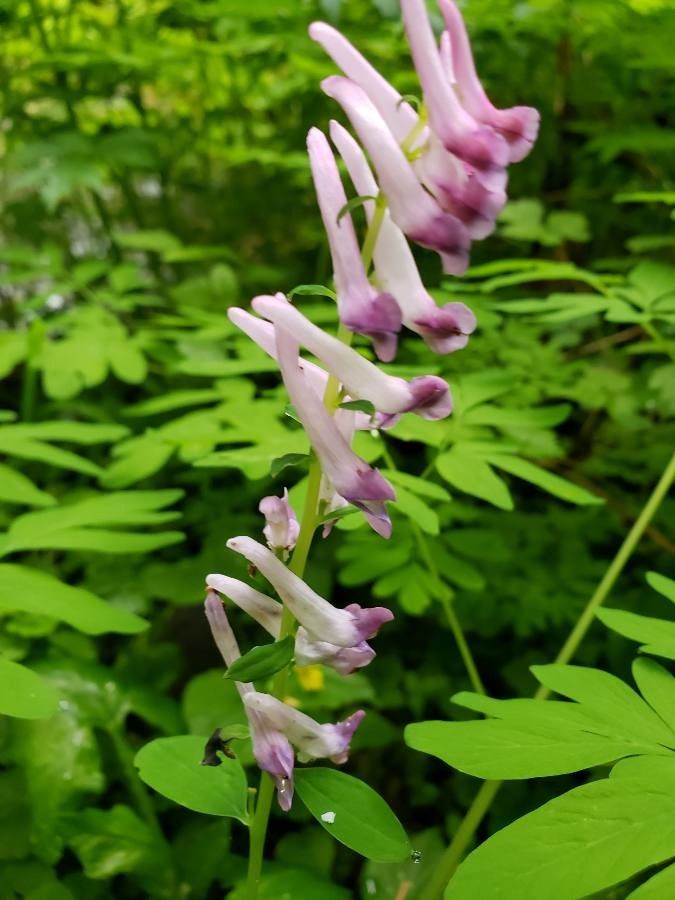
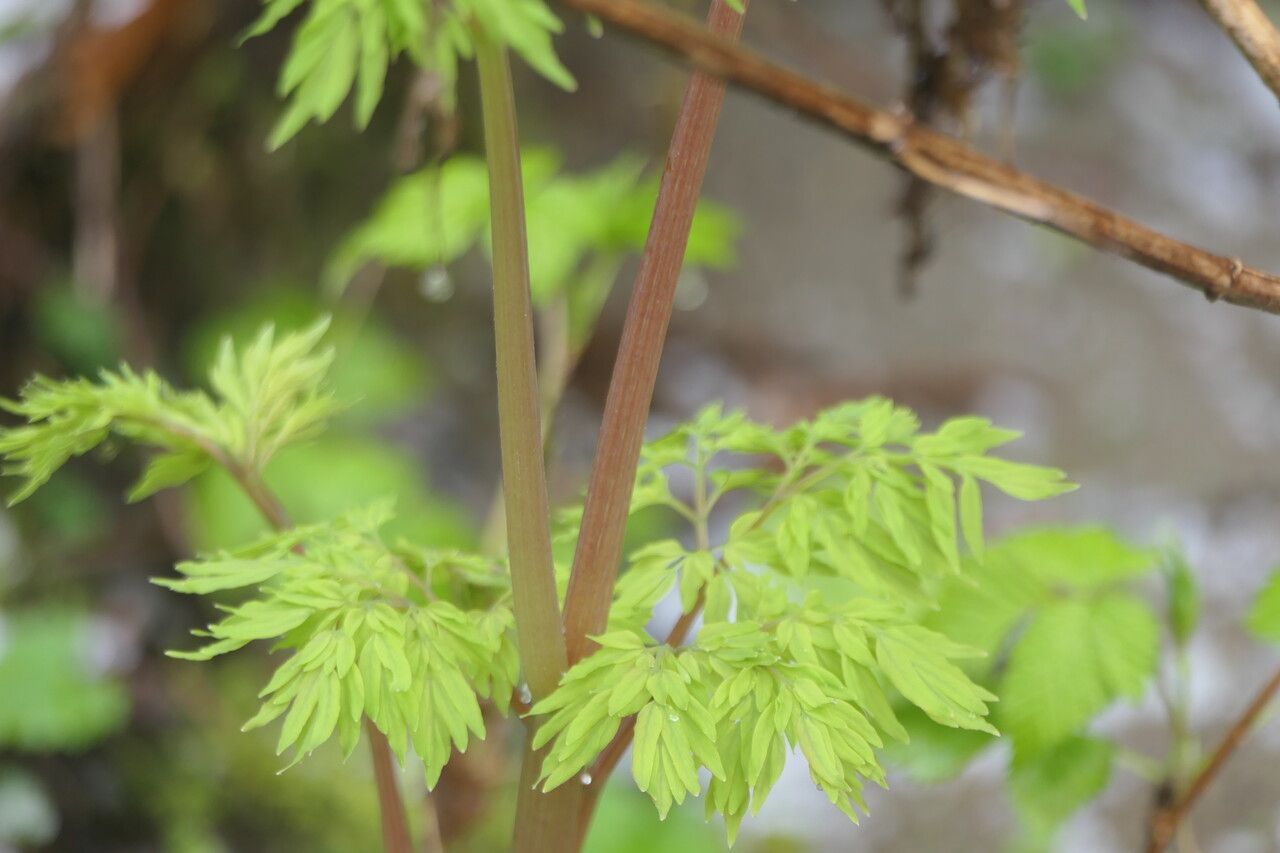
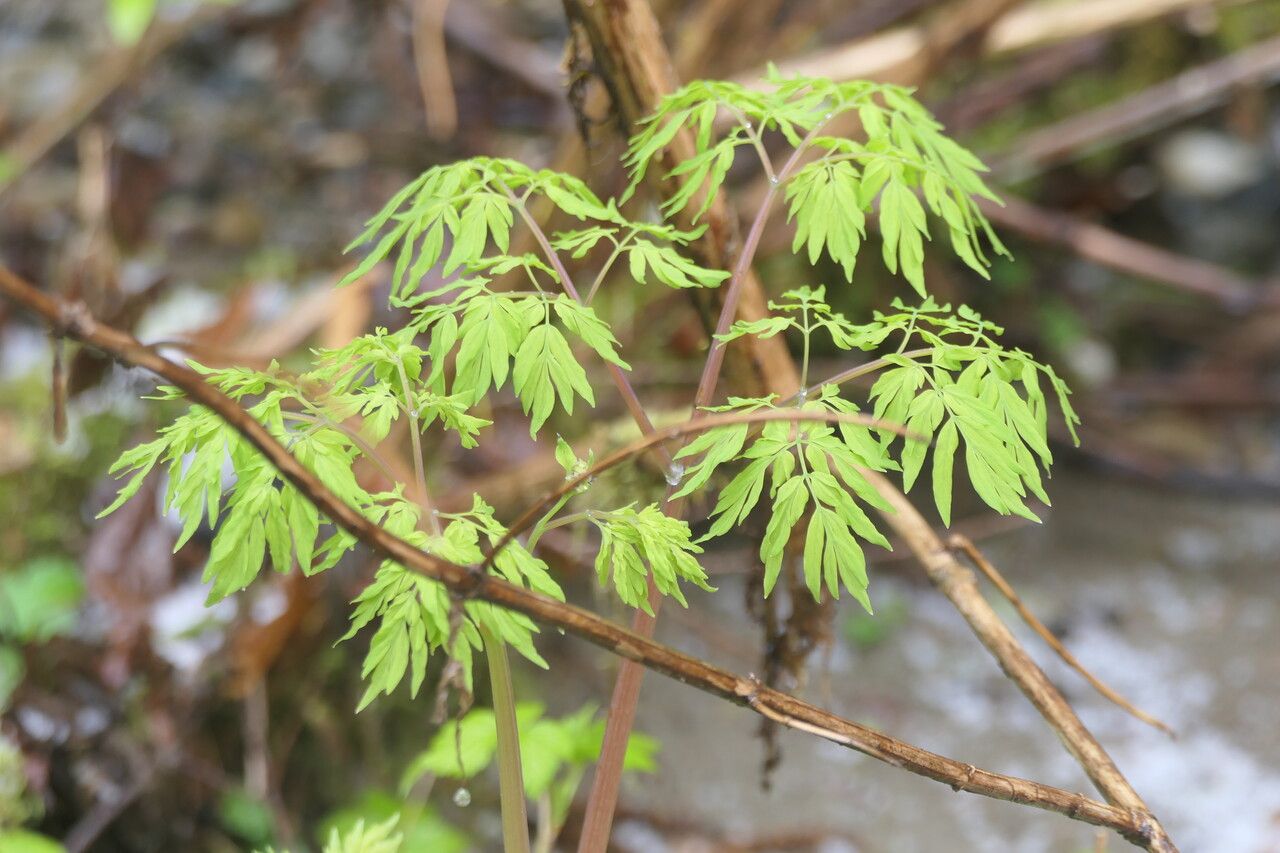
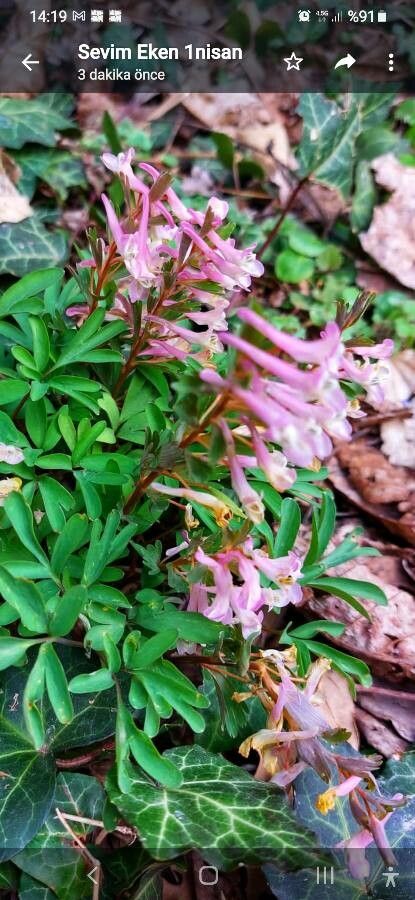
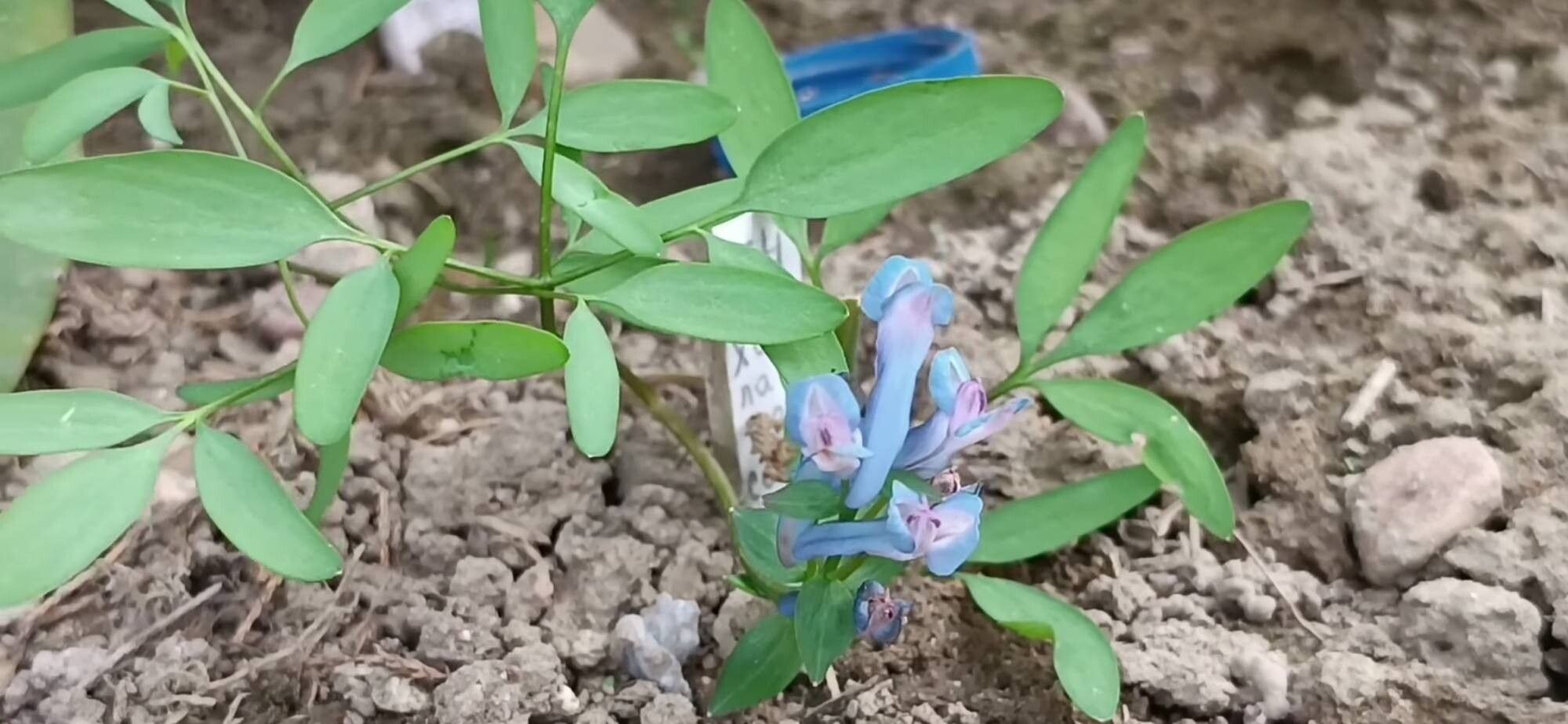
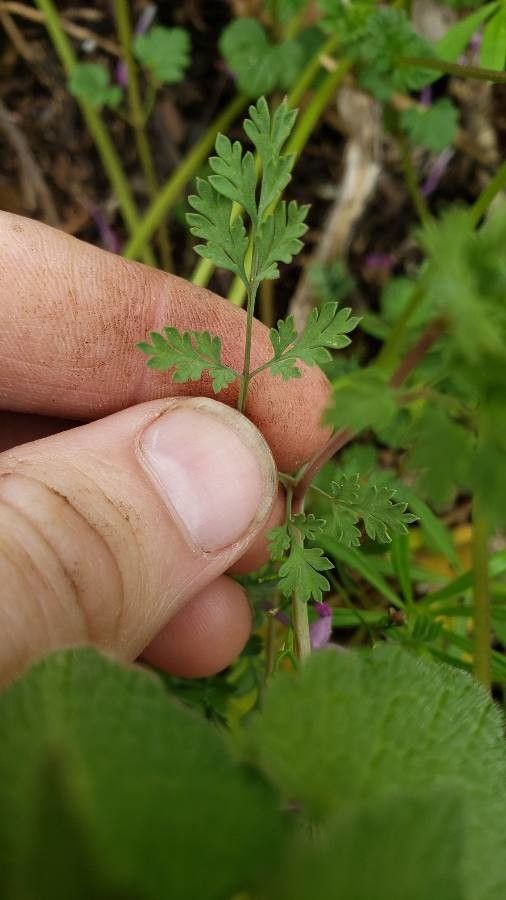
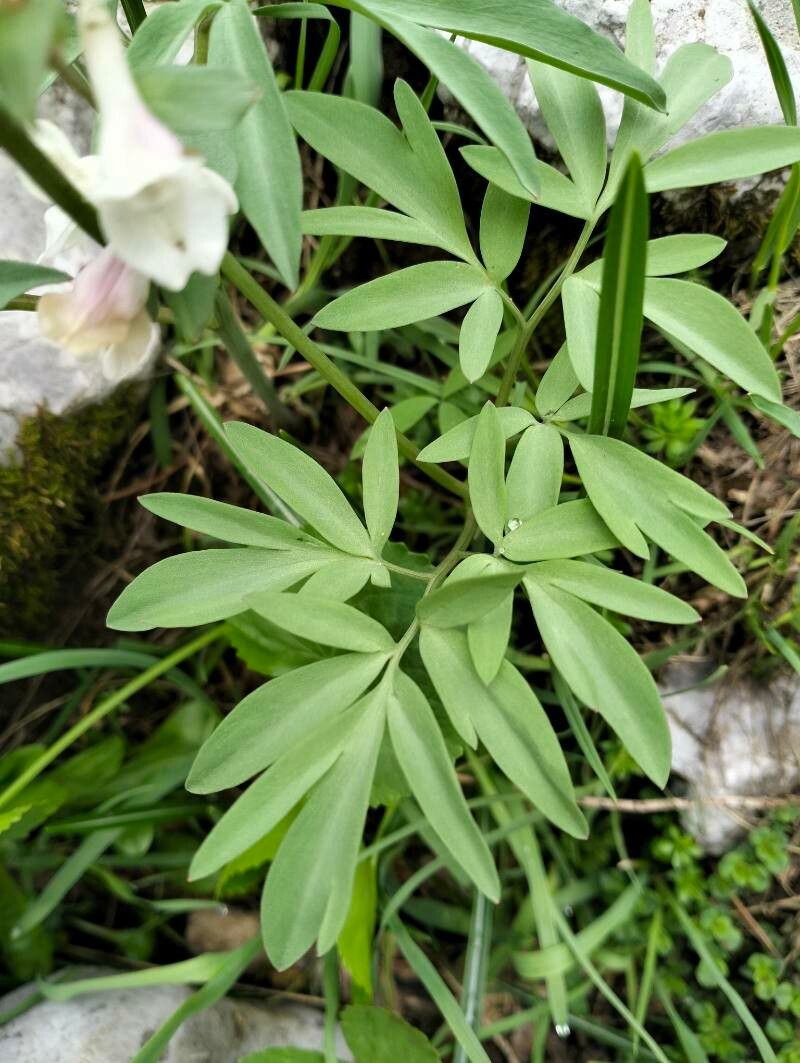
Corydalis scouleri, commonly known as Scouler's corydalis, is a perennial herbaceous plant in the Papaveraceae family. Native to western North America, it thrives in diverse habitats, including forests, meadows, and rocky slopes. The plant can grow up to 60 cm tall and features finely divided, bluish-green leaves. Its tubular flowers, marked by a distinctive spur at the back, vary in color from pinkish-purple to yellow. These blooms appear from late spring through summer. Historically, Corydalis scouleri has been used by indigenous peoples for its analgesic properties. The plant contains alkaloids such as corydaline, which have demonstrated pain-relieving effects. Gardeners also appreciate Corydalis scouleri for its attractive flowers and foliage. It prefers moist, well-drained soil but, once established, can tolerate some drought. Overall, Corydalis scouleri is a beautiful native plant with both medicinal and ornamental value, meriting more attention in gardens across North America.
Scouler's fumewort is fairly disease-resistant and generally does not suffer from many diseases. It can, however, be affected by pests and illnesses present in its environment. Such infections tend to be mild. For care, the plant requires moderate maintenance. It should be pruned regularly to preserve a tidy appearance and support healthy growth. Fertilizing can also help encourage flowering. Scouler's fumewort is well suited to anyone with outdoor space, such as a garden or patio, and does not demand extensive care experience. It may need more attention if grown indoors.
How to keep Corydalis Scouleri.
Light
Scouler's fumewort prefers sites with filtered sunlight, though it can tolerate locations with limited sun. Light promotes its healthy growth, but too much or too little can harm its wellbeing. Its roots develop in areas that consistently have dappled light.
Water
Scouler's fumewort thrives in humid environments, needing a careful balance between moisture and dryness. Watering it weekly is ideal. As an evergreen, it grows actively during rainy seasons, highlighting its dependence on water for optimal growth.
Temperature
Scouler's fumewort is a plant native to regions with temperate climates, growing best at 50 to 89.6 °F (10 to 32 °C). If ambient conditions move away from that range, consider moderating the growing environment.
Fertilizer
The best time to fertilize a Scouler's fumewort is in early spring, as it is coming out of dormancy and beginning active growth. Fertilization supplies essential nutrients needed for healthy development. Although Scouler's fumewort has fairly low fertilizer requirements, giving it fertilizer annually can improve its survival and encourage better, longer-lasting flowers.
Pruning
Scouler's fumewort is a perennial herb with delicate, fern-like leaves and beautiful pink to purple flowers. To keep your plant healthy and vigorous, prune it between early and late spring. This will help remove dead stems and any leggy growth, encouraging a bushier appearance and improved vitality. Be careful not to over-prune, as this can cause stress and reduce flowering.
Botanical profile.
- Plant Type
- Herb
- Life Cycle
- Perennial
- Genus
- Corydalis
- Family
- Papaveraceae
- Hardiness Zone
- 6-7
- Mature Height
- 0.52 m to 1.22 m
- Mature Spread
- 91 cm
- Leaf Color
- Light Green, Pale Green
- Leaf Type
- Semi-evergreen
- Flower Color
- Pink
- Flower Size
- 2.03 cm to 3.05 cm
- Bloom Time
- Mid spring, Late spring, Early summer
- Planting Time
- Spring, Autumn
- Harvest Time
- Summer
Other names.
Reader questions.
How should I water my Scouler's fumewort plant?
"To ensure the healthy growth of Scouler's fumewort, it is recommended to water it with filtered water at room temperature or slightly warmer. Tap water may contain harmful particles, so using filtered water is the better option. The plant prefers warm temperatures, so using cold water can be a shock to its system. Additionally, it is best to avoid overhead watering as it can cause problems with the foliage. Instead, gently water the soil with the filtered room temperature water until it is completely soaked. This helps to moisturize the roots, allowing them to spread through the soil and absorb the necessary nutrients for the plant's well-being."
Why should I put fertilizer on my Scouler's fumewort?
Fertilization plays a crucial role in the growth of Scouler's fumewort and other plants by providing essential nutrients. While the overall fertilization needs for Scouler's fumewort are relatively low, annual fertilization can greatly benefit the plant, helping it to survive and produce better and longer-lasting flowers. Therefore, for those looking to enhance the appearance of their Scouler's fumewort, regular fertilization is recommended.
How much sunlight does Scouler's fumewort need to grow?
To thrive, Scouler's fumewort requires 3-6 hours of direct sunlight daily, along with some shade during the hottest periods to avoid sun damage. Ideal conditions are provided by morning sunlight, although it can tolerate some afternoon sun if the temperature is moderate. To achieve the optimal sunlight balance, consider planting Scouler's fumewort in a location that receives partial sun, like beneath a tree or on the east side of a building.
What temperature is best for Scouler's fumewort?
Scouler's fumewort grows best in cooler weather and has a specific temperature range for optimal growth. To keep them healthy, aim to maintain temperatures between 65~75℉(18~25℃). While Scouler's fumewort can tolerate higher and lower temperatures, it is preferable to keep the growing area within a few degrees of 65~75℉(18~25℃). If it's not possible to stay within this range, don't worry – the plant will still grow. However, there is a limit to how much heat it can handle before damage or reduced growth occurs. The upper limit is around 75~85℉(25~30℃), and the lower limit is as low as 5℉(-15℃). Pay more attention to avoiding temperatures above the upper range, as Scouler's fumewort prefers cooler environments. Excessive heat above 85℉(30℃) can lead to slow growth or even the death of the plant.
What should I do if I give my Scouler's fumewort plant too much or too little water?
Both overwatering and underwatering can harm the health of your Scouler's fumewort, but overwatering is more likely to occur. When this plant gets too much water, its stems and leaves may wilt and turn yellow. Overwatering for a long time can also cause diseases like root rot, mold, and mildew, which can kill your plant. Underwatering is less common because the Scouler's fumewort can tolerate drought fairly well. However, underwatering can still happen, and in that case, you may notice brittle, brown leaves. It's important to catch signs of overwatering early when taking care of your Scouler's fumewort. Some diseases from overwatering, like root rot, may not be fixable if you wait too long. If you see early signs, reduce your watering schedule and check the soil quality. If the soil doesn't drain well, replace it with a loose, well-draining potting mix. If your Scouler's fumewort shows signs of not getting enough water, simply water it more regularly until the signs improve.
When should I fertilize my Scouler's fumewort to get the best results?
The best time to fertilize a Scouler's fumewort is in late winter to early spring when it is transitioning from dormancy to active growth. Fertilizing during this period promotes healthy growth and sets the plant up for a successful season. Although fall is an alternative time to fertilize, summer and winter are not recommended for feeding a Scouler's fumewort.
What happens if Scouler's fumewort doesn't get enough sunlight?
Scouler's fumewort is sensitive to excess sunlight and can show signs of sun damage such as yellowing, drying out, or burning of its leaves. The plant may also become wilted or stunted. To protect it from sun damage, it's important to provide some shade during the hottest times of the day. This can be done by using a shade cloth or by planting it near taller plants that can naturally provide some shade.
Does Scouler's fumewort need varying temperatures at different stages of growth?
To ensure Scouler's fumewort grows healthily, it's important to maintain a temperature range of 65~75℉(18~25℃) in your growing space. It's recommended to stay towards the cooler end of this range, but be cautious not to let the temperature drop below -5℉(-20℃), as extremely cold temperatures can hinder growth. However, it's worth noting that extremely hot temperatures are much more damaging than cold temperatures for Scouler's fumewort. If the temperature remains high during the budding stage, it may result in a lack of flowering.
How often do I need to water my Scouler's fumewort?
If your Scouler's fumewort is in a pot, you can check if it needs water by inserting your finger into the soil. If the top two to three inches are dry, it's time to water. If you grow your Scouler's fumewort outdoors in the ground, you can use the same method. When the top few inches of soil are dry, it's time to give it water. During spring and early fall, watering once a week is usually sufficient. However, during extremely hot weather, you may need to water twice a week or more. It's worth mentioning that mature, well-established Scouler's fumewort plants can tolerate drought conditions well.
When is it best to not use fertilizer on my Scouler's fumewort plant?
To properly care for your Scouler's fumewort, it is important to only fertilize it during late winter and early spring. This plant has very low fertilization needs, so it only requires one feeding each year. Fertilizing during spring, summer, and fall can lead to overfertilization, which can cause problems. However, if you forgot to fertilize in spring, it is alright to feed the plant in fall. Additionally, there is no need to fertilize during winter when the plant is in a dormant phase and not actively growing.
If Scouler's fumewort gets too much sunlight, what will happen?
If Scouler's fumewort doesn't receive sufficient sunlight, it may become tall and thin with few leaves. The leaves may also turn yellow or pale green, suggesting that the plant is not producing enough chlorophyll due to the lack of sunlight. To resolve this issue, consider relocating Scouler's fumewort to a sunnier area or trimming surrounding foliage to enable more light to reach the plant.
Here are three ways to control the temperature of Scouler's fumewort.
Here are some tips to help you grow Scouler's fumewort successfully indoors: Tip #1: Choose the Coldest Room: When growing Scouler's fumewort indoors, select the coldest room in your home. This is usually on the side of your house that doesn't get direct sunlight during the hottest part of the day. However, it's important to provide a healthy amount of sunlight to ensure proper growth. Tip #2: Watch the Temperature: Scouler's fumewort grows during spring and early summer. During this time, high temperatures can hinder flowering, causing buds to become non-flowering. To avoid this, maintain temperatures between 65-75℉ (18-25℃) to optimize flowering. Tip #3: Protect from Frost: Although Scouler's fumewort can tolerate temperatures as low as -5℉ (-20℃), it cannot withstand significant frost. If exposed to colder temperatures in late fall or winter, it will show signs of frost damage. This includes wilting and discoloration, which may turn brown or black. Remove any damaged parts to keep the plant alive.