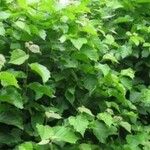
Corylus americana
American hazelnut · American Hazel · Hazelnut · Hazel · American filbert
Description
Source: leafsnapCorylus americana, commonly known as American hazelnut, is a deciduous shrub native to North America. It typically reaches a height of 3-4 meters with a spread of 2-3 meters. The shrub has an upright growth habit and produces multiple stems covered in smooth gray bark. The leaves of the American hazelnut are oval-shaped with serrated edges and a dark green color. In the fall, they turn yellow before dropping off for the winter. In early spring, before the leaves emerge, the plant produces small clusters of yellowish-green flowers. These flowers give way to edible nuts that ripen in late summer or early fall. American hazelnuts prefer well-drained soils and can tolerate partial shade or full sun exposure. They are commonly found growing along woodland edges, stream banks, and other moist areas throughout their native range. In addition to being an important food source for wildlife such as squirrels and birds, American hazelnuts have also been used by humans for centuries as food and medicine. The nuts can be eaten raw or roasted, and extracts from various parts of the plant have been used to treat ailments such as coughs, colds, feverish conditions, and diarrhea, among others.
🌳 American hazelnut is an excellent choice for wildlife gardens because it produces small, edible, and nutritious nuts. It also offers shelter and nesting sites for birds and other animals. Additionally, this species is ideal for creating visual screens or borders when planted in hedgerows, as it displays colorful foliage in the fall.
🎭 Illumination, insight, inspiration, prophecy, comprehension, inventiveness, the divine seer, and knowledge
Care Guide
💧 Water Every 7 days
The American hazelnut flourishes in temperate climates with moderate moisture and prefers well-drained soils. It should be watered every 1 to 2 weeks, with adjustments made during its dormant period in colder months. This plant can withstand short droughts, showcasing its resilience to changes in seasonal water availability.
How should I water my American hazelnut tree the best way?
To ensure excellent root development, place a garden hose at the base of the plant. Avoid spraying the leaves directly, especially if they are exposed to direct sunlight. For moistening the roots, consider using bubblers or soaker hoses. Soaker hoses are also useful for thoroughly watering the entire garden or bed when adding or removing plants. After watering, remove any excess water and allow the soil to dry before watering again. Watering at ground level helps prevent diseases. On a sunny day, it may be beneficial to spray the entire bush with water. Whether it is potted or in the ground, remember that American hazelnut prefers deep watering rather than light sprinkling.
What do I need to do if I give the American hazelnut plant too much or too little water?
An overwatered American hazelnut may show yellowing, wilting leaves that eventually drop off. The plant may also appear dull and unhealthy, with mushy stems. Adjusting your watering schedule is important when these signs start to appear. On the other hand, wilting can also indicate under watering. In this case, the leaves may become crispy and dry. If the soil is dry and regular watering is not enough, full watering is required. This will help the hazelnut tree recover, but it may still have dry and yellow leaves due to damaged roots. Once the plant returns to normal, the yellowing of the leaves will stop. When keeping an American hazelnut indoors, always check the moisture levels in the pot and avoid overwatering. Look out for black spots on the leaves and let the soil dry out for a few days if necessary. Overwatering can lead to root rot, so transfer the plant to a different pot if you notice discolored and slimy roots. Preventing root rot is crucial, so be cautious of soggy soil. When planting an American hazelnut outdoors, make sure to dig deeper. If the soil is too dry, it may indicate underwatering. Provide adequate watering to help the plant recover.
How frequently should I give water to my American hazelnut tree?
The American hazelnut prefers deep and infrequent watering. When planted in pots, it is important to water them with a gallon of water each time due to limited water storage in the pots. In cold regions, watering is needed every 3 to 5 days. You should water the plant early in the morning when the soil is dry, whether it is placed indoors or outdoors. Check the soil inside to determine if watering is needed - if the top 2-3 inches of soil are dry, it's time to water the plant. On hot days, monitor the moisture level daily as the soil in the pot can dry out quickly. If you have a garden, you will also need to irrigate the soil. In a hot climate, watering once a week is recommended. Only water the plant when you notice that about 2 to 3 inches of soil has become too dry, both indoors and outdoors. Keep in mind the amount of rainfall on the plant and avoid adding water to prevent root rot. Additional watering may not be necessary if there is already ample rainfall. American hazelnut typically grows during spring and fall, so it's advised to add mulch about 3 to 4 inches deep when the plant is outdoors to conserve more water. In sandy soil, watering should be done more frequently as it tends to drain faster. On the other hand, with clay soil, watering can be done less frequently and you can let the plant dry for 2-3 days to avoid root rot. Consider marking the date on the calendar when you water and keep an eye out for drooping leaves, as this may indicate that watering is needed.
How much water should I give my American hazelnut tree?
The American hazelnut typically requires a gallon of water on a regular schedule. For potted plants, water them deeply until water begins to drip from the bottom of the pot. Allow the soil to dry before watering again. To determine how much water you've given your plant in a week, you can use a water calculator or moisture meter. During the flowering period, provide ample water but allow it to evaporate to prevent root rot. If the American hazelnut is planted outside and receives sufficient rainfall, it may not need additional watering. However, when it is young or newly planted, make sure it receives 1-2 inches of rain per week. As the hazelnut grows, it can rely solely on rainfall. Only during extreme heat or prolonged periods without rain should you consider giving the hazelnut a thorough watering during cooler times of the day to prevent damage from high temperatures. Additional watering will be necessary during extended dry spells.
Do I need to change how often I water my American hazelnut tree based on the time of year or the weather?
The American hazelnut requires outdoor conditions with regular rain, although watering may be necessary during persistent dry weather. During the spring and fall growing seasons, it is important to keep the soil consistently moist but not overly wet, as alternating dry and moist soil conditions promote healthy growth. In the summer, hot weather and lack of rainfall may cause water to evaporate quickly, requiring more frequent and extra watering to maintain moisture. During winter, the American hazelnut generally requires less water as it goes dormant and drops its leaves. It is beneficial to use terracotta or similar well-draining but moisture-retentive soil to help water evaporate quickly during this time. Once the American hazelnut begins to leaf out in the spring, it can rely on fall and winter rains to survive the dormant period without additional watering. For optimal growth and blooming, it is important to cultivate the hazelnut and provide good drainage, especially during winter. When the hazelnut is planted in a pot, it has limited root growth and requires regular watering, especially in the summer. Deep soaking watering is recommended once or twice a week, depending on the weather, to reach the entire root system. Shallow sprinkles should be avoided as they promote the growth of fungi and do not reach the roots effectively. Care should be taken to prevent the hazelnut from drying out completely in the fall or winter, even during dormancy. Over-watering should also be avoided, as sitting in water for too long can be detrimental to the plant, particularly during winter. Applying mulch is beneficial to reduce stress, conserve water, and promote healthy blooming.
☀️ Light Partial sun
American hazelnut performs best with moderate sun exposure but can tolerate conditions from full sun to full shade. In its native habitat it experiences a range of light intensities. Excessively strong light can cause stress, while very low light hampers its vibrant growth.
How many hours of sunlight does American hazelnut require to grow?
American hazelnut thrives with 3-6 hours of direct sunlight each day, but it also needs shade during the hottest parts of the day to avoid sun damage. The ideal scenario is morning sunlight, but it can handle some afternoon sun if it's not too hot. To achieve this balance, consider planting American hazelnut in a partially sunny spot, like under a tree or on the east side of a building.
What will happen if American hazelnut doesn't receive enough sunlight?
If American hazelnut is exposed to excessive direct sunlight, it may cause the leaves to turn yellow, dry out, or even burn. Additionally, the plant may appear wilted or stunted. To prevent such damage from the sun, it is advisable to provide American hazelnut with shade during the hottest portions of the day. This can be achieved by using a shade cloth or by planting American hazelnut near taller plants that can offer natural shade.
What happens if American hazelnut gets too much sunlight?
If the American hazelnut doesn't receive sufficient sunlight, it might grow tall and thin with less foliage. Additionally, the leaves may become yellow or pale green, which indicates a lack of chlorophyll production due to inadequate sunlight. To resolve this issue, consider relocating the American hazelnut to a sunnier area or trimming nearby foliage to enable more light to reach the plant.
🌡️ Temperature 5–35°C
American hazelnut favors a temperate climate and can grow across a wide temperature range, from 41 ℉ (5 ℃) to 95 ℉ (35 ℃). In colder seasons, keep soil temperatures above 32 ℉ (0 ℃) to prevent freezing damage. When summer heat becomes excessive, providing shade or shelter from direct sunlight will help protect American hazelnut from heat stress.
What temperature is best for American hazelnut?
The ideal temperature range for American hazelnut to thrive is between 65~80℉ (18~27℃). During the main growing phase, it can tolerate temperatures as high as 95℉ (35℃) and as low as 15℉ (-10℃). This species is able to survive freezing winters as it is tolerant of low temperatures. To summarize, the perfect temperature range is 65~80℉ (18~27℃), the highest tolerable range is 85~95℉ (30~35℃), and the lowest tolerable range is -5~15℉ (-20~-10℃) or below.
Do I need to change the temperature for American hazelnut while it's growing?
According to research, American hazelnut trees can experience stunted growth when exposed to prolonged high temperatures, especially during the development of axillary buds and main shoots. To promote healthy growth after germination or transplanting, it is recommended to maintain a consistent and cooler temperature of around 65℉ (18℃).
How can I make sure American hazelnut doesn't get too cold in winter?
The American hazelnut is able to endure freezing temperatures when planted in the ground, provided that the winter months do not bring temperatures below 15℉(-10℃). However, when planted in pots or containers, it is important to safeguard the roots from the cold of winter. This can be achieved by wrapping the container in a blanket or by bringing it indoors for complete protection from the elements.
If the temperature is too high or too low, what will happen to American hazelnut?
If the temperature is consistently too high for American hazelnuts, it will cause greater harm compared to if it is consistently too low. When the hazelnuts are exposed to high temperatures, their ability to germinate and efficiently carry out photosynthesis is reduced due to hormones triggered by heat stress. This can be observed through symptoms such as wilting and leaf browning, and in extreme cases, it may result in the death of the plant. On the other hand, if the hazelnuts are exposed to excessively low temperatures, important plant functions like nutrient uptake and photosynthesis will stop, potentially leading to the plant's death. If a single freezing event occurs during the growing season, it can cause a transition in the plant's membrane phase, resulting in the cessation of its functions and ultimately leading to its death.
What should I remember about temperature for American hazelnut?
To ensure the health of American hazelnut and promote successful budding, flowering, and new growth, it is crucial to maintain a consistent soil temperature. This can be achieved by regularly watering the plants, applying mulch to exposed soil, and choosing shaded areas for planting.
💨 Humidity normal (40-60%)
This plant will thrive in moderate humidity, which is probably the level in your home. However, misting it a few times a week can be very beneficial. Make sure the room has good ventilation.
🪴 Soil 6-7
🌱 Fertilizer
Fertilize your American hazelnut in early spring to encourage healthy growth. Regular fertilization improves overall health, producing vigorous growth, greater resilience to adverse conditions, and enhanced resistance to diseases and pests. Keep to a specific fertilization schedule for your American hazelnut to preserve vibrant, deeply colored, and lush foliage.
Why do I have to put fertilizer on my American hazelnut tree?
No matter the type of American hazelnut you have, fertilizing regularly will improve its overall health. Having a proper supply of nutrients promotes stronger growth and helps the hazelnut plant withstand difficult growing conditions, making it more resistant to diseases and pests. The foliage of the hazelnut is particularly appealing, so it's important to maintain it. This involves following a regular fertilization schedule specifically tailored to your hazelnut variety. By doing so, you can expect the hazelnut to produce vibrant leaves and have an overall lush appearance.
When is it best to not add fertilizer to my American hazelnut plant?
Do not fertilize your American hazelnut in a few specific times throughout the year. Firstly, avoid fertilizing during the early and mid-winter months when the tree is dormant. Secondly, it is not recommended to fertilize during late spring and summer because the weather is typically hotter and drier, which can have a negative impact on the tree's response to fertilization. To prevent such issues, only fertilize your American hazelnut during early spring and early fall.
What kind of fertilizer does my American hazelnut tree need?
In most cases, nitrogen is the most important nutrient for an American hazelnut. However, phosphorus and potassium are not unimportant. A balanced fertilizer like a 10-10-10 can provide all three nutrients in decent amounts. Yet, a more nuanced ratio of nutrients tends to promote optimal growth. Fertilizers with slightly higher nitrogen content, like 10-6-4, often work well. You can choose between using granular or liquid-based fertilizers when fertilizing.
How can I give my American hazelnut plant the nutrients it needs to grow?
To effectively fertilize your American hazelnut, you have two options: using granular or liquid fertilizer. If you choose granular fertilizer, simply sprinkle it on the soil at the right time. The nutrients will be slowly released into the soil over time. It's recommended to lightly water the hazelnut before applying the fertilizer. On the other hand, liquid fertilizer is less common but still an option. Mix the fertilizer with water and pour it around the hazelnut's base. It may also be helpful to conduct a soil test to determine if any pH adjustments are needed.
What will happen if I give too much fertilizer to my American hazelnut?
Feeding an American hazelnut can present a risk of overfertilization. This risk increases if you feed the plant at the wrong time, too frequently, or without watering the soil first. When overfertilization occurs, the hazelnut may exhibit brown leaves and stunted growth. Conversely, excessive fertilizer can also result in rapid new growth, although this growth is often weak and breaks easily. Additionally, weak new wood can negatively affect the overall form and structure of the hazelnut.
🪴 Pot & Repot
✂️ Pruning
The American hazelnut produces edible nuts and benefits from pruning in early spring. Important practices for maintaining its health and productivity include removing dead or crossing branches to improve airflow and light penetration, thinning the center to enhance fruit yield, and eliminating suckers to preserve the plant's structure. These actions promote healthy, vigorous growth and help maintain an attractive shape.
🌿 Propagating
🐛 Diseases & pets
☠️ Toxicity
Characteristics
- Plant Type
- Shrub
- Life Cycle
- Perennial
- Genus
- Corylus
- Family
- Betulaceae
- Hardiness Zone
- 4-9
- Mature Height
- 2.74 m to 3.66 m
- Mature Spread
- 2.44 m to 3.66 m
- Leaf Color
- Green, Yellow, Red, Orange
- Leaf Type
- Deciduous
- Flower Color
- Tan
- Flower Size
- 2.54 cm to 7.62 cm
- Bloom Time
- Early spring, Mid spring
- Planting Time
- Autumn, Spring, Summer
- Harvest Time
- Mid summer