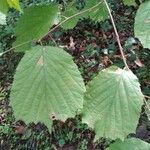
Corylus avellana
انگور grape · Φουντουκιά · Λεπτοκαρυά · Common Hazel · Corcscrew Hazel
Description
Source: leafsnapCorylus avellana, commonly known as the European hazelnut or filbert, is a deciduous shrub or small tree belonging to the Betulaceae family. Native to Europe and western Asia, it has been cultivated for centuries for its edible nuts. This plant can grow up to 6 meters tall and typically has a rounded shape with multiple stems. Its leaves are oval-shaped with serrated edges, turning yellow in autumn before falling off. The flowers of Corylus avellana are small catkins that appear in early spring before the leaves emerge. These flowers are wind-pollinated, meaning they do not produce nectar or fragrance to attract insects. The nuts of this plant develop inside a woody husk called an involucre, which splits open when the nuts are ripe. Corylus avellana prefers well-drained soil in full sun or partial shade, but it can tolerate some drought conditions once established. Due to its attractive foliage and interesting growth habit, it is commonly used as an ornamental shrub in gardens. In addition to being cultivated for its edible nuts, Corylus avellana also has medicinal properties. It is rich in antioxidants like vitamin E and flavonoids such as quercetin, which have anti-inflammatory properties. Overall, Corylus avellana is an attractive deciduous shrub with both ornamental value and the ability to produce delicious, nutrient-rich nuts. These nuts are high in protein, fiber, and vitamins such as E and B6, making this plant a valuable addition both aesthetically and nutritionally.
💡 Pagans believed that the common hazel had magical powers. A hazel rod could serve effectively as a wand and was thought to repel evil spirits. Even today, some people use hazel for water-divining. In ancient Britain, people carried hazel nuts as lucky charms and to relieve aches and pains. To the Irish, hazel was known as the "Tree of Knowledge," and during the Middle Ages, it symbolized fertility.
🌳 The common hazel is a versatile plant that can be grown both as a shrub and as a tree, and it's primarily cultivated for its edible nuts. Besides its nutritional benefits, it is often used as a privacy plant in hedges, screens, and borders. Additionally, the common hazel is well-suited for naturalized gardens, such as cottage or prairie gardens, as well as meadows and woodlands.
🎭 Fecundity
Care Guide
💧 Water Every 7 days
The common hazel originates from temperate regions and thrives in moist, well-drained soil. It has a moderate tolerance for drought and needs watering every two weeks during its growing season. Primarily grown outdoors, it benefits from natural rainfall for strong growth during its active phases.
What should I do if I overwater or underwater Common hazel?
An overwatered Common hazel can show signs of distress such as yellowing, dropping, and wilting leaves. The plant may also appear dull and unhealthy, with mushy stems. When these signs are observed, it's advisable to adjust your watering schedule when possible. Wilting can also indicate under watering, which causes crispy and dry leaves. In such cases, check the soil moisture and provide a thorough watering if needed. Although sufficient water will help the Common hazel recover, the damaged root system may cause the plant to still have dry and yellow leaves for a few days. Once it returns to normal, the yellowing of leaves will cease. Always monitor the moisture levels of potted Common hazel plants indoors. Avoid overwatering and look for any signs of black spots, allowing the soil to dry by abstaining from watering for a few days if present. Overwatering can lead to root rot, so it may be necessary to transfer the plant to a different pot if discolored and slimy roots are observed. Preventing root rot is crucial by avoiding overly soggy soil. When planting Common hazel outdoors, ensure the soil is adequately moist by checking with your fingers. If the soil feels too dry, it may be a sign of under watering, and appropriate watering is necessary for the plant's recovery.
Do I need to change how often I water my Common hazel plant based on the seasons or climate?
The Common hazel needs outdoor conditions that include rain, but if there is persistent dry weather, you may need to water it. During the spring and fall growing seasons, the soil should be kept moist but not soggy. Alternating between dry and moist soil conditions will help the Common hazel grow well. In the summer, hot weather and lack of rainfall can cause water to evaporate quickly, so you will need to water more frequently to keep the soil moist. During winter, the Common hazel needs less water because it drops its leaves and goes dormant. Using a well-draining, moisture-retentive soil mixture can help the water evaporate faster. Once the Common hazel begins to leaf out in the spring, you can stop watering as it can rely on fall and winter rains to survive its dormant period. When flowering, it's important to ensure good drainage and avoid ponding or drought. When the plant is in a pot, it has limited root growth, so it needs to be watered well, especially in summer. Avoid cold and wet roots by providing adequate drainage. Deeply water the Common hazel's entire root system once or twice a week, depending on the weather, and avoid shallow sprinkles that only reach the leaves. Even during dormancy in fall or winter, don't allow the plant to dry out completely. Avoid overwatering to prevent the roots from sitting in water for too long, as this can be fatal in winter. Applying mulch can help reduce stress, conserve water, and promote healthy blooms.
What is the most effective way to water my Common hazel plant?
To promote excellent root development for your plants, place a garden hose at the base of each plant. It's important to avoid spraying water directly on the leaves. If your plants are outdoors and exposed to direct sunlight, the leaves will require more watering. To ensure the roots are properly moistened, you can also use bubblers or soaker hoses. When adding or removing plants, use soaker hoses that cover the entire garden or bed to help the roots grow deeply. After watering, make sure to drain any excess water and wait for the soil to dry before watering again. To prevent diseases, water at ground level. On a sunny day, you may want to spray the entire bush with water. Whether your plants are in pots or in the ground, remember that Common hazel prefers deep watering rather than light sprinkling.
How frequently should I water my Common hazel plant?
The Common hazel prefers deep and infrequent watering, especially when planted in pots. It is recommended to soak them in a gallon of water each time because the water storage in pots is limited and the soil tends to dry out quickly. In colder regions, watering is needed every 3 to 5 days. Watering should be done in the early morning when the soil is dry, whether the plant is indoors or outdoors. You can also check the soil moisture by examining the top 2-3 inches of soil. If it is dry, it is time to give the plant a full watering. During hot days, it is advisable to check the moisture daily as the heat can rapidly dry out the soil in the pot. If you have a garden, you will also need to irrigate the soil. In hot climates, watering once a week is sufficient, but only do so when you notice that about 2 to 3 inches of soil has become too dry, whether indoors or outdoors. Take into account the amount of rainfall, and avoid adding water to prevent root rot. If there is ample rainfall, additional watering may not be necessary. Common hazel typically grows in spring and fall. When planted outdoors, adding mulch about 3 to 4 inches deep can help conserve water. Sandy soil requires more frequent watering as it drains faster, while clay soil requires less frequent watering, about 2-3 days to allow the plant to dry and prevent root rot. Keeping track of watering dates and observing drooping leaves can help determine the appropriate watering schedule.
How much water does my Common hazel need?
The Common hazel generally needs about a gallon of water on a regular schedule. For potted plants, water them deeply until you see water dripping from the bottom of the pot. Wait for the soil to dry before watering again. To determine the amount of water given in a week, use a water calculator or moisture meter. During the flowering period, provide plenty of water but allow the moisture to evaporate afterwards to prevent root rot. If the Common hazel is planted outdoors with adequate rainfall, additional watering may not be necessary. When the Common hazel is young or newly planted, ensure it receives 1-2 inches of rain per week. As the Common hazel grows, it can rely on rainfall alone. Only water it fully during the cooler part of the day when the weather is too hot or if there has been no rain for 2-3 weeks to prevent damage from high heat. Additional watering will be needed during prolonged dry periods.
☀️ Light Full sun
The common hazel strongly prefers full, unshaded sun throughout the day. It is, however, tolerant of locations with dappled or intermittent light. Too little sunlight can lead to poor growth vigor, while excessive sun exposure can hinder its normal development. In its native habitat it does best beneath clear, open skies.
What are the sunlight requirements for Common Hazel?
Common Hazel (Corylus avellana) requires full sun for optimal growth, which means it prefers above 6 hours of sunlight daily. However, it can also tolerate partial sun, receiving about 3-6 hours of sunlight. It's important to watch how sunlight moves through your garden to choose spots that provide the right balance of light and shade, ensuring the plant's happiness. In its natural habitat, Common Hazel thrives under clearing skies, showing resilience even where sunlight is filtered or intermittent. Sparse sunlight can lead to weaker growth, while too much direct exposure can hinder its development.
How does artificial lighting affect Common Hazel's growth?
Artificial lighting can significantly support Common Hazel's growth, especially when natural sunlight is insufficient. This is commonly needed in winter or less sunny spaces. For optimal growth, indoor plants like Common Hazel require specific types of artificial lighting. LED lights are recommended due to their ability to provide tailored wavelengths. Full sun plants need 30-50W/sq ft, partial sun plants require 20-30W/sq ft, and full shade plants need 10-20W/sq ft of artificial light. Positioning the light source 12-36 inches above the plant for 8-12 hours per day can mimic natural sunlight effectively, promoting healthier and faster growth.
What are the signs of insufficient or excessive sunlight exposure in Common Hazel?
Common Hazel shows various symptoms under suboptimal light conditions. Insufficient sunlight may lead to smaller new leaves, leggy or sparse growth, accelerated leaf drop, slower or halted new growth, pale new leaves, and chlorosis - where leaves lose their green color. Excessive sunlight can cause issues like sunscald, which appears as pale or necrotic spots on the plant tissue, leaf curling as a defense against water loss, wilting due to increased transpiration, and leaf scorching characterized by brown, dry edges on leaves due to too much light exposure.
How can I manage light exposure for Common Hazel to ensure its health?
To manage light exposure effectively for Common Hazel, consider these solutions: For indoor plants, gradually move them to a spot with at least 6 hours of direct sunlight daily, using south-facing windows for maximum exposure. If the plant is large or not easily movable, supplement with artificial light for at least 8 hours a day. For outdoor plants, move them gradually to sunnier spots to avoid sunburn. Pruning obstructions like trees can also help increase sunlight. If necessary, transplant smaller plants to better-lit locations, ideally during their dormant period in late winter or early spring, ensuring good drainage and sunlight.
🌡️ Temperature 5–35°C
Common hazel is highly adaptable to a range of climate conditions, from blazing summers to cold winters. However, it has a preferred temperature range for healthy growth. If temperatures rise too much, the plant can suffer from heat and humidity stress, which may lead to its death. In areas where temperatures approach the lower limit of its cold tolerance, it is necessary to use insulating measures to protect the plant.
What is the botanical name of the Common hazel?
The botanical name of the Common hazel is Corylus avellana. This plant is widely recognized for its significance in various contexts, though specific details about its uses, care, or characteristics are not provided in the initial data.
💨 Humidity normal (40-60%)
This plant will thrive in moderate humidity, which is probably the level in your home. However, misting it a few times a week can be very beneficial. Make sure the room has good ventilation.
🪴 Soil 6-7
🌱 Fertilizer Every 120 days
The Common hazel plant needs adequate nutrients to achieve the best fruit production. Apply fertilizer in early spring to encourage new growth and flowering. Regular feeding keeps the plant healthy, produces more delicious fruit, and prevents nutrient deficiency problems like yellow leaves and poor fruit yields.
When should I fertilize my Common hazel tree?
To keep your Common hazel healthy and promote growth, it's best to fertilize it twice a year. The first round should be done in late winter or early spring, as this will give the hazel all the nutrients it needs to thrive once the weather gets warmer. If you live in a warm climate, it's also beneficial to fertilize again in early fall. This extra feeding will provide the hazel with additional nutrients for the following growing season and help it withstand the winter cold without any damage to its foliage. Fertilizing earlier in the fall ensures that the new branches have enough time to grow and become strong enough to survive the cold winter.
What kind of fertilizer does my Common hazel tree need?
In most cases, nitrogen is the most important nutrient for a Common hazel. However, phosphorus and potassium are also important. A balanced fertilizer like 10-10-10 can be effective since hazels need all three nutrients. However, a more specific nutrient ratio can lead to optimal growth. Hazels tend to respond well to higher nitrogen levels, so a ratio like 10-6-4 might work better. Granular or liquid-based fertilizers can be used when fertilizing.
Why should I put fertilizer on my Common hazel plant?
No matter what type of Common hazel you have, regular fertilization is crucial for its overall health. Providing the right nutrients promotes stronger growth and helps the plant withstand challenging conditions. It also enhances its ability to resist diseases and pests. The foliage of the Common hazel is a key feature, so it's important to keep it healthy. This involves following a specific fertilization schedule to encourage vibrant leaves with a deep color and a lush appearance.
When is the best time to not fertilize my Common hazel?
There are a few times during the year when you should avoid fertilizing your Common hazel. The first period is in early and mid-winter when the plant is dormant and does not require feeding. It is also not recommended to fertilize the plant in late spring and throughout the summer, as the weather is generally hotter and drier. These conditions increase the likelihood of a negative response to fertilization. To prevent any problems, it is best to stick to a fertilization schedule that involves feeding only in early spring and early fall.
How should I give nutrients to my Common hazel plant?
To fertilize your Common hazel, there are two options you can choose from - granular fertilizer or liquid fertilizer. If you opt for granular fertilizer, simply sprinkle it on the soil at the correct time. The slow-release nature of granular fertilizer will gradually release nutrients into the soil over time. It is generally recommended to lightly water your Common hazel before applying the fertilizer. As for liquid fertilizer, this method is less common but still an option. Mix the fertilizer with water and then pour the mixture onto the soil around the base of your Common hazel. In some cases, it may be beneficial to perform a soil test before fertilizing to assess if any pH adjustments are needed.
🪴 Pot & Repot Every 12 months
✂️ Pruning
The common hazel is a shrub that is prized for its catkins and nuts. To maintain its health and productivity, it is best to prune the shrub in early spring. During pruning, remove any dead branches and thin out crowded sections of the plant. This process helps improve airflow, increase light penetration, and reduce the risk of fungal diseases. As a result, the shrub will experience vigorous growth and potentially yield more nuts. For detailed instructions, including diagrams, consult horticultural guides.
🌿 Propagating
🐛 Diseases & pets
☠️ Toxicity
The tree's nuts serve as food for a variety of creatures, including birds, squirrels, bears, and people, who either consume them raw or processed. It is frequently used in food manufacturing in raw, roasted, salted, and paste form because it is not hazardous to humans, (big) pets, or cattle. Proteins are essential elements that provide hazelnut its advantageous sensory, technical, and functional qualities.
Characteristics
- Plant Type
- Tree, Shrub
- Life Cycle
- Perennial
- Genus
- Corylus
- Family
- Betulaceae
- Hardiness Zone
- 5-9
- Mature Height
- 3.05 m to 14.94 m
- Mature Spread
- 2.44 m to 3.05 m
- Leaf Color
- Green, Yellow
- Leaf Type
- Deciduous
- Flower Color
- Yellow, Brown
- Flower Size
- 5.08 cm to 11.43 cm
- Bloom Time
- Early spring, Mid spring, Winter
- Planting Time
- Spring, Autumn
- Harvest Time
- Mid summer
- Native Area
- Turkey, Sweden, Austria, Slovakia, Montenegro, Slovenia, Croatia, Belarus, Russia, Germany, Estonia, Romania, Latvia, Belgium, Portugal, Netherlands, France, Tajikistan, Czech Republic, Cyprus, Bulgaria, Poland, Armenia, Greece, Ukraine, Serbia, Lithuania, Norway, Italy, Kazakhstan, Spain, Switzerland, Denmark, Finland, Iran, Albania, Ireland, United Kingdom, Hungary, Azerbaijan