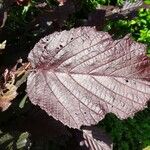
Corylus maxima
Filbert · Giant filbert · Lambert nut · Kentish cob · Hazel
Description
Source: leafsnapCorylus maxima, the filbert, is a species of hazel in the birch family Betulaceae, native to southeastern Europe and southwestern Asia, from the Balkans to Ordu in Turkey.It is a deciduous shrub 6–10 m (20–33 ft) tall, with stems up to 20 cm (8 in) thick. The leaves are rounded, 5–12 cm (2–4+3⁄4 in) long by 4–10 cm (1+1⁄2–4 in) broad, with a coarsely double-serrated margin. The flowers are wind-pollinated catkins produced in late winter; the male (pollen) catkins are pale yellow, 5–10 cm (2–4 in) long, while the female catkins are bright red and only 1–3 mm (1⁄16–1⁄8 in) long. The fruit is a nut produced in clusters of 1–5 together; each nut is 1.5–2.5 cm (1⁄2–1 in) long, fully enclosed in a 3–5 cm (1+1⁄4–2 in) long, tubular involucre (husk).The filbert is similar to the related common hazel, C. avellana, differing in having the nut more fully enclosed by the tubular involucre. This feature is shared by the beaked hazel C. cornuta of North America, and the Asian beaked hazel C. sieboldiana of eastern Asia.
Care Guide
💧 Water
Filbert plants thrive in temperate regions and can tolerate moderate drought conditions. They require watering every two weeks. Mulching during the growing season is beneficial, as it helps retain soil moisture, which is essential for nut development.
What is the most effective way to water my Filbert plant?
To ensure excellent root development for your plants, consider using a garden hose at the base of each plant. It's important to avoid directly spraying the leaves, as this can lead to excessive moisture on the foliage. If your plants are outdoors and exposed to direct sunlight, keep in mind that the leaves may require more watering. One option to keep the roots moist is to use bubblers specifically designed for each plant. Another useful tool is a soaker hose that can be used to cover the entire garden or bed when adding or removing plants, allowing for deep root penetration. After watering, be sure to drain any excess water and wait for the soil to dry before watering again. To prevent diseases, it's recommended to water at ground level, rather than spraying the foliage. On sunny days, it may be beneficial to spray the entire bush with water. Regardless of whether your plants are potted or planted in the ground, keep in mind that Filbert plants prefer deep watering rather than light sprinkling.
What can I do if I give Filbert too much or too little water?
Filbert plants can show signs of overwatering, such as yellowing, dropping, and wilting leaves. Additionally, the plant may look dull and unhealthy, with mushy stems. To address these symptoms, it's important to adjust watering schedules as needed. However, wilting can also indicate under watering. In this case, leaves may become crispy and dry. When the soil is dry and watering alone is not enough, a thorough watering is recommended. While sufficient water will help the Filbert recover, the plant may still exhibit yellow and dry leaves due to root damage. Once the plant returns to normal, the yellowing leaves will cease. When keeping Filbert indoors, regularly check the moisture levels in the pot and avoid overwatering. Look for any signs of black spots, which would indicate the need for the soil to dry out before watering again. Overwatering can cause root rot, so it may be necessary to transfer the plant to a different pot if discolored and slimy roots are present. Preventing root rot is essential, so be mindful not to let the soil become too soggy. For outdoor planting, dig a little deeper and assess the soil's moisture level using your fingers. If the soil is very dry, this suggests underwatering. Adequate watering is crucial for the plant's recovery.
How frequently should I give water to my Filbert plant?
The Filbert plant prefers deep and infrequent watering. When planted in pots, make sure to soak them with a gallon of water each time. Potted plants have limited water storage, so the soil dries out faster. In colder regions, water the plant every 3 to 5 days. Early morning, when the soil is dry, is the best time for watering, both indoors and outdoors. You can check the moisture level by examining the top 2-3 inches of soil. If it's dry, it's time to water thoroughly. On hot days, check the soil moisture daily as it can dry out quickly. For garden plants, irrigation is necessary. In hot climates, watering once a week is recommended. Watch for signs of dryness in the top 2-3 inches of soil before watering. Take into account the amount of rainfall and avoid overwatering to prevent root rot. Filbert plants typically grow during spring and fall. If they're outdoors, adding mulch 3-4 inches deep helps retain water. Sandy soil requires more frequent watering due to its fast drainage, while clay soil needs less water to avoid root rot. Marking water dates on a calendar can help ensure the plants are not watered too late, indicated by drooping leaves.
How much water does my Filbert need?
To properly water a Filbert tree, it generally needs about a gallon of water on a regular basis. For potted plants, water them deeply until you see water dripping from the bottom of the pot, and then wait for the soil to dry before watering again. To determine how much water you have given in a week, you can use a water calculator or moisture meter. During the flowering period, provide plenty of water but let the moisture evaporate afterward to avoid root rot. If the Filbert tree is planted outside and receives enough rainfall, it may not need additional watering. However, when the Filbert tree is young or newly planted, make sure it receives 1-2 inches of rain per week. As the tree grows, it can rely solely on rainfall for its water needs. Only during extremely hot weather or extended periods without rainfall should you consider giving the tree a thorough watering during cooler parts of the day to prevent heat damage. Additional watering may be necessary during prolonged dry spells.
Should I change how often I water my Filbert tree based on the different seasons or weather conditions?
The Filbert thrives in outdoor conditions but can tolerate dry weather. During the spring and fall, the soil should be kept moist but not soggy. It's beneficial to have alternating dry and moist soil conditions for the Filbert to grow well. In the summer, hot weather can cause water to evaporate quickly, so if there is no rainfall, more frequent watering is needed to keep the plant moist. However, in winter, the Filbert requires less water as it goes dormant and drops its leaves. Using a well-draining soil mixture, like terracotta, helps with water evaporation. During the dormant period, the Filbert can rely on fall and winter rains for survival. When the temperature warms up in spring, you can encourage growth and blooming. Adequate drainage is crucial, especially during winter, as the Filbert dislikes ponding or drought. When in a pot, the plant has limited root growth and should be watered well, particularly in summer. Avoid shallow sprinkles that only reach the leaves and promote fungal growth. In fall and winter, even during dormancy, the Filbert should not be allowed to completely dry out. Avoid overwatering, as the plant doesn't like sitting in water for extended periods, especially during winter. Applying mulch is beneficial for reducing stress, conserving water, and promoting healthy blooms.
☀️ Light Full sun
Filbert requires substantial sunlight for healthy growth but can tolerate moderate shade. While it ideally comes from areas with abundant sun, its health can suffer from either too little or too much exposure. Insufficient light may limit growth, whereas excessive sun can scorch the leaves.
What are the sunlight requirements for Filbert?
Filbert requires considerable exposure to sunlight for healthy growth and can tolerate modest levels of shade. It thrives in conditions where it can receive full to partial sun—meaning above 6 hours of direct sunlight for 'full sun' and about 3-6 hours for 'partial sun.' However, it's crucial to monitor the plant's exposure closely, as too little sunlight can impede its growth, while too much can cause issues such as leaf scorching. Observing how sunlight moves through your garden will help in selecting the best spots that provide a balance of light and shade, ensuring the wellbeing of your plants.
How can artificial lighting be used for Filbert indoors?
Indoor Filbert plants may require artificial lighting to achieve optimal growth, especially when natural sunlight is insufficient, like during winter or in less sunny spaces. LED lights are recommended due to their ability to customise specific wavelengths needed by plants. Full sun plants should get 30-50W/sq ft of artificial light, partial sun plants 20-30W/sq ft, and full shade plants 10-20W/sq ft. The artificial light source should be placed 12-36 inches above the plant, simulating natural sunlight and kept on for 8-12 hours per day to mimic the natural daylight hours specific to the plant species.
What are the signs of insufficient or excessive sunlight exposure in Filbert?
Filbert plants, when deprived of adequate sunlight, may display several symptoms indicative of light deficiency, including smaller new leaves compared to mature ones, leggy or sparse growth, accelerated leaf drop, diminished or halted new growth, and lighter-colored or yellow new leaves due to chlorosis. On the flip side, excessive sunlight exposure can lead to leaf scorching, sunscald, leaf curling, wilting, and chlorosis. These conditions reflect the plant's struggle to maintain its health and can severely impact its growth and appearance.
What steps can be taken to address sunlight-related issues for Filbert?
To address insufficient sunlight exposure for Filbert, gradually acclimatize the plant to receive at least 6 hours of direct sunlight daily if indoors, possibly by using a south-facing window or by supplementing with artificial light for at least 8 hours daily. For outdoor plants, similarly, gradate their exposure to sunlight to avoid sunburn. If issues stem from too much shade, consider pruning obstructive branches or even transplanting the plant during its dormant period to a location with better sunlight and drainage. Note that parts of the plant already affected may not recover, but new growth should be healthy once conditions improve.
🌡️ Temperature 5–32.2°C
Filbert shows strong adaptability to different climate conditions, from scorching summers to cold winters. However, it still has an optimal temperature range for growth. If temperatures become too high, the plant is vulnerable to heat and humidity stress, which can lead to its death. In areas where temperatures approach the lower limit of its cold tolerance, providing insulation is important to protect the plant.
💨 Humidity normal (40-60%)
This plant will thrive in moderate humidity, which is probably the level in your home. However, misting it a few times a week can be very beneficial. Make sure the room has good ventilation.
🪴 Soil 6-7
🌱 Fertilizer
The Filbert plant needs adequate nutrients to produce fruit optimally. Fertilize in early spring to promote new growth and bloom development. Regular fertilization keeps the plant healthy, encourages production of more delicious fruit, and prevents nutrient deficiency problems such as yellow leaves and poor fruit production.
Why do I need to add fertilizer to my Filbert plant?
No matter what type of Filbert you have, regular fertilization is crucial for overall plant health. Proper nutrients lead to stronger growth and increased resilience to difficult conditions, as well as better defense against diseases and pests. The foliage of your Filbert is an appealing aspect, so it's important to maintain it. To achieve this, establish a regular fertilization schedule tailored to your Filbert, which will result in deep-colored leaves and a lush appearance.
When should I fertilize my Filbert tree?
To keep your Filbert tree healthy and thriving, it is best to fertilize it twice a year. The first time to fertilize is in late winter or early spring, which will provide your tree with the necessary nutrients for healthy growth once the weather warms up. If you live in a warm climate region, it is also beneficial to give your Filbert an additional round of fertilizer in early fall. This will provide extra nutrients for the following growing season and help the tree withstand the cold winter without damaging its foliage. By fertilizing earlier in the season, you allow the new branches to grow and strengthen, ensuring their ability to withstand the winter cold.
When is the best time to not fertilize my Filbert plant?
There are certain times of the year when you should avoid fertilizing your Filbert. Firstly, during the early and mid-winter months when the plant is dormant and does not require feeding. Secondly, it is not advisable to fertilize in late spring and throughout the summer as the weather tends to be hotter and drier during this period. These conditions can have a detrimental effect on your Filbert if fertilized. To prevent any issues, it is best to stick to a fertilization schedule that focuses on feeding during early spring and early fall.
What kind of fertilizer does my Filbert tree need?
The most important nutrient for a Filbert is usually nitrogen, but phosphorus and potassium are still important. Your Filbert needs a good amount of all three nutrients, so a balanced fertilizer like a 10-10-10 can be effective. However, using a fertilizer with a slightly higher nitrogen ratio, like 10-6-4, tends to promote better growth. You can choose to use granular or liquid-based fertilizers when feeding your Filbert.
How should I fertilize my Filbert plant?
Fertilizing your Filbert tree is easy with granular fertilizer. Simply sprinkle the fertilizer on the soil at the right time. The slow-release nature of granular fertilizer gradually releases nutrients into the soil. Before applying the fertilizer, it's best to lightly water your Filbert. Another option is liquid fertilizer, although it's less common. To use liquid fertilizer, mix it with water and pour the mixture around the base of your Filbert tree. Sometimes, it's helpful to conduct a soil test beforehand to determine if any pH adjustments are needed.
🪴 Pot & Repot
✂️ Pruning
Filbert is a deciduous shrub prized for its edible nuts and dense foliage. To keep the plant healthy, prune it in early spring. Remove any dead or diseased branches to improve air circulation, and cut older stems down to ground level to encourage new growth. It's important to use clean tools to prevent disease and enhance both the health and productivity of the shrub.
🌿 Propagating
🐛 Diseases & pets
☠️ Toxicity
Characteristics
- Plant Type
- Tree, Shrub
- Life Cycle
- Perennial
- Genus
- Corylus
- Family
- Betulaceae
- Hardiness Zone
- 4-8
- Mature Height
- 3.96 m
- Mature Spread
- 3.96 m
- Leaf Color
- Green, Purple
- Leaf Type
- Deciduous
- Flower Color
- Yellow, Brown
- Flower Size
- 2.54 cm
- Bloom Time
- Late winter, Early spring
- Planting Time
- Spring, Winter
- Harvest Time
- Early fall, Mid fall
- Native Area
- Slovenia, Croatia, Turkey, Italy