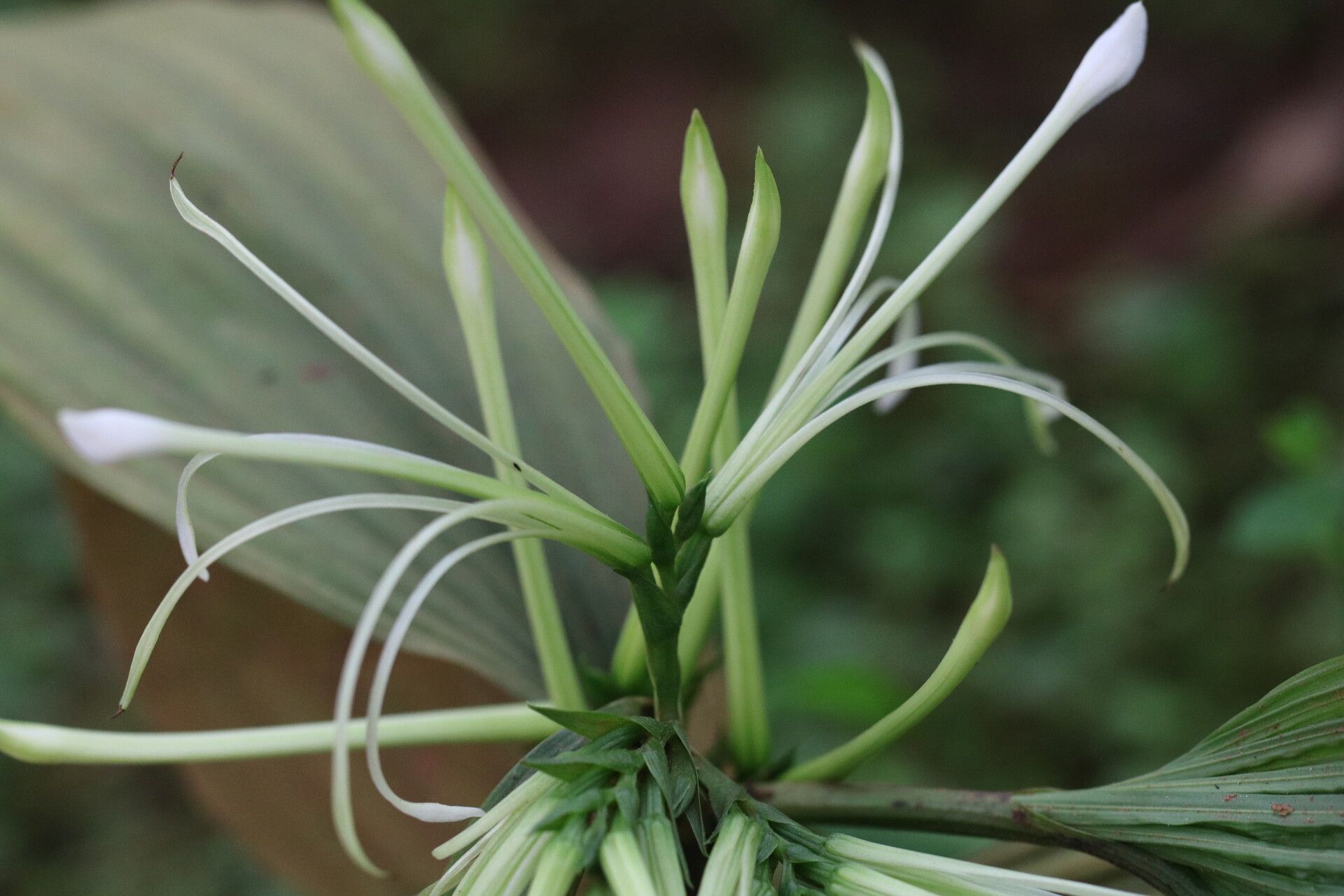
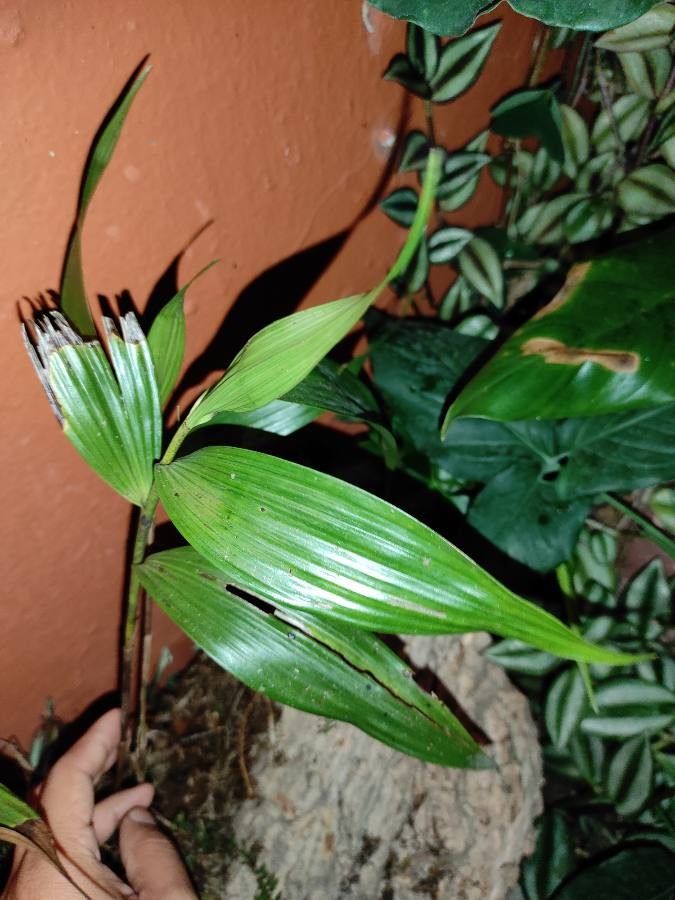
Corymborkis veratrifolia, commonly known as the white cinnamon orchid is a plant in the orchid family and is native to areas from tropical and subtropical Asia to Australia and the Pacific Islands. It is an evergreen, terrestrial orchid with a thin, upright stem, papery, pleated leaves and a short flowering stems with up to sixty crowded, short-lived green and white flowers.
White cinnamon orchid is generally resistant to disease and suffers from relatively few insect pests. Its care is considered difficult because it needs high humidity combined with good ventilation and low levels of harmful pathogens. Too much watering can cause root rot. Although anyone can grow White cinnamon orchid, keeping it healthy and getting it to flower again requires more growing experience.
How to keep Corymborkis Veratrifolia.
Light
The white cinnamon orchid naturally thrives in shaded settings like forest understories or rocky regions. Although it prefers partially sunny conditions, it shows its adaptability and robustness by being able to tolerate either full sun or complete shade.
Water
The white cinnamon orchid flourishes in humid, tropical climates and needs a well-balanced watering schedule. For optimal health, it's important to water the plant weekly. Commonly grown indoors, this orchid benefits from controlled humidity levels. Despite being a deciduous plant that loses its leaves during dormancy, it still requires regular watering throughout the year.
Temperature
The White cinnamon orchid flourishes in mild climates. It prefers moderately warm temperatures that are not overly hot and moist. The warmth from sunlight benefits the plant and encourages the growth of its flowers. But, keeping the plant in direct sunlight for extended periods during the summer can cause sunburn, hence it's crucial to regulate the sunlight it gets in this season. The white cinnamon orchid typically cannot withstand colder temperatures, and thus needs sufficient protection and increased warmth during the winter months, to avoid freezing.
Fertilizer
Proper fertilization is essential for the health and appearance of the White cinnamon orchid. Fertilize the White cinnamon orchid in summer, applying fertilizer monthly throughout the season. Nutrients fuel growth and help maintain the plant's parts. Fertilization improves the White cinnamon orchid's flower display, ensuring the best blooms.
Pruning
For optimal growth of the white cinnamon orchid, it is beneficial to prune it during early to late spring. Focus on removing any dead stems and selectively thinning the plant to improve airflow. This timing coincides with its growth phase, encouraging flowering and reducing the risk of disease, ultimately supporting robust growth. To learn more about the best pruning practices, consult resources such as the Royal Horticultural Society (RHS) and the American Orchid Society (AOS).
Botanical profile.
- Plant Type
- Herb
- Life Cycle
- Perennial
- Genus
- Corymborkis
- Family
- Orchidaceae
- Hardiness Zone
- 10-12
- Mature Height
- 49 cm to 91 cm
- Mature Spread
- 30 cm to 49 cm
- Leaf Color
- Green, Dark Green
- Leaf Type
- Semi-evergreen
- Flower Color
- White
- Flower Size
- 2.03 cm to 3.05 cm
- Bloom Time
- All year round
- Planting Time
- Spring
- Harvest Time
- All year round
- Native Area
- Sri Lanka, India, Malaysia, Vanuatu, Philippines, Bangladesh, Laos, Fiji, Brunei, China, Indonesia, Cambodia, Vietnam, Myanmar, Japan, Singapore, Thailand
Other names.
Reader questions.
What are the sunlight requirements for plants?
Plants have varying needs for sunlight, categorized mainly into partial sun and full sun. Partial sun refers to about 3-6 hours of sunlight each day, while full sun means receiving more than 6 hours of sunlight daily. It's important to observe the movement of sunlight in your garden to identify spots that offer an ideal balance of light and shade, ensuring that your plants thrive in their specific light conditions.
What is the name of the orchid?
The name of the orchid is White cinnamon orchid.
What are the essential growing conditions for the White cinnamon orchid?
The White cinnamon orchid, native to forest understories or rocky areas, thrives in partial sun but can also tolerate full shade. This makes it a versatile perennial herbaceous plant adaptable to various lighting conditions. For indoor plants that lack natural sunlight, especially during winter or in darker spaces, artificial lighting can be a crucial alternative. LED lights are recommended for their customizable wavelength offerings, with different wattage specifications for full sun, partial sun, and full shade plants. The distance the light should be placed from the plant and the duration it should be left on varies depending on the plant's specific needs.
What is the botanical name of the White cinnamon orchid?
The botanical name of the White cinnamon orchid is Corymborkis veratrifolia.
What symptoms indicate insufficient light for the White cinnamon orchid?
When the White cinnamon orchid does not receive enough light, several symptoms may manifest, including smaller new leaves, leggy or sparse growth, faster leaf drop, slowed or halted growth, and lighter-colored or yellowing leaves due to chlorosis. Sunscald, leaf curling, wilting, and leaf scorching are symptoms of excessive light exposure. These signs indicate that the plant's environmental conditions need to be adjusted to either increase or decrease the light exposure, depending on the symptom.
What solutions can help manage light conditions for White cinnamon orchid?
Managing light conditions for the White cinnamon orchid involves gradual adaptation to sunlight. For indoor plants, gradually shifting them to sunnier spots or using artificial lighting, such as desk lamps or grow lights for at least 8 hours a day, can optimize growth. Outdoors, plants should be moved gradually to sunnier locations to prevent sunburn. Pruning trees or other obstacles that shade your plants too much can help, as can transplanting smaller plants to sunnier spots during their dormant periods to avoid shock and ensure a smooth transition to more suitable growing conditions. It's crucial to note that parts of the plant that have suffered from inadequate sunlight may not recover, but new growth should be healthier with proper light adjustment.