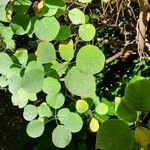
Cotinus coggygria
درختچه پر ارغوانی · درخت دودی · Smoketree · Smoke-bush · Fustet
Description
Source: leafsnapCotinus coggygria, commonly known as smokebush or smoke tree, is a deciduous shrub or small tree native to southern Europe and central China. Belonging to the Anacardiaceae family, it can grow up to 15 feet tall with a spread of 12 feet. This plant features an open, spreading habit with arching branches covered in large leaves that turn vibrant shades of yellow, orange, and red in autumn. The most distinctive feature of Cotinus coggygria is its inflorescence, appearing as a cloud-like mass of tiny flowers in shades that range from pinkish-red to purple. These flowers bloom from late spring through summer, giving the plant its common name "smokebush" due to their resemblance to puffs of smoke. Cotinus coggygria prefers full sun but can tolerate partial shade. It thrives in well-drained soil but can also withstand poor soil conditions. This plant requires minimal maintenance once established but benefits from regular pruning, which helps maintain its shape and encourages new growth. The smokebush is highly valued for its ornamental purposes, thanks to its unique appearance. It also has medicinal uses, such as treating ailments like diarrhea and fever, and practical applications, including dye production—yellow dyes from the leaves and purple dyes from the bark. Overall, Cotinus coggygria is an attractive shrub or tree with unique features, making it an excellent addition to any garden or landscape design project.
💡 Historically, the smoketree was used to produce a yellow dye known as young fustic. Although popular during the Middle Ages for dyeing textiles, young fustic was found to have poor lightfastness, meaning it faded easily when exposed to light. Consequently, its use declined significantly after the 16th century.
🌳 Besides its decorative appeal, smoketree is also recognized for a practical role in producing a natural dye from its leaves and wood. This practice dates back to earlier times and still persists today within artisanal crafts. Beyond dyeing, smoketree can be useful in traditional carpentry for its durable timber, and its characteristic "smoke" can be used to flavor foods much like smoking with other wood chips.
🎭 cleansing
Care Guide
💧 Water Every 7 days
The smoketree, a native plant of rocky hillsides, is well-known for its drought tolerance and ability to thrive in low-moisture environments. It should be watered every one to two weeks, with the soil allowed to dry out between waterings. Typically grown outdoors, the smoketree is deciduous, meaning it adapts to seasonal changes by shedding its leaves in cooler, drier conditions.
When should I water my Smoketree?
Watering your Smoketree appropriately is vital for its health. Check the soil's moisture content by feeling the soil 1 to 2 inches below the surface; if dry, it's time to water. Observe the leaves for signs of wilting or color fading, which indicate the need for water. Pay special attention during the pre-flowering stage, as adequate moisture is crucial for proper bud development. Increase watering during warm temperatures and high sunlight exposure to compensate for the greater water demand. However, be cautious of over-watering, especially when the soil is still moist, to avoid root rot and fungal diseases. Conversely, delaying watering for too long when the soil is excessively dry can lead to wilting and stunted growth, or even plant death in severe cases.
How should I water my Smoketree?
Water your Smoketree by aiming for deep watering at the plant's base, utilizing a watering can with a thin spout for precision. This method promotes deep root growth and reduces the need for frequent waterings, which is beneficial for the tree's long-term health. Since Smoketrees are drought-tolerant once established, it's critical to ensure that they are not overwatered. Using a moisture meter can help determine the optimal watering times. Focus on watering the base rather than the foliage to prevent fungal diseases. Early morning or late evening watering is ideal to reduce evaporation and maximize water absorption. Always verify the moisture content of the soil before watering to avoid overwatering.
How much water does Smoketree really need?
The amount of water a Smoketree requires varies with its size, age, and environmental conditions. Young Smoketrees may need about 1-2 cups of water weekly, while established trees could require much more, depending on their size. The rule of thumb is to water the Smoketree when the top inch of soil dries out. This plant prefers infrequent but thorough watering to ensure moisture reaches the deep roots. Observing the foliage's vibrancy and health can also provide cues; vibrant, purplish hues indicate good hydration, while wilting or yellowing suggests issues. Consistent but moderate watering, ensuring well-drained soil conditions, will support healthy growth and prevent root rot or dehydration.
What kind of water is best for Smoketree?
For Smoketrees, rainwater and tap water are generally acceptable, but distilled or filtered water can be used if the tap water contains high levels of chlorine or minerals. Let tap water sit overnight to evaporate chlorine, beneficial for plants less tolerant to it. While Smoketrees are not particularly sensitive to chlorine and fluoride, excessively fluoridated water might inhibit growth. High mineral content ('hard water') could also harm plant health by causing soil mineral deposits. Water treatments are typically unnecessary unless signs of stress appear. Using water at room temperature is advisable to avoid shock and stress to the plant.
How do Smoketree's watering needs change with the seasons?
Smoketree's watering needs vary through the seasons. In spring, as growth accelerates with rising temperatures, water the tree thoroughly but let the topsoil dry between waterings. Summer demands consistent soil moisture due to higher evaporation rates, so deep, infrequent waterings are best to encourage root deepening. In autumn, reduce watering frequency as the plant prepares for dormancy, and excessive moisture could increase susceptibility to root diseases. During winter, water sparingly only when the soil is dry, since the tree's water consumption is minimal. These seasonal adjustments ensure the Smoketree remains healthy and well-prepared for each growth phase.
☀️ Light Full sun
The smoketree prefers a high level of sunlight for optimal growth and health. It also adapts well to partially lit (semi-luminous) environments. Native to habitats with abundant sun exposure, the smoketree can tolerate some shade. However, very limited sunlight can hinder its growth.
What are the sun requirements for a Smoketree?
The Smoketree requires a significant amount of sunlight for optimal growth and health, thriving best in full sun conditions, which mean above 6 hours of sunlight daily. It can also adjust to partial sun environments, approximately 3-6 hours of sunlight. However, it's essential to observe the sunlight movement in your garden to ensure that Smoketree gets a balanced mix of light and shade, as too little sunlight can inhibit its growth.
How does artificial lighting support Smoketree growth indoors?
When natural sunlight is insufficient, especially during winter or in less sunny indoor spaces, artificial lighting can be a critical solution for supporting Smoketree growth. Indoor plants benefit from artificial lights as they promote faster and healthier growth by providing necessary wavelengths. LED lights are recommended for their customization options to suit plant needs. Full sun plants should have 30-50W/sq ft of artificial light, partial sun plants should have 20-30W/sq ft, and full shade plants require 10-20W/sq ft. It's important to position the light source 12-36 inches above the plant and mimic natural daylight hours, most plants needing 8-12 hours of light per day.
What are the symptoms of insufficient light in Smoketrees?
Smoketrees may exhibit several symptoms when they receive insufficient light, including smaller new leaves, leggy or sparse growth, faster leaf drop, slower or halted growth, and lighter-colored or irregularly patterned new leaves. Moreover, excessive sunlight can lead to chlorosis (leaf yellowing), sunscald, leaf curling, wilting, and leaf scorching. These symptoms indicate stress due to inappropriate lighting conditions, reflecting the plant's struggle to adapt and maintain health.
What solutions can address light-related issues in Smoketrees?
To address light-related issues for Smoketrees, consider the following solutions:Indoor care includes gradually moving your plant to a sunnier location each week, aiming for at least 6 hours of direct sunlight daily, and considering the use of artificial grow lights if the plant is large or hard to move.Outdoor care involves gently relocating your plants to better-lit areas while avoiding sudden changes to prevent sunburn. Not all parts of the plant may recover from light deficiency, but new growth should be healthy post-adjustment.Furthermore, reducing obstructions, such as by pruning trees that block sunlight, and transplanting smaller plants to more sun-exposed locations can improve light access. Always select a spot with ample sunlight and good drainage for optimal growth.
🌡️ Temperature 5–37.8°C
Smoketree favors temperatures between 41 to 100 ℉ (5 to 38 ℃). It grows in temperate regions and can endure both warm and cool conditions so long as they are not extreme. In winter, it is recommended to protect the plant from freezing by placing extra mulch around the base.
What is the ideal temperature range for a Smoketree?
The ideal temperature range for a Smoketree is between 41 to 100 °F (5 to 38 °C). It thrives well in temperate climates, showing strong resistance to both hot and cold temperatures, provided they are not extreme. To safeguard the plant during winter, especially from freezing temperatures, adding extra mulch around its base is advised. Although Smoketrees possess considerable cold resistance and typically do not require special frost protection measures, if winter temperatures are expected to drop significantly, wrapping the trunk and branches with non-woven fabric or cloth can provide additional cold protection. It is also beneficial to water the plant abundantly before the first freeze in autumn to ensure the soil is moist entering into the frozen state, which helps prevent drought and water scarcity during winter and early spring.
How does low temperature affect Smoketree and what are the solutions?
Smoketrees are cold-tolerant and perform best when temperatures remain above their minimum viable threshold. During winter, it's crucial to maintain temperatures above this minimum limit. Falling below can lead to the branches becoming brittle and dry by spring, with an absence of new shoots. The solution to this issue is straightforward; in spring, prune away any dead branches that have failed to produce new leaves, fostering the growth of healthy new shoots.
What should be done if a Smoketree experiences high temperatures?
During the summer, it's important to ensure that a Smoketree’s temperature stays below its maximum tolerable limit. Exceeding this threshold can cause the leaves to lighten in color, tips to dry and wither, and make the plant more susceptible to sunburn. To mitigate these effects, trim away any sunburned or dried parts of the plant. Relocating the plant to a spot shielded from the midday and afternoon sun or using a shade cloth can provide necessary protection. Additionally, watering the plant in the morning and evening helps keep the soil adequately moist, further protecting the plant from high temperature stress.
💨 Humidity
🪴 Soil 6-7
🌱 Fertilizer
Fertilize your Smoketree in early spring to encourage healthy growth. Consistent fertilization improves overall health, leading to vigorous growth, increased tolerance of harsh conditions, and enhanced resistance to diseases and pests. Stick to a defined fertilizing schedule for your Smoketree to keep the foliage vibrant, richly colored, and lush in appearance.
Why should I put fertilizer on my Smoketree?
If you own a Smoketree, regular fertilization is important regardless of the type you have. Providing the proper nutrients will promote stronger growth and increase its ability to withstand tough conditions and resist diseases and pests. Since the foliage of your Smoketree is one of its most appealing aspects, it's crucial to maintain its health. This can be achieved by implementing a consistent fertilization schedule tailored to your specific Smoketree, resulting in vibrant and lush leaves.
When should I fertilize my Smoketree for the best results?
To give your Smoketree the best chance for healthy growth, it's recommended to fertilize it in late winter or early spring. This provides all the necessary nutrients for when the weather warms up. If you live in a warm climate, an additional fertilizer feeding in early fall can be beneficial. This not only adds nutrients for the following growing season but also helps your Smoketree withstand winter cold without foliage damage. Doing this earlier will ensure that new branches have enough time to grow and be prepared for the cold winter.
When should I not put fertilizer on my Smoketree?
There are a few periods throughout the year when you should avoid fertilizing your Smoketree. The first is during the early and mid-winter months when the tree is dormant and does not require feeding. Additionally, it's not recommended to fertilize the plant during late spring and summer due to the hot and dry weather conditions. Fertilizing during this time can have a negative impact on the Smoketree. To prevent any issues, it is best to follow a fertilization schedule that focuses on feeding in early spring and early fall.
Which fertilizer should I use for my Smoketree?
Smoketrees primarily require nitrogen as their main nutrient, but phosphorus and potassium are still important for their growth. It is recommended to use a balanced fertilizer, like a 10-10-10, which provides a decent amount of all three nutrients. However, a more specific nutrient ratio, such as 10-6-4, often results in optimal growth. When fertilizing, you have the option to use either a granular or liquid-based fertilizer.
How can I add nutrients to my Smoketree?
To fertilize your Smoketree, you have two options: using a granular or liquid fertilizer. If you choose granular, simply sprinkle the fertilizer on the soil when it's the right time. The slow-release nature of granular fertilizer will gradually provide nutrients to the soil. Before applying fertilizer, it's recommended to lightly water your Smoketree. Alternatively, you can use a liquid fertilizer, although this is less common. To do this, mix the fertilizer with water and pour it around the base of your Smoketree. Occasionally, it's helpful to perform a soil test beforehand to determine if any pH adjustments are needed.
🪴 Pot & Repot 2-3 years
When repotting a Smoketree, select a pot 1–2 inches (2.5–5.1 cm) larger with good drainage. Use a well-draining potting mix. Repot in spring or fall, making sure the root ball sits slightly below the rim of the flower pot. Water thoroughly after repotting and place in a warm spot with indirect sunlight.
✂️ Pruning
The smoketree is known for its plume-like flowers and vibrant leaves. To maintain its shape, prune it in late spring after it has finished flowering. Remove any dead wood and thin out the branches as needed. To increase bushiness, you can perform rejuvenation pruning by cutting back one-third of the plant. Avoid heavy pruning during the dormant season to prevent shock and ensure healthy growth and ornamental appeal.
🌿 Propagating
🐛 Diseases & pets
☠️ Toxicity
Characteristics
- Plant Type
- Shrub, Tree
- Life Cycle
- Perennial
- Genus
- Cotinus
- Family
- Anacardiaceae
- Hardiness Zone
- 5-11
- Mature Height
- 3.05 m to 7.01 m
- Mature Spread
- 3.96 m
- Leaf Color
- Green, Red, Yellow, Orange, Blue, Purple
- Leaf Type
- Deciduous
- Flower Color
- Pink
- Flower Size
- 0.51 cm to 1.02 cm
- Bloom Time
- Late spring, Early summer, Mid summer
- Planting Time
- Spring, Autumn
- Harvest Time
- Mid summer
- Native Area
- Nepal, Tajikistan, Turkey, India, Austria, Slovakia, Montenegro, Bulgaria, Pakistan, Armenia, Greece, Croatia, Slovenia, Ukraine, Serbia, Russia, Hungary, Syria, Italy, Switzerland, Iran, Albania, Romania, Turkmenistan, France